Great British Menu 2026 episode 28 brought the entire dessert competition to its most decisive moment, placing eight outstanding chefs in direct contest for the final place at a red-carpet banquet in Liverpool celebrating the British film industry. With only one dessert course to be served at the banquet, the pressure on every competitor was absolute. Dame Prue Leith returned to the judging panel alongside Michelin-starred chefs Tom Kerridge and Lorna McNee, with comedian Phil Wang completing the quartet. Between them, they faced the task of selecting a single winning dish from eight wildly different interpretations of what a banquet dessert could be.
The British film industry provided both the theme and the emotional context for the entire series, and nowhere was that more apparent than in the dessert final. Desserts, by their nature, carry expectations of joy, indulgence, and spectacle — qualities that align naturally with the world of cinema. The chefs understood this. Each dish arrived loaded with references, memories, and technical ambition, designed not simply to taste extraordinary but to conjure something cinematic in the diner’s imagination. Cooking at this level demands that food tells a story, and every plate in this final attempted exactly that.
The eight chefs competing were drawn from regional heats held across the country, each having already fought through preliminary rounds to earn their place at the finals table. Some arrived with scores that gave them confidence; others carried the knowledge that they needed to deliver a perfect round to stay competitive. Tom Kerridge, speaking as a judge with direct experience of the competition, acknowledged the extraordinary difficulty of producing a banquet-worthy dessert under finals conditions. Lorna McNee brought her own Michelin-starred perspective, and Phil Wang offered the viewpoint of an enthusiastic but exacting guest diner — someone who would actually sit at the banquet table.
The format placed all eight chefs cooking simultaneously, then presenting their dishes to the judging panel in sequence. Each dish was scored, and the scores from the entire finals week would determine whose food ultimately earned the honour of being served at the Liverpool celebration. The dessert course carried particular weight because it represented the final impression the banquet would leave on its guests. Great British Menu 2026 episode 28 was therefore not simply the last competition of the week — it was the moment that would shape the entire evening’s conclusion.
Dame Prue Leith, whose connection with the competition spans decades, brought authority and warmth to the panel in equal measure. Her assessments consistently balanced technical scrutiny with genuine emotional response to the food, and the other judges clearly valued her perspective as the benchmark against which their own reactions were measured. Phil Wang, less experienced in professional kitchen culture but acutely perceptive about pleasure and surprise, repeatedly offered observations that cut through technical analysis to ask the simplest possible question: did this dish make the diner happy?
Happiness, it turned out, was harder to manufacture than perfection. Several dishes across the finals week had been technically immaculate while leaving judges feeling curiously unmoved. The dessert final reversed that pattern in several cases, with dishes that carried obvious emotional warmth receiving stronger responses than their scores from earlier rounds might have predicted. Cooking with genuine feeling, rather than simply cooking with precision, became a recurring theme in the judges’ deliberations throughout the episode.
The Liverpool banquet setting also shaped how the panel thought about each dish. A red-carpet celebration of British film demanded food that felt celebratory and inclusive, capable of delighting a room full of people rather than merely impressing a single diner. Scale and sharability mattered. Dishes that were exquisite but delicate risked being lost in a large event setting. Conversely, dishes built for spectacle risked sacrificing the intimacy and finesse that fine dining demands. The chefs were navigating a genuinely difficult brief, and the judges were acutely aware of it.
By the time the eighth and final dish was presented, the panel had experienced an extraordinary range of ideas, flavours, and ambitions. Great British Menu 2026 episode 28 had delivered everything the competition promises at its best: fierce talent, genuine jeopardy, and food that went well beyond the merely impressive. What followed was a deliberation that required the judges to weigh not just taste but meaning, not just technique but feeling.
Great British Menu 2026 episode 28
The Great British Menu 2026 Episode 28 Judging Panel and Their Approach
Tom Kerridge arrived at the finals table with a clear set of priorities. As a Michelin-starred chef who has competed on and judged Great British Menu across multiple series, he understood the specific demands of banquet cooking. His assessments focused on whether dishes would survive the journey from kitchen to table at scale, whether flavours would hold their integrity across multiple servings, and whether the emotional resonance of each dish matched its technical ambition. He was generous with praise when warranted but equally direct when a dish fell short of what the occasion demanded.
Lorna McNee brought a different but complementary perspective. Her cooking background emphasised precision and clarity of flavour, and she consistently probed whether dishes had a clear and confident identity. When a dish attempted too many things simultaneously, she was among the first to identify the resulting confusion. However, when a chef had committed fully to a single strong idea and executed it with conviction, McNee’s appreciation was evident and enthusiastic. Her Michelin training gave her a precise vocabulary for discussing texture, temperature, and balance that enriched the panel’s collective analysis.
Phil Wang’s role was equally important, if differently calibrated. As a guest diner rather than a professional cook, he represented the audience the banquet was actually designed to serve. His reactions were immediate, instinctive, and entirely honest. When a dish genuinely surprised and delighted him, his response was unguarded. When something failed to land, he said so plainly. Dame Prue Leith, presiding over the panel with characteristic directness, repeatedly drew the judges back to the fundamental question: which of these dishes deserved to be at the banquet?
Competing Dishes and the Standards Set in Great British Menu 2026 Episode 28
The eight desserts presented in Great British Menu 2026 episode 28 covered an impressive range of styles, temperatures, and technical approaches. Several chefs had chosen to work with classic British dessert traditions, updating or reinterpreting familiar flavours to fit the film industry theme. Others had pushed further into experimental territory, using modern techniques to create something genuinely unexpected. The range itself testified to the depth of talent the competition had assembled.
Among the dishes that generated the strongest early reactions was one built around a distinctly British flavour combination, presented with a level of technical refinement that immediately signalled serious ambition. The judges’ response was enthusiastic but not uncritical — they identified specific elements that worked brilliantly while noting areas where the execution had fallen slightly short of the concept’s potential. This pattern repeated across several dishes: brilliant ideas occasionally let down by small but meaningful technical lapses.
Temperature control emerged as a significant differentiator across the field. Several desserts depended on precise contrasts between hot and cold elements, and the difficulty of maintaining those contrasts between kitchen and table was apparent in at least two cases. Kerridge, drawing on his own banquet cooking experience, was particularly attentive to this issue. A dessert that relies on a perfect temperature contrast can be extraordinary when executed flawlessly; the same dessert, served slightly off, loses its defining quality. The judges discussed this problem candidly, weighing whether the concept justified the risk.
Presentation, Theatre, and the Film Industry Theme Across the Cooking
The connection between the film industry theme and the dessert course proved richly generative for several chefs. Cinema offers a natural vocabulary for dessert: glamour, emotion, spectacle, and the satisfying resolution of a story well told. Chefs who engaged most directly with this vocabulary produced dishes that resonated on multiple levels simultaneously — they tasted excellent and they meant something. The judges responded warmly to this kind of layered intention, provided the food itself delivered on the promise.
One dish in particular drew on the visual language of cinema with striking confidence. Its presentation incorporated deliberate theatrical elements that recalled specific aspects of the film industry brief, and the judges appreciated the clarity of the connection. Phil Wang, whose professional life sits adjacent to the entertainment world, engaged with the reference enthusiastically, noting that it felt genuinely celebratory rather than merely decorative. The distinction mattered: using a theme as decoration produces superficial results, but building a dish around a theme’s emotional core produces something altogether more resonant.
However, not every thematic gesture landed with equal force. Some dishes gestured towards the film industry brief in ways the judges found relatively superficial — a name, a colour scheme, a garnish — without that connection informing the fundamental character of the food. Kerridge was direct about this: the theme should shape what the dish is, not merely how it looks. Lorna McNee agreed, observing that the strongest dishes in the competition had used the brief as a genuine creative constraint, allowing it to generate ideas rather than simply decorate finished ones.
Technical Execution and the Pressure of the Great British Menu 2026 Finals Format
Cooking under finals conditions in Great British Menu 2026 episode 28 imposed a specific kind of pressure that distinguished it from earlier rounds. By this stage, every chef had already cooked the same dish multiple times — in regional heats, in earlier finals rounds — and the danger was as much complacency and fatigue as inexperience. The judges were aware of this dynamic and paid close attention to whether dishes showed signs of a chef at the peak of their engagement with the material or a chef going through motions they had rehearsed too many times.
Several chefs produced their best versions of their dishes in this final round, responding to the heightened stakes with heightened focus. The quality of pastry work across the field was particularly noted, with multiple dishes showing exceptional technical skill in components that are easy to overlook but impossible to disguise when they go wrong. Sugar work, tempered chocolate, precisely set creams and gels — these elements either demonstrated complete control or revealed its absence, and the judges’ assessments consistently reflected this unforgiving standard.
Where execution fell short, the judges were candid but fair. One dish that had shown great promise in earlier rounds arrived with a component that had not set correctly, affecting both texture and flavour delivery. The panel acknowledged the obvious quality of the concept while noting that finals cooking demands consistency above all else. A dish that performs brilliantly seven times out of ten is not a banquet dish; a banquet dish must deliver perfectly under every condition, including the worst.
Scoring Dynamics and Strategic Implications in Great British Menu 2026 Episode 28
The scoring system in Great British Menu 2026 episode 28 operated within the context of the full week’s results, meaning that each dessert score contributed to a cumulative total that would determine which chef’s complete menu had impressed the judges most consistently. This context shaped how the panel approached individual dishes. A chef who had scored exceptionally well earlier in the week arrived at the dessert round with something to protect; a chef who had struggled earlier needed something exceptional to remain competitive.
Dame Prue Leith’s scores carried the particular weight of experience. Her assessments had shaped the competition for years, and the other judges engaged seriously with her reasoning even when they saw things differently. When Leith awarded a score at the higher end of the scale, it was because something had genuinely moved her — not merely impressed her technically, but produced a real response in the diner she had been for the entirety of her extraordinary food career. That distinction, between impressive and moving, ran through the entire episode’s judging.
Phil Wang’s scores, approaching the food from a position of genuine enthusiasm and honest appetite, provided a valuable counterpoint. His highest scores went to dishes that had made him feel something immediately and without effort — joy, surprise, comfort, or excitement. When his scores aligned with Kerridge’s and McNee’s, the judges could be confident they had identified something close to universally successful. When they diverged, the ensuing discussion invariably uncovered interesting tensions between technical and experiential values in the food.
The Deliberation and What the Judges Weighed in the Final Assessment
The deliberation that followed the eight presentations in Great British Menu 2026 episode 28 was extended and genuinely contested. Several dishes had impressed in different ways, and the panel had to establish a clear shared understanding of what the Liverpool banquet specifically needed from its dessert course. A banquet celebrating British film was not a tasting menu context — it was a large-scale event requiring food that could carry emotional weight for a room full of guests who would include industry professionals, invited guests, and people for whom this would be a memorable occasion in itself.
Kerridge repeatedly emphasised the practicalities of banquet service. A dish might be extraordinary in a restaurant context and still be unsuitable for service to a large room. Timing, temperature management, the ability of service staff to deliver the dish consistently across a full room — these were not peripheral concerns but central ones. McNee added that a dessert which required highly precise last-minute assembly in a banquet kitchen was inherently risky in a way that a more robust dish was not, regardless of how much superior the precise version might taste in ideal conditions.
Dame Prue Leith, however, consistently argued that the ambition should not be sacrificed for safety. The banquet was a celebration, not a corporate dinner, and the food should reflect that. A slightly imperfect dish with genuine emotional power was preferable, in her view, to a technically safe dish that left the table unmoved. This tension — between the pragmatics of large-scale cooking and the demands of genuine emotional impact — produced the most interesting exchanges of the deliberation, and ultimately shaped which dish the panel selected.
Great British Menu 2026 Episode 28 and the Broader Competition Legacy
Great British Menu 2026 episode 28 concluded a dessert competition that had demonstrated the extraordinary range and depth of talent in contemporary British cooking. Across the eight dishes presented, the judges had encountered every style of dessert thinking currently active in professional kitchens: classical British traditions elevated by modern technique, avant-garde constructions built from unexpected ingredients, and everything between. The breadth alone was a testament to what the competition had assembled.
The film industry theme had proven to be a genuinely productive brief for the dessert course specifically. More than any other meal course, dessert carries associations of pleasure, celebration, and emotional completion — qualities that resonate directly with the experience of cinema at its best. Chefs who had fully internalised this connection produced food that was not merely themed but transformed by its theme, using the brief to unlock ideas they might not have reached through purely gastronomic thinking. The best dishes in the field demonstrated that a well-chosen brief does not constrain a chef — it liberates one.
Phil Wang, reflecting on the experience at the deliberation’s end, observed that the food he had tasted across the finals week had genuinely expanded his sense of what British cooking was capable of. This response — from someone encountering the competition’s full scale for the first time — captured something important about what Great British Menu consistently achieves: it makes the best case possible for British food, not defensively, but through the simple evidence of extraordinary plates.
The Winner and the Road to the Liverpool Banquet
The final scoring in Great British Menu 2026 episode 28 produced a result that reflected the panel’s priorities throughout the deliberation. The winning dessert was chosen because it had achieved the specific combination the judges had identified as essential: technical accomplishment in service of genuine emotional resonance, a clear and confident connection to the film industry theme, and the practical robustness required for banquet service at scale. It was, in the panel’s collective assessment, the dish that would do most honour to the occasion it was designed to serve.
The chef whose dessert was selected responded with a mixture of elation and evident relief that reminded the panel — and the viewer — of the sustained effort that had brought them to this moment. Reaching the Great British Menu finals is itself an achievement that reflects years of professional development; winning a finals round represents something beyond that. The emotional weight of the moment was entirely appropriate.
Tom Kerridge acknowledged that the standard across all eight desserts had been exceptionally high and that the decision had been genuinely difficult. This was not diplomatic generosity but an accurate reflection of what the panel had experienced. Several dishes that did not win had been remarkable by any normal standard; they were unfortunate only in having to compete against something that happened to be exactly right for the occasion. That is the nature of the competition at its most demanding, and Great British Menu 2026 episode 28 had delivered it fully.
The Liverpool banquet, when it takes place, will feature a dessert course chosen not merely because it tasted best in isolation but because it best embodied the values the competition was built to celebrate: the exceptional quality of British cooking, the creative ambition of the chefs who practice it, and the extraordinary occasions that food, at its finest, is capable of creating. Great British Menu 2026 episode 28 made the case for all three with complete conviction.
FAQ Great British Menu 2026 episode 28
Q: What is Great British Menu 2026 episode 28 about?
A: Great British Menu 2026 episode 28 is the dessert final of Series 21. Eight chefs compete for the right to have their dessert served at a red-carpet banquet in Liverpool celebrating the British film industry. The judging panel selects one winning dish from eight outstanding dessert courses.
Q: Who are the judges in Great British Menu 2026 episode 28?
A: The judging panel features Dame Prue Leith, Michelin-starred chefs Tom Kerridge and Lorna McNee, and comedian Phil Wang. Together, they bring decades of professional cooking expertise and a guest diner’s perspective to the judging table. Each judge evaluates the dishes from a distinct but complementary viewpoint.
Q: What is the banquet theme that the chefs cook for in this episode?
A: The chefs cook for a red-carpet banquet in Liverpool celebrating the British film industry. This theme directly inspires each dish. The judges expect the food to reflect the glamour, emotion, and spectacle associated with cinema. Dishes must connect meaningfully to the theme rather than simply using it as surface decoration.
Q: How does the scoring work in Great British Menu 2026 episode 28?
A: Each dessert is scored individually, but the score contributes to a cumulative total from the entire finals week. This means the dessert result can confirm a lead or dramatically change the overall standings. A chef who performed strongly earlier in the week must still deliver an exceptional dessert to protect their position.
Q: What qualities do the judges prioritise when selecting the winning dessert?
A: The judges prioritise three qualities above all others. First, genuine emotional impact on the diner. Second, clear and confident connection to the film industry theme. Third, practical suitability for large-scale banquet service. Additionally, technical precision in execution carries significant weight. A dish that excels across all three areas stands the strongest chance of winning.
Q: Why is banquet suitability so important in the judging process?
A: A winning dish must perform consistently when served to a large room, not just impress in a controlled tasting. Tom Kerridge emphasises that timing, temperature management, and ease of service all affect quality at scale. Furthermore, dishes requiring highly precise last-minute assembly carry significant risk in a busy banquet kitchen. Robustness is therefore as important as refinement.
Q: How does Phil Wang’s role as a judge differ from the professional chefs on the panel?
A: Phil Wang represents the perspective of an enthusiastic guest diner rather than a trained professional. His reactions are immediate and honest, focusing on whether a dish produces genuine joy or surprise. However, his scores carry real weight. When his assessments align with those of Kerridge and McNee, the panel gains confidence that a dish has achieved something close to universal appeal.
Q: What technical challenges do chefs face in the dessert final specifically?
A: Temperature control is one of the most demanding technical challenges in the dessert final. Several dishes rely on precise contrasts between hot and cold elements that are difficult to maintain between kitchen and table. Additionally, components such as tempered chocolate, precisely set creams, and sugar work demand complete control. Any lapse in consistency is immediately visible and affects both texture and flavour delivery.
Q: How does the film industry theme influence the dessert dishes in this episode?
A: The film industry theme proves particularly well suited to dessert cooking because both share associations with celebration, emotion, and satisfying resolution. Chefs who engage most deeply with this connection produce dishes that resonate on multiple levels simultaneously. Conversely, chefs who treat the theme as surface decoration—using only a colour scheme or a name—produce results the judges find noticeably weaker and less convincing.
Q: What does Great British Menu 2026 episode 28 reveal about the standard of British cooking today?
A: The episode demonstrates the exceptional range and ambition present in contemporary British cooking. Eight chefs present radically different dessert styles, from elevated classical traditions to avant-garde modern constructions. Phil Wang, experiencing the competition for the first time, observes that the food expands his understanding of what British cooking can achieve. The episode makes a compelling case for the strength and creativity of British culinary talent.
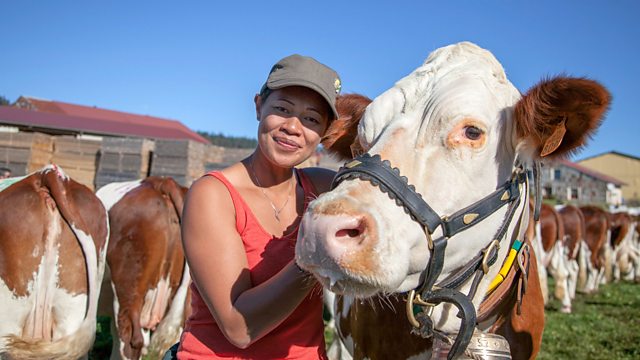
Thanx for the post and I have watched Nikita on Masterchef:The Professionals – so it is quite interesting to see her competition/competitive journey continue.