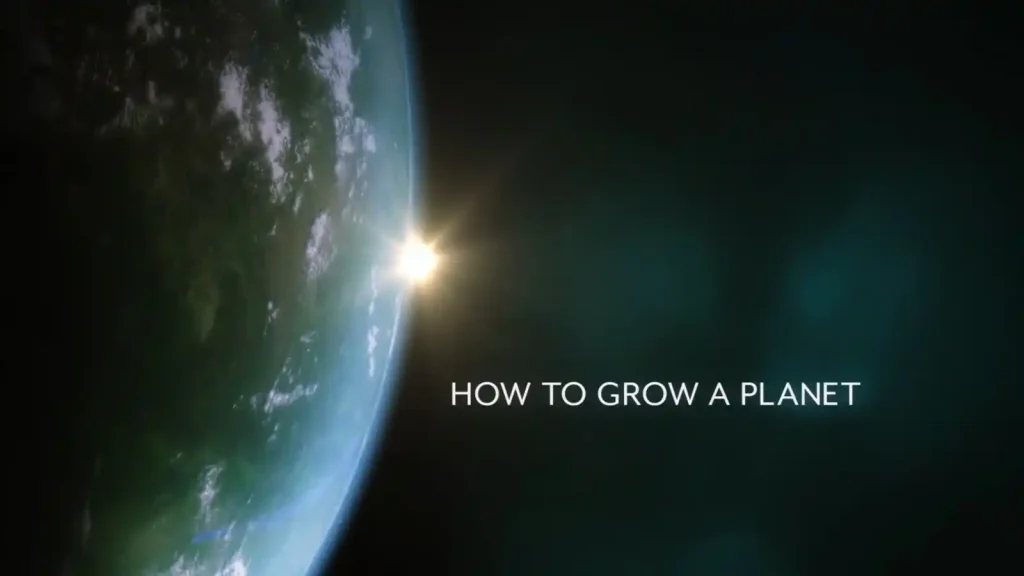
The documentary How to Grow a Planet episode 1 presents a radical reimagining of Earth’s history, positioning plants not as passive scenery but as the primary architects of our world. While geology, with its volcanoes and colliding continents, has long been credited with shaping our planet, this perspective reveals that the greatest changes were driven by a quieter, greener force. The power of the plant kingdom is immense, capable of turning a tiny, seemingly insignificant seed into a giant sequoia, the largest single life form on Earth. However, the story of individual plants pales in comparison to their collective impact. Over billions of years, they transformed a barren, alien rock into the vibrant, living planet we know today.
This shift in understanding is personified by the documentary’s guide, geologist Professor Iain Stewart. For most of his career, he explains, the story of our planet was written in rock. It was a narrative dominated by geological forces. Yet, as he reveals, a deeper look at Earth’s history shows that at crucial moments, another force was at play. This botanical force has not only sculpted landscapes but has fundamentally created the conditions for all other life to thrive, a concept central to How to Grow a Planet episode 1.
This planetary-scale transformation hinges on a remarkable ability: harnessing the energy of a star 150 million kilometers away. This process, photosynthesis, is arguably the most important natural process on Earth, allowing plants to essentially eat sunlight and manufacture life from light. This singular capability, a kind of natural solar power, allowed vegetation to colonize nearly every corner of the globe. Consequently, it provided the energetic foundation for all animal life and sculpted the very atmosphere we breathe by releasing the oxygen essential for our survival. Understanding this intricate process is fundamental to understanding life itself.
The scope of this planetary engineering, as explored in How to Grow a Planet episode 1, is staggering. It begins three billion years ago, long before the first animals, when the earliest ancestors of plants—simple bacteria—began a revolution. This epic journey tracks the creation of our oxygen-rich atmosphere from a toxic brew, the first tentative colonization of a scorched and sterile land, and a dramatic evolutionary arms race with the largest creatures to ever walk the Earth, the dinosaurs. It is a sweeping story of crisis, innovation, and conquest played out on a geological timescale.
To fully appreciate this story, one must first picture the early Earth. Three billion years ago, our world was a hostile and utterly lifeless place. The atmosphere was a toxic cocktail of gases like methane and sulfur dioxide, with almost no free oxygen. Furthermore, without a protective ozone layer to shield the surface, the land was relentlessly scorched by the sun’s powerful and deadly ultraviolet rays, which were hundreds of times stronger than they are today. Nothing could survive there. The planet was a sterile landscape of rock and salt, a silent world awaiting a catalyst for change.
That catalyst emerged not on the hostile land but under the protective shield of the planet’s oceans. Water acted as a liquid sunscreen, absorbing the dangerous UV radiation and allowing the first simple organisms to evolve. These were not complex plants but tiny bacteria. Among them, a competition for light began between different types, including purple bacteria and green cyanobacteria. This seemingly minor rivalry over which part of the light spectrum to absorb would have colossal and unforeseen repercussions, setting the stage for the single greatest turning point in the history of life on Earth.
These green cyanobacteria would ultimately dominate the world’s waters and become the ancestors of all plants. Their green color, a result of the specific wavelengths of light they reflected, is the reason our planet is green today instead of purple. More importantly, these microorganisms did something their purple cousins could not: as a byproduct of their photosynthetic process, they produced oxygen. This waste product, initially a poison to other early life, would fundamentally remake the world, breathing life into a once-deadly planet and paving the way for organisms that respire.
How to Grow a Planet episode 1
The Great Oxidation Event: A Planet Reborn
Evidence for this ancient revolution is buried deep within the Earth, revealed in places like the Sishen iron mine in South Africa. The rocks here are banded with iron ore that is distinctly red. This color is the result of rust, a chemical reaction that requires oxygen. These ancient rock formations, known as banded iron formations, are in effect a fossilized record of the first time free oxygen flooded the Earth’s systems between 2.5 and 3 billion years ago. This period is known to geologists as the Great Oxidation Event. It was a profound and irreversible change, transforming a world with virtually no free oxygen into the planet we recognize today.
The engine for this change was photosynthesis, a complex process perfected by the ancient cyanobacteria. Inside these simple cells, and later inside the specialized compartments known as chloroplasts within all plant cells, an incredible chemical reaction unfolds. The energy from sunlight is captured and used to split water molecules into their constituent parts: hydrogen and oxygen.
While the hydrogen is used as fuel for the plant’s growth, the oxygen is released as waste. For billions of years, these tiny organisms relentlessly pumped this gas into the oceans and, eventually, the atmosphere. The Great Oxidation Event cleaned the air of toxic gases, left the sky a clear blue for the first time, and, crucially, formed a protective ozone layer high in the stratosphere that blocked most of the sun’s harmful UV radiation.
From Water to Land: The First Invasion
The formation of the ozone layer was a pivotal moment, making it possible for life to finally move onto the land. Yet, after billions of years protected by water, this was a shocking and difficult transition. Evidence of these pioneers is found in an unlikely place: a stone wall in the village of Rhynie, Scotland. The local rock, a type of fossil-rich stone called chert, contains the exquisitely preserved remains of some of the first land plants, like Aglaophyton. These bizarre, naked-stemmed organisms, just a few centimeters tall, were the first to make the giant leap ashore over 400 million years ago, establishing the first terrestrial toehold.
However, these early plants were tethered to the water’s edge, unable to penetrate the harsh, rocky interior. To truly conquer the continents, they needed a new innovation: roots. Roots gave plants the power to anchor themselves and, more importantly, to smash apart solid rock. This process, a combination of physical pressure and chemical secretions exerted over millennia, broke down the planet’s sterile surface and mixed it with dead organic material.
The result was another vital ingredient for a living world: soil. Soil provided a stable, porous medium for storing water and nutrients, allowing plants to break free from the coasts and march inland. This green invasion, in turn, allowed animals to follow, as plants provided both a new habitat and a vital food source.
Breathing Lessons: How a Crisis Created Leaves and Forests
The early plants were so successful that they triggered a global crisis. In their flourishing, they consumed so much carbon dioxide from the atmosphere that levels plummeted by an astonishing 90%, threatening the plants themselves with suffocation. In response to this existential crisis, plants evolved a remarkable new structure: the leaf. Leaves dramatically increased the surface area of a plant by over a hundredfold, allowing it to absorb far more of the scarce carbon dioxide. This advanced breathing apparatus is covered in thousands of microscopic pores called stomata, which act like tiny mouths, opening and closing to regulate the exchange of gases with the atmosphere.
The evolution of the leaf, rich in stomata, saved plants from suffocation and fueled an even fiercer competition for sunlight. This drove the evolution of another innovation: wood, a strong, structural material that allowed plants to grow ever taller, outcompeting their neighbors. In Nova Scotia, a fossil forest reveals the petrified remains of the planet’s first trees, like the 30-meter-tall Lepidodendron. These first tropical forests, which emerged over 300 million years ago, were so extensive they caused atmospheric oxygen to spike to nearly double today’s levels. This hyper-oxygenated world, in turn, allowed for the evolution of giant invertebrates, including two-meter-long millipedes and dragonflies with the wingspans of eagles.
How to Grow a Planet episode 1: The Dinosaur-Plant Arms Race
Around 230 million years ago, a new group of animals emerged that would challenge the plant kingdom’s supremacy: the dinosaurs. While fearsome meat-eaters get the most attention, the majority of dinosaur species were herbivores, and they were led by the largest land animals in history, the sauropods. These creatures were the ultimate eating machines, with some consuming up to 1,500 kilograms of foliage every day. Their immense appetites ignited a titanic evolutionary battle. This dinosaur-plant arms race forced plants to develop a sophisticated and deadly arsenal of defenses to survive.
To fend off the ravenous dinosaurs, plants first evolved an array of physical weapons. Cycads, a group of plants that were once widespread, developed viciously sharp needles and spikes to make their leaves as painful as possible to eat. Plants also deployed potent chemical weapons. Many, including the ancestors of the chili pepper, produced powerful toxins that could cause vomiting, paralysis, or even death. The documentary reveals an even more astonishing defense: some plants can communicate. When attacked by a herbivore, they release an unseen gas that warns neighboring plants to activate their own chemical defenses. This hidden conversation reveals a level of interaction and intelligence previously unknown in the plant world.
Ultimately, the most effective defense was height. Conifers, the ancestors of modern pines and sequoias, used wood to construct massive trunks, creating veritable cathedrals of living tissue that raised their precious leaves and chloroplasts far out of the reach of even the tallest dinosaurs. These giants, like the sequoias of today, became the largest organisms on Earth, winning back the title from the dinosaurs. They created vast polar forests in a warmer ancient climate, dominating the planet.
Plants had created the oxygen, conquered the land, and transformed rock into soil, fueling the explosion of all life. From a barren world, they had made a living Earth. Left on its own, the world would have continued like this, dominated by giant dinosaurs and endless forests. Then, about 65 million years ago, something happened that would change everything. An event originating not on Earth, but in outer space, would have dramatic consequences for all life.
The Green Revolution That Never Ended
As that cosmic catastrophe hurtled toward Earth 65 million years ago, it marked not an ending but another chapter in the most extraordinary success story ever told. The plants that had already spent three billion years remaking our world would once again prove their remarkable resilience, adapting to yet another planetary crisis and continuing their quiet conquest.
This isn’t just ancient history—it’s the foundation of everything around you right now. Every breath you take contains oxygen manufactured by plants. The food on your table, whether it’s a carrot or a steak, traces its energy back to photosynthesis. The fossil fuels powering our civilization? They’re compressed remnants of those ancient forests that once dominated the Earth. Even the soil supporting our cities was originally created by plant roots cracking apart sterile rock over millions of years.
What makes this story so compelling isn’t just the scale of transformation, but the intelligence and innovation it reveals. Plants aren’t the passive, mindless organisms we often imagine them to be. They’re chemical engineers developing sophisticated toxins, communications specialists warning their neighbors of danger, and master architects building structures that dwarf any human skyscraper. The giant sequoias standing today are living monuments to an evolutionary arms race with dinosaurs—and they won.
Perhaps most remarkably, plants achieved all this through cooperation as much as competition. While individual trees battle for sunlight, forests create their own weather patterns, share nutrients through underground networks, and collectively regulate the planet’s atmosphere. They’ve maintained Earth’s oxygen levels within a narrow band that keeps our world habitable, neither too little for complex life nor so much that the entire planet becomes a tinderbox.
This perspective fundamentally changes how we should see our relationship with the natural world. We’re not separate from nature—we’re participants in a story that began when the first cyanobacteria started releasing oxygen into ancient seas. The climate crisis we face today is essentially a test of whether we can work with these planetary systems rather than against them. Plants have already demonstrated their ability to remove carbon dioxide from the atmosphere and store it for millions of years. The question is whether we’re wise enough to partner with them in doing it again.
The next time you walk through a forest or even glance at a houseplant, remember that you’re in the presence of Earth’s true architects. These green engineers continue their work every day, breathing life into our atmosphere, creating the soil that feeds us, and maintaining the delicate balance that makes our planet habitable. Their three-billion-year project isn’t finished—and our future depends on ensuring they can continue their remarkable work.
The greatest revolution in Earth’s history was green, and it’s still happening all around us. We just need to open our eyes to see it.
FAQ How to Grow a Planet episode 1
Q: What is the main thesis of How to Grow a Planet episode 1?
A: The documentary presents a radical reimagining of Earth’s history, positioning plants as the primary architects of our world rather than passive scenery. Furthermore, it demonstrates how plants transformed a barren, alien rock into the vibrant, living planet we know today through their remarkable ability to harness solar energy via photosynthesis.
Q: How did plants create Earth’s oxygen-rich atmosphere?
A: Ancient cyanobacteria began producing oxygen as a waste product during photosynthesis approximately three billion years ago. These microorganisms relentlessly pumped oxygen into the oceans and atmosphere, transforming a toxic world with virtually no free oxygen into the planet we recognize today during the Great Oxidation Event.
Q: What was the Great Oxidation Event and why was it significant?
A: The Great Oxidation Event occurred between 2.5 and 3 billion years ago when free oxygen first flooded Earth’s systems. Additionally, this profound change cleaned toxic gases from the air, turned the sky blue for the first time, and crucially formed a protective ozone layer that blocked harmful UV radiation.
Q: How did plants first successfully colonize land from the oceans?
A: The formation of the ozone layer made land colonization possible by blocking deadly UV radiation. Early plants like Aglaophyton made the giant leap ashore over 400 million years ago. However, these pioneers remained tethered to water’s edge until they evolved roots, which enabled them to anchor themselves and break apart solid rock.
Q: Why did plants evolve leaves, and how did this innovation save them?
A: Early plants were so successful they consumed 90% of atmospheric carbon dioxide, threatening themselves with suffocation. Consequently, plants evolved leaves to dramatically increase their surface area by over a hundredfold. These advanced breathing structures, covered in thousands of microscopic pores called stomata, allowed plants to absorb far more scarce carbon dioxide.
Q: What crucial role did roots play in transforming Earth’s surface?
A: Roots gave plants the power to anchor themselves and, more importantly, to smash apart solid rock through physical pressure and chemical secretions. Over millennia, this process broke down the planet’s sterile surface and mixed it with dead organic material, creating soil—a vital ingredient that allowed plants to march inland and animals to follow.
Q: How did plants defend themselves against massive dinosaur herbivores?
A: Plants developed a sophisticated arsenal of defenses during their evolutionary arms race with dinosaurs. They evolved physical weapons like sharp needles and spikes, deployed chemical toxins causing vomiting or paralysis, and ultimately achieved the most effective defense—height. Conifers constructed massive trunks that raised their leaves far beyond even the tallest dinosaurs’ reach.
Q: Can plants actually communicate with each other as the documentary suggests?
A: Yes, the documentary reveals an astonishing defense mechanism where plants can communicate through chemical signals. When attacked by herbivores, plants release invisible gases that warn neighboring plants to activate their own chemical defenses. This hidden conversation demonstrates a level of interaction and intelligence previously unknown in the plant world.
Q: How did the dinosaur-plant arms race ultimately reshape life on Earth?
A: The evolutionary battle between plants and dinosaurs drove remarkable innovations on both sides. Plants developed sophisticated defenses and grew to enormous heights, while dinosaurs became the largest land animals in history. Ultimately, plants created the oxygen, conquered land, and transformed rock into soil, fueling the explosion of all life and making Earth a living world.
Q: What is the ongoing significance of plant evolution in modern times?
A: Plants continue their three-billion-year project of planetary engineering today. Every breath we take contains plant-manufactured oxygen, and all food traces back to photosynthesis. Moreover, plants have demonstrated their ability to remove atmospheric carbon dioxide and store it for millions of years, offering potential solutions to modern climate challenges if we partner with them wisely.