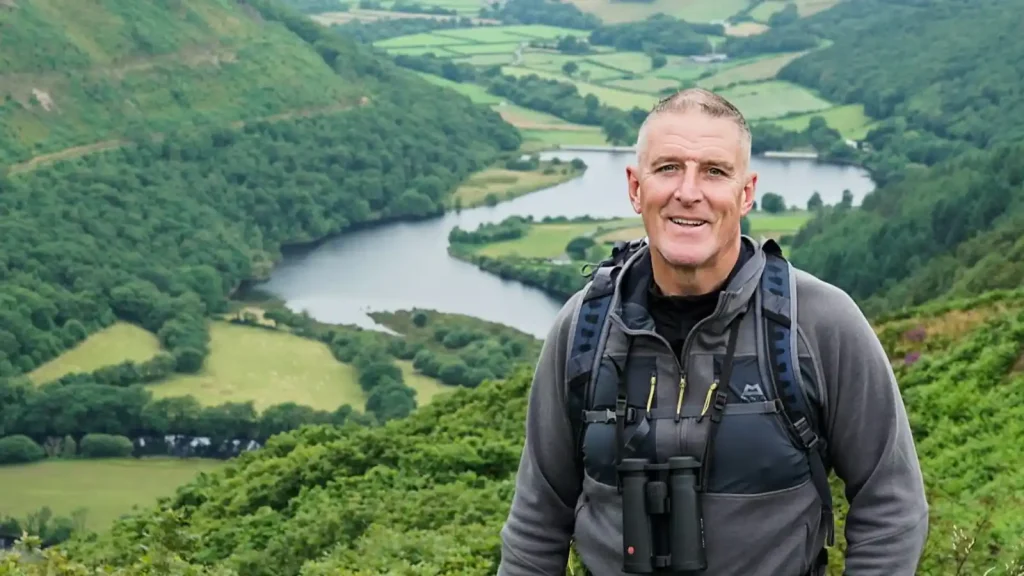
Iolo’s River Valleys episode 1: The morning mist clings to the verdant hillsides as Iolo Williams begins his journey through one of Wales’ most spectacular waterways. Standing at Aberystwyth harbour, where the River Rheidol meets the Irish Sea, Iolo breathes in the salty air and scans the horizon. The picturesque west coast of Ceredigion stretches before him, a perfect starting point for exploring the breathtaking Rheidol Valley.
“The coast here offers so much more than most visitors realize,” Iolo explains, watching a cormorant dive gracefully beneath the harbor waters. “These waters support an astonishing variety of birdlife.”
Indeed, Aberystwyth harbour proves surprisingly rich in avian diversity. Besides the sleek cormorants with their distinctive outstretched wing-drying poses, sharp-eyed visitors might spot the electric blue flash of kingfishers darting along the water’s edge. These striking birds, with their unmistakable plumage and lightning-fast fishing technique, represent just one of the many natural treasures the Rheidol Valley holds.
As Iolo leaves the coastal town behind, the landscape transforms. The valley narrows, its steep sides cloaked in ancient woodland. The river, sometimes placid, sometimes tumbling over rocky cascades, carves its determined path through this timeless terrain. This marriage of water and woodland creates perfect conditions for some of Wales’ most charismatic wildlife.
In the quaint village of Capel Bangor, nestled in the heart of the valley, Iolo encounters a sight that would thrill any wildlife enthusiast. A local resident has become an unwitting host to one of Britain’s most magnificent birds of prey. At the rear of their modest property, a pair of red kites has established a nest.
“This is truly extraordinary,” Iolo whispers, maintaining a respectful distance as the birds soar above. “Just decades ago, these magnificent raptors were on the brink of extinction in Wales. Now they’re comfortable enough to nest in someone’s garden!”
The red kites, with their distinctive forked tails and five-foot wingspans, perform an aerial ballet that leaves Iolo spellbound. Their russet plumage catches the sunlight as they wheel and turn, their piercing calls echoing across the valley. Once persecuted to near-extinction, these birds now symbolize one of Britain’s most remarkable conservation success stories.
The journey continues upstream, and the valley grows wilder. Near the village of Devil’s Bridge, famous for its three stacked bridges spanning a dramatic gorge, Iolo embarks on a different kind of wildlife quest. As dusk approaches, he waits patiently in a woodland clearing. His target? One of Britain’s most elusive mammals—the pine marten.
“Pine martens have made an incredible comeback in Wales,” Iolo explains in hushed tones. “These shy, intelligent creatures were once common throughout Britain but were persecuted for centuries. Now they’re finding sanctuary in valleys like the Rheidol.”
As darkness falls, Iolo’s patience is rewarded. A sleek, chestnut-brown form emerges from the undergrowth. With its cream-colored throat patch and bushy tail, the pine marten moves with fluid grace through the trees. For a few precious moments, it pauses to investigate a feeding platform before melting back into the night.
But the Rheidol Valley tells human stories too. The next day finds Iolo exploring the remnants of an 18th and 19th-century zinc mine, tucked away in a remote corner of the valley. Nature has begun to reclaim these industrial relics, with ferns and mosses softening the harsh lines of stone buildings and rusty machinery.
“It’s easy to forget how industrialized parts of rural Wales once were,” Iolo observes, running his hand along a weathered stone wall. “The Rheidol Valley’s tranquility today masks a busy past of mining and mineral extraction.”
The abandoned mine offers a poignant reminder of how landscapes evolve. What once buzzed with human industry now provides habitat for bats, which roost in the old tunnels, and rare plant species that thrive in the mineral-rich soils around the workings.
Iolo’s River Valleys episode 1
As afternoon sunshine filters through the canopy, Iolo follows the river upstream to a series of spectacular waterfalls. The Rheidol thunders over rock faces, creating rainbows in the spray. Dippers—remarkable birds that can walk underwater against the current—bob on mid-stream boulders before plunging beneath the surface in search of aquatic insects.
“The Rheidol Valley epitomizes what makes Welsh river valleys so special,” Iolo reflects. “Within just a few miles, you can experience coastal habitats, ancient woodland, industrial heritage, and some of Britain’s most charismatic wildlife.”
The day ends with Iolo perched on a riverside boulder, watching the evening light transform the valley. Overhead, a buzzard circles lazily on thermal currents. Nearby, the soft plop of an otter entering the water goes almost unnoticed.
“This valley has seen so much change,” Iolo muses. “From the ice age that carved its basic shape to the industries that exploited its resources. Yet nature persists and adapts. The Rheidol Valley isn’t a static museum piece—it’s a living, breathing ecosystem constantly writing new chapters in its story.”
As twilight deepens, Iolo reluctantly prepares to leave. Tomorrow will bring new valleys to explore, new wildlife encounters to treasure. But the Rheidol, with its blend of natural beauty and human heritage, has set a high standard for the adventures that lie ahead.
The first stars appear overhead as Iolo takes one last look at the river. In this moment of tranquility, the Rheidol Valley reveals its true magic—a perfect harmony between wild nature and human history, flowing together through time just as surely as the river flows to the sea.
Journey’s End: Where Water Meets Wonder
As we draw our exploration of the Rheidol Valley to a close, the river continues its timeless journey toward the sea, carrying with it the whispered secrets of the landscape. Moreover, this remarkable Welsh waterway has revealed itself as more than a mere geographical feature—it stands as a living testament to nature’s resilience and beauty.
The valley, like a well-worn storybook, has shared its diverse chapters with us. From the bustling coastal harbor of Aberystwyth to the secluded woodland paths near Devil’s Bridge, each turn in the river has unveiled new wonders. Furthermore, the wildlife that calls this valley home—from darting kingfishers to majestic red kites—reminds us that wilderness can thrive alongside human presence when given proper respect and protection.
What makes the Rheidol truly special, however, is how it weaves together natural splendor and human heritage. The abandoned zinc mines, now softened by ferns and moss, serve as powerful reminders of our industrial past. Meanwhile, the resurgence of once-threatened species like pine martens offers hope for conservation efforts throughout Wales and beyond.
In many ways, the Rheidol Valley mirrors our own life journeys. Sometimes we flow peacefully through gentle meadows; other times we tumble dramatically over unexpected obstacles. Nevertheless, we continue forward, carving our path through the landscape of existence.
As visitors to this enchanted valley, we depart enriched by its beauty yet humbled by its persistence through time. The river was here long before human eyes gazed upon it, and it will continue flowing long after our footprints fade from its banks. Consequently, we become merely temporary caretakers of this precious ecosystem.
Perhaps the greatest lesson the Rheidol offers is about balance—between preservation and access, between remembering history and embracing the present. Therefore, as we leave these verdant slopes and rushing waters behind, we carry with us not just memories but responsibility.
The story of the Rheidol Valley doesn’t end with our departure. Instead, it continues to unfold with each rainfall, each season, each new generation of wildlife making their home along its banks. And like all great natural wonders, it waits patiently to inspire future explorers who will discover, just as we did, that some places touch not just our senses but our souls.
FAQ Iolo’s River Valleys episode 1
Q: What exactly is a river valley and how is it formed?
A: A river valley is a depression or lowland created by the erosive action of a river over time. These natural formations develop as rivers carve through landscape, gradually wearing away soil and rock. Over thousands or even millions of years, the persistent flow of water shapes the surrounding terrain into distinctive V-shaped valleys in mountainous regions or broader U-shaped valleys in flatter areas. Furthermore, factors like the river’s volume, speed, and the underlying geology significantly influence the valley’s ultimate shape and character.
Q: Why are river valleys often described as biodiversity hotspots?
A: River valleys serve as biodiversity hotspots because they create unique microhabitats with varying conditions that support diverse plant and animal communities. The combination of flowing water, rich alluvial soils, and varied elevations creates multiple ecological niches within a relatively small area. As a result, these environments often harbor specialized species adapted to specific conditions found nowhere else. Additionally, river valleys function as natural wildlife corridors, allowing species to migrate and disperse while providing essential resources like water, shelter, and food throughout the seasons.
Q: How have river valleys influenced human settlement patterns throughout history?
A: River valleys have profoundly shaped human settlement patterns by offering essential resources for survival and prosperity. Since ancient times, civilizations like Mesopotamia, Egypt, and the Indus Valley flourished along rivers due to reliable water access, fertile farmland, and natural transportation routes. Moreover, these geographical features provided natural defenses against enemies while facilitating trade and cultural exchange. Consequently, many of today’s major cities originated as river settlements, with the valleys’ resources continuing to support dense populations and diverse economic activities.
Q: What types of wildlife typically thrive in Welsh river valleys?
A: Welsh river valleys support remarkably diverse wildlife adapted to these dynamic ecosystems. Otters and water voles inhabit riverbanks, while kingfishers and dippers hunt along the water’s edge. In recent years, once-threatened species like red kites and pine martens have made significant comebacks in these protected habitats. The rivers themselves teem with fish such as brown trout and Atlantic salmon, which migrate upstream to spawn. Furthermore, the surrounding woodlands shelter badgers, foxes, and numerous bird species, creating interconnected communities that depend on the valley’s varied resources.
Q: How do seasonal changes affect river valley ecosystems?
A: Seasonal changes transform river valley ecosystems through dramatic shifts in water flow, temperature, and resource availability. Spring brings snowmelt and increased rainfall, raising water levels and triggering plant growth and animal breeding cycles. Summer sees stabilized flows and flourishing vegetation, while autumn introduces falling leaves that enrich the ecosystem with organic matter. During winter, reduced flows and colder temperatures force adaptations in resident species. These rhythmic changes, much like the movements of a symphony, maintain the ecological balance and drive natural processes that keep river valleys healthy and resilient.
Q: What environmental threats do river valleys face in the modern era?
A: River valleys face numerous environmental challenges including pollution from agricultural runoff, industrial discharge, and urban development. Dams and water diversions disrupt natural flow patterns, often preventing fish migration and altering downstream habitats. Additionally, invasive species outcompete native flora and fauna, while climate change intensifies flooding and drought cycles. Deforestation of surrounding hillsides accelerates erosion, consequently leading to sedimentation that smothers aquatic life. Despite these threats, conservation efforts focused on watershed management and habitat restoration offer hope for the future of these vital ecosystems.
Q: How has the industrial heritage of Wales affected its river valleys?
A: Wales’ industrial heritage has left an indelible mark on its river valleys, transforming them from pristine wilderness into working landscapes during the Industrial Revolution. Mining operations for coal, slate, and metals often contaminated waterways with heavy metals and acid drainage. However, many former industrial sites have undergone remarkable recoveries since operations ceased. Nature has reclaimed abandoned mines and factories, creating unique habitats where wildlife now flourishes. Furthermore, these industrial remains serve as important historical monuments, telling the story of Wales’ pivotal role in global industrialization while reminding visitors of the environmental lessons learned.
Q: What recreational opportunities do river valleys offer to visitors?
A: River valleys provide abundant recreational opportunities that connect visitors with nature’s splendor. Hiking trails along valley contours offer breathtaking vistas, while the rivers themselves invite fishing, canoeing, and wild swimming adventures. Bird watchers and wildlife photographers find endless subjects among the diverse species that inhabit these ecosystems. Moreover, many valleys feature historical sites like ancient bridges, mills, and mining remains that tell stories of human ingenuity. These natural playgrounds, therefore, offer something for everyone—from peaceful contemplation to adrenaline-pumping activities—all while fostering appreciation for environmental conservation.
Q: How do river valleys contribute to local water management and flood control?
A: River valleys play crucial roles in water management by naturally regulating flow and mitigating flood risks. Healthy floodplains absorb excess water during heavy rainfall, then gradually release it back into the river system. Vegetation along valley slopes slows runoff, consequently reducing erosion and filtering pollutants. Furthermore, the meandering nature of rivers in valleys dissipates energy, thereby decreasing downstream flooding potential. When these natural systems remain intact or are restored after disturbance, they provide cost-effective flood protection that far exceeds human-engineered solutions, while simultaneously supporting biodiversity and enhancing water quality.
Q: What conservation measures protect Welsh river valleys today?
A: Welsh river valleys benefit from multi-faceted conservation approaches that address both ecological health and cultural heritage. Many valleys carry protective designations such as Sites of Special Scientific Interest or Special Areas of Conservation. Local river trusts implement restoration projects including riverbank stabilization, native tree planting, and removal of barriers to fish migration. Meanwhile, farmers increasingly adopt water-friendly practices that reduce pollution and erosion. Additionally, community engagement programs foster public stewardship through volunteer monitoring and cleanup events. These combined efforts ensure that Welsh river valleys, like threads woven through the national landscape, remain vibrant and healthy for future generations.