Landward episode 11 2026 delivers one of the series’ most urgent reports yet, as Dougie returns to Montrose beach to measure coastal erosion that has accelerated tenfold in barely two decades. Markers laid in the dunes tell a stark story: sixteen metres of shoreline have vanished since the programme last filmed here in 2018, and the town’s natural flood barrier is shrinking fast.
The episode balances that warning with stories of remarkable resilience. Near Edinburgh, Rosie meets brothers Charlie and Angus Buchanan-Smith, who ignored their father’s plea to stay out of farming and transformed a failed dairy at Balerno into a Michelin Green Star food destination. In Aberdeenshire, Leanna discovers how the town of Huntly is solving a housing crisis for swifts, while Shahbaz travels to St Andrews to learn how a Georgian artist’s coastal illustrations have become a scientific goldmine.
And as the annual clip begins across Scotland, award-winning shearer Cammy puts apprentice Anne through a masterclass in one of farming’s most physically demanding jobs. From disappearing dunes to swift bricks and shearing blows, Landward episode 11 2026 captures a country adapting to change on every front.
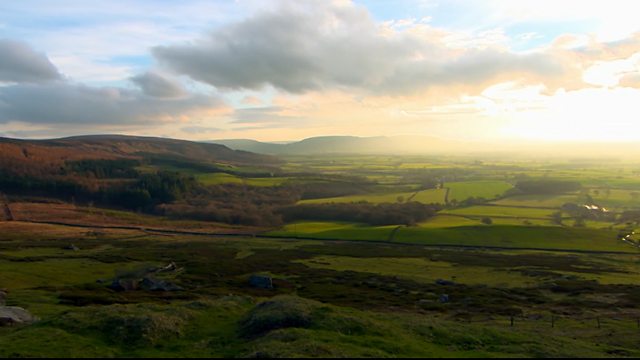
The dunes at Montrose stretch three miles between the North and South Esk rivers, and they are disappearing fast. Dougie first investigated the problem in 2018 with Dr Jim Hansom of Glasgow University, who laid out markers showing how far the shoreline had already retreated. Coastal erosion is a natural process, but climate change is driving it at a pace that worries local communities.
Eight years on, Hansom returns with his markers, and the numbers are dramatic. The vegetation edge filmed in 2018 now sits sixteen metres behind the current dune line. This year’s marker goes in sixteen metres closer to the town. Ground that was solid dune on the last visit is now open beach.
The acceleration is what alarms scientists most. In the early years of the century, erosion here ran at around 0.2 of a metre per year. Into the 2020s, the average rate has surged to between two and two and a half metres annually. Rising sea levels and the growing impact of local storms are stripping sediment from the system, and the dunes that shield Montrose from flooding are paying the price.
Landward episode 11 2026
Storm Babet Took Seven Metres of Dune in Just Two Days
If the average figures sound abstract, one event makes them brutally concrete. During Storm Babet in October 2023, Montrose lost seven metres of dune in just two days. That single storm wiped out what would once have taken decades of natural erosion to achieve.
Montrose’s golf course sits directly in the front line. Dougie walked the second fairway with John Adams, then club chair, in 2018, when the edge was already described as precarious. Today the course is measurably smaller, with sixty metres gone since that visit. Projections mapped out on the ground place the erosion line for 2030, 2040 and 2050, and the 2050 figure shows another fifty-four metres of dune disappearing from the current edge.
The deeper fear goes beyond lost fairways. If the sea punches through the lower-lying sections of the dune system, it could flood the town beyond. Adams puts it bluntly: it is a question of when, not if. Strong easterlies combined with big high tides could leave the golf club, and Montrose itself, with its feet wet. Local anxiety is visible too, with the Angus Climate Hub organising a demonstration to highlight the town’s plight and push for action.
Could Harbour Dredging Hold the Answer to Saving Montrose Beach?
Hundreds of thousands of pounds have already been spent trying to shore up this coastline, yet the dunes keep retreating. Hansom believes a different approach could help hold back the tide, and it starts in the town’s harbour. Montrose Port Authority dredges the channel to keep the port open to large ships, and the volumes involved are enormous.
Over the forty years for which records exist, roughly 2.4 million cubic metres of sediment have been removed from the Montrose system. Hansom argues that extracting so much material from the channel has a knock-on effect on the beach, with sand from the shoreline shifting to replace what dredgers take away. He stresses that he is not against dredging, which remains essential to the port. Instead, he wants the dredge spoil used more sustainably.
His proposal is simple: put the dredged sediment back on the beach. A bigger, fatter beach absorbs wave energy far more effectively and slows coastal erosion. The Port Authority says its current dredging strategy was developed with Angus Council and various Scottish Government bodies, and confirms it is in talks with the council about pumping sediment onto the beach in 2027 to raise its level and protect the dunes. For a town watching its natural defences vanish, that timeline matters enormously.
The Balerno Brothers Who Defied Their Father and Rescued the Family Farm
Rosie’s report near Edinburgh begins with a bombshell. Charlie and Angus Buchanan-Smith were meant to be the fourth generation of dairy farmers at Balerno, where their family has farmed for generations. But in 2002, the price of milk crashed, and like many family dairy farms, the business quickly became unviable. Their father stopped dairying and rented out the fields.
Growing up, the brothers heard one message repeatedly: stay out of farming and find a career with a better lifestyle. They fully intended to follow that advice. Then, in 2016, their father told them he had no choice but to sell the farm. That conversation changed everything. The brothers put their heads together and decided to act before the land was gone for good.
Rather than walking away, they took over. They began renting the fields from their father and built something entirely new: growing fruit and vegetables, raising native breed livestock organically, and serving it all in their own restaurant on the farm. The old milking byre, where the last cow was probably milked in the 1950s, still carries its name, but the business it anchors has been utterly transformed. Dairy is out. High-end cuisine is in.
How Regenerative Farming Earned a Michelin Green Star Near Edinburgh
The brothers’ farm-to-table model is built on storytelling as much as soil. Their restaurant servers explain the story behind each day’s menu, describing how the food was produced and inviting diners to ask questions about the farm. Charlie, who used to be the main chef, still spends time in the kitchen, while Angus works the fields, moving livestock onto fresh pasture every single day.
That daily movement sits at the heart of their regenerative approach. By shifting animals regularly, they mimic the way livestock graze in the wild, giving the grass left behind long rest periods. The focus throughout is healthy soils. Looking back, Angus describes the old dairy as a broken system, one with high inputs and conventional methods that simply stopped working. The new model deliberately runs on low inputs, reducing the financial risk and burden that sank the dairy.
The results speak for themselves. The brothers have earned a Michelin Green Star for sustainability, a rare distinction that validates both the ethics and the economics of their approach. Asked whether they regret ignoring their father’s advice, Angus jokes that they should have listened. Then the truth comes out: hard work aside, they believe they have the dream jobs, a passionate team around them, and real pride in keeping the farm in family hands into a fourth generation.
Huntly Tackles a Housing Crisis for Scotland’s Disappearing Swifts
Leanna’s story in Aberdeenshire centres on a bird that barely touches the ground. Swifts eat, drink and even sleep on the wing, landing only during the breeding season to nest and lay eggs. They migrate from Africa, arriving in early summer and completing a 14,000-mile round trip once their chicks fledge in September. Their distinctive screaming call was once a defining sound of summer.
That sound is fading. Swift numbers have dropped by almost two-thirds over the last thirty years. Climate change and pesticide use have hit the insects they feed on, and when the birds do land, they increasingly find nowhere to stay. Swifts favour nooks and crannies in buildings, slipping into gaps where pointing has fallen out, under gutters, or beneath loose slates. Modern construction methods seal buildings completely, leaving no room for them.
Cally Smith, described as a kind of estate agent for the birds, set up a conservation group in Huntly in 2017 to find the swifts new accommodation. Her work shows what one determined community can achieve. A local development completed in 2024 includes six swift bricks, hollow units with a nesting chamber behind and a narrow entrance the birds can slip through. The bricks are sturdy, discreet, and built into the wall itself.
Swift Bricks, School Webcams and a Live-Streamed Nest in the Town Square
Scotland has now turned Huntly’s example into national policy. In January this year, it became the first country in the UK to insist on swift bricks in new builds, a move that puts the Scottish Government ahead of the curve on urban wildlife. Bricks alone will not solve the swift housing crisis, however, so Cally’s group has developed other options across the town.
At the secondary school, Karin de Rijck shows Leanna external nest boxes from one of the group’s earliest projects. Four boxes went up in 2018, followed by another four in 2019. Two contain webcams, and anyone can download an app to watch the comings and goings, meaning pupils can follow the nests even during the holidays. For swifts seeking more exclusive accommodation, there are penthouses in the eaves of a recently renovated community space in the town square, where the nests are live-streamed into the cafe below. One camera reveals a bird sitting with a single egg.
Swifts also make remarkably good tenants. Adult birds eat the faeces inside the box, extracting calcium and nutrients while keeping the nesting site spotless. Cally’s devotion to the species is infectious. She calls them incredible birds, beautiful in shape and call, and a true sign of summer. With her group watching over Huntly, the swifts look set to keep their home in the town for years to come.
William Daniell’s 200-Year-Old Coastal Art Becomes a Tool for Modern Science
Shahbaz’s report in St Andrews connects directly back to the erosion story at Montrose. Two hundred years before satellite imagery, one artist captured Scotland’s coastline with astonishing accuracy. William Daniell, a painter and printmaker, set out in 1813 on a journey around the nation, documenting the entire coastline. His work was published in eight volumes as A Voyage Round Britain, the pricey coffee table books of their day.
Professor Tom Dawson, a coastal archaeologist at St Andrews University, demonstrates the secret behind that accuracy: the camera lucida. The device uses a lens to reflect the scene in front of the artist down onto paper, allowing it to be traced. Daniell probably began learning the technique in his teens, working with a small brass instrument far trickier than modern versions. He sketched through gales and storms around the entire British coast, then refined those tracings into finished illustrations.
Shahbaz tries the modern version himself, with wobbly results. Dawson’s verdict is diplomatic: he probably would not buy the sketch at auction, but it makes a very good first attempt. Dawson has spent years collecting Daniell’s work, amassing an impressive set of the 308 prints. The detail is extraordinary, recording clothing, ships, the herring industry just starting up at Wick, the seaweed trade on every beach, and daily life from working folk to lairds.
For Dawson, the prints are far more than art. He works on archaeological sites being destroyed by coastal erosion, and some of the places Daniell painted have already vanished. His pictures reveal exactly how the coast has changed. A recent find of photographs taken from the same viewpoints in 1980 has added what Dawson calls a goldmine, giving images from 200 years ago and nearly fifty years ago. His team is now mapping every spot Daniell visited, hoping the public will photograph the same views today and complete the record.
Cammy’s Shearing Masterclass Proves Footwork Beats Muscle
The annual clip is under way across Scotland, and Landward episode 11 2026 closes with a lesson from a master. Cammy, the programme’s award-winning sheep shearer, has shorn thousands of sheep every summer for thirteen years. As he begins his own clip of 1,400 yows, he takes on an apprentice: Anne, whose previous experience amounts to a short stint with crofters on Harris.
The demonstration breaks the craft down step by step. Tip the sheep onto its rear, start down the belly, and watch carefully to avoid catching skin or the teats. Turn the animal into an L shape with its legs pointing towards the trailer, work the undermine, take a blow up over the neck, then finish with the head tucked between the shearer’s legs. It looks effortless in expert hands. Anne, watching, admits she is sweating just observing.
Her own attempt proves the point. The shearing itself goes respectably, earning genuine praise from Cammy, who calls it a cracking job and notes that most beginners cannot get their hand down onto the skin cleanly. But Anne identifies the real challenge immediately: foot position. Cammy confirms it. Everyone assumes the buzzing handpiece is the hard part, yet ninety per cent of shearing is footwork, keeping the sheep controlled at all times. Lose control of the animal and the wool simply will not come off.
The welfare message lands just as firmly. Shearing happens first and foremost for the sheep’s sake, removing fleece bred for harvest to prevent flystrike, heat stroke, and animals becoming stuck on their backs. Cammy admits his glory days of 400 sheep a day are behind him; 300 now would earn him a week off. His hiring verdict on Anne is affectionate but final: stick to the news.
What Landward Episode 11 2026 Reveals About a Country in Transition
Taken together, the stories in Landward episode 11 2026 form a portrait of Scotland adapting under pressure. The Montrose report shows climate change arriving not as a distant forecast but as a measurable retreat, sixteen metres of dune gone in eight years and a town weighing how to defend itself. The proposed sediment pumping scheme for 2027 offers genuine hope, but the clock is visibly running.
The Buchanan-Smith brothers prove that collapse can become reinvention. A dairy that broke under crashing milk prices now feeds diners from regenerated soil, with a Michelin Green Star to show that sustainability and profitability can share a table. Huntly demonstrates the same spirit at community scale, turning swift conservation into national legislation through patient local effort.
Even Daniell’s 200-year-old prints carry the episode’s central thread: Scotland’s coastline and countryside have always changed, but the pace has shifted, and the response must shift with it. From dredge spoil to swift bricks, from rotational grazing to a perfectly placed shearing blow, Landward episode 11 2026 finds people choosing practical action over resignation. The next instalment promises Fife strawberries, a recovering wool market and sixteen million trees, but this episode stands as one of the strongest of the series so far.
FAQ Landward episode 11 2026
Q: How fast is coastal erosion happening at Montrose beach?
A: Erosion at Montrose has accelerated dramatically, rising from around 0.2 metres per year in the early 2000s to an average of 2 to 2.5 metres per year in the 2020s. Markers placed by Dr Jim Hansom of Glasgow University show the dunes have retreated sixteen metres since 2018 alone.
Q: What did Storm Babet do to the Montrose dunes?
A: Storm Babet stripped seven metres of dune from Montrose beach in just two days during October 2023. The loss matters because the dunes act as the town’s natural flood barrier, and experts fear the sea could eventually punch through lower-lying sections and flood Montrose itself.
Q: Is Montrose golf course at risk from coastal erosion?
A: Yes. Sixty metres of the course have already disappeared since 2018, and projections show another fifty-four metres of dune going by 2050. Former club chair John Adams describes flooding as a question of when, not if, with strong easterlies and big high tides posing the greatest threat.
Q: Can harbour dredging help save Montrose beach?
A: Potentially, yes. Around 2.4 million cubic metres of sediment have been dredged from the Montrose system over forty years to keep the port open. Dr Jim Hansom wants that dredge spoil pumped back onto the beach, because a bigger, fatter beach absorbs wave energy and slows erosion. The Port Authority is in talks with Angus Council about doing exactly that in 2027.
Q: How did the Buchanan-Smith brothers save their family farm at Balerno?
A: When their father announced in 2016 that he had to sell the farm, Charlie and Angus Buchanan-Smith took over instead. They began renting the fields, growing fruit and vegetables, and raising native breed livestock organically, all served in their own farm restaurant. The switch from failed dairy to high-end cuisine kept the farm in family hands for a fourth generation.
Q: What makes regenerative farming financially viable compared with dairy?
A: Low inputs are the key difference. The brothers’ old dairy was conventional and carried very high input costs, which made it unviable when milk prices crashed in 2002. Their regenerative system moves livestock daily to mimic wild grazing, gives grass long rest periods, builds healthy soils, and deliberately reduces financial risk. The approach earned them a Michelin Green Star for sustainability.
Q: Why are swift numbers declining in Scotland?
A: Swift numbers have dropped by almost two-thirds over the last thirty years. Climate change and pesticide use have reduced the insects they feed on, while modern sealed buildings and renovations have removed the nooks and crannies the birds rely on for nesting after their 14,000-mile round trip from Africa.
Q: What are swift bricks and does Scotland require them in new builds?
A: Swift bricks are hollow bricks built into walls, containing a nesting chamber and a narrow entrance just big enough for a swift. In January 2026, Scotland became the first country in the UK to insist on swift bricks in new builds. In Huntly, Cally Smith’s conservation group has also installed school nest boxes with webcams and live-streamed nests in the town square.
Q: How are William Daniell’s 200-year-old paintings helping scientists today?
A: Daniell documented the entire British coastline from 1813 using a camera lucida, producing 308 highly accurate prints published as A Voyage Round Britain. Coastal archaeologist Professor Tom Dawson uses them to track erosion at sites that have since vanished. Combined with matching photographs from 1980, his team is mapping every viewpoint so the public can re-photograph the same scenes today.
Q: What is the hardest part of sheep shearing according to experts?
A: Footwork, not the handpiece. Master shearer Cammy says ninety per cent of shearing is foot and leg positioning to keep the sheep controlled, because without control the wool simply will not come off. Shearing is done primarily for welfare, preventing flystrike, heat stroke, and sheep becoming stuck on their backs. In his prime, Cammy managed around 400 sheep a day.