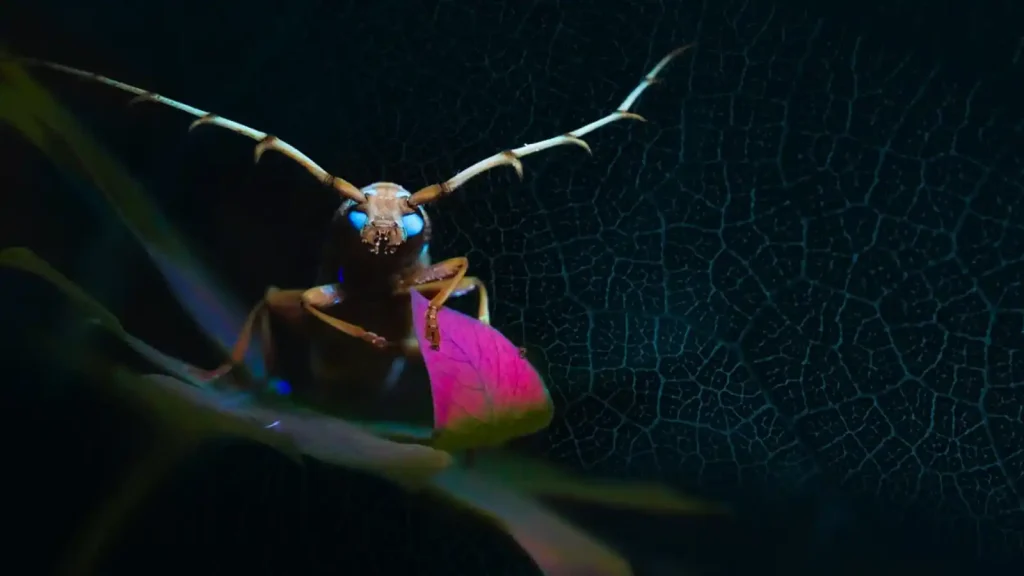
Mysterious Origins of Insects: Insects play an indispensable role in maintaining the balance of life on Earth. Despite their critical importance, nearly 40 percent of known insect species are teetering on the brink of extinction. This film delves into the captivating world of these creatures, aiming to shed light on their enigmatic evolution and the threats they face.
Embarking on a journey that spans the lush rainforests of French Guiana to the frigid expanse of the Arctic Ocean, the documentary follows scientists employing a blend of traditional methods and innovative technologies. These experts study both contemporary insects and the fossil record to trace the lineage back to a singular, common insect ancestor. Through this exploration, the film uncovers the complex history and adaptation strategies that have allowed insects to thrive in diverse environments across the globe.
The story begins in the dense, vibrant rainforests of French Guiana, a region teeming with insect diversity. Here, researchers delve into the rich tapestry of insect life, cataloging species and studying their behaviors. The rainforest, with its myriad of niches, serves as a living laboratory where scientists can observe the interactions between insects and their environment in real-time. This biodiversity hotspot offers a glimpse into the past, revealing clues about how ancient insects might have lived and evolved.
From the tropical heat of the rainforests, the journey shifts to the starkly contrasting environment of the Arctic Ocean. In this extreme climate, insects have developed remarkable adaptations to survive freezing temperatures and limited resources. Scientists here use advanced techniques, such as DNA analysis and remote sensing, to study the genetic makeup and ecological roles of Arctic insects. These studies are crucial for understanding the broader evolutionary patterns that have shaped insect diversity over millions of years.
Throughout the film, viewers are introduced to a variety of insects, from the resilient beetles that have outlasted dinosaurs to the delicate butterflies whose migratory patterns cover thousands of miles. The documentary highlights the intricate relationships insects have with their ecosystems, acting as pollinators, decomposers, and a food source for other animals. These roles underscore the ecological importance of insects and the potential consequences of their decline.
Mysterious Origins of Insects
The film also addresses the pressing issue of insect decline, emphasizing the interconnectedness of all life forms. Factors such as habitat destruction, climate change, pesticide use, and pollution are identified as major threats to insect populations. By presenting scientific data and expert testimonies, the documentary paints a sobering picture of the potential collapse of ecosystems if current trends continue. However, it also offers hope by showcasing conservation efforts and innovative solutions aimed at protecting these vital creatures.
One of the film’s key messages is the importance of interdisciplinary research in understanding the origins and future of insects. It brings together entomologists, paleontologists, ecologists, and geneticists, each contributing unique perspectives and expertise. This collaborative approach is crucial for piecing together the complex puzzle of insect evolution and devising strategies to mitigate their decline.
In addition to scientific insights, the film captures the beauty and wonder of the insect world through stunning cinematography. Close-up shots reveal the intricate details of insect anatomy and behavior, from the delicate wings of a dragonfly to the complex social structures of ant colonies. These visual elements enhance the narrative, making the science accessible and engaging to a broad audience.
The documentary concludes with a call to action, urging viewers to appreciate the vital role insects play in our world and to support efforts to protect them. It emphasizes that the fate of insects is intertwined with our own and that preserving their diversity is essential for maintaining the health of our planet.
“Mysterious Origins of Insects” is not just a film about the past; it is a timely reminder of the present challenges and future possibilities. By exploring the ancient origins and current threats facing insects, the documentary aims to inspire a deeper understanding and respect for these remarkable creatures. It invites viewers to join the quest for knowledge and conservation, highlighting that the survival of insects is integral to the survival of life on Earth.
Unveiling the Arthropod Enigma: A Deep Dive into the Mysterious Origins of Insects
Insects, those ubiquitous six-legged marvels, dominate the animal kingdom in terms of sheer numbers and diversity. From the iridescent wings of butterflies to the industrious colonies of ants, they have captivated and mystified humanity for millennia. Yet, the origins of these remarkable creatures remain shrouded in an intriguing fog. Embark on a scientific expedition as we delve into the fossil record, dissect the marvels of insect anatomy, and unravel the evolutionary pathways that led to this unparalleled success story.
Fossil Whispers: Clues from a Bygone Era
Our journey begins millions of years ago, in the Paleozoic Era, a time teeming with bizarre and wonderful creatures. The earliest evidence of insect ancestors comes in the form of fossilized impressions left on ancient rocks. These fragmentary remains belong to wingless, primitive creatures called “wingless insects” or “apterygotes.” These ancient arthropods, resembling modern silverfish or bristletails, scurried amongst the early flora, laying the foundation for the incredible diversification of insects to come.
The fossil record becomes richer during the Devonian Period, roughly 400 million years ago. This geological period witnessed the rise of the first winged insects, aptly named “paleodictyopterans.” Imagine dragonfly-like creatures with intricate wing venation, gliding through the lush primeval forests. The emergence of flight marked a pivotal moment in insect evolution, opening up new ecological niches and propelling their diversification into the myriad forms we see today.
Evolutionary Innovations: Traits that Shaped Success
Insects possess a unique body plan perfectly adapted for their minuscule size and active lifestyles. Their segmented exoskeleton, composed of chitin, provides remarkable strength and flexibility while remaining lightweight. This external skeleton, unlike our internal bones, doesn’t grow with the insect, necessitating a dramatic metamorphosis in many species. The molting process, where they shed their exoskeleton and emerge larger, is a testament to this ingenious evolutionary adaptation.
Another key innovation is the development of a three-part body structure – head, thorax, and abdomen – with specialized appendages on each segment. The head houses the compound eyes, some of the most sophisticated visual organs in the animal kingdom, allowing insects to navigate their complex environments. The thorax is dedicated to locomotion, boasting powerful legs adapted for walking, jumping, swimming, or even burrowing. Finally, the segmented abdomen contains the digestive, reproductive, and excretory organs. This modular design has proven remarkably successful, allowing for a staggering variety of forms and functions within the insect class.
Flight: A Masterstroke of Evolution
The evolution of insect flight remains one of the most captivating mysteries. Two main hypotheses dominate the scientific debate. The first suggests wings arose from flattened lobes on the thorax, gradually evolving for gliding and eventually powered flight. The second theory proposes wings developed from lateral outgrowths of the body segments. Recent genetic studies suggest a more complex scenario, where both mechanisms might have played a role.
Regardless of the exact origin, insect wings come in a mesmerizing array of shapes and sizes. Delicate butterfly wings, buzzing fly wings, and the powerful, transparent wings of dragonflies – each is a marvel of engineering, perfectly adapted for the insect’s specific needs. Flight revolutionized insect life, allowing them to access new food sources, escape predators, and colonize diverse habitats.
A Symphony of Adaptations: Specialization for Survival
Insects have conquered nearly every ecological niche imaginable, from the frozen tundra to scorching deserts, and from the depths of freshwater lakes to the dizzying heights of mountain peaks. This remarkable feat is a testament to their incredible adaptability. From the herbivorous caterpillars munching on leaves to the blood-sucking mosquitoes and the carnivorous praying mantises, insects have evolved an astonishing array of mouthparts and digestive systems to exploit a vast spectrum of food sources.
Chemical communication plays a vital role in insect societies. Pheromones, complex scent molecules, are used to attract mates, signal danger, and coordinate colony activities. Ants, for example, leave behind pheromone trails to guide their fellow foragers to food sources. Bees utilize a “waggle dance” to communicate the location and direction of nectar-rich flowers. This intricate language of scents and movements allows insects to function as highly coordinated social units.
The Entangled Dance: Insects and the Environment
The story of insects is inextricably linked to the story of life on Earth. As pollinators, they play a vital role in plant reproduction, ensuring the success of countless flowering plants. Decomposers, like dung beetles and termites, break down dead organic matter, returning vital nutrients to the soil and keeping ecosystems healthy. Predatory insects, such as ladybugs and dragonflies, keep populations of herbivorous insects in check, maintaining a delicate ecological balance.
However, human activities pose a significant threat to insect populations. Habitat loss due to deforestation and urbanization, combined with the overuse.
F.A.Q. – Mysterious Origins of Insects
Q: What is the documentary “Mysterious Origins of Insects” about?
A: “Mysterious Origins of Insects” explores the fascinating world of insects, delving into their evolutionary history, remarkable adaptations, and the threats they face today. It combines scientific investigation with stunning visuals to reveal the vital role insects play in our planet’s ecosystem.
Q: Where do scientists believe insects originated from?
A: Fossil evidence suggests the earliest insect ancestors were wingless creatures that scurried amongst the early flora millions of years ago during the Paleozoic Era. These primitive arthropods laid the foundation for the incredible diversification of insects seen today.
Q: What is one of the key innovations that contributed to insect success?
A: The evolution of flight is considered a pivotal moment in insect history. It opened up new ecological niches and allowed them to access new food sources, escape predators, and colonize diverse habitats. The exact origin of insect wings remains a topic of debate, with two main hypotheses suggesting they developed from either flattened lobes on the thorax or lateral outgrowths of the body segments.
Q: How do insects play a vital role in the environment?
A: Insects fulfill a variety of essential ecological functions. They act as pollinators, ensuring the reproduction of countless flowering plants. Decomposers like dung beetles and termites break down dead organic matter, returning nutrients to the soil. Predatory insects keep populations of herbivorous insects in check, maintaining a delicate ecological balance.
Q: What are some of the threats facing insect populations today?
A: The documentary highlights human activities such as habitat loss due to deforestation and urbanization, overuse of pesticides, and pollution as significant threats to insect populations. The decline of insect populations has cascading effects on ecosystems and could potentially lead to their collapse.