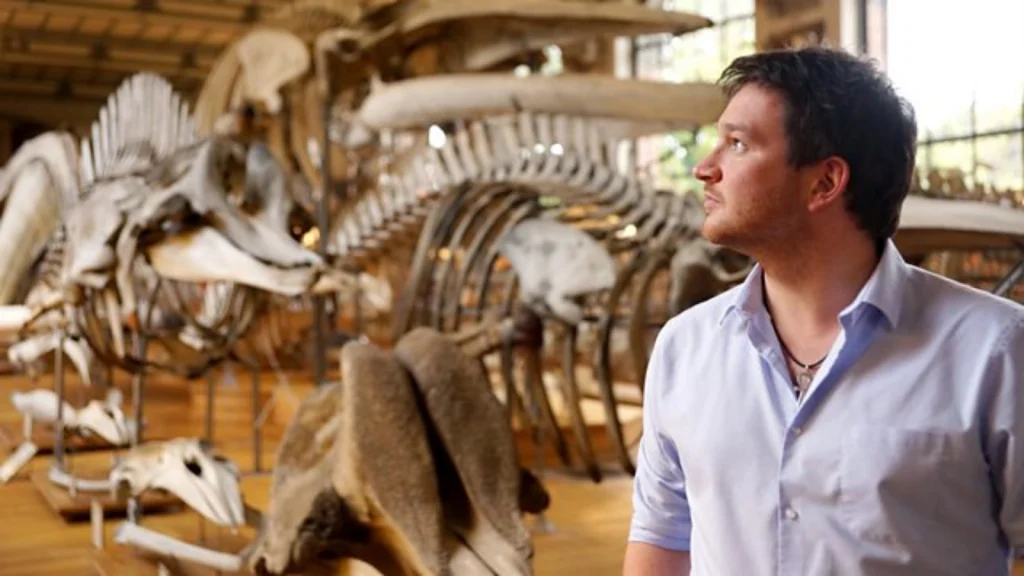
The documentary Secrets of Bones episode 1 reveals the fundamental role of the skeleton in the vast diversity of the animal kingdom. It explores how a single material, bone, provides the internal framework that allows for both the minuscule scale of a tiny frog and the colossal size of a blue whale. The internal skeleton, or endoskeleton, represents a shared blueprint that has been modified through evolution to conquer nearly every environment on Earth. Understanding this structure is key to comprehending how animals move, survive, and dominate their respective habitats.
The subject of skeletal anatomy remains profoundly relevant in fields from evolutionary biology to biomechanics. By studying the size, shape, and composition of bones, scientists can decipher the life stories of both extinct and living creatures. This knowledge helps us understand the physical limitations and capabilities of different species, including our own. Moreover, the principles of skeletal strength and adaptation inform advancements in materials science and medicine, particularly in areas like orthopedic surgery and the development of prosthetics.
This exploration delves into the remarkable properties of bone that enable such a vast range of animal sizes. The documentary Secrets of Bones episode 1 examines what makes this material uniquely suited to support creatures weighing many tons while remaining light enough for flight or agile movement. It breaks down the composite nature of bone, demonstrating how its constituent parts contribute to its overall strength and flexibility. Furthermore, it investigates the dynamic, living nature of bone and its ability to remodel itself in response to physical stress.
At its core, bone is a composite material, a concept central to its incredible capabilities. It consists of two primary components: an organic protein called collagen and an inorganic mineral, calcium phosphate. Collagen provides flexibility and resilience, preventing bones from being brittle. Conversely, calcium phosphate gives bone its hardness, rigidity, and compressive strength. It is the precise combination of these two elements that creates a material stronger and more durable than its individual parts, a principle that underpins the entire vertebrate story.
The journey into skeletal mechanics transitions from the microscopic composition of bone to its macroscopic function in real-world scenarios. We will see how these foundational properties translate into the raw power needed for a sprinter to launch from the blocks or for a rhino to gallop at high speed. The investigation will test the limits of bone strength, compare it to other materials, and reveal the clever architectural adaptations that have allowed some animals to become terrestrial giants, all as explored in Secrets of Bones episode 1.
Secrets of Bones episode 1
The Unique Composition and Strength of Bone
The remarkable success of vertebrates is largely due to the unique properties of their foundational material: bone. Evolutionary biologist Ben Garrod explains that bone is a composite, ingeniously blending two distinct substances to create a material that is both strong and flexible. The first ingredient is collagen, an organic protein that gives bone its durability and capacity to bend without breaking. The second is calcium phosphate, a mineral compound that provides rigidity and structural strength. Separately, these components are inadequate. A bone stripped of its collagen becomes brittle and shatters easily, while a bone stripped of its mineral content becomes soft and pliable, unable to support any weight.
To quantify this strength, experiments featured in Secrets of Bones episode 1 at the University of Bath provide a compelling demonstration. Professor Richie Gill tested the breaking point of a roe deer’s femur against a piece of unreinforced concrete of similar diameter. The concrete, representing a purely mineral substance, fractured under a force of 1.2 kilonewtons, equivalent to about 120 kilograms. The deer bone, however, withstood 4.5 kilonewtons of force—more than three times that of the concrete. This superior strength is attributed to the collagen, which allows the bone to flex and absorb energy before catastrophic failure. The test highlights that bone is not just hard; it is incredibly resilient.
Even more impressive is bone’s ability to withstand compressive forces, which mimic the loads they bear in nature. When the deer femur was tested under downward compression, it withstood an astonishing 17 kilonewtons of force, or approximately 1.7 tonnes, before exploding. This is a massive safety factor for an animal that weighs little more than a large dog. This over-engineering is crucial for survival, as animals often subject their skeletons to extreme forces when running, jumping, or changing direction at high speeds. For instance, a human sprinter can exert a force equivalent to over a tonne on each leg at the start of a race.
Wolff’s Law and a Skeletal Record of Life: Insights from Secrets of Bones episode 1
Bone is not a static, inert material; it is a living, dynamic tissue that constantly remodels itself throughout an animal’s life. This process involves the continuous removal of old bone and the formation of new bone, with the entire human skeleton being replaced over roughly a ten-year period. This ability to grow and change is fundamental to how animals adapt to their physical environment and activities. This principle is dramatically illustrated through the study of skeletons from the Tudor warship, the Mary Rose.
The wreck of the Mary Rose, which sank in 1545, yielded the skeletal remains of 179 individuals. Nick Owen, a sports scientist, examined these bones for clues about the lives of the crew. Historical records suggested that many were elite longbowmen who wielded powerful bows requiring up to 160 pounds of draw weight—three to four times that of a modern Olympic archer. These archers would have started training from a young age, subjecting their bodies to immense and repetitive physical stress. The key question was whether this lifelong activity left a permanent mark on their skeletons.
The investigation centered on a principle known as Wolff’s Law, named after 19th-century anatomist Julius Wolff. The law states that bone adapts to the loads under which it is placed. When subjected to repeated stress, bone will remodel itself over time to become denser and stronger to better resist that force. In the case of a longbowman, the left arm pushes the bow away while the right arm draws the string, creating massive compressive and tensile forces across the shoulders, back, and arms. Nick Owen’s team hypothesized that these forces would cause measurable changes in the bones of the archers’ arms.
The findings were remarkable. When comparing the arm bones from the same individual, they found significant asymmetry. In many of the skeletons believed to be archers, the bones of one arm were visibly larger and more robust than the other, with measured differences of up to 30%. This is far beyond the typical variation seen in the general population. This skeletal evidence provides a powerful confirmation of their physically demanding occupation, demonstrating that the bones themselves serve as a direct record of a life of intense, specialized training.
The Challenge of Size: Skeletal Adaptations in Land Giants
While the inherent strength of bone allows for large body sizes, terrestrial life presents a unique challenge: gravity. Unlike aquatic animals like the blue whale, which are supported by water’s buoyancy, land animals must have skeletons capable of supporting their entire body weight against a constant downward pull. The African elephant, the largest land animal, showcases a suite of skeletal adaptations specifically evolved to cope with its massive size. Its legs are positioned directly beneath its body, forming straight, pillar-like columns to efficiently transfer weight to the ground.
Further examination of the elephant skeleton reveals other critical adaptations for weight-bearing. The hip sockets, unlike those in most mammals which angle outwards, face almost straight down. This alignment further enhances the columnar support of the legs, though it restricts the animal’s mobility and prevents it from galloping. As detailed in Secrets of Bones episode 1, elephants also have unique feet. They effectively walk on their tiptoes, with a large, fibrous, fatty pad situated behind the toes. This pad acts as a giant shock absorber, cushioning the immense forces generated with each step.
However, there is a trade-off between size and speed. The elephant’s skeleton is a masterpiece of weight support, but it is not built for agility. For an animal to be both massive and fast, it requires a different skeletal blueprint. The rhinoceros provides a perfect example of this compromise. Weighing up to four tonnes, a rhino can still gallop at nearly 50 kilometers per hour—twice the speed of an elephant. This combination of weight and speed places tremendous stress on its skeleton, which has evolved to be extraordinarily robust.
The secret to the rhino’s strength lies in the design of its individual bones. A comparison between the femur of an elephant and that of a rhino is revealing. The elephant’s femur is long and relatively slender, optimized for static support. In contrast, the rhino’s femur is short, thick, and stocky, with prominent flanges and ridges for massive muscle attachments. Although smaller than the elephant’s femur, the rhino’s is three times stronger. In fact, calculations show that a rhino femur can withstand a compressive force of 109 tonnes, making it arguably the strongest single bone in the animal kingdom and a testament to bone’s ability to adapt for both size and power.
The Living Blueprint: What Bones Teach Us About Nature’s Engineering Mastery
The story of bone reveals one of evolution’s most elegant solutions to an engineering challenge that has puzzled humans for millennia: how to create a material that is simultaneously strong yet flexible, lightweight yet durable, and capable of adapting to ever-changing demands. Through the lens of Secrets of Bones episode 1, we’ve witnessed how this remarkable composite material has enabled life to flourish across an extraordinary range of scales and environments.
At its heart, bone’s genius lies in its dual nature. The marriage of organic collagen and inorganic calcium phosphate creates something far greater than the sum of its parts—a material that can withstand forces exceeding 17 kilonewtons while maintaining the flexibility to absorb impact without shattering. This isn’t just biological trivia; it’s a masterclass in materials science that continues to inspire innovations in everything from aerospace engineering to prosthetic design. When we see that a deer’s femur outperforms concrete by more than three times, we’re not just observing nature’s strength—we’re glimpsing the future of human engineering.
Perhaps even more fascinating is bone’s role as a biographical narrator. The skeletons of those Tudor longbowmen from the Mary Rose didn’t just support their bodies; they recorded the story of their lives, bone cell by bone cell. Wolff’s Law reminds us that our skeletons are not fixed structures but dynamic, responsive tissues that sculpt themselves according to the demands we place upon them. Every step a marathon runner takes, every weight a powerlifter hoists, every note a violinist plays—all leave their mark in the architecture of bone. In an age where we’re increasingly disconnected from our physical selves, this serves as a powerful reminder that our bodies are constantly adapting, learning, and growing stronger in response to challenge.
The contrast between elephants and rhinos illuminates another profound truth: there is no single “perfect” design in nature, only solutions optimized for specific challenges. The elephant’s pillar-like legs sacrifice speed for stability, while the rhino’s stocky femurs—three times stronger than an elephant’s despite being smaller—enable explosive power. These aren’t compromises; they’re masterpieces of biological engineering, each solving the puzzle of terrestrial life in their own remarkable way.
As we face an era of unprecedented technological advancement, the lessons embedded in bone become increasingly relevant. The principles that allow a blue whale to grow to massive proportions or enable a sprinter to generate over a tonne of force per leg are now informing the development of bio-inspired materials, robotic systems, and medical treatments. Understanding how bone achieves its remarkable properties doesn’t just satisfy scientific curiosity—it opens doors to solving some of humanity’s most pressing challenges, from creating sustainable building materials to developing better treatments for bone diseases.
The skeleton may be the framework that supports all vertebrate life, but its true power lies in showing us that the most effective solutions often emerge from the marriage of opposing forces: strength with flexibility, permanence with adaptability, individual optimization with universal principles. In bone, nature has written a blueprint for resilience that continues to teach us new lessons about what it means to be truly strong.
FAQ Secrets of Bones episode 1
Q: What makes bone such a remarkably strong yet flexible material?
A: Bone achieves its extraordinary properties through a composite structure combining organic collagen protein with inorganic calcium phosphate mineral. Additionally, collagen provides flexibility and resilience, preventing brittleness, while calcium phosphate delivers hardness and compressive strength. Furthermore, this precise combination creates a material stronger than either component alone, enabling vertebrates to thrive across diverse environments.
Q: How does bone strength compare to common construction materials like concrete?
A: Research from the University of Bath demonstrates that a roe deer femur withstands 4.5 kilonewtons of force, while unreinforced concrete of similar diameter fractures at just 1.2 kilonewtons. Consequently, bone outperforms concrete by more than three times due to collagen’s ability to flex and absorb energy before failure, showcasing nature’s superior engineering.
Q: What is Wolff’s Law and how does it influence bone development?
A: Wolff’s Law states that bone adapts to loads placed upon it by becoming denser and stronger through remodeling. Moreover, when subjected to repeated stress, bone tissue responds by restructuring itself to better resist those specific forces. Therefore, activities like archery or weightlifting literally reshape skeletal architecture, creating permanent records of physical demands throughout an individual’s lifetime.
Q: How did scientists analyze the Tudor-era skeletons from the Mary Rose shipwreck?
A: Sports scientist Nick Owen examined 179 skeletal remains from the 1545 wreck, specifically investigating longbowmen who used bows requiring 160 pounds of draw weight. Subsequently, researchers compared arm bones from the same individuals, discovering remarkable asymmetry with differences up to 30% between dominant and non-dominant arms, providing concrete evidence of their physically demanding archery profession.
Q: Why can’t elephants run as fast as rhinoceroses despite their impressive size?
A: Elephant skeletons prioritize weight support over speed, featuring pillar-like legs positioned directly beneath their bodies for maximum stability. Conversely, rhinos possess short, thick femurs with prominent ridges for massive muscle attachments, enabling galloping at 50 kilometers per hour. However, this trade-off means elephants sacrifice agility for their remarkable ability to support multi-ton body weights efficiently.
Q: How do bones serve as biographical records of an individual’s life experiences?
A: Bones continuously remodel throughout life, with the entire human skeleton replacing itself approximately every ten years through dynamic tissue renewal. Therefore, repetitive activities leave permanent marks through Wolff’s Law adaptations. Additionally, occupational stresses, injuries, diseases, and even musical instrument practice create distinctive patterns that scientists can interpret centuries later, making skeletons invaluable historical documents.
Q: What extraordinary forces can human bones withstand during athletic activities?
A: Human sprinters generate forces exceeding one tonne per leg when launching from starting blocks, demonstrating bone’s remarkable over-engineering for safety. Furthermore, the deer femur compression test revealed bones can withstand 17 kilonewtons (1.7 tonnes) before failure. Consequently, this massive safety factor proves essential for survival during high-impact activities like jumping, running, and rapid directional changes.
Q: How do different animals adapt their skeletal structures for specific environmental challenges?
A: Animal skeletons represent optimized solutions for distinct challenges rather than universal designs. Meanwhile, elephants feature downward-facing hip sockets and shock-absorbing foot pads for weight distribution, while rhinos develop exceptionally robust bones for combining size with speed. Additionally, these adaptations demonstrate evolution’s ability to modify the basic vertebrate blueprint for conquering diverse terrestrial environments successfully.
Q: What applications in engineering and medicine arise from studying bone structure?
A: Bone research directly informs aerospace engineering, prosthetic development, and bio-inspired materials creation by revealing optimal strength-to-weight ratios and adaptive properties. Moreover, understanding bone’s composite nature helps engineers design superior building materials and robotic systems. Furthermore, these insights advance orthopedic surgery techniques and treatments for bone diseases, translating natural engineering principles into practical human applications.
Q: How does bone tissue continuously remodel itself throughout an animal’s lifetime?
A: Bone remodeling involves continuous removal of old tissue and formation of new bone through specialized cells working in coordinated cycles. Subsequently, this dynamic process allows adaptation to changing physical demands, repair of microscopic damage, and maintenance of optimal strength. Therefore, bone remains a living, responsive material rather than static structure, constantly adjusting its architecture based on mechanical stress patterns.