The Great Pottery Throw Down 2026 episode 3 delivers one of the most technically demanding weeks in the competition’s history, pushing nine remaining potters to their absolute limits with a medieval drinking vessel and a blindfolded brick-making challenge that tests muscle memory over visual precision. Inside the familiar confines of the pottery, tension builds as Keith Brymer Jones and Rich Miller prepare to assess creations that must balance historical authenticity with contemporary craftsmanship. The stakes have never felt higher, with elimination looming over every imperfect handle and uneven surface.
This particular installment arrives at a pivotal moment in the series, where the initial nerves of early competition have given way to genuine technical assessment. The potters have settled into the rhythm of the pottery, yet they remain acutely aware that each challenge separates contenders from pretenders. Siobhan McSweeney welcomes viewers back to witness what promises to be an extraordinary test of skill, creativity, and composure under pressure.
The episode explores two distinct challenges that could not be more different in their demands. The main make requires potters to construct puzzle jugs, those enigmatic medieval vessels designed to drench unsuspecting drinkers who fail to discover their secret drinking method. Meanwhile, the spot test strips away the most fundamental tool any potter possesses, their sight, forcing competitors to shape bricks using only touch and instinct. Together, these challenges reveal which potters possess true ceramic intuition and which rely too heavily on visual feedback.
Keith Brymer Jones sets the scene with characteristic enthusiasm, explaining that puzzle jugs represent some of the earliest examples of interactive ceramics in Western history. These vessels emerged from medieval taverns where entertainment and drinking intertwined, creating objects that served both practical and playful purposes. The challenge demands not merely technical proficiency but an understanding of how historical potters approached their craft with ingenuity and humor.
Rich Miller brings his expertise in traditional techniques to bear on the assessment criteria, emphasizing that successful puzzle jugs must actually function as intended. A beautiful vessel that fails to puzzle drinkers or, worse, simply leaks everywhere, cannot be considered successful regardless of its aesthetic appeal. This fusion of form and function represents the essence of ceramics at its finest, where beauty and utility merge into singular objects of enduring value.
The competition intensifies as potters realize the complexity awaiting them. Slab building techniques will prove essential for certain components, while throwing skills determine the success of the main body. Some competitors approach the challenge with historical research informing their designs, while others trust their instincts to guide them through unfamiliar territory. The diversity of approaches promises drama regardless of outcome.
Throughout the pottery, conversations reveal the personal journeys that brought each competitor to this moment. Veterans of previous challenges carry confidence earned through survival, while others feel mounting pressure to prove their worth before elimination claims another victim. The camaraderie that develops among potters facing shared adversity provides emotional counterweight to the competitive tension, creating an atmosphere where rivalry and friendship coexist in delicate balance.
As wheels begin spinning and clay takes shape, the true test of The Great Pottery Throw Down 2026 episode 3 commences in earnest, promising revelations about craft, character, and the ancient art of deceiving thirsty tavern patrons.
The Great Pottery Throw Down 2026 episode 3
The Medieval Origins and Mechanics of Puzzle Jugs
Puzzle jugs emerged from medieval England as objects of tavern entertainment, designed to humiliate drinkers who approached them without understanding their hidden mechanisms. Keith Brymer Jones explains that these vessels typically feature a hollow rim connected to the interior through concealed tubes, with multiple spouts arranged around the neck. The unwary drinker who simply tips the jug finds liquid pouring through decorative perforations rather than into their waiting mouth. Success requires discovering and blocking the correct combination of spouts while drinking from a specific location.
The construction demands exceptional technical skill because every connection must remain watertight while appearing decorative. Potters must create hollow handles that serve as air passages, ensuring liquid flows properly when the correct drinking method is employed. Rich Miller emphasizes that medieval craftsmen achieved these results without modern tools or materials, making their accomplishments all the more impressive. Contemporary potters benefit from better understanding of ceramic engineering, yet the fundamental challenges remain identical.
Historical examples housed in institutions like the Gladstone Museum demonstrate the remarkable variety puzzle jugs achieved over centuries. Some feature elaborate figural decoration, others incorporate inscriptions challenging drinkers to solve their mysteries, and still others employ multiple simultaneous tricks to maximize confusion. The potters must decide which historical approach to reference while maintaining their individual artistic voices. This balance between tradition and personal expression defines much of what makes ceramics compelling as an art form.
The practical implications of puzzle jug construction create natural drama throughout the making process. Potters who rush risk creating vessels that leak from every joint, while those who work too cautiously may fail to complete their pieces in time. The hollow rim alone requires careful calculation, as walls that are too thick become heavy and awkward while walls that are too thin collapse during construction. Every decision cascades into subsequent choices, creating chains of consequence that determine ultimate success or failure.
The Great Pottery Throw Down 2026 Episode 3 Main Make Challenge
The main make challenge grants potters four hours to complete their puzzle jugs from initial conception through final assembly. Keith Brymer Jones circulates through the pottery, offering observations and gentle guidance while avoiding direct intervention that might compromise the competitive integrity. His emotional investment in each potter’s journey remains evident, particularly when promising work encounters unexpected difficulties or when struggling competitors discover solutions through persistence.
Several potters choose to throw their main bodies before addressing the complicated rim assembly, reasoning that the largest component should receive attention while energy levels remain high. Others begin with the technically demanding hollow sections, preferring to complete the most difficult elements before fatigue sets in. Neither approach proves definitively superior, as success depends more on execution quality than strategic sequencing. The variety of methods demonstrates how experienced ceramicists develop personal workflows suited to their individual strengths.
The slab building techniques required for certain puzzle jug components challenge potters accustomed to working primarily on the wheel. Flat clay sections must maintain consistent thickness while being shaped into tubes and chambers that will ultimately connect to thrown elements. Joining slabs to rounded forms demands careful scoring and slipping to ensure bonds that survive both drying and firing. Potters with stronger slab building backgrounds find themselves advantaged, while wheel-throwing specialists must adapt their skills to unfamiliar territory.
Halfway through the allotted time, the pottery buzzes with concentrated effort as potters enter the critical assembly phase. Handles attach to bodies, rims connect to necks, and hidden channels find their positions in an intricate dance of wet clay components. The pressure mounts visibly on faces throughout the room, with some competitors pulling ahead while others struggle to recover from early setbacks. Rich Miller observes the proceedings with analytical precision, noting both technical achievements and emerging problems that may prove fatal during firing.
Blindfolded Brick Making at the Gladstone Museum
The spot test transports competitors to the historic Gladstone Museum, where industrial ceramic heritage surrounds them with kilns, equipment, and artifacts from pottery’s manufacturing past. This setting provides appropriate context for the challenge ahead, connecting contemporary craft practice to the workers who shaped Britain’s ceramic industry over centuries. The museum’s preserved workshops evoke an era when brick making represented essential industrial output rather than artisanal pursuit.
Keith Brymer Jones announces the challenge with barely concealed delight, explaining that potters must create standard bricks while blindfolded. The task sounds deceptively simple until competitors realize they cannot see the clay they are shaping, the molds they are filling, or the surfaces they are smoothing. Every action that normally receives visual guidance must instead rely on tactile feedback and spatial memory. The blindfolds transform familiar materials into mysterious substances that reveal their properties only through touch.
Brick making itself demands specific techniques that industrial workers once performed thousands of times daily. Clay must be pressed firmly into wooden molds, excess material struck off cleanly with wire tools, and finished bricks released without damage. The regularity expected of proper bricks leaves no room for artistic interpretation or creative license. Either the brick matches specifications or it fails, a binary assessment far removed from the subjective judgments typical of artistic ceramics.
The potters struggle visibly as blindfolds remove the sensory input they most depend upon. Some discover unexpected competence in their hands, finding that muscle memory guides them more accurately than conscious visual processing. Others flounder without sight, their movements becoming hesitant and imprecise as familiar tasks suddenly feel foreign. The exercise reveals which competitors have truly internalized ceramic fundamentals and which still rely heavily on visual confirmation of their actions.
Technical Mastery and Creative Expression in The Great Pottery Throw Down 2026 Episode 3
The intersection of technical mastery and creative expression defines every successful puzzle jug, requiring potters to satisfy engineering constraints while developing distinctive aesthetic identities. Some competitors embrace historical precedents directly, creating vessels that might have graced medieval taverns without appearing anachronistic. Others push contemporary interpretations that honor the puzzle jug tradition while speaking in modern ceramic vocabularies. Both approaches carry validity, though judges must ultimately determine which executions best fulfill the challenge parameters.
Keith Brymer Jones consistently emphasizes the importance of pottery that functions as intended, noting that even the most beautiful vessel fails if its mechanical elements malfunction. This pragmatic perspective grounds the competition in craft fundamentals, preventing purely decorative approaches from overshadowing functional requirements. The best ceramics, he suggests, achieve beauty through the honest expression of purpose rather than surface decoration applied to disguise structural shortcomings.
Rich Miller provides complementary technical analysis, examining wall thicknesses, joint integrity, and surface preparations with expert scrutiny. His assessments help potters understand precisely where their work succeeds or falls short, transforming subjective impressions into concrete observations. The educational dimension of The Great Pottery Throw Down emerges through these detailed critiques, offering viewers insight into standards that distinguish professional ceramics from amateur attempts.
The creative choices potters make extend beyond mere decoration to encompass conceptual approaches to the puzzle jug format. Some design their hidden mechanisms with maximum complexity, creating puzzles that might require extended experimentation to solve. Others prioritize elegance of solution over difficulty, producing vessels that reward observant drinkers with relatively quick discoveries. These philosophical differences reflect broader debates within ceramics about the proper balance between challenge and accessibility, with no single answer satisfying all perspectives.
Judging Criteria and Potter Assessments in The Great Pottery Throw Down 2026 Episode 3
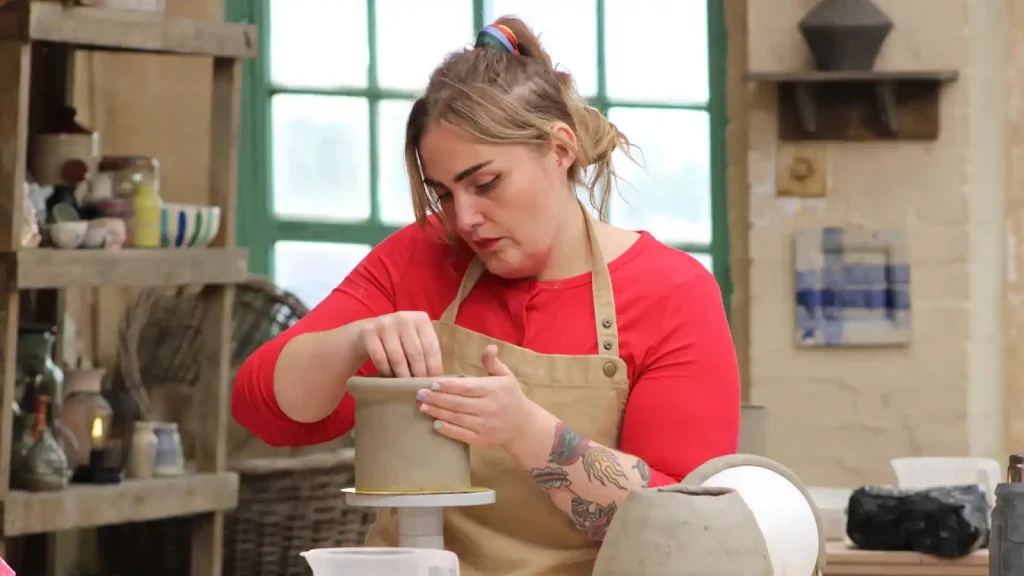
The judging process examines completed puzzle jugs across multiple dimensions, beginning with basic functionality before progressing to aesthetic considerations. Keith Brymer Jones tests each vessel by attempting to drink from it, determining whether the puzzle mechanism actually works as intended. Vessels that simply leak everywhere receive immediate criticism regardless of their visual appeal, while those that successfully deceive receive acknowledgment of their technical achievement.
Rich Miller evaluates construction quality through careful examination of joints, surfaces, and proportions. His trained eye detects subtle flaws invisible to casual observers, identifying areas where clay bodies attach imperfectly or where drying stresses have begun compromising structural integrity. These technical assessments provide objective foundations for judgments that might otherwise seem arbitrary, demonstrating that ceramic excellence involves measurable qualities beyond mere taste.
The emotional dimension of judging intensifies as potters await verdicts on work into which they have invested significant effort. Keith Brymer Jones famously weeps when exceptional pieces move him, his tears signaling recognition of craftsmanship that transcends ordinary achievement. Such moments remind viewers that ceramics exists as a fundamentally human endeavor where technical proficiency serves emotional and aesthetic purposes that numbers alone cannot capture.
The combination of main make and spot test results determines overall standings for the week, with both challenges contributing to judges’ impressions of each potter’s abilities. Strong performance in one area can compensate for weakness in another, though potters who struggle in both face serious elimination risk. The competitive structure ensures that well-rounded ceramic skills receive greater reward than narrow specialization, encouraging potters to develop breadth alongside depth.
Emotional Journeys and Personal Stakes in The Great Pottery Throw Down
Behind every competition stands a human being whose identity has become intertwined with ceramic practice, making success and failure feel deeply personal rather than merely professional. The potters share their motivations throughout the episode, revealing diverse pathways that led them to pursue competitive ceramics. Some discovered pottery late in life as therapeutic escape from demanding careers, while others grew up surrounded by clay and kilns that shaped their earliest memories.
The pressure of competition affects potters differently, with some thriving under scrutiny while others struggle to perform when stakes rise highest. Siobhan McSweeney navigates between potters throughout the pottery, offering encouragement and gentle humor that helps ease tension without diminishing the seriousness of the challenge. Her presence humanizes the competition, reminding viewers that these are ordinary people pursuing extraordinary achievements rather than professional performers accustomed to camera attention.
Relationships among competitors evolve throughout the season, with early strangers becoming genuine friends who support each other through difficulties. The pottery develops its own social ecosystem where rivalry coexists with mutual respect and shared passion for ceramics. Potters celebrate each other’s successes alongside their own, recognizing that exceptional work benefits the entire group by elevating overall standards and proving what amateurs can achieve.
The elimination format forces difficult decisions upon judges who must send home potters despite genuine appreciation for their efforts and potential. Keith Brymer Jones approaches these moments with visible reluctance, clearly pained by the necessity of ending anyone’s competitive journey. Yet the format’s demands cannot be avoided, and each episode must conclude with one fewer potter than it began. This inevitability creates dramatic tension that builds throughout every installment.
Ceramic Heritage and Contemporary Practice in The Great Pottery Throw Down
The Great Pottery Throw Down consistently situates contemporary craft practice within historical contexts that illuminate pottery’s enduring cultural significance. The Gladstone Museum visit during the brick making challenge exemplifies this approach, surrounding competitors with industrial heritage that transformed regional economies and global trade patterns. Understanding where ceramics has been helps potters appreciate where the craft might go, connecting individual practice to collective traditions spanning millennia.
Keith Brymer Jones brings encyclopedic knowledge of ceramic history to his judging role, contextualizing contemporary work within broader evolutionary patterns. His references to historical precedents help potters and viewers alike understand that current techniques emerged through countless generations of accumulated wisdom. Even seemingly simple operations like wedging clay or centering on the wheel represent refined solutions to persistent problems, perfected through trial and error across centuries.
The puzzle jug challenge specifically invites engagement with medieval ceramic traditions that prioritized wit alongside utility. These objects remind modern potters that historical craftspeople possessed creativity and humor alongside technical skill, producing works that entertained as well as served. Recovering this playful dimension of ceramic heritage enriches contemporary practice, expanding possibilities beyond purely functional or decorative purposes toward interactive experiences.
Rich Miller contributes expertise in traditional techniques that industrial standardization nearly erased from living memory. His understanding of historical methods allows accurate assessment of attempts to recreate period-appropriate works, distinguishing between authentic approaches and superficial imitations. This specialized knowledge ensures that competitions honoring ceramic heritage actually reward genuine engagement rather than surface-level pastiche.
The Great Pottery Throw Down 2026 Episode 3 Climax and Elimination
As the episode approaches its climax, potters gather to learn their fates based on combined performance across both challenges. The atmosphere in the pottery shifts from productive focus to anxious anticipation as everyone waits for judges to announce their assessments. Some potters feel confident based on strong performances, while others know their work fell short of personal standards and hope their competitors fared no better.
Keith Brymer Jones and Rich Miller deliver their verdicts with careful attention to both achievement and encouragement, recognizing that even eliminated potters have demonstrated genuine skill to reach this stage. Potter of the week honors reward exceptional performance, providing validation that motivates continued growth and experimentation. This recognition matters deeply to recipients who have invested countless hours developing their ceramic abilities in preparation for exactly such acknowledgment.
The elimination announcement carries emotional weight for everyone present, not merely the departing potter. Competitors who survive feel relief tinged with sadness at losing someone who has become part of their temporary community. The eliminated potter faces the end of their competitive journey but also receives genuine appreciation for their contributions and encouragement to continue pursuing ceramics regardless of competition outcomes.
The Great Pottery Throw Down 2026 episode 3 concludes with remaining potters looking forward to future challenges while processing the intensity of what they have just experienced. The puzzle jug challenge tested historical awareness alongside technical execution, while blindfolded brick making revealed the depth of internalized ceramic knowledge. Together, these challenges have clarified the field, identifying potters whose skills extend beyond single dimensions toward the comprehensive mastery the competition ultimately rewards.
The slab building, bookends of concentration and release that bracket each challenge, and the ever-present possibility of elimination ensure that drama remains constant throughout. As potters return to their homes and studios, they carry lessons learned in competition back to their regular practice, improving their craft regardless of ultimate competitive outcomes. The Great Pottery Throw Down thus fulfills its dual purpose of entertainment and education, celebrating ceramics while nurturing its future practitioners.
FAQ The Great Pottery Throw Down 2026 episode 3
Q: What is a puzzle jug and why does it appear in The Great Pottery Throw Down 2026 episode 3?
A: A puzzle jug is a medieval drinking vessel designed to drench unsuspecting drinkers who fail to discover its secret drinking method. These vessels feature hollow rims connected to hidden tubes and multiple spouts. In episode 3, potters must construct functional puzzle jugs that actually work. The challenge tests both historical awareness and technical ceramics skill, requiring watertight connections throughout.
Q: How does the blindfolded brick making challenge work at the Gladstone Museum?
A: The spot test transports competitors to the historic Gladstone Museum for an unusual challenge. Potters must create standard bricks while completely blindfolded, relying solely on touch and muscle memory. Consequently, this exercise reveals which competitors have truly internalized ceramic fundamentals. Those who depend heavily on visual feedback struggle significantly, while others discover unexpected competence in their hands.
Q: Who are the judges on The Great Pottery Throw Down 2026 and what do they assess?
A: Keith Brymer Jones and Rich Miller serve as judges throughout the series. Keith tests puzzle jug functionality by attempting to drink from each vessel. Meanwhile, Rich evaluates construction quality through careful examination of joints, surfaces, and proportions. Together, they assess both technical execution and creative expression, ensuring potters demonstrate comprehensive ceramic mastery.
Q: What slab building techniques do potters use in episode 3?
A: Slab building proves essential for constructing puzzle jug components that cannot be thrown on a wheel. Potters roll flat clay sections to consistent thickness, then shape them into tubes and chambers. Furthermore, joining slabs to rounded thrown forms demands careful scoring and slipping. This technique ensures bonds survive both drying and firing processes successfully.
Q: How much time do potters receive for the main make challenge?
A: The main make challenge grants potters four hours to complete their puzzle jugs from initial conception through final assembly. This timeframe creates significant pressure during the critical assembly phase. Potters who rush risk creating leaky vessels, while those working too cautiously may fail to finish. Therefore, strategic time management becomes crucial for success.
Q: What makes puzzle jug construction technically demanding for ceramics?
A: Puzzle jugs require every connection to remain completely watertight while appearing decorative. Potters must create hollow handles serving as air passages for proper liquid flow. Additionally, the hollow rim demands careful calculation since walls that are too thick become awkward. Conversely, walls that are too thin collapse during construction, creating a delicate balance.
Q: How does The Great Pottery Throw Down 2026 episode 3 connect to ceramic heritage?
A: The episode situates contemporary craft practice within important historical contexts. The Gladstone Museum visit surrounds competitors with industrial heritage that transformed regional economies. Similarly, puzzle jugs invite engagement with medieval ceramic traditions prioritizing wit alongside utility. Keith Brymer Jones contextualizes contemporary work within these broader evolutionary patterns throughout judging.
Q: What role does Siobhan McSweeney play in The Great Pottery Throw Down?
A: Siobhan McSweeney serves as the show’s presenter, welcoming viewers and navigating between potters throughout the pottery. Her presence humanizes the competition through gentle humor and encouragement. Specifically, she helps ease tension without diminishing challenge seriousness. Her interactions remind viewers these are ordinary people pursuing extraordinary ceramic achievements.
Q: How do judges determine Potter of the Week and elimination decisions?
A: Judges combine main make and spot test results to determine overall weekly standings. Strong performance in one challenge can compensate for weakness in another. However, potters struggling in both face serious elimination risk. Potter of the Week honors reward exceptional performance, while elimination removes the weakest competitor from the pottery competition.
Q: Why does Keith Brymer Jones sometimes cry during The Great Pottery Throw Down judging?
A: Keith Brymer Jones famously weeps when exceptional ceramic pieces move him emotionally. His tears signal recognition of craftsmanship transcending ordinary achievement. Importantly, these moments remind viewers that pottery exists as a fundamentally human endeavor. Technical proficiency serves emotional and aesthetic purposes that numbers alone cannot capture in ceramic arts.


Thank you