The Sky at Night – Space Mysteries: Have you ever just stopped and looked up? Have you stared into the vast, dark night sky? Perhaps you felt a powerful pull of endless wonder. We all share this deep curiosity. It often starts with simple, childlike questions. Are we truly, completely alone in this vast darkness? What strange secrets do black holes whisper into the void? These are not just idle questions for philosophers. Instead, they are the driving force behind all science. This powerful feeling of awe guides humanity. It pushes us to explore. Ultimately, this shared curiosity connects every single one of us.
This season, The Sky at Night fully embraces that feeling. We are diving headfirst into the biggest Space Mysteries. Forget those dusty, dry textbooks from school. This is about the thrilling, active chase for answers. Consequently, for our spectacular season finale, we are doing something special. We are joining forces with the hit podcast Curious Cases. Together, we will tackle your most burning cosmic questions. This is a finale unlike any other. Therefore, it promises to be an event filled with genuine discovery.
What kind of questions, you ask? Well, we are starting with the big one. Do aliens exist? Furthermore, if they do, could we ever actually talk to them? What would we even say as a first hello? Then, we explore the universe’s strange, hidden music. What does a black hole sound like? Is it a terrifying roar, a low hum, or just perfect silence? Our experts will investigate. We also ask about the very shape of the universe. Is it flat and endless, like a sheet of paper? Or, in a strange twist, does the universe look like a giant doughnut? Prepare for some truly mind-bending answers.
We filmed this special episode in front of a live studio audience. You can almost taste the energy in the room. There is an electric buzz of shared excitement. The audience’s own questions help fuel the entire discussion. This creates a truly interactive and dynamic experience. As a result, it feels less like a formal lecture. It feels more like a brilliant, lively conversation. You feel like you are right there, part of this cosmic journey. The live format also adds a wonderful layer of spontaneity. You never know what will happen next.
Guiding us through this cosmic maze are our brilliant hosts. The incredible Hannah Fry returns. She brings her trademark sharp intellect and amazing warmth. Hannah has a gift for making complex ideas feel simple. Alongside her is the fantastic Dara Ó Briain. Dara provides his signature, rapid-fire wit and boundless curiosity. Together, they are the perfect team. They quiz our stellar panel with genuine, infectious enthusiasm. They are not afraid to ask the questions we are all thinking. Their shared passion for science is absolutely contagious.
Of course, the hosts need amazing experts to quiz. We have assembled an absolute dream team. First, the legendary Maggie Aderin-Pocock joins us. Maggie’s passion for space science simply lights up the stage. She speaks about the cosmos with pure, unadulterated joy. Listening to her is like hearing a poet describe the stars. She will tackle the grand, sweeping ideas. Maggie helps us all dream a little bigger. Her explanations are always crystal clear. Her enthusiasm is impossible to resist.
Alongside Maggie is the wonderful Chris Lintott. Chris is a master of citizen science. He knows how to find profound wonder hidden in data. More importantly, he connects the public to real, tangible discovery. Finally, George Dransfield joins the panel. George brings another fantastic and vital perspective. He helps ground the discussion in practical terms. This panel is a true powerhouse of knowledge. They represent the very best of space science.
So, what happens when you mix these brilliant minds? You get an unforgettable night of television. Expect incredibly lively debates. Our experts do not always agree on everything. In fact, that is the best part of science! You will witness surprising, sudden revelations. These are the moments that will make you gasp. Above all, you will feel a sense of pure, astronomical awe. They explore the weird corners of the universe. They also explore the wonderful, hopeful side of space science. This is a true celebration of human curiosity.
Meanwhile, after so much excitement, we need a moment to breathe. We need to reconnect with the sky above us. The amazing Pete Lawrence provides this grounding link. He turns his expert eyes to the heavens. He guides us through the incredible sights lighting up our sky right now. This is not just abstract theory. This is practical, hands-on astronomy. Pete shows you exactly what to look for. He offers a glimpse into the Space Mysteries unfolding just over our heads. He reminds us to simply look up.
The Sky at Night – Space Mysteries
Adding another fascinating layer of intrigue is a special animation. This beautiful short film comes from the team at BBC Ideas. It explores our ongoing, global search for alien life. This is arguably one of the biggest Space Mysteries of all. The animation clearly details the science behind the search. It also wonderfully captures the deep human desire to connect. It examines the tantalizing, thrilling possibility of making contact. What would that really mean for humanity? The film is both informative and deeply moving.
The exploration does not end when the credits roll. We know you will be left wanting more. For those who want to keep that curiosity flowing, we have a treat. Radio 4 is airing a special companion episode. This Curious Cases bonus features extra content. It includes more insights from the live recording. Think of it as the ultimate backstage pass. Consequently, it is the perfect way to continue the conversation. You get to hear even more from Hannah Fry and the team.
This is more than just a television program. This is a heartfelt invitation. Join us for this unforgettable night of discovery. We promise an evening of cosmic exploration. The Sky at Night will then take a short break. We need to go and gather more wonders for you. But fear not. The programme returns in the spring of 2026. We will bring even more marvels from the final frontier. Do not miss this spectacular finale. It is your front-row seat to the universe.
The Sky at Night – Space Mysteries review
The Sky at Night – Space Mysteries explores the profound, vast, and sometimes strange questions that space presents. The universe constantly keeps humanity guessing. It forces us to ask fundamental questions about our place in the cosmos. These questions range from the nature of time to our ultimate destination. The study of space is a field driven by deep curiosity. This curiosity is a shared human trait. It pushes us to explore and understand the unknown.
Understanding these cosmic questions is not just an academic exercise. It is a core part of modern science. The quest to find answers drives technological and intellectual progress. We live in an era of powerful new tools. These tools allow us to probe the universe in unprecedented detail. This makes the current exploration of space science particularly exciting. The mysteries we face today are some of the biggest ones humanity has ever tackled.
This exploration delves into several specific, compelling topics. We will examine the surprising science of stellar sounds. We will also investigate the practical search for life beyond Earth. Finally, we will grapple with the mind-bending shape of the universe itself. These subjects represent just a fraction of the field. However, The Sky at Night – Space Mysteries highlights them as particularly engaging. They capture the imagination while pushing the boundaries of scientific knowledge.
The universe is vast, mysterious, and often weird. For generations, programs like The Sky at Night have guided audiences through these wonders and other Space Mysteries. The show itself is the longest-running science program in the world. It is older than Doctor Who or Coronation Street. This legacy provides a deep foundation for tackling complex ideas in space science. It brings together curious minds, like Hannah Fry, to discuss and unravel these topics for the public.
The questions posed by the public are often the most profound. They start simple but lead to complex answers. For example, a basic question about sound in space opens a window into a whole field of study. It challenges the common misconception that space is silent. In reality, the cosmos is filled with vibrations and waves. These can be translated into sound. Scientists are actively studying this cosmic orchestra.
This process of “sonification,” or turning data into sound, is a powerful tool. It allows us to experience celestial objects in a new way. It transforms abstract data from light waves into something we can intuitively grasp. This approach applies to stars, black holes, and even the universe’s beginning. It reveals that the vacuum of space does not mean an absence of sound. It simply means the sound needs a medium to travel, or a new way to be heard.
Probing the Universe with Sound
A common belief is that there is no sound in space. This is technically true, as the vacuum cannot transmit sound waves. However, this literal answer misses a brilliant truth. Stars absolutely make sounds. Sound waves constantly travel through them. We can detect these waves on the surfaces of stars. This field of study is known as asteroseismology. It is a very cool and active area of research.
We cannot hear these sounds directly. The vacuum prevents their travel. Instead, we detect them by observing the star’s light. The internal sound waves make the star wobble slightly. This, in turn, causes the starlight we receive to wobble. By analyzing this wobble, we can reconstruct the waves. This data tells us critical information about the star. We can learn its size, its composition, or its density.
Scientists can take these detected waves and sonify them. This process translates the wave’s shape and frequency into an audible sound. This sonification of stars is a definite practice. The stars even work similarly to musical instruments. George, a presenter from The Sky at Night, explains this. Small stars are like flutes, producing higher-pitched sounds. Big stars, in contrast, are like trombones with deeper notes. The universe is like a cosmic orchestra.
An Intergalactic Audio Gallery
While many space sounds are translations, some are actual audio. Maggie, another presenter, highlights one such case. The Cassini-Huygens mission visited Saturn. The European Space Agency built the Huygens probe. This probe landed on Saturn’s moon, Titan. Titan is special because it has an atmosphere. As Huygens fell through this atmosphere, it recorded audio. There was a medium to carry the sound. The recording captures the whooshing of its descent, ending in a “pop” as it lands.
Other sounds are sonifications of more exotic objects. George shared a particularly haunting audio translation. It represents a black hole at the center of a galaxy cluster. Scientists created the sound by sweeping around the black hole’s image. They translated the profile of its wave-like structure into audio. The resulting sound is a deep, undulating rumble. It was described as sounding like “utter despair.” It captures the eerie and extreme nature of such a cosmic object.
Perhaps the grandest sound of all was presented by Chris. This sound represents the entire universe just after the Big Bang. In that early, hot, dense state, matter was close enough. Sound waves could propagate through the entire universe. We can still see the effects of these waves today. They are imprinted on the cosmic microwave background. This is the oldest light in the universe.
By studying this old light, we know what sound waves were present. We can work out their spectrum and sonify them. The result is not a clean note. It is a deep, rumbling white noise. Chris describes it as sounding “terrible.” This is because the universe was not playing one single note. It was playing all frequencies at once. This chaotic noise was the sound of the entire universe as an instrument, right at its beginning.
The Search for Life in Our Solar System
Beyond sound, one of the biggest Space Mysteries is life elsewhere. Richard, a listener, asked about Venus and Jupiter. While deemed unsuitable, their upper atmospheres have points with Earth-like pressure and temperature. He suggested sending airship drones. George explains these are like robotic balloons. Such balloons have been dropped into Venus’s atmosphere before. More are planned to measure what is there.
Such missions are incredibly difficult. Jupiter’s immense gravity means the pressure quickly gets out of hand. A drone would be rapidly crushed. Venus presents its own problems. Its atmosphere is full of sulphur. This makes it extremely acidic. Any airship drone would need to be designed very carefully to survive. It is, as Dara O Briain notes, like floating a hot-air balloon over a “death planet.”
This hostility is well-documented. A series of Russian probes, the Venera missions, attempted to land on Venus. They had almost “hilarious misadventures.” One probe survived on the surface for only 23 minutes. In that time, it sent back one picture. Then, the horrendous temperature and pressure caused it to melt away. This demonstrates the extreme challenges of exploring Venus’s surface directly.
However, the question about the atmosphere remains compelling. Chris points out there is a specific layer in Venus’s atmosphere. This layer is at about room temperature and pressure. It is still very acidic. But this is the exact layer where astronomer Jane Greaves made a stunning discovery. A few years ago, she announced the detection of phosphine.
The discovery of phosphine is exciting. On Earth, phosphine is a biosignature. It is made by life. It is found, for example, in penguin poo. Finding it on Venus is a puzzle. It could be the product of some unknown volcanism. It might also be a weird chemical process we do not understand. But it could also be a sign of life. This life might be hanging on in that temperate cloud layer. This led to the humorous idea of “Venus penguins.”
This entire discussion highlights a key bias. We always talk about “life as we know it.” Maggie notes this is a major limitation. We insist on conditions like liquid water. But perhaps life elsewhere is completely different. Maggie even recalls debating this topic with David Attenborough. She argued that water might not be a universal requirement. There could be a whole variety of life that we simply cannot anticipate.
The Great Debate: Listening or Shouting into the Cosmos
Finding microbes is one thing. But as Hannah Fry admits, many people want “little green men.” This is the search for intelligent life. This search is the subject of a major scientific debate. It centers on two different approaches. The first is SETI, the Search for Extraterrestrial Intelligence. The second is METI, or Messaging Extraterrestrial Intelligence.
SETI operates on the principle of listening. Astrophysicist Mike Garrett, an active SETI member, explains the method. The universe is full of natural radio waves. These are generated by stars, planets, and galaxies. This natural emission is very smooth. Artificial radio waves, by contrast, would be “spiky.” They would be spiky because they must convey information. SETI researchers, therefore, look for these anomalies. They scan the skies for a signature of another intelligent civilization broadcasting.
The other side of the debate is METI. Douglas Vakoch, METI’s founder, argues that listening is not enough. METI’s proponents believe we should do the heavy lifting. We should be the ones to reach out first. They argue that someone has to make the first move in this potential relationship. This active approach involves transmitting powerful, intentional signals from Earth. These signals are aimed at star systems that might host life.
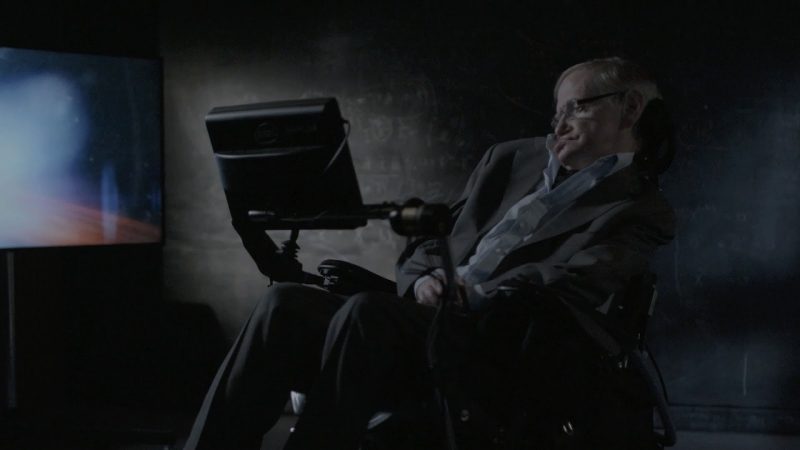
Making the first move in any relationship has risks. This is especially true when the other party is unknown. Science fiction is full of stories. Alien fleets visit Earth with the sole intention of wiping us out. There is a serious theory that this could become science fact. The famous cosmologist Stephen Hawking was a prominent voice of caution.
Hawking warned that transmitting signals might not turn out well for us. He made a powerful historical analogy. He compared our situation to the Native Americans when Columbus first arrived. That encounter did not turn out well for the native population. Hawking and others feared a similar outcome. A more advanced civilization might view us as a resource to be exploited, or a threat to be removed.
METI advocates, however, see this argument as a red herring. Douglas Vakoch’s position is simple: “It’s too late to hide.” He and his colleagues argue that we are already known in the universe. Earth has been leaking radiation into space for decades. Our TV and radio broadcasts, not to mention mobile phone towers, have been streaming outwards. This leakage is exactly what SETI looks for as a sign of life.
It stands to reason, therefore, that if aliens are listening, they could probably already hear us. Our leakage radiation may be faint. But an advanced civilization might be capable of detecting it. From this perspective, METI’s intentional messages are not creating a new risk. They are simply replacing a chaotic, accidental signal with a clear, deliberate one.
The debate is not purely about risk. It is also about representation. Mike Garrett of SETI raises a key political question. “Who speaks for Earth?” He argues that just arbitrarily sending signals is not very democratic. These signals are often sent by small groups. They do not represent all of this planet. There is no global consensus on what we should say, or if we should say anything at all.
The Fermi Paradox and Our Place in The Sky at Night – Space Mysteries
This entire debate leads back to a central question. In 1974, the Arecibo message was the first powerful signal sent for aliens. So far, we have received nothing in return. This brings us to Enrico Fermi’s famous question: “Where is everybody?” Given the age and size of the universe, it seems life should be common. Yet, when we turned on our radio telescopes, we found silence.
Chris notes that the space age was, in this sense, a bit of a disappointment. Early hopes were for a cosmos teeming with life. Instead, we found that Mars just had craters. We learned that Venus was a hellhole. People had expected it to be obvious that life was out there. It is not. The lack of a cacophony of sounds was strange.
But the universe is a very big place. Our search has only just begun. The discovery of life, even if it is not “little green men,” would be profound. Mike Garrett believes that if we detect a signal, we will know we are not alone. He thinks this should make people happy. If we discover a civilization very different from us, it may have a powerful effect. It might make us realize how similar we are to our human neighbors.
The Shape and Edge of the Universe
Beyond life, the universe itself presents profound conceptual puzzles. Marlon, an 11-year-old listener, asked about the edge of space. He reasoned that if it is expanding, it must have an edge. This is a brilliant question. Chris explains that astronomers have an answer, but it is a partial one. We can define the “edge of the observable universe.”
The universe is 13.8 billion years old. Therefore, light has only had 13.8 billion years to travel. The observable universe is the part whose light has had time to reach us. We can put a line around this region. It is the bubble of space we can see. But this is only our observable bubble. The whole universe is almost certainly much larger. Our guess is that we live in a tiny fraction of the whole.
This leads to a paradox that is impossible to grasp intuitively. The universe could have started in the Big Bang. Yet, it could have been infinite even at that first moment. It could still be infinite now, and it has been expanding ever since. Chris admits he has no intuitive answer for this. It is simply what the mathematics tells us is possible.
This relates to another question from a listener named Stephen. If the Big Bang was an explosion, why is the universe not a doughnut shape? Why is it not a shell of matter with nothing in the middle? The answer lies in the name itself. The term “Big Bang” is a bit of a misunderstanding. It was not an explosion in space, like a bomb.
An explosion implies a central point from which matter is thrown outwards. The Big Bang was different. It was a rapid expansion of space itself. The singularity expanded rapidly, creating space and time as it went. The matter itself is expanding outwards because the fabric of space it sits on is stretching. This makes a hollow doughnut shape unlikely. It is more of a continuum that is expanding.
The BBC is actually to blame for the confusing name. In 1948, astronomer Fred Hoyle gave a talk on the radio. He did not believe in the expansion theory. He used the phrase “this Big Bang theory” as an insult to disparage it. The name, however, was so memorable that it stuck. In the 1990s, a magazine competition tried to find a replacement. “Big Bang” still won. The runner-up was “Horrendous Space Kablooie,” which still has the explosion problem.
The Universe: Doughnut, Crumpet, or Pancake? (The Sky at Night – Space Mysteries)
While the “explosion” model is wrong, the doughnut shape is not entirely dismissed. George confirms there is a real theory about the universe’s topology. The four-dimensional fabric of spacetime could be curved. Researchers are actively studying this. They want to know if it is flat, like a sheet of paper. Or is it curved? If so, is it open like a saddle, or closed like a sphere?
One possibility is that the universe is shaped like a doughnut, or torus. This would be incredibly cool. It would mean that if you traveled in one direction for long enough, you would eventually come back on yourself. You would end up right where you started. It would be like living inside a video game, where moving off one edge of the screen makes you appear on the other.
However, we are not ruling out the doughnut. But, as Chris explains, we know it must be a very big doughnut. This is because when we look at the part of the universe we can see, it appears to be pretty flat. For it to be on a doughnut and still look flat, we must be seeing only a tiny, tiny part of it.
Chris provides an analogy. If you stood on a football, you would easily notice it was round. If you stand on the Earth, it looks flat. You have to do more work to prove it is a sphere. Now, imagine standing on something a billion times the size of the Earth. It would be extremely difficult to tell you were on a sphere at all. This is our situation. Our universe appears flat.
This leaves two main possibilities. Either the universe really is so much bigger than we can even imagine, and we are just on one tiny, flat-looking patch of a larger, curved shape. Or, the universe is simply flat. As George jokes, we should perhaps go with the “Pancake Universe.” This leaves us with a range of breakfast-pastry-themed models. It could be a doughnut, a crumpet, or a pancake. But based on our best measurements, it appears flat.
A Guide to the Coming Night Sky
While these cosmic mysteries remain, the skies never fail to inspire. With the clocks having gone back, darkness arrives an hour earlier. This provides great opportunities to enjoy the night sky. In the early evening, the stars of summer are still visible. This includes the Summer Triangle. Within it, you can find the impressive constellation of Cygnus the Swan. An asterism called the Northern Cross sits in Cygnus’s core.
Later in the evening, the stars of winter begin to appear. This includes the magnificent constellation of Orion the Hunter. Orion is a great navigational aid for stargazers. From Orion, we can find other constellations, such as Gemini, the twins. To find Gemini, first identify the two brightest stars in Orion. These are Rigel in the bottom right and Betelgeuse in the upper left.
Extend an imaginary line from Rigel through Betelgeuse, up and to the left. Continue for about twice the distance between them. You will arrive at a pair of bright stars. These are Castor and Pollux, which represent the heads of the twins. Gemini is an unusual constellation. With a bit of imagination, it actually looks like what it is supposed to represent.
From the UK, Gemini gets to its highest position in the sky between mid-November and mid-December. This occurs in the early hours of the morning. This high position lifts it well above the turbulent atmosphere found lower down. This makes it perfect for stargazing. Currently, Gemini is also home to the gas giant Jupiter. It is easy to find. It is the bright, star-like object located just below Castor and Pollux.
There is a special treat starting to come into view involving Jupiter. A Jovian equinox is approaching in December 2026. Because of this, for the next two years or so, Jupiter’s moon Callisto will be seen appearing to cross Jupiter’s disc. A great time to watch is in the early hours of November 21st. On that morning, you will be able to see the shadows of both Io and Callisto. They will be crossing Jupiter’s disc at the same time.
Another treat comes at the end of the year. The Geminid meteor shower will occur. As its name suggests, the shower’s radiant is in the constellation Gemini. The radiant is the small area of sky from which the meteors appear to emanate. The shower is active between the 8th and 16th of December. The peak will occur on the night of the 13th into the 14th of December.
This year has the potential for a great show. The peak occurs when the moon is past its last quarter. This means the sky will be darker, as bright moonlight will not wash out the fainter meteors. With 12 hours of night sky darkness, conditions are ideal. The night sky is something everyone can enjoy. Whether just looking up at the stars or out with a telescope, clear skies offer a connection to these great mysteries.
FAQ The Sky at Night – Space Mysteries
Q: What is The Sky at Night – Space Mysteries about?
A: The Sky at Night – Space Mysteries is a spectacular season finale that explores profound cosmic questions through an innovative collaboration with the Curious Cases podcast. Filmed before a live studio audience, the program features hosts Hannah Fry and Dara Ó Briain alongside experts Maggie Aderin-Pocock, Chris Lintott, and George Dransfield. The episode tackles burning questions about alien existence, communication possibilities, black hole sounds, and the universe’s shape. Additionally, viewers experience dynamic discussions that blend scientific rigor with accessible explanations. This special event transforms complex space science into an engaging, interactive journey that captures humanity’s shared sense of wonder about the cosmos.
Q: Can we actually hear sounds from space?
A: While space’s vacuum cannot transmit traditional sound waves, scientists use a process called sonification to translate cosmic data into audible experiences. Stars constantly generate internal sound waves that travel through their structure, detected through asteroseismology by observing subtle wobbles in starlight. Researchers then convert these wave patterns into sounds we can hear. Interestingly, small stars produce higher-pitched sounds like flutes, while massive stars generate deeper tones resembling trombones. Furthermore, some recordings capture actual audio, such as the Cassini-Huygens probe’s descent through Titan’s atmosphere. Even black holes and the early universe’s cosmic microwave background can be sonified, revealing a hidden cosmic orchestra.
Q: What did the universe sound like after the Big Bang?
A: The early universe, when matter was dense enough for sound propagation, produced a deep, chaotic rumbling white noise across all frequencies simultaneously. Scientists sonified this ancient sound by studying the cosmic microwave background, which preserves imprints of those primordial sound waves. Unlike a single musical note, the universe played every frequency at once, creating what researchers describe as a terrible-sounding cacophony. This represents the entire cosmos functioning as one massive instrument immediately following the Big Bang. Consequently, this cosmic soundtrack offers profound insights into the universe’s earliest moments, approximately 13.8 billion years ago, when space and time were just beginning their expansion.
Q: Could life exist in Venus’s atmosphere?
A: Venus’s surface is utterly inhospitable, with Russian Venera probes surviving mere minutes before melting in extreme heat and pressure. However, a specific atmospheric layer exists at room temperature and pressure, though highly acidic. Astronomer Jane Greaves discovered phosphine in this exact zone, sparking exciting speculation. On Earth, phosphine serves as a biosignature produced by living organisms. While this discovery could indicate unknown volcanic activity or strange chemistry, it might also suggest microbial life surviving in Venus’s temperate cloud layer. Nevertheless, scientists acknowledge our bias toward “life as we know it,” potentially overlooking completely different life forms that don’t require water or Earth-like conditions.
Q: What is the difference between SETI and METI?
A: SETI (Search for Extraterrestrial Intelligence) focuses on passively listening for artificial radio signals from alien civilizations, scanning for spiky, information-rich transmissions amid smooth natural cosmic radiation. Conversely, METI (Messaging Extraterrestrial Intelligence) advocates actively transmitting powerful, intentional signals toward potentially habitable star systems. This fundamental disagreement centers on whether humanity should remain silent or announce its presence. METI proponents argue someone must make the first move, while critics raise safety concerns about alerting potentially hostile civilizations. However, METI supporters counter that Earth has already been broadcasting radio and television signals for decades, making concealment impossible. This debate encompasses scientific, philosophical, and political dimensions about humanity’s cosmic role.
Q: Why was Stephen Hawking concerned about contacting aliens?
A: Stephen Hawking warned that actively transmitting signals might expose humanity to existential risks from advanced civilizations. He drew a powerful historical analogy comparing our situation to Native Americans encountering Columbus, an encounter that ended catastrophically for indigenous populations. Hawking theorized that technologically superior aliens might view Earth as a resource to exploit or a threat requiring elimination. Nevertheless, METI advocates dismiss this concern, arguing that decades of accidental radio leakage from television, mobile phones, and other broadcasts have already revealed our presence. Therefore, they contend that intentional messages simply replace chaotic signals with clear, deliberate communications rather than creating new dangers in an already-exposed situation.
Q: What is the Fermi Paradox?
A: The Fermi Paradox addresses physicist Enrico Fermi’s famous question: “Where is everybody?” Given the universe’s immense age and size, intelligent life should theoretically be common and detectable. Yet radio telescopes have found only silence since we began searching. The 1974 Arecibo message, humanity’s first powerful deliberate signal to potential alien civilizations, has received no response. Early space age optimism for a cosmos teeming with life gave way to disappointment as Mars revealed only craters and Venus proved hellish. However, scientists emphasize that our search has barely begun in an incomprehensibly vast universe. Even discovering microbial life would profoundly impact humanity’s understanding of our cosmic significance.
Q: Does the universe have an edge?
A: The observable universe has a defined edge representing the boundary of light that has had time to reach us in 13.8 billion years. This creates our visible bubble of space. However, the entire universe likely extends far beyond this observable region, possibly infinitely. Paradoxically, the universe could have been infinite even at the Big Bang moment while simultaneously expanding ever since. Mathematically, this counterintuitive concept is possible, though it defies human intuition. Furthermore, the universe wasn’t an explosion in space but rather an expansion of space itself. The singularity rapidly expanded, creating space and time simultaneously. Therefore, asking about the universe’s edge requires distinguishing between what we can observe and what actually exists.
Q: Is the universe shaped like a doughnut?
A: Scientists actively study the universe’s topology, investigating whether four-dimensional spacetime is flat like paper, curved like a saddle, or closed like a sphere. One intriguing possibility involves a toroidal (doughnut) shape where traveling far enough in one direction returns you to your starting point, similar to video game screens. However, measurements indicate the observable universe appears remarkably flat. If it were doughnut-shaped, we must occupy only a tiny portion of an enormously large torus. Analogously, standing on Earth makes it appear flat despite its spherical nature. Current evidence suggests either a truly flat “pancake universe” or a curved structure so vast that our observable region appears flat, leaving breakfast-pastry-themed cosmological models still under investigation.
Q: When is the best time to observe the Geminid meteor shower?
A: The Geminid meteor shower occurs annually between December 8th and 16th, with peak activity on the night of December 13th into the 14th. This year offers exceptional viewing conditions because the moon will be past its last quarter phase, significantly reducing light pollution that typically washes out fainter meteors. With twelve hours of night sky darkness available, observers can expect an impressive display. The shower’s radiant point lies in Gemini constellation, easily located below the bright stars Castor and Pollux, which currently hosts Jupiter as a brilliant reference marker. Additionally, Jupiter itself provides a spectacular viewing opportunity during this period, with its moons Io and Callisto casting shadows across the planet’s disc in the early hours of November 21st.