The Cozy Battlefield of Texture Week
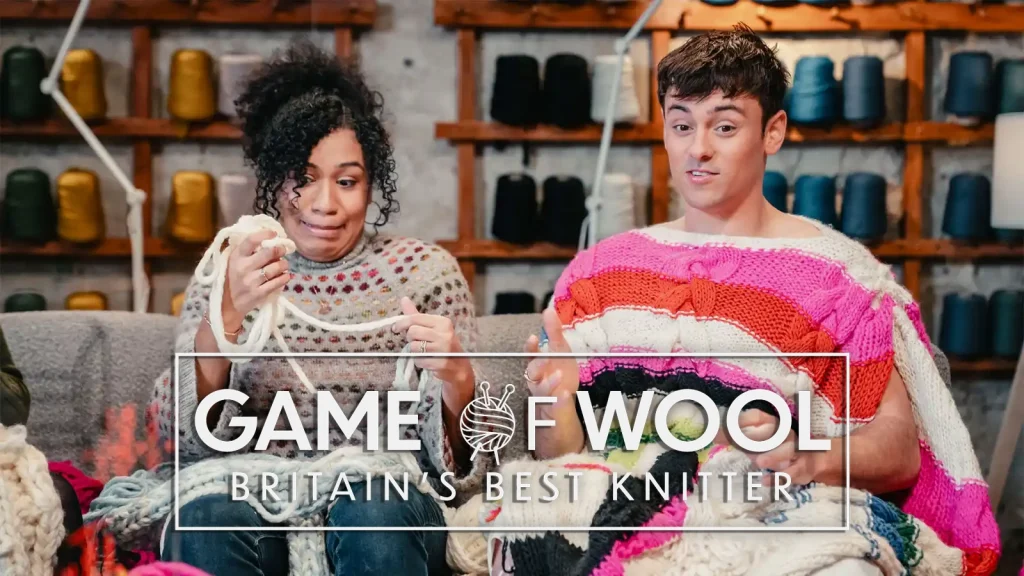
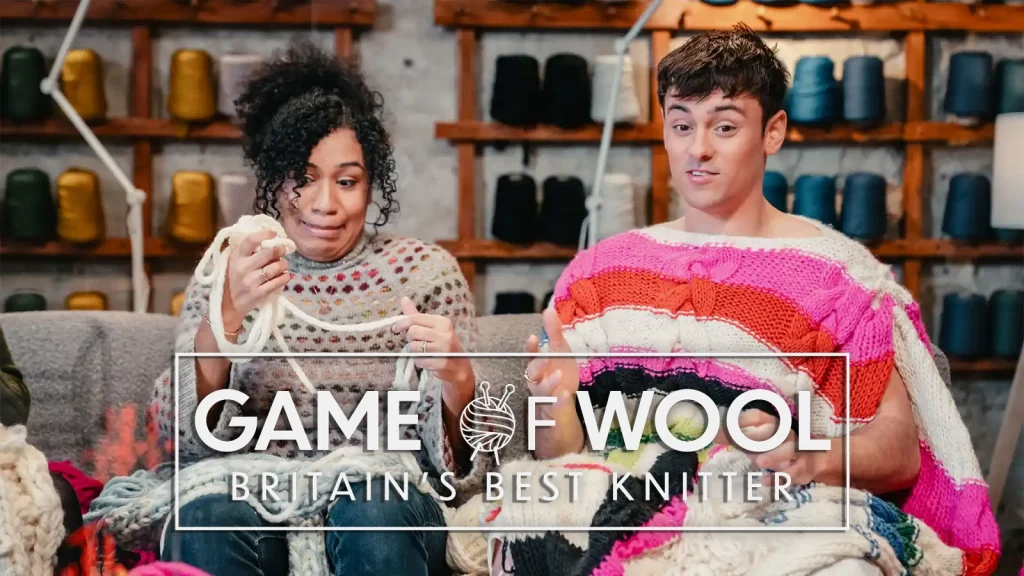
Game of Wool Britain’s Best Knitter episode 5: The gentle click of needles usually signals relaxation. However, on the Game of Wool TV show, that sound represents intense focus. We are witnessing a battle fought with soft fibers. Indeed, this UK knitting show has captured the nation’s heart. It combines creativity with high-stakes pressure. Consequently, viewers are hooked on the drama of the yarn.
At the center of this storm stands a surprising figure. Tom Daley host of the series, brings a unique energy to the studio. Most know him from the swimming pool. Yet, the image of the Olympic champion diver knitting is now iconic. He understands the rhythm of the craft perfectly. Therefore, he connects deeply with every contestant.
His passion is not just for show. In fact, Tom Daley knitting poolside became a viral sensation for a reason. He truly loves the art form. As a result, his empathy for the knitters is genuine. He knows the frustration of a tangled skein. Furthermore, he celebrates their triumphs like they are gold medals.
Now, the competition heats up significantly. We have arrived at Game of Wool Britain’s Best Knitter episode 5. The theme for this week is Texture. This might sound simple to the uninitiated. However, any crafter knows that texture is where mistakes hide. Consequently, there is nowhere to conceal a dropped stitch.
The amateur knitters remaining in the competition face a daunting task. They must prove they can handle complex patterns. Flat stockinette stitch will not suffice this week. Instead, they must manipulate yarn into three-dimensional art. Therefore, the studio is filled with tension and concentration.
Their first assignment involves knitting clothing that demands a specific vibe. The challenge is to create the ultimate slouchy cardigan. Everyone loves wearing them. Yet, making them is a structural nightmare. The garment must look relaxed but fit perfectly. Thus, it requires a mastery of drape and sizing.
If the cardigan is too loose, it looks messy. Conversely, if it is too tight, it loses the “slouchy” appeal. The knitters must find a perfect balance. They are engineering comfort from scratch. Therefore, the choice of wool is absolutely critical. It must flow over the body like water.
Transitioning from fashion to sculpture, the second challenge is wild. The competitors must create ultra-realistic amigurumi food. Amigurumi is the Japanese art of knitting or crocheting small, stuffed creatures. However, these projects made from wool aren’t cute animals. They are edible illusions.
Imagine a hamburger made entirely of yarn. The lettuce must ripple convincingly. The bun needs a golden, toasted texture. Consequently, the knitting challenges this week test observation skills as much as technical ability. The goal is to make the judges hungry. It is a feast for the eyes, if not the stomach.
Watching these creations come to life is magical. A simple string transforms into a slice of cake. Suddenly, a ball of yarn becomes a sushi roll. The Game of Wool contestants are essentially sculpting with fiber. Furthermore, the level of detail required is excruciating. One wrong loop ruins the illusion.
Of course, the judges are not easily impressed. Di Gilpin brings her vast experience to the inspection table. She looks for innovation and history in every piece. Therefore, she expects the textures to tell a story. Her critique can be sharp, but it is always fair. She pushes the knitters to exceed their own limits.
Beside her stands Shelia Greenwell, a legend in the industry. She examines the technical execution ruthlessly. Loose ends and uneven tension will not escape her notice. Consequently, the amateur knitters must bring their absolute best game. Both judges demand perfection in this knitting competition.
Game of Wool Britain’s Best Knitter episode 5
The dynamic between the judges and Tom Daley is delightful. They balance technical critique with supportive encouragement. It creates a warm, albeit stressful, environment. This is the charm of the show. It feels like a knitting circle, but with higher stakes. Therefore, we root for everyone to succeed.
As we watch Game of Wool Britain’s Best Knitter episode 5, the pressure mounts. We are over halfway through the series. The finale is appearing on the horizon. Thus, every mistake carries more weight. No one wants to go home during Texture Week.
The sheer variety of wool used in this episode is stunning. We see mohair, merino, and chunky blends. Each material behaves differently on the needles. The knitters must fight with the fibers to get the desired result. Consequently, physical fatigue sets in quickly.
Knitting a slouchy cardigan is a marathon. It requires thousands of movements. In contrast, the amigurumi food is a sprint of precision. Switching between these two mindsets is difficult. Therefore, mental endurance is just as important as manual dexterity. The UK knitting champion must master both.
Who will crumble under the weight of the yarn? Who will rise to the occasion? These questions keep us glued to the screen. The drama is surprisingly high for a show about crafts. Furthermore, the personal stories of the knitters add emotional depth. We want them to win.
Tom Daley guides us through the chaos with a smile. He breaks the tension with humor. Additionally, he offers a shoulder to cry on when things go wrong. His presence elevates the show beyond a simple contest. It becomes a celebration of creativity.
This episode proves that knitting is not an outdated hobby. It is a vibrant, modern art form. The projects made from wool display incredible ingenuity. From fashion to faux food, the possibilities are endless. As a result, the show inspires viewers to pick up needles themselves.
Ultimately, Texture Week is a sensory delight. You can almost feel the fabrics through the screen. The cozy cardigans look like warm hugs. Meanwhile, the knit food looks deceptively delicious. The visual appeal of this episode is unmatched.
So, grab your own knitting project and settle in. Prepare for a display of skill and passion. Di Gilpin and Shelia Greenwell have their work cut out for them. Judging these masterpieces will not be easy. However, a decision must be made.
Only the strongest stitchers will survive. The path to becoming the UK knitting champion is fraught with dropped loops. Yet, the glory is worth the struggle. Join Tom Daley and the gang for this spectacular hour of television. It is time to get cozy and competitive.
Game of Wool Britain’s Best Knitter episode 5
Game of Wool Britain’s Best Knitter episode 5 introduces a pivotal moment in the competition where the remaining six contestants face the complex theme of texture. The atmosphere in the yarn barn shifts perceptibly as the midway point of the series arrives. Tensions rise as the amateur knitters realize that merely following a pattern is no longer sufficient to secure safety. The gentle click of needles usually signals relaxation, but here it represents intense focus and mounting pressure.
This specific installment of the UK knitting show pushes the boundaries of fiber arts by demanding absolute realism in sculptural forms. Tom Daley host duties involve more than just timekeeping; he actively supports the competitors as they navigate significantly difficult briefs. As an Olympic champion diver knitting enthusiast, Daley understands the intersection of technical precision and artistic flair required to succeed. His presence adds a layer of empathetic mentorship to the high-stakes environment.
The judges, Di Gilpin and Shelia Greenwell, arrive with high expectations for the fifth week. They require the knitters to demonstrate a sophisticated understanding of how different yarns and stitches interact to create tactile surfaces. Texture is not simply about roughness or smoothness; it encompasses the structural integrity and visual depth of the fabric. Consequently, the challenges set for this episode are designed to expose any weaknesses in the knitters’ technical repertoires.
In this comprehensive analysis of Game of Wool Britain’s Best Knitter episode 5, we will explore the intricate details of the Amigurumi solo challenge and the collaborative team task. We will examine how the contestants interpreted the brief to create realistic food items using wool. Furthermore, we will dissect the structural engineering required to fabricate slouchy cardigans in the group challenge. The episode serves as a masterclass in the versatility of knitting clothing and sculptural objects.
The remaining competitors—Isaac, Ailsa, Holger, Tracy, Lydia, and Simon—must prove they possess both the imagination and the mechanical skill to remain in the Game of Wool. With the field narrowing, the margin for error has vanished. A single dropped stitch or a miscalculated seam could result in immediate elimination. Therefore, every loop of yarn becomes a critical component of their survival in the competition.
The Amigurumi Challenge: A Test of Hyper-Realism
The solo challenge for Week 5 tasks the knitters with creating Amigurumi, a Japanese art of knitting or crocheting small, stuffed yarn creatures or objects. However, the judges introduce a strict caveat that fundamentally alters the nature of the task. Rather than creating cute characters with smiley faces, the brief demands absolute realism. The amateur knitters must replicate their favorite dish so convincingly that it tempts the viewer to eat it. This requirement forces the competitors to look beyond caricature and focus on organic irregularity.
Amigurumi is typically associated with tight stitches and playful shapes, but this challenge requires a mastery of texture to mimic food. The contestants have twelve hours to engineer their meals. This timeframe places immense pressure on their ability to manage complex shaping and colorwork simultaneously. The goal is to produce a plate of food where the proportion, scale, and surface texture are indistinguishable from the real thing.
The challenge explicitly forbids anthropomorphism in the food items. This creates a serious atmosphere regarding the technical execution of stitches. The judges, Di Gilpin and Shelia Greenwell, emphasize that they are looking for the correct choice of stitches to evoke realistic textures. Whether it is the flaky crust of a pie or the sheen of a mussel shell, the wool must behave like the ingredient it represents.
Isaac’s Engineering Feat with the Everything Bagel
Isaac approaches the Amigurumi challenge with a focus on structural engineering and advanced knitting techniques. He chooses to recreate a bacon, egg, and cheese sandwich on an “everything” bagel. His plan involves a high degree of mathematical planning, particularly regarding the construction of the bagel itself. To achieve the perfect curved toroidal shape, Isaac employs short-row shaping. This advanced technique involves knitting part of a row before turning back, allowing the fabric to curve naturally without creating unsightly steps.
The ambition of Isaac’s project extends beyond mere shaping. He decides to incorporate a mechanical element into his knitting. He hides tiny magnets within the halves of the bagel. This allows the sandwich to snap together and pull apart, mimicking the functionality of a sliced bread roll. Tom Daley host interactions reveal his admiration for the scientific approach Isaac takes toward his fiber art.
However, the complexity of the bagel entails a significant time risk. Isaac dedicates a large portion of the twelve-hour limit to the bread component alone. He knits and crochets the internal elements—bacon, egg, and cheese—separately. The challenge lies in assembling these disparate parts into a cohesive whole before the clock runs out. His strategy relies heavily on the “hero element” of the bagel carrying the visual weight of the dish.
Holger’s Illusionary Seafood Ramen
Holger decides to look East for his inspiration, selecting a seafood ramen as his favorite dish. His project is a masterclass in mixed media within the Game of Wool context. He plans to knit a broth base and then layer various crochet and knit elements on top to represent the ingredients. His bowl will feature udon noodles, shrimp, seaweed, carrot flowers, fish cakes, and a boiled egg complete with tiny black beads representing sesame seeds.
The true innovation in Holger’s piece is his plan to create an optical illusion. He constructs a false bottom for the bowl using a knitted fabric base. This elevates the ingredients, giving the appearance of a full bowl of soup without requiring him to fill the entire volume with noodles. Furthermore, he employs wire structures wrapped in yarn to create “floating” noodles. This detail is intended to mimic the action of chopsticks lifting the noodles from the broth.
This approach demonstrates a high level of conceptual thinking. Holger is not just knitting an object; he is capturing a dynamic moment in time. The use of wire and the careful layering of textures showcase his willingness to experiment with unconventional materials to achieve the judges’ demand for realism. The varied textures of the smooth egg, the rough shrimp, and the fluid noodles present a significant balancing act.
Simon’s Freeform Fry-Up and Texture Experimentation
Simon enters Week 5 as one of the few remaining knitters who has not yet won a “sheep badge,” the show’s token of weekly victory. Determined to change his standing, he chooses a classic British staple: the Full English Breakfast. His plate includes hash browns, tomatoes, sausages, eggs, mushrooms, beans, and bacon. Unlike the rigid planning seen in Isaac’s work, Simon adopts a riskier strategy known as freeform crochet.
Freeform crochet involves combining stitches spontaneously without adhering to a rigid pattern. This technique allows for organic growth and irregular shapes, which is ideally suited for mimicking cooked food. Simon uses this method specifically for his bacon. He argues that real bacon twists and turns as it cooks, and a flat, patterned piece of fabric would look artificial. By mixing double and treble stitches randomly, he creates a rippled, fatty texture that looks authentically crisp.
The judges have previously criticized Simon for a lack of planning, but in this context, his improvisational style proves advantageous. The organic nature of fried food aligns perfectly with the unpredictability of freeform crochet. He engineers structured shapes for the sausages and hash browns but allows the bacon and eggs to flow naturally. This combination of structure and chaos aims to capture the messy, appetizing reality of a fry-up.
Ailsa’s Sunday Roast and the Trap of Perfection
Ailsa, known for her meticulous attention to detail, selects a Sunday roast as her subject. Her plate features roast beef, Yorkshire puddings, carrots, and roast potatoes, accompanied by a classic blue and white gravy jug. Ailsa’s approach is characterized by extreme neatness and precision. She opts to crochet most elements but chooses to knit the roast potatoes to achieve a smoother, skin-like finish.
For the roast beef, she employs a color gradient technique. She transitions the yarn colors to represent the cooking levels of the meat, moving from the browned outer edge to a pink, medium-rare center. This requires careful yarn management to ensure the gradient appears natural rather than striped. Her gravy jug includes a tiny I-cord handle, demonstrating her commitment to fine details.
However, the judges verify that perfection can be a double-edged sword in a challenge about organic realism. Ailsa’s natural tendency toward uniform tension and precise stitching risks making the food look manufactured rather than cooked. Real food has imperfections, lumps, and asymmetry. Ailsa faces the difficult task of forcing her disciplined hands to create something that looks intentionally organic.
Tracy and Lydia: Seafood Pasta vs. Pie and Mash
Tracy, an experienced crocheter, sticks to her comfort zone with a seafood pasta dish. Her composition includes bow-tie pasta, a tomato sauce base, basil leaves, lobsters, prawns, cockles, and mussels. Tracy relies almost exclusively on double crochet stitches for every element. While this technique is reliable, it creates a consistent, flat texture across the entire plate.
The challenge brief explicitly called for a variety of textured stitches. Tracy attempts to add interest by embroidering “beards” onto her mussels and using the natural sheen of the yarn to mimic shells. However, her reliance on a single stitch type threatens to make the dish look one-dimensional. The scale of her pasta also proves challenging, as maintaining accurate proportions between the shellfish and the pasta shapes is difficult when working freehand.
Lydia chooses a traditional East End meal: Pie and Mash. She crochets two individual pies and three scoops of mashed potato. To create the texture of fluffy potato, she uses a basic crochet stitch and then vigorously brushes the yarn to break the fibers. This fuzzing technique is intended to soften the definition of the stitches and simulate the grain of mashed potato. She also commits to making a large number of individual peas, a repetitive task that consumes valuable time.
The Verdict on the Amigurumi Menus
When the twelve hours conclude, the knitters present their plated dishes to Di Gilpin and Shelia Greenwell. The judging process reveals a clear divide between those who embraced the texture brief and those who focused solely on shape. Isaac’s bagel impresses with its construction and magnetic engineering. The short-row shaping is praised for its skill, but the judges note that the color of the bacon is slightly off, and the surface decoration of seeds was cut short due to time constraints.
Simon’s gamble with freeform crochet pays off spectacularly. The judges are captivated by his bacon, noting the veins of fat and the realistic crispness achieved through his chaotic stitching. His Full English Breakfast is praised for its excellent proportions and the intelligent combination of planning and improvisation. He successfully proves that freeform techniques can produce high-quality results in a knitting competition.
Holger’s seafood ramen is hailed as a triumph. The wire-supported noodles work perfectly to create the illusion of movement. The variety of textures, from the “peeled” look of the prawn to the broth base, meets the brief’s requirements for realism. Conversely, Tracy faces harsh criticism. Her seafood pasta is deemed to lack variation, as the uniform double crochet stitch fails to distinguish the different textures of pasta, shell, and sauce. Similarly, Ailsa receives feedback that her roast dinner is “too perfect,” lacking the abstraction required for true realism.
Introduction to the Team Challenge: Slouchy Cardigans
Following the solo challenge, the contestants face the team challenge, a staple of the Game of Wool TV show. This week, the six remaining knitters are split into three pairs. The brief is to create three slouchy cardigans using super chunky wool. They are given ten hours to complete the garment. The constraints are strict: they must use a single color and incorporate a minimum of three distinct stitch techniques.
This challenge is “judge-blind,” meaning Di Gilpin and Shelia Greenwell leave the barn during production. They will assess the final garments without knowing which team created them. This adds a layer of anxiety, as the knitters cannot rely on their past reputations to sway the judges. They must rely solely on the quality of their fabric and construction.
The teams are assigned as follows: Tracy and Isaac (Team Yellow), Holger and Ailsa (Team Red), and Lydia and Simon (Team Green). The use of super chunky wool means the fabric will grow quickly, but the physical demand of maneuvering large needles and heavy yarn is significant. The “slouchy” silhouette requires the teams to understand drape and positive ease, ensuring the cardigans look relaxed rather than merely oversized.
Strategic Decisions in Team Collaboration
The teams immediately begin strategizing, knowing that communication is as vital as knitting speed. Lydia and Simon, Team Green, decide to keep their approach classic. They opt for a mossy green yarn and select a combination of cable patterns and honeycomb stitch. The honeycomb stitch is dense and creates a tight, hexagonal texture, while the cables provide a raised, rippling effect. They plan to finish the hem with a lace eyelet edge to add a contrasting delicacy to the chunky wool.
Isaac and Tracy, Team Yellow, choose a more whimsical concept. Isaac proposes a “smiley face” motif for the back of the cardigan, created using reverse stocking stitch against a stocking stitch background. For the sleeves, they select a bubble stitch. This is a complex technique where stitches are intentionally dropped and picked up rows later to create large, 3D protrusions. They aim to make the garment “Texture City.”
Holger and Ailsa, Team Red, take the most radical approach to construction. Instead of knitting the traditional five pieces (back, two fronts, two sleeves), they decide to knit the cardigan in two horizontal halves. Each knitter will create a T-shape that includes half the body and one sleeve. These two pieces will then be joined down the center back and center front. This method changes the orientation of the knitting, meaning the stitches will run horizontally across the wearer’s body.
Complexity of Stitch Choices in the Team Task
The stitch choices made by the teams reflect their interpretation of “texture.” Team Red (Holger and Ailsa) selects a catalogue of Guernsey-inspired patterns. Ailsa works with a Waffle stitch for raised squares and a Scottish Fleet stitch featuring columns and diamonds. Holger employs a Seersucker stitch for a dimpled surface and a Diamond Gansey stitch. Their goal is to create a garment rich in historical knitting references and tactile variety.
Team Green’s choice of honeycomb stitch presents a potential problem. While texturally beautiful, honeycomb stitch pulls the fabric in, creating a dense and less elastic fabric. Lydia and Simon must be careful to ensure the sleeves remain wide enough to fit the “slouchy” brief. If the tension is too tight, the sleeves could end up being stiff and narrow rather than relaxed.
Team Yellow’s bubble stitch is visually striking but technically perilous. Dropping stitches intentionally is terrifying for any knitter, as one mistake can cause a column of knitting to unravel completely. Tracy admits she has never done bubble stitch before. She is effectively learning a high-risk technique during a timed competition. Isaac takes the lead on the back panel with the smiley face, leaving Tracy to manage the complex sleeves.
The Risks of Radical Construction
As the team challenge progresses in Game of Wool Britain’s Best Knitter episode 5, the decision by Holger and Ailsa to radically alter the construction method becomes a focal point of drama. By knitting the cardigan in two T-shaped halves that join at the center, they are effectively turning the garment sideways. This means the drape of the super chunky wool will behave differently than in a vertically knitted piece. The gravity will pull against the stitch rows rather than with them.
While this approach allows for an explosion of different textures—waffle stitch, seersucker, and diamond gansey—it creates a high-stakes moment for the final assembly. The two halves must be identical in length and width for the seams to match. Ailsa’s precision pairs well with Holger’s engineering mind, but the pressure of the ten-hour limit creates cracks in their execution. They plan to join the two halves using a Kitchener stitch, a grafting technique usually used for seamless toes in socks, which creates an invisible join between two sets of live stitches.
Meanwhile, Team Green (Lydia and Simon) faces a different issue related to physics. The honeycomb stitch they selected for the sleeves is consuming more yarn and creating a tighter fabric than anticipated. The “slouchy” aspect of the brief is threatened by the density of the stitch. Simon, who is knitting the sleeves, realizes that the fabric is contracting. They have to hope that blocking or the weight of the wool will relax the fiber enough to meet the judges’ criteria for a relaxed fit.
The Bubble Stitch Crisis
In Team Yellow’s corner, the complexity of the bubble stitch begins to take its toll. Tracy, tasked with creating the voluminous textured sleeves, struggles with the mechanics of the stitch pattern. The bubble stitch requires the knitter to drop a stitch off the needle and let it unravel down four rows before hooking it back up. This action creates the gathered “bubble” effect. It is a counter-intuitive action for a knitter, as dropping a stitch is usually a catastrophic error.
As the clock ticks down, Isaac spots a critical mistake in Tracy’s work. She has failed to pick up the dropped stitches correctly in several places. Instead of catching the loose strands to form the bubble, she has inadvertently gone between the stitches or missed the catch altogether. This leaves structural weaknesses in the fabric. These unanchored loops are liable to run, meaning the entire sleeve could unravel if pulled.
Isaac attempts to coach Tracy through the fix, but the error is embedded deep within the rows of heavy wool. With limited time remaining, they cannot rip back and re-knit the section. They are forced to press on, hoping the texture of the yarn will hide the structural instability. The smiley face on the back panel is finished, but Isaac worries that the “pictorial” texture might not be as physically tactile as the judges want.
The Inside-Out Error
The most significant twist of the episode occurs in the final hour as Team Red attempts to seam their two halves together. Holger takes charge of the joining process. In his haste and exhaustion, he makes a fundamental error in orientation. He sews one of the T-shaped panels to the other inside out. Consequently, one half of the cardigan displays the “right” side of the texture patterns, while the other half displays the “wrong” side.
The realization hits the team with devastating force. The beautiful diamond gansey and seersucker stitches are hidden on the inside of the garment on one side, while the reverse of the fabric is exposed. With minutes left on the clock, Holger considers cutting the seam, but the risk of destroying the fabric is too high. They decide to leave it, hoping they can spin the error as a design choice or that the “wrong” side of the texture is interesting enough to pass inspection.
This mistake highlights the mental fatigue that sets in during knitting competitions. Even highly skilled amateurs like Holger can lose track of spatial orientation under the glare of studio lights and ticking clocks. The error creates a garment that is essentially an “enigma,” showing two different faces of the same fabric.
The Blind Judging Begins
Time is called, and the mannequins are dressed. Di Gilpin and Shelia Greenwell return to the barn for the blind judging. They have no idea which team produced which cardigan, allowing for an unbiased assessment of the fabric and construction. They begin with Team Green’s mossy colored cardigan.
The judges immediately appreciate the definition of the cable stitches and the firmness of the fabric. They praise the lace eyelet edging as a nice detail. However, their critique confirms Simon’s fears. The honeycomb cabling has pulled the sleeves in considerably, making them too narrow. Furthermore, the eyelet pattern at the hem has distorted the fabric at the back, causing it to balloon out strangely. The verdict is that it is “not slouchy enough” due to the tension of the stitches.
Next, they assess Team Yellow’s bright yellow creation. The smiley face receives a lukewarm reception. The judges feel it is “pictorial rather than textural,” meaning it looks like a picture of texture rather than having physical depth. The real disaster, however, is the sleeve. Shelia immediately spots the dropped stitches in the bubble pattern. She identifies the fabric as unstable and notes that it would unravel quickly. This is a major technical failure that compromises the functionality of the garment.
The Verdict on the “Enigma” Cardigan
Finally, the judges approach Team Red’s red cardigan. They are immediately struck by the unique construction, noting that the knitting runs horizontally from a central seam. They praise the sheer variety of texture, acknowledging the ambition of using so many complex stitch patterns like waffle and gansey.
Then, they notice the mistake. They point out that one side is inside out. The judges are baffled, asking if it is intentional. They even turn the cardigan inside out on the mannequin to see if it was meant to be reversible. Despite the obvious error, they are charmed by the result. They note that the “wrong” side of the texture stitches still provides visual interest and tactile depth. They describe the garment as “an enigma” and “playful.”
Crucially, the texture on the red cardigan is far superior to the other two. Even with the construction error, the fabric fulfills the brief perfectly. It is slouchy, rich in depth, and demonstrates a mastery of complex stitches. The mistake, while severe, does not compromise the structural integrity of the garment in the way Team Yellow’s dropped stitches did.
Determining the Winning Team
After deliberation, Di and Sheila announce the results. Team Yellow takes third place. The structural instability of the sleeves and the lack of deep texture in the smiley face were fatal flaws. Team Green takes second place; their cardigan was technically competent but failed the “slouchy” silhouette requirement due to the tightness of the honeycomb stitch.
Team Red is declared the winner. Despite the inside-out seam, Holger and Ailsa created a garment that epitomized the theme of texture. The judges reward their ambition and the successful execution of the difficult stitch patterns. Holger explains the mistake, admitting it was a seaming error, but the judges reassure him that the result still works aesthetically. This victory is significant for Holger, who also won the solo challenge, cementing his dominance in Week 5.
The Final Deliberation and “Big Knitter”
The episode concludes with the judges reviewing the performance of the knitters across both the solo and team challenges. They must decide who will be awarded the title of “Big Knitter” (Star Baker equivalent) and who will be cast off.
Holger is the clear frontrunner. His seafood ramen was an optical illusion masterpiece, and he was part of the winning team for the cardigan challenge. The judges admire his “Michelin star” approach to the food challenge and the texture he achieved in the cardigan. Simon is also praised highly. His freeform crochet fry-up was a revelation, showing a new side to his skill set, and his work on the cable cardigan was solid.
On the other end of the spectrum, Tracy is in danger. Her seafood pasta was criticized for being one-dimensional and lacking texture variation. In the team challenge, her inability to execute the bubble stitch correctly led to a structurally unsound garment. Isaac is also discussed as a potential candidate for elimination. While his bagel was engineered brilliantly, it was unfinished, and the smiley face on his cardigan failed to impress.
The Elimination of Tracy
Ultimately, Tom Daley announces that Holger is the “Big Knitter” of the week. He receives the coveted sheep badge, marking him as the one to beat. The mood then turns somber as the elimination is announced. The judges decide that Tracy is the knitter to be cast off.
Tracy’s departure is emotional for the group. Her warmth and humor were staples of the yarn barn. However, in a competition focused on finding Britain’s best knitter, her technical limitations with complex textures and new stitches proved to be her undoing this week. The judges felt that her crochet work, while neat, did not show the same level of growth or risk-taking as the other competitors.
Tracy accepts the decision with grace, expressing gratitude for the adventure. Her exit signals that the competition has reached a level where “safe” knitting is no longer enough. The remaining knitters—Holger, Ailsa, Isaac, Lydia, and Simon—are now the final five.
Conclusion: The Stakes Rise for Lace Week
Game of Wool Britain’s Best Knitter episode 5 serves as a turning point in the series. The theme of texture forced the knitters to think beyond the flat plane of the fabric and consider the sculptural possibilities of wool. It rewarded risk-takers like Simon and Holger while punishing the safe approaches of Tracy and the rigid perfectionism of Ailsa.
The episode demonstrated that in high-level knitting competitions, ambition often trumps perfection. Team Red won with a garment that was sewn inside out because the fabric itself was spectacular. Team Yellow lost because they attempted a difficult stitch but failed to execute the mechanics, resulting in a holey garment.
As the credits roll, the preview for the next episode promises even greater challenges. The final five will tackle “Lace,” described by the judges as the ultimate test of skill. They will also be creating knitted jewelry using wire. With the numbers dwindling and the tasks becoming more technical, the Game of Wool continues to prove that knitting is a pursuit of intense focus, engineering, and artistic resilience. The remaining amateurs must now prepare to knit with air and holes, where there is nowhere to hide a mistake.
FAQ Game of Wool Britain’s Best Knitter episode 5
Q: What is the main focus of Game of Wool Britain’s Best Knitter episode 5?
A: Episode 5 centers on texture as its primary theme. Furthermore, the remaining six contestants must demonstrate mastery over complex stitch patterns that create three-dimensional tactile surfaces. The challenges include crafting ultra-realistic Amigurumi food items and collaborating in pairs to construct slouchy cardigans using super chunky wool. Consequently, this installment tests both sculptural precision and garment engineering skills, pushing amateur knitters beyond basic techniques.
Q: Who are the judges evaluating the contestants in this episode?
A: Di Gilpin and Shelia Greenwell serve as the expert judges throughout the competition. Both bring extensive industry experience to the inspection table. Di Gilpin looks for innovation and historical context in every piece, while Shelia Greenwell examines technical execution with ruthless precision. Additionally, Tom Daley hosts the series, offering empathetic support and mentorship to competitors. His background as an Olympic champion diver who loves knitting provides a unique perspective on the intersection of technical skill and artistic passion.
Q: What makes the Amigurumi challenge particularly difficult in this episode?
A: The Amigurami challenge demands absolute realism rather than typical cute characters. Contestants must replicate their favorite dishes so convincingly that viewers feel tempted to eat them. This requirement forces knitters to master organic irregularity and avoid caricature. Moreover, they have only twelve hours to engineer complex shaping and colorwork simultaneously. The judges explicitly forbid anthropomorphism, requiring correct stitch choices to evoke realistic textures like flaky pie crusts or shimmering mussel shells.
Q: How did Isaac approach his bagel creation in the solo challenge?
A: Isaac engineered a bacon, egg, and cheese sandwich on an everything bagel with remarkable technical sophistication. He employed short-row shaping to achieve the perfect curved toroidal form, which allows fabric to curve naturally without unsightly steps. Additionally, Isaac incorporated tiny magnets within the bagel halves, enabling the sandwich to snap together and pull apart realistically. However, this ambitious construction consumed significant time, forcing him to rush the internal elements and surface seed decoration.
Q: What innovative technique did Holger use for his seafood ramen?
A: Holger created an optical illusion masterpiece by constructing a false bottom using knitted fabric, elevating ingredients to simulate a full bowl without filling the entire volume. Furthermore, he employed wire structures wrapped in yarn to create floating noodles that mimic chopsticks lifting them from broth. This conceptual approach captured a dynamic moment in time rather than just a static object. The varied textures across smooth eggs, rough shrimp, and fluid noodles showcased his willingness to experiment with unconventional materials.
Q: Why did Simon’s freeform crochet approach succeed in the food challenge?
A: Simon’s Full English Breakfast utilized freeform crochet, which combines stitches spontaneously without rigid patterns. This technique proved ideal for mimicking cooked food’s organic irregularity. His bacon, created by mixing double and treble stitches randomly, achieved a rippled fatty texture resembling authentic crisp bacon. Although judges had previously criticized his lack of planning, the improvisational style perfectly captured the messy, appetizing reality of fried food. Consequently, his gamble paid off spectacularly with excellent proportions and intelligent structural balance.
Q: What was the team challenge requirement for the slouchy cardigans?
A: Teams had ten hours to create slouchy cardigans using super chunky wool in a single color. They needed to incorporate a minimum of three distinct stitch techniques to showcase texture variety. The challenge was judge-blind, meaning Di Gilpin and Shelia Greenwell assessed final garments without knowing which team created them. This structure eliminated reputation bias, forcing knitters to rely solely on fabric quality and construction excellence. Understanding drape and positive ease became critical for achieving the relaxed silhouette without merely creating oversized garments.
Q: What critical mistake did Team Red make during cardigan construction?
A: Holger accidentally sewed one T-shaped panel to the other inside out during the final assembly rush. Consequently, one half displayed the right side of texture patterns while the other exposed the wrong side. This orientation error meant beautiful diamond gansey and seersucker stitches were hidden inside on one half. Despite considering cutting the seam, they left it due to time constraints and fabric destruction risks. Remarkably, the judges found the enigmatic result charming, noting that even the wrong side provided interesting visual and tactile depth.
Q: Why was Team Yellow’s cardigan criticized despite the creative smiley face design?
A: The judges felt the smiley face was pictorial rather than textural, meaning it looked like a picture instead of having genuine physical depth. More critically, Tracy struggled executing the bubble stitch on the sleeves, failing to pick up dropped stitches correctly in several places. Shelia immediately identified the fabric as structurally unsound with unanchored loops liable to unravel. This technical failure compromised the garment’s functionality completely. Consequently, attempting a difficult technique without mastering the mechanics proved more damaging than choosing simpler approaches.
Q: Who was eliminated in episode 5 and why?
A: Tracy was cast off after her technical limitations with complex textures became apparent. Her seafood pasta lacked variation, relying on uniform double crochet that failed to distinguish different material textures. Moreover, her inability to execute bubble stitch correctly created a structurally unsound cardigan sleeve. While her crochet work remained neat, it demonstrated insufficient growth or risk-taking compared to other competitors. Holger earned Big Knitter honors for his Michelin-star seafood ramen and winning cardigan contribution. This elimination signals that safe knitting no longer suffices as the competition intensifies.