
MasterChef The Professionals 2026 episode 4: The second week of heats has arrived, and MasterChef: The Professionals 2026 is turning up the temperature. Four ambitious professional chefs are stepping into the legendary kitchen, ready to prove their culinary prowess. However, the challenges awaiting them would make even the most seasoned veterans nervous. These aren’t just ordinary cooking tests – they’re career-defining moments that separate the exceptional from the merely competent.
For these fearless contestants, the journey begins with the dreaded skills tests. They’ll have just 20 minutes to showcase their technical abilities under intense pressure. Moreover, the stakes couldn’t be higher, as only those who demonstrate genuine potential will earn a coveted quarter-final place. This is where dreams either take flight or come crashing down.
This week’s skills tests come with an exciting twist. The challenges have been specially designed by Philli Armitage-Mattin, the talented 2020 professional finalist who captured hearts with her innovative approach to Asian cuisine. Philli’s culinary journey reflects her deep love for the vibrant flavours of the region. In fact, her passion runs so deep that she’s authored a cookbook titled Taste Kitchen: Asia. She even named her cat Kimchi, which tells you everything you need to know about her dedication to Asian gastronomy.
The first two chefs will face a challenge that’s quintessentially Philli. They must prepare grilled cod’s collar, tempura cod cheeks, and a punchy gochujang Korean-style barbecue sauce. This dish is like a tightrope walk of flavours and techniques. The chefs need to demonstrate exceptional filleting skills to honour both the cod’s collar and the delicate cheeks. Furthermore, they’ll need a sophisticated palate to balance the complex flavours that make this dish sing.
For the remaining two contestants, Philli has prepared another test steeped in her culinary passion. These chefs will create mushroom and kimchi-filled dumplings accompanied by a fiery chilli dipping sauce. Now, you might think dumplings sound straightforward, but these little parcels of flavour are deceptively challenging. The dumpling cases require precision and patience to construct properly.
Additionally, the filling presents its own minefield of potential mistakes. The kimchi must be the star of the show, not buried under a avalanche of competing spices. As always, the ingredients are provided, but success depends on using them in exactly the right proportions. One heavy hand with the seasoning could spell disaster.
Once the skills tests conclude, the real showdown begins. The signature dish round gives each chef 90 minutes to prove what they’re truly made of. These are dishes they’ve prepared countless times before – recipes they could practically cook blindfolded. Therefore, there’s absolutely no room for excuses or sloppy execution. If a chef stumbled during the skills test, this is their golden opportunity to redeem themselves.
The signature round is where personalities shine through on the plate. Consequently, the judges will be looking for more than just technical competence. They want to see creativity, confidence, and that special something that sets a chef apart from the crowd. Each dish tells a story about the chef who created it.
MasterChef The Professionals 2026 episode 4
Throughout this intense culinary competition, the three judges will be watching every move with eagle eyes. Marcus, Matt, and Monica have seen it all before, and they know exactly what it takes to succeed in this pressure cooker environment. Their combined experience means nothing escapes their notice – not an underseasoned sauce, not an overcooked protein, not a single misplaced garnish.
As the cooking show reaches its climax, the judges will gather to taste the signature dishes. This moment is both thrilling and terrifying for the chefs. Subsequently, Marcus, Matt, and Monica will deliberate on the day’s performances, weighing technical skill against creativity and flavour. Their decisions will determine who moves forward and who goes home.
The judges understand the weight of their responsibility. They must choose wisely because the chefs who advance to this week’s quarter-final face even greater challenges ahead. MasterChef 2026 is a marathon, not a sprint, and the competition only intensifies with each passing round.
For those who make it through, the path to becoming the 2026 MasterChef: The Professionals champion becomes clearer yet steeper. Each successive challenge demands more precision, more creativity, and more resilience. The food they produce must be exceptional, not merely good.
This episode encapsulates everything that makes MasterChef Professionals such compelling television. We witness raw talent meeting overwhelming pressure, ambition clashing with reality, and dreams either flourishing or fading. The chefs enter the competition as professionals, but they’ll need to dig deeper than ever before to prove they deserve a place among the elite.
As the clock ticks down and plates are assembled, one thing becomes crystal clear. These aren’t just chefs cooking food – they’re artists creating edible masterpieces under the most demanding circumstances imaginable. The journey is brutal, the standards are unforgiving, and only the strongest will survive to fight another day.
MasterChef The Professionals 2026 episode 4 review
MasterChef The Professionals 2026 episode 4 marks the commencement of week two in the heat rounds, introducing a fresh cohort of professional chefs to the competition’s unforgiving gauntlet. Four ambitious culinary practitioners face two distinct challenges designed to expose weaknesses and illuminate strengths under pressure. The stakes remain consistently high: only those demonstrating exceptional promise will advance to the quarter-finals, while others will see their championship aspirations extinguished before reaching the competition’s deeper rounds.
The episode’s structure follows the established format that has made this culinary competition a proving ground for professional talent. Skills tests arrive first, demanding technical precision within a compressed twenty-minute window. This examination strips away comfort and familiarity, forcing chefs to execute unfamiliar tasks while judges scrutinize every knife stroke and seasoning decision. The signature dish round follows, offering ninety minutes for competitors to showcase their personal culinary philosophy through dishes they have refined countless times in their professional kitchens.
What distinguishes this particular episode from previous iterations is the presence of guest judge Philli Armitage-Mattin, the 2020 professional finalist whose culinary journey has been defined by Asian-inspired innovation. Her appearance as skills test designer introduces a specific flavour profile and technical approach that reflects her professional identity. Armitage-Mattin’s progression from competition finalist to cookbook author demonstrates the trajectory available to those who perform exceptionally in this demanding environment. Her published work, Taste Kitchen: Asia, and her dedication to regional flavours—extending even to naming her cat Kimchi—signal the depth of her commitment to this culinary tradition.
The skills tests she has designed for this episode demand more than basic competence. Contestants face challenges rooted in Asian culinary techniques that require both technical mastery and cultural understanding. The first test involves preparing grilled cod’s collar, tempura cod cheeks, and a gochujang Korean-style barbecue sauce. This combination demands advanced filleting skills, precise frying technique, and the ability to balance complex flavour profiles. The second test requires mushroom and kimchi-filled dumplings with a chilli dipping sauce, challenging chefs to create delicate wrappers while ensuring the filling achieves proper seasoning balance.
These challenges represent more than arbitrary technical hurdles. They function as diagnostic tools, revealing which chefs possess the adaptability and skill range necessary for advancement. A professional chef’s ability to work with unfamiliar ingredients and techniques indicates their capacity for growth and learning—qualities essential for success in the competition’s later stages. The skills tests expose gaps in knowledge while simultaneously offering opportunities for redemption in the signature round.
The cooking show format intensifies pressure through time constraints and expert observation. Unlike restaurant service, where chefs operate within familiar systems and can recover from minor mistakes, this environment offers no safety net. Every decision occurs under scrutiny from judges Marcus Wareing, Matt Tebbutt, and Monica Galetti, whose combined experience spans decades of professional cooking and competition evaluation. Their presence transforms routine cooking tasks into high-stakes performances where technique, timing, and flavour must align perfectly.
Professional chefs entering this competition carry substantial experience from their respective kitchens, yet the MasterChef environment destabilizes even seasoned practitioners. The skills tests deliberately push chefs beyond their comfort zones, revealing whether their competence extends past their specialized domains. A chef who excels at modern European cuisine might struggle with Asian techniques, while another accustomed to fine dining plating might find dumpling construction unexpectedly challenging. These revelations matter because the competition’s later rounds demand versatility across multiple culinary traditions.
The episode’s progression from skills tests to signature dishes creates a natural rhythm of tension and release. Skills tests generate immediate stress through unfamiliarity and time pressure, while signature dishes offer chefs the opportunity to regain equilibrium by preparing food that represents their culinary identity. This structure allows judges to assess both adaptability and mastery, creating a comprehensive evaluation that extends beyond single-dimensional technical testing.
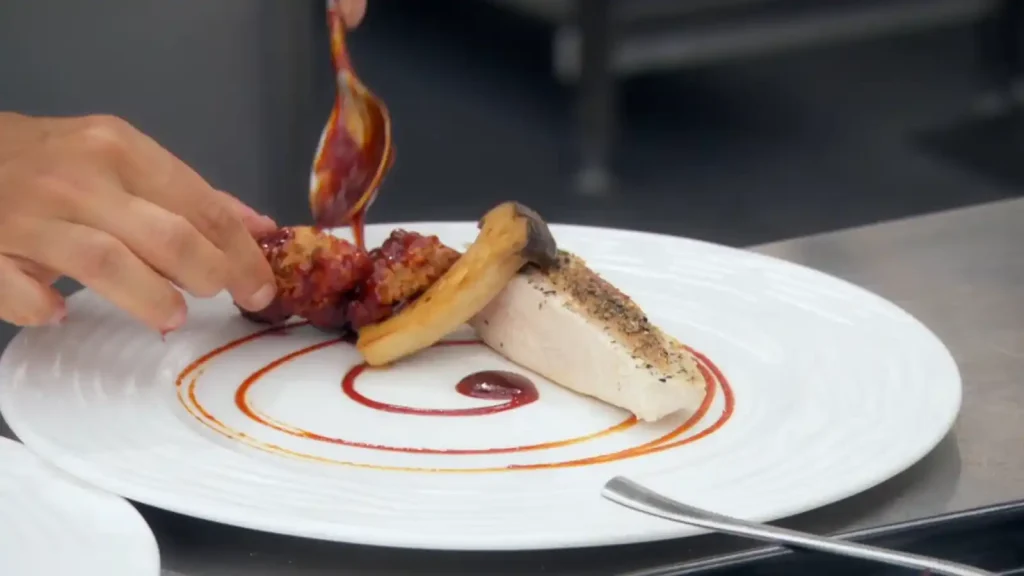
Technical Demands of the Cod Skills Test in MasterChef The Professionals
The first skills test confronting two contestants requires preparing grilled cod’s collar, tempura cod cheeks, and a gochujang Korean-style barbecue sauce within the standard twenty-minute timeframe. This multi-component challenge demands simultaneous management of different cooking techniques while maintaining quality control across all elements. The cod’s collar, located behind the fish’s gills, contains rich, fatty meat that becomes succulent when properly grilled but turns dry and unpalatable when overcooked. Extracting this section requires precise knife work to separate it from the surrounding anatomy without leaving excessive waste or damaging the meat.
Cod cheeks present an entirely different challenge despite coming from the same fish. These small, tender morsels require careful removal from the head structure, with chefs needing to navigate cartilage and bone to extract the meat cleanly. Once removed, the cheeks must be prepared for tempura coating—a process that seems straightforward but reveals competence through execution quality. The tempura batter itself must achieve the proper consistency: too thick and it overwhelms the delicate fish; too thin and it fails to provide adequate coating. Temperature control becomes critical during frying, as cod cheeks cook quickly and demand constant attention to prevent overcooking.
The gochujang sauce component adds another layer of complexity by requiring flavour balancing rather than pure technical skill. Gochujang, a Korean fermented chilli paste, carries substantial heat along with fermented depth and subtle sweetness. Creating a barbecue sauce from this base requires understanding how to modulate its intensity while incorporating complementary ingredients. The sauce must enhance rather than overwhelm the fish, meaning chefs need to taste and adjust constantly during the limited preparation time.
Managing these three components simultaneously within twenty minutes demands strategic planning and efficient movement. Chefs must mentally map their workflow before touching ingredients, determining which elements require longer cooking times and which can be assembled quickly at the end. The collar needs adequate grilling time to render fat and develop char, meaning it should begin cooking relatively early. Tempura preparation must happen just before service to maintain crispness, while the sauce can be prepared earlier and held at appropriate temperature.
The test exposes whether chefs possess genuine filleting competence or merely function adequately within their specialized restaurant roles. A professional who primarily works with pre-portioned fish might struggle with whole fish butchery, while someone from a fish-focused restaurant should demonstrate superior knife skills. These distinctions matter because they reveal the depth and breadth of professional experience. Judges recognize immediately whether a chef has performed these tasks hundreds of times or is attempting them for the first time based on knife confidence and meat yield.
Presentation standards remain as important as technical execution. The grilled collar should show appealing char marks without excessive burning, the tempura should maintain golden colour and crisp texture, and the sauce should be appropriately pooled or drizzled rather than carelessly spooned. Judges evaluate visual appeal alongside flavour because professional chefs must deliver on both dimensions consistently. A technically perfect dish that looks haphazard on the plate fails to meet professional standards.
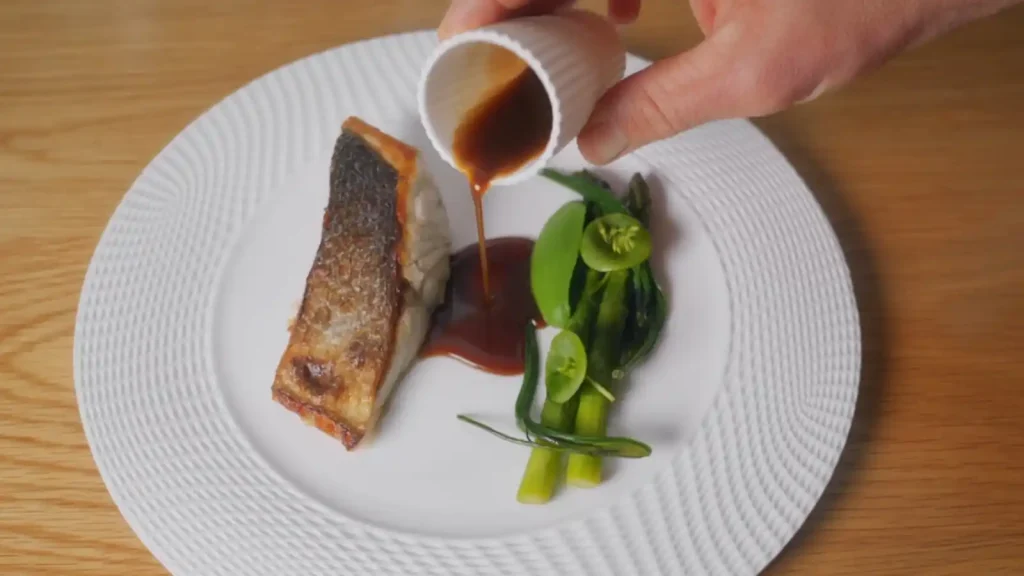
Dumpling Construction and Kimchi Balance in the Second Skills Test
The remaining two chefs face a different challenge centred on mushroom and kimchi-filled dumplings with chilli dipping sauce. This test emphasizes pastry skills and flavour balance rather than fish butchery and frying technique. Dumpling construction begins with wrapper preparation, requiring chefs to create a dough that achieves proper texture—supple enough to fold without cracking yet sturdy enough to contain filling without tearing. The dough must be rolled to consistent thickness, as variations create uneven cooking and structural weaknesses.
Creating the filling presents the test’s central challenge: achieving proper kimchi prominence without allowing other ingredients to dominate. Kimchi carries distinctive fermented tang and chilli heat that should define the dumpling’s flavour profile. Mushrooms provide earthiness and texture but should function as supporting players rather than stars. The balance requires understanding how flavours intensify during cooking and how the wrapper’s neutral taste affects overall perception. Too much mushroom and the kimchi disappears; too much kimchi liquid and the filling becomes sodden and difficult to seal.
Seasoning the filling demands particular care because kimchi already contributes salt and heat. Additional seasoning must enhance rather than clash with these existing elements. Chefs need to taste the raw filling and mentally adjust for how flavours will concentrate during steaming or pan-frying. This predictive ability separates experienced cooks from those still developing their palates. The dipping sauce adds another flavour layer that must complement rather than compete with the dumpling filling, requiring yet another balancing act within the twenty-minute timeframe.
Folding technique reveals whether chefs have dumpling experience or are improvising based on visual memory. Proper dumpling construction requires specific folding patterns that create structural integrity while allowing steam to circulate during cooking. The pleating must seal completely to prevent filling escape, yet the wrapper shouldn’t become so thick at the seam that it cooks unevenly. Judges can identify proper technique immediately by observing hand position and folding rhythm. Confident, experienced hands move quickly through repetitive motions, while uncertain chefs hesitate and produce irregular results.
Cooking method selection matters significantly for final dumpling quality. Pan-frying creates appealing texture contrast between crispy bottom and tender top, but requires careful heat management to prevent burning before the filling cooks through. Steaming produces more uniform texture but demands proper timing to avoid sogginess. Boiling offers speed but increases risk of wrapper breakage if the dough isn’t properly constructed. Within the twenty-minute constraint, chefs must choose their cooking method based on their dumpling construction confidence and available equipment.
The chilli dipping sauce serves as both condiment and flavour statement. It should provide heat that complements rather than obliterates the dumpling’s flavours, with enough complexity to stand as its own component rather than merely providing spice. Balancing acid, heat, salt, and sweetness within a small-volume sauce requires precise measurement or well-developed intuition. The sauce’s consistency matters too—thin enough to coat dumpling surfaces but substantial enough to cling rather than run immediately onto the plate.
This test specifically targets chefs’ comfort with Asian techniques and ingredients. Many professional kitchens in Britain focus on European cooking traditions, meaning some contestants might have limited exposure to kimchi fermentation characteristics or proper dumpling construction. This deliberate knowledge gap tests adaptability and problem-solving ability under pressure. Can chefs who lack specific experience still produce acceptable results through general culinary competence and intelligent ingredient usage? The answer reveals much about their potential for growth within the competition.
The Signature Dish Round as Professional Identity Statement
Following the skills tests, all four chefs proceed to the signature dish round, where ninety minutes allows for substantially more complex preparation and plating. This round fundamentally differs from skills tests because chefs prepare food they have conceptualized, refined, and executed repeatedly in their professional careers. These dishes represent personal culinary philosophy rather than assigned technical challenges. The signature dish reveals each chef’s aesthetic preferences, technical strengths, cultural influences, and ambition level.
Judges expect near-perfect execution during signature rounds because familiarity eliminates uncertainty. A chef preparing their signature dish should move with confidence born from repetition, knowing exactly when to start each component and how long each element requires. Timing mistakes or technique failures during this round carry more weight than skills test struggles because they suggest fundamental competence gaps rather than unfamiliarity with specific techniques. A poorly executed signature dish raises questions about whether the chef truly deserves quarter-final placement.
The dishes presented during this round span culinary traditions and complexity levels, with each chef choosing their own strategic approach. Some select technically intricate dishes with multiple components requiring precise timing coordination, demonstrating ambition and confidence. Others focus on fewer elements executed to exceptional standards, privileging quality over quantity. Neither approach guarantees success; judges evaluate based on execution quality, flavour balance, and overall coherence rather than component count.
Professional chefs understand that signature dishes must tell coherent stories through ingredient selection and preparation method. A dish claiming Mediterranean influence should demonstrate genuine understanding of that region’s flavour principles rather than superficial inclusion of olives and tomatoes. Similarly, a chef presenting modern British cuisine should show thoughtful engagement with seasonal ingredients and traditional techniques reinterpreted through contemporary sensibility. Judges recognize immediately whether dishes reflect genuine culinary perspective or merely assemble trendy ingredients without underlying philosophy.
Plating standards during signature rounds reflect current professional expectations. Chefs must balance visual appeal with practical eating considerations, creating plates that photograph well while remaining functional for diners. Excessive height or architectural complexity often creates eating difficulties, while overly simple presentations might suggest limited technical ability. The ideal signature dish presentation shows restraint and intention, with each element placed purposefully rather than scattered decoratively.
Protein cookery during this round receives particular scrutiny because temperature control and timing reveal core competence. Overcooked fish or underseasoned meat indicates problems with fundamental technique that raise concerns about a chef’s professional reliability. Conversely, perfectly cooked protein with well-executed accompaniments demonstrates the consistent skill required for competition advancement. Judges note not just final temperature but also seasoning penetration, resting time, and sauce integration.
The signature round also reveals each chef’s understanding of portion balance and eating experience. Restaurant-sized portions differ from competition portions, and chefs must adjust accordingly while maintaining their dish’s essential character. Too much food overwhelms judges tasting multiple dishes consecutively, while insufficient quantity might leave flavour profiles underdeveloped. Finding this balance requires understanding the evaluation context and adjusting familiar recipes appropriately.
MasterChef The Professionals Standards and Judging Criteria
Marcus Wareing, Matt Tebbutt, and Monica Galetti bring distinct professional backgrounds to their judging responsibilities, creating a comprehensive evaluation framework. Wareing’s fine dining pedigree means he scrutinizes classical technique and flavour precision. Tebbutt’s broader culinary experience allows him to appreciate diverse cooking styles while maintaining high standards. Galetti’s background spans both high-end service and competition experience, giving her particular insight into pressure management and technical execution. Together they form a judging panel that misses very little.
The judges evaluate skills tests and signature dishes using different criteria suited to each round’s nature. Skills tests focus primarily on technique, efficiency, and problem-solving ability. Can the chef extract cod cheeks cleanly? Does the tempura maintain crispness? Has the gochujang sauce achieved proper balance? These specific, measurable outcomes allow for relatively objective assessment. A chef might struggle with unfamiliar ingredients but demonstrate strong fundamental technique that suggests future potential.
Signature dish evaluation incorporates subjective elements alongside technical assessment. Flavour preferences vary among judges, meaning a dish that appeals strongly to one might leave another less impressed. However, fundamental quality standards remain consistent: protein must be properly cooked, sauces must show proper consistency, seasoning must be appropriate, and the overall dish must demonstrate coherence. Within these parameters, chefs have latitude for creative expression and personal style.
The judging process includes verbal feedback during tasting, allowing chefs to understand their performance immediately. This real-time communication serves multiple purposes. It gives chefs insight into their strengths and weaknesses, helps judges clarify their observations, and provides viewers with educational context about professional standards. The feedback ranges from specific technical corrections to broader philosophical discussions about ingredient combinations and culinary direction.
Judges must make difficult decisions when determining quarter-final advancement, as limited places mean talented chefs face elimination. They consider not just current performance but potential trajectory. A chef who struggled with skills tests but delivered exceptional signature dishes might show greater promise than one who performed adequately across both rounds without particular brilliance. These deliberations balance objective performance metrics against subjective assessments of creativity, potential, and professional growth capacity.
The quarter-final represents a significant competition milestone because advancing chefs face substantially more difficult challenges requiring greater technical range and creative thinking. Judges need confidence that selected chefs possess both current competence and development capacity. This forward-looking evaluation means that a single outstanding dish might outweigh multiple adequate performances if it demonstrates exceptional potential.
Asian Culinary Techniques and Their Competition Relevance
Philli Armitage-Mattin’s selection as skills test designer reflects growing recognition of Asian culinary traditions within professional cooking competitions. Her focus on Korean and broader Asian flavours introduces techniques and ingredients that might fall outside some contestants’ regular practice. This strategic choice tests whether professional chefs maintain curiosity and learning orientation beyond their specialized domains. The ability to engage meaningfully with unfamiliar culinary traditions indicates the intellectual flexibility required for long-term professional growth.
Gochujang represents just one element within Korea’s complex fermented food tradition, carrying distinctive flavour characteristics that differ substantially from European condiments. Its combination of heat, fermentation depth, and subtle sweetness creates flavour complexity that requires understanding for proper application. Chefs unfamiliar with gochujang might struggle to gauge appropriate quantities or complementary ingredients, potentially creating imbalanced sauces that overwhelm rather than enhance the fish.
Tempura technique, while associated primarily with Japanese cuisine, demonstrates principles applicable across multiple cooking traditions. The batter’s lightness depends on specific mixing methods and temperature management, with overworking creating gluten development that produces heavy, dense coating. Ice-cold water helps maintain proper texture, while frying temperature must be carefully controlled to achieve golden colour without greasiness. These technical requirements test fundamental cooking knowledge rather than specialized training.
Kimchi brings additional complexity through its fermentation characteristics. The cabbage undergoes lactic acid fermentation that creates distinctive tang while maintaining vegetable texture. This fermentation process intensifies flavours, meaning fresh kimchi tastes substantially different from well-aged versions. Chefs must understand these variations when incorporating kimchi into dumpling fillings, adjusting other ingredients to accommodate its particular flavour contribution. The fermentation also introduces moisture that affects filling consistency and wrapper sealing.
Dumpling construction spans numerous Asian culinary traditions, each with particular folding styles and wrapper characteristics. Chinese dumplings differ from Korean mandu, which differ from Japanese gyoza, despite sharing fundamental construction principles. The test doesn’t require specific regional authenticity but rather competent execution of basic dumpling assembly. Chefs should produce properly sealed, evenly cooked dumplings with balanced filling regardless of which particular folding pattern they employ.
The inclusion of these Asian techniques within MasterChef The Professionals 2026 episode 4 reflects broader culinary industry trends toward ingredient and technique diversity. Professional kitchens increasingly incorporate global influences rather than remaining within single culinary traditions. Chefs who limit themselves to narrow technique ranges face professional limitations, while those maintaining curiosity and learning capacity position themselves for greater opportunities. The competition mirrors these industry realities through its challenge design.
Pressure Management and Professional Performance Under Scrutiny
The cooking competition environment creates psychological pressure that differs substantially from regular restaurant service. Professional chefs typically work within familiar systems supported by established teams and backup resources. The MasterChef kitchen strips away these supports, placing individual chefs alone at their stations with limited equipment and unfamiliar surroundings. This isolation intensifies stress and reveals how chefs respond when comfortable structures disappear.
Time pressure during skills tests creates particular difficulty because twenty minutes allows minimal error margin. A chef who spends too long on initial filleting might rush tempura preparation, compromising quality. Conversely, someone working too quickly might make knife mistakes that waste product or create unusable pieces. Finding the appropriate pace requires experience and self-awareness—qualities that develop through years of professional practice but might fail under competition stress.
The judges’ physical presence during cooking adds another pressure layer. Unlike restaurant kitchens where chef-proprietors might periodically observe service, the MasterChef environment features constant scrutiny from multiple expert observers. Chefs can feel judges watching their knife work, noting their organization, and silently evaluating their technique. This awareness can either sharpen focus or create self-consciousness that disrupts natural cooking rhythm.
Some chefs thrive under competitive pressure, finding that heightened stakes improve their concentration and performance. Others struggle despite possessing excellent technical skills because the environment overwhelms their coping mechanisms. The competition deliberately creates these conditions because professional cooking involves substantial pressure even outside competitive contexts. A chef who cannot manage skills test stress might similarly struggle during intense restaurant service or when cooking for important guests.
The signature dish round offers partial pressure relief because familiarity reduces uncertainty. However, the stakes remain high because poor signature dish performance can eliminate quarter-final chances regardless of skills test results. Chefs must manage their nerves while maintaining the precision their familiar dishes require. Overconfidence presents as much danger as anxiety—a chef might rush through routine steps, assuming muscle memory will ensure success, only to discover that competition stress has disrupted their normal workflow.
Recovery ability matters substantially when mistakes occur. Professional kitchens demand rapid problem-solving when unexpected issues arise, and competitions test this capacity by placing chefs in challenging situations. A chef who burns their tempura must quickly adjust their approach, while someone whose dumpling wrappers tear needs immediate solutions. The ability to adapt and recover without panicking distinguishes resilient competitors from those who crumble when plans go awry.
Quarter-Final Implications and Competition Trajectory
Advancing to the quarter-finals represents significant achievement because fewer than half of heat competitors reach this stage. The quarter-finals introduce new challenges designed to test skills and creativity beyond heat round requirements. Chefs who advance face more complex technical tasks, stricter time constraints, and higher judge expectations. Each subsequent competition round eliminates additional competitors until only the most capable remain.
The 2026 MasterChef: The Professionals champion title represents the competition’s ultimate goal, offering winner substantial professional credibility and career opportunities. Previous winners have leveraged their victory into cookbook deals, television appearances, and elevated restaurant positions. The title carries weight within the professional culinary community because it signals not just technical competence but also creativity, consistency, and pressure management ability.
Judges select quarter-finalists based on demonstrated potential rather than perfect performance. They recognize that even talented chefs might struggle with unfamiliar techniques during skills tests while showing exceptional ability during signature rounds. The evaluation considers overall trajectory—whether chefs show learning capacity, creative thinking, and technical range that suggests continued improvement. A chef with obvious gaps but exceptional strengths might advance over someone consistently adequate but lacking distinctive brilliance.
The quarter-final challenges remain undisclosed during heat rounds, maintaining uncertainty that prevents strategic preparation. Chefs know they will face difficult tasks but cannot predict specific requirements. This ambiguity tests adaptability and general competence rather than specialized preparation. The competition structure rewards chefs with broad skill sets and intellectual flexibility over those who excel within narrow domains.
Professional advancement beyond the competition requires sustained excellence rather than single performances. The MasterChef platform offers visibility and credibility, but long-term career success depends on consistent professional performance after cameras stop rolling. Judges recognize this reality when selecting quarter-finalists, looking for qualities that translate beyond competitive contexts into sustainable professional excellence.
Culinary Competition Evolution and Professional Standards
MasterChef The Professionals has evolved substantially since its inception, with current challenges reflecting elevated professional expectations and broader culinary influences. Early series focused primarily on classical European techniques, while recent seasons incorporate global ingredients and cooking methods. This evolution mirrors professional kitchen trends toward culinary fusion and technique diversity. The show maintains relevance by adapting its challenges to match current industry standards and expectations.
The skills tests designed by previous finalists like Philli Armitage-Mattin introduce personal perspectives that vary from those of permanent judges. This rotation prevents predictability while exposing contestants to different culinary philosophies and technique emphasis. Guest judges bring specialized knowledge that enriches the competition’s educational value while challenging contestants to adapt to varying standards and expectations.
Professional chefs entering the competition increasingly come from diverse culinary backgrounds rather than traditional fine dining trajectories. This democratization reflects broader industry changes as food television and social media create alternative paths to culinary recognition. The competition accommodates these varied backgrounds by including challenges that test different skill sets rather than focusing exclusively on classical French techniques.
The show’s educational function extends beyond entertainment, demonstrating professional standards and techniques to aspiring chefs and interested viewers. Detailed feedback during judging rounds explains why certain approaches succeed while others fail, building culinary literacy among audiences. This educational component adds value beyond simple competition drama, positioning the show as genuine culinary instruction rather than pure entertainment.
Competition preparation has become more sophisticated as the show’s prominence has grown. Professional chefs study previous seasons, analyze judge preferences, and deliberately prepare for likely challenge categories. This preparation arms race raises overall performance standards, forcing producers to design increasingly difficult challenges that test even well-prepared contestants. The escalating difficulty maintains competitive integrity while ensuring that advancing requires genuine excellence rather than adequate preparation.
The cooking show format influences professional kitchen culture by creating aspirational models for young chefs. Successful competitors demonstrate that sustained excellence and creative thinking lead to recognition and opportunity. This aspirational function motivates culinary professionals to refine their skills and develop distinctive cooking styles. The competition’s influence extends beyond individual participants to affect broader professional standards and expectations throughout the industry.
FAQ MasterChef The Professionals 2026 episode 4
Q: What makes the skills tests in MasterChef The Professionals so challenging for experienced chefs?
A: The skills tests challenge professional chefs by removing familiarity and forcing them to execute unfamiliar techniques within a twenty-minute timeframe. Unlike their regular kitchen environments where chefs work with known ingredients and established systems, these tests demand instant adaptation to new recipes and methods. Furthermore, the tests often incorporate culinary traditions outside contestants’ expertise, such as Asian techniques requiring specific knowledge of ingredients like gochujang or kimchi. Judges scrutinize every knife stroke and seasoning decision, intensifying pressure that can destabilize even seasoned practitioners who typically operate within comfortable specializations.
Q: Who designed the skills tests for MasterChef The Professionals 2026 episode 4?
A: Philli Armitage-Mattin, the 2020 professional finalist, designed both skills tests for this episode. She created challenges reflecting her culinary passion for Asian-inspired cuisine, which led to her cookbook Taste Kitchen: Asia. Consequently, both tests incorporated Asian techniques and ingredients, including Korean gochujang sauce, tempura preparation, and kimchi-filled dumplings. Her involvement demonstrates how successful competitors can return to the competition in different capacities, bringing specialized knowledge that challenges contestants to expand beyond their usual cooking domains while testing adaptability and technical range.
Q: What technical skills are required for preparing cod’s collar and cheeks?
A: Preparing cod’s collar requires precise knife work to separate the fatty meat located behind the fish’s gills without excessive waste or damage. Chefs must navigate complex fish anatomy while maintaining usable portions. Meanwhile, cod cheeks demand careful extraction from the head structure, requiring navigation around cartilage and bone to remove these tender morsels cleanly. Additionally, the cheeks need proper preparation for tempura coating, with batter consistency balanced perfectly—neither too thick to overwhelm the delicate fish nor too thin to provide adequate coverage. Temperature control during frying becomes critical since cod cheeks cook rapidly.
Q: How does the signature dish round differ from the skills tests?
A: The signature dish round provides ninety minutes for chefs to prepare food they have conceptualized and refined repeatedly in their professional careers, representing personal culinary philosophy rather than assigned challenges. Consequently, judges expect near-perfect execution because familiarity eliminates uncertainty about techniques or timing. Poor performance during signature rounds carries more weight than skills test struggles since mistakes suggest fundamental competence gaps rather than unfamiliarity. Moreover, this round reveals each chef’s aesthetic preferences, technical strengths, cultural influences, and ambition level through dishes that tell coherent stories about their culinary identity and professional expertise.
Q: What are the common challenges when making kimchi-filled dumplings?
A: Creating kimchi-filled dumplings requires achieving proper flavour balance where kimchi’s fermented tang and heat define the profile without being overwhelmed by mushrooms or other ingredients. The wrapper preparation demands creating dough that remains supple enough to fold without cracking yet sturdy enough to contain filling without tearing. Additionally, kimchi introduces moisture from fermentation that affects filling consistency and wrapper sealing, requiring careful management. Chefs must also master specific folding patterns that create structural integrity while allowing steam circulation, with complete sealing to prevent filling escape. Furthermore, cooking method selection impacts final texture significantly.
Q: How do judges evaluate performance during MasterChef The Professionals?
A: Marcus Wareing, Matt Tebbutt, and Monica Galetti evaluate skills tests primarily on technique, efficiency, and problem-solving ability through measurable outcomes like clean cod cheek extraction or proper tempura crispness. Conversely, signature dish evaluation incorporates subjective elements alongside technical assessment, considering flavour preferences while maintaining consistent quality standards for protein cooking, sauce consistency, and seasoning appropriateness. Importantly, judges consider not just current performance but potential trajectory when selecting quarter-finalists. They balance objective performance metrics against subjective assessments of creativity, potential, and professional growth capacity, recognizing that exceptional promise might outweigh consistent adequacy.
Q: Why do skills tests incorporate Asian culinary techniques in this competition?
A: Asian culinary techniques test whether professional chefs maintain curiosity and learning orientation beyond their specialized domains, indicating intellectual flexibility required for long-term professional growth. These techniques might fall outside some contestants’ regular practice, deliberately creating knowledge gaps that test adaptability and problem-solving under pressure. Moreover, the inclusion reflects broader culinary industry trends toward ingredient and technique diversity, as professional kitchens increasingly incorporate global influences rather than remaining within single culinary traditions. This strategic choice ensures the competition mirrors industry realities where chefs who limit themselves to narrow technique ranges face professional limitations.
Q: What pressure management challenges do chefs face during the competition?
A: The competition environment strips away familiar systems and team support, placing individual chefs alone at stations with limited equipment and unfamiliar surroundings. This isolation intensifies stress significantly compared to regular restaurant service where established structures provide comfort. Additionally, constant scrutiny from expert judges creates awareness that can either sharpen focus or disrupt natural cooking rhythm through self-consciousness. Twenty-minute skills tests allow minimal error margin, requiring perfect pace management where spending too long on one task forces rushing others. Some chefs thrive under heightened stakes while others struggle despite excellent technical skills because the environment overwhelms their coping mechanisms.
Q: What does advancing to the quarter-finals signify for contestants?
A: Reaching the quarter-finals represents significant achievement since fewer than half of heat competitors advance to this stage, which introduces more complex technical tasks and stricter time constraints. Quarter-finalists face higher judge expectations and challenges designed to test skills and creativity beyond heat round requirements. Importantly, judges select quarter-finalists based on demonstrated potential rather than perfect performance, evaluating overall trajectory and whether chefs show learning capacity, creative thinking, and technical range suggesting continued improvement. The advancement offers substantial professional credibility and positions chefs closer to the championship title, which previous winners have leveraged into cookbook deals and elevated restaurant positions.
Q: How has MasterChef The Professionals evolved to reflect modern culinary standards?
A: The competition has evolved from focusing primarily on classical European techniques to incorporating global ingredients and cooking methods, mirroring professional kitchen trends toward culinary fusion and technique diversity. Skills tests designed by previous finalists introduce personal perspectives and specialized knowledge that vary from permanent judges, preventing predictability while enriching educational value. Furthermore, the show accommodates increasingly diverse contestant backgrounds beyond traditional fine dining trajectories, reflecting how food television and social media create alternative paths to culinary recognition. Escalating challenge difficulty maintains competitive integrity as preparation becomes more sophisticated, ensuring advancement requires genuine excellence rather than adequate preparation alone.