
The tension in the kitchen is palpable as professional baking teams face their most demanding challenges yet in Bake Off The Professionals 2025 Episode 2. You can almost taste the anticipation as skilled pastry chefs prepare to showcase their technical prowess and creative vision. This episode promises to be a masterclass in precision, innovation, and artistic expression that will leave viewers both inspired and hungry for more.
What makes this particular episode extraordinary is the perfect balance between technical skill and creative freedom. The contestants must navigate three distinct challenges that test every aspect of their professional training. From the exacting standards of French patisserie to the delicate art of fruit tart innovation, each task demands nothing short of perfection.
The first challenge immediately sets the bar sky-high with the creation of 24 identical Le Petit Antoine pastries. These delicate French confections are like tiny architectural marvels, requiring each team to demonstrate surgical precision in their execution. Every layer, every curve, and every finishing touch must mirror its siblings with mathematical accuracy. The slightest deviation becomes glaringly obvious when multiplied across two dozen pieces.
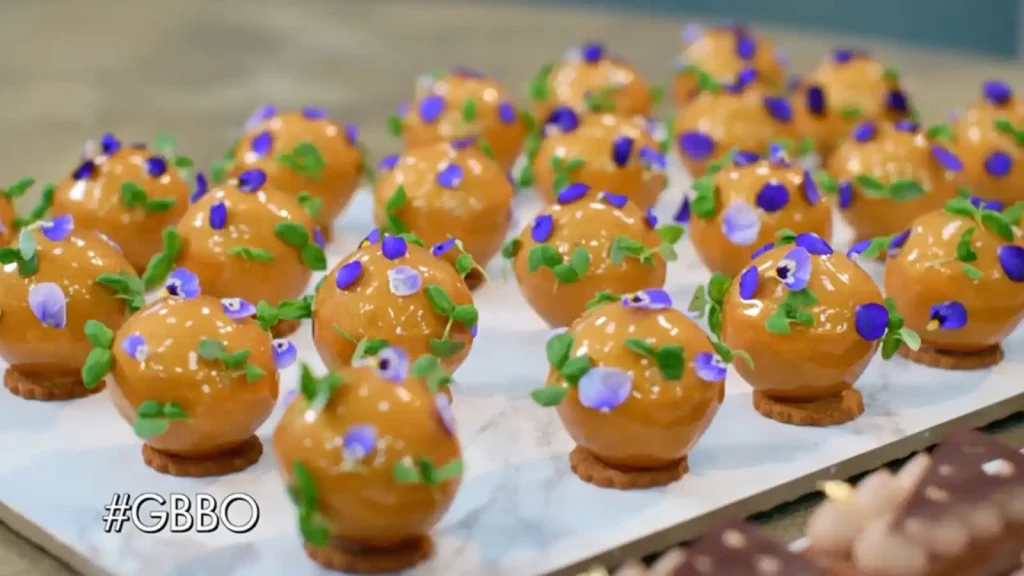
Simultaneously, the teams must craft 24 reinvented fruit tarts that breathe new life into a classic dessert. This challenge becomes a dance between tradition and innovation, where respected techniques meet bold creativity. The fruit tarts serve as canvases for culinary artistry, allowing each team to showcase their unique perspective while honoring the fundamental principles of pastry making.
However, the true test of mastery arrives with the showpiece challenge, where teams must create serenity itself through sugar, flour, and imagination. The Japanese garden theme transforms the kitchen into a zen meditation space, demanding that contestants channel tranquility through their craft. This isn’t merely about baking; it’s about storytelling through edible architecture.
The showpiece requirements elevate the competition to new heights, as teams must incorporate roll cakes into their Japanese-inspired designs. These delicate sponge creations become both structural elements and artistic flourishes, requiring teams to think like engineers and artists simultaneously. The roll cakes must seamlessly integrate into garden scenes that evoke peace, balance, and natural beauty.
The Technical Precision of Le Petit Antoine
Mastering Le Petit Antoine requires more than just following a recipe—it demands understanding the soul of French patisserie. These miniature masterpieces test every fundamental skill, from temperature control to timing precision. Each component must harmonize perfectly with the others, creating a symphony of flavors and textures that speaks to generations of pastry tradition.
The challenge intensifies when multiplied by 24, as consistency becomes the ultimate test. Professional bakers know that creating one perfect pastry is challenging enough, but replicating that perfection dozens of times separates the truly skilled from the merely competent. Every measurement, every technique, and every moment of timing must remain constant across the entire batch.
Reimagining Classic Fruit Tarts
The fruit tart challenge offers teams a canvas for creative expression while respecting culinary heritage. Traditional fruit tarts have graced tables for centuries, yet this bake off challenge demands fresh interpretation without sacrificing the essence that makes them beloved. Teams must balance innovation with familiarity, creating something both surprising and comforting.
Success here requires understanding how different fruits interact with pastry, custard, and glazes. The reinvention process becomes a careful negotiation between flavor profiles, textures, and visual appeal. Each team’s approach reveals their culinary philosophy and their ability to honor tradition while pushing boundaries.
Creating Zen Through Pastry Art
The Japanese garden showpiece represents the episode’s creative pinnacle, where technical skills merge with artistic vision. Teams must capture the essence of tranquility through edible media, creating landscapes that transport viewers to peaceful garden spaces. The challenge requires understanding not just baking techniques, but also principles of design, balance, and aesthetic harmony.
Roll cakes become versatile building blocks in these edible gardens, serving as everything from decorative elements to structural foundations. Their flexibility allows for creative interpretations of natural forms, from flowing water features to rolling hills. The key lies in making these sponge components feel integral to the overall design rather than merely decorative afterthoughts.
What Makes This Episode Stand Out
Bake Off The Professionals 2025 Episode 2 distinguishes itself through the thoughtful progression of its challenges. Each task builds upon the previous one, creating a comprehensive test of professional baking abilities. The episode showcases how technical precision, creative innovation, and artistic vision must work together in professional kitchens.
The combination of French technique, creative interpretation, and Japanese aesthetics creates a unique culinary journey. Viewers witness not just competition, but education in the highest levels of pastry craft. This episode proves that professional baking transcends mere cooking—it’s a form of edible art that nourishes both body and soul.
Bake Off The Professionals 2025 Episode 2
Bake Off The Professionals 2025 Episode 2 delivered an intense culinary battle as five remaining pastry chef teams faced their most demanding challenges yet. This pivotal episode of the acclaimed British baking competition showcased the extraordinary skills required at professional pastry level, where precision meets creativity under extreme time pressure.
The stakes couldn’t be higher in this second installment of Bake Off The Professionals 2025. With one team already eliminated in the opening episode, the remaining contestants knew that every piped decoration, every perfectly tempered chocolate element, and every flavor balance would determine their survival in the competition. The episode demonstrated why this series has become the ultimate proving ground for Britain’s most talented pastry professionals.
This episode explored two distinct culinary traditions through its dual-challenge format. Teams first tackled classic French patisserie techniques before transitioning to Japanese-inspired artistry, creating a fascinating study in how professional chefs adapt their skills across different cultural contexts. The challenges tested not only technical proficiency but also creative interpretation and time management under pressure.
The format of Bake Off The Professionals continues to push boundaries in competitive baking television. Unlike amateur competitions, these professional teams bring years of commercial kitchen experience, yet still struggle with the unique pressures of competition baking. Each team represents different establishments across Britain, from independent bakeries to luxury hotel chains, showcasing the diverse landscape of professional pastry work.
The episode’s structure reflected the reality of professional pastry kitchens, where chefs must simultaneously manage multiple complex projects while maintaining exacting standards. This realistic approach to competition baking sets the series apart from other culinary competitions, offering viewers insight into the genuine demands of professional pastry work.
French Mastery Under Pressure
The skills challenge centered on two French classics that form the foundation of professional patisserie training. Teams faced the daunting task of producing 48 identical desserts in just three and a half hours: 24 le petit antoine and 24 reimagined fruit tarts. The le petit antoine, a sophisticated layered dessert featuring praline, hazelnut dacquoise, dark chocolate cream, and milk chocolate chantilly, demanded perfect execution at every level.
Judge Benoit, bringing authentic French expertise to the evaluation, emphasized the importance of proper layering and proportion in the petit antoine. His assessment revealed how these classic desserts serve as benchmarks for professional skill, where minor variations in technique become glaringly obvious. The challenge highlighted the precision required in professional patisserie, where consistency across 24 identical pieces separates experienced chefs from novices.
The fruit tart reimagination challenge pushed teams beyond mere technical replication into creative territory. While maintaining the essential elements of crunch, cream, and fruit, teams had to demonstrate their ability to innovate within traditional frameworks. This balance between respect for culinary heritage and modern creativity represents a constant challenge in contemporary professional pastry work.
Several teams struggled with fundamental techniques during this challenge. DeShantha and Dominic’s difficulties with proportion and flavor balance foreshadowed their eventual elimination, while Dane and Sally’s over-sweetened creation demonstrated how easily professional expertise can falter under competition pressure. Meanwhile, Ericsson and Jamie’s elegant “Barbara” fruit tart earned particular praise for its refined execution and balanced flavors.
Innovation Through Japanese Aesthetics
The showpiece challenge transported teams into unfamiliar territory with its Japanese zen garden theme. This cultural shift required contestants to research and interpret aesthetic principles foreign to traditional European pastry training. Teams had four hours plus overnight preparation time to create elaborate showpieces incorporating enough whole cakes to serve 24 people.
The Japanese theme proved particularly challenging because it demanded restraint and minimalism—qualities often at odds with the elaborate decoration traditions of European patisserie. Successful teams like Darion and Yudera embraced authentic Japanese elements, incorporating traditional materials and techniques such as torii gates, hand-painted koi fish, and carefully considered spatial relationships that reflected genuine zen garden principles.
Technical execution varied dramatically across the showpieces. While some teams created visually stunning displays, others struggled with basic construction and decoration. The challenge revealed how professional pastry chefs must rapidly acquire knowledge outside their training when competition demands innovation. Teams researched sake varieties, mochi textures, and traditional Japanese flavors like yuzu and black sesame to create authentic taste experiences.
The integration of roll cakes into the showpieces required sophisticated planning and execution. These weren’t simple Swiss rolls but complex constructions featuring multiple fillings, decorative sponge patterns, and careful assembly techniques. The success of each showpiece depended heavily on how seamlessly teams incorporated these functional dessert elements into their artistic vision.
Technical Mastery and Creative Vision
Throughout both challenges, the episode showcased the multifaceted skills required in professional pastry work. Beyond basic baking techniques, teams demonstrated sugar work, chocolate tempering, intricate piping, and artistic decoration. The complexity of creating 48 identical petit antoine while simultaneously constructing elaborate showpieces highlighted the stamina and organization essential in professional kitchens.
Time management emerged as perhaps the most critical skill displayed in Bake Off The Professionals 2025 Episode 2. Successful teams like Darion and Yudera maintained calm focus while weaker teams became visibly stressed as deadlines approached. This psychological pressure often separated technically competent teams from true professionals who thrive under demanding conditions.
The judging process revealed the minute details that distinguish professional-level work. Cherish and Benoit evaluated not only taste and visual appeal but also consistency, innovation, and technical precision. Their critiques demonstrated how professional pastry standards extend far beyond what might satisfy amateur competitions, requiring mastery of classical techniques combined with creative vision.
Equipment usage and ingredient selection also played crucial roles in team success. Professional-grade thermomix machines, precise temperature control for chocolate work, and specialized molds all factored into final results. The episode illustrated how professional pastry relies heavily on understanding and maximizing these tools while working within strict time constraints.
Elimination and Rising Stakes
The elimination of DeShantha and Dominic from Marriott International highlighted how quickly fortunes can change in professional competition. Despite their hospitality industry experience, they struggled with both technical execution and creative vision throughout the episode. Their departure reduced the field to four teams, intensifying competition for remaining contestants.
Darion and Yudera’s victory demonstrated the rewards of thorough preparation and cultural research. Their authentic Japanese showpiece, featuring traditional elements like deer scarers and carefully balanced flavors, impressed judges with both technical skill and artistic integrity. This win positioned them as early favorites while establishing high standards for future challenges.
The ranking system employed in Bake Off The Professionals creates ongoing pressure even for successful teams. Second-place finishers Ericsson and Jamie, despite their previous day’s success, faced criticism for their overly colorful Japanese garden interpretation. This feedback loop ensures that no team can coast on previous victories, maintaining tension throughout the competition.
The Art of Excellence Under Fire
Bake Off The Professionals 2025 Episode 2 ultimately revealed that true mastery in professional pastry extends far beyond technical skill—it’s about grace under pressure, cultural adaptability, and the relentless pursuit of perfection multiplied by dozens. Like master craftsmen of old who could create beauty while the world watched, these professional teams demonstrated that excellence isn’t just about knowing how to bake; it’s about executing flawlessly when everything is on the line.
The episode’s dual-challenge structure illuminated a fundamental truth about professional baking: versatility separates good chefs from great ones. Teams that thrived, particularly Darion and Yudera, showed remarkable ability to pivot from the precise mathematics of French patisserie to the philosophical minimalism of Japanese aesthetics. This cultural code-switching represents the modern reality of professional kitchens, where chefs must be culinary chameleons, adapting their expertise to meet diverse customer expectations and creative challenges.
Perhaps most striking was how the competition exposed the psychological demands of professional baking. While technical skills can be taught and practiced, the mental fortitude to maintain consistency across 48 identical pastries while simultaneously constructing elaborate showpieces cannot be easily replicated. The elimination of experienced professionals like DeShantha and Dominic proved that in high-stakes environments, even seasoned expertise can crumble under pressure.
The innovation displayed throughout Bake Off The Professionals 2025 also signals exciting directions for the pastry industry. Teams successfully merged traditional techniques with contemporary creativity, suggesting that the future of professional baking lies not in abandoning classical training but in using it as a foundation for bold experimentation. The Japanese garden challenge, in particular, demonstrated how cultural exploration can push pastry arts into new territories of expression.
For aspiring pastry professionals watching this episode, the message is clear: technical competence is merely the entry fee to elite competition. True success requires developing what might be called “competitive resilience”—the ability to maintain creative vision while executing precise techniques under intense scrutiny. The teams that advanced didn’t just bake well; they performed exceptionally when performance mattered most.
As the competition narrows and stakes intensify, remaining teams face an increasingly demanding path. Each future challenge will likely demand even greater innovation, precision, and mental toughness. The early episodes of Bake Off The Professionals 2025 have established a standard that promises to push professional baking to its absolute limits, offering viewers unprecedented insight into what separates competent professionals from true culinary artists.
FAQ Bake Off The Professionals 2025 Episode 2
Q: What is Bake Off The Professionals 2025 Episode 2?
A: Bake Off The Professionals 2025 Episode 2 is the second installment of Britain’s premier professional pastry competition. This episode featured five remaining teams of skilled pastry chefs competing in demanding challenges that tested both technical precision and creative artistry. Unlike amateur baking shows, this competition showcases professionals from established bakeries, hotels, and restaurants across Britain, demonstrating the highest levels of pastry craftsmanship under intense time pressure.
Q: What challenges did teams face in Episode 2?
A: Teams encountered three distinct challenges designed to test different aspects of professional baking expertise. The skills challenge required creating 48 identical desserts: 24 Le Petit Antoine pastries and 24 reimagined fruit tarts in just three and a half hours. Additionally, teams had to construct elaborate Japanese zen garden showpieces incorporating roll cakes, demanding both technical mastery and artistic vision while working within strict time constraints.
Q: Who were the judges evaluating the contestants?
A: The contestants were evaluated by two expert judges: Benoit, who brought authentic French patisserie expertise to assess technical execution, and Cherish, who evaluated creativity and overall presentation. These judges applied professional industry standards, examining not only taste and visual appeal but also consistency, innovation, and technical precision. Their critiques demonstrated how professional pastry standards extend far beyond amateur competition requirements.
Q: What is Le Petit Antoine and why was it challenging?
A: Le Petit Antoine is a sophisticated French layered dessert featuring praline, hazelnut dacquoise, dark chocolate cream, and milk chocolate chantilly topped with chocolate decoration. The challenge intensified because teams needed to create 24 identical pieces with mathematical precision. Every layer, proportion, and finishing touch had to remain consistent across the entire batch, separating truly skilled professionals from merely competent bakers.
Q: How did the fruit tart reimagination challenge work?
A: The fruit tart challenge required teams to reinvent a classic French dessert while maintaining three essential elements: crunch, cream, and fruit. Teams had creative freedom to interpret these components innovatively, but the fruit had to remain the hero of the dessert. This challenge tested their ability to balance respect for culinary heritage with modern creativity, demonstrating their unique culinary philosophy and technical adaptability.
Q: What was the Japanese zen garden showpiece challenge?
A: The showpiece challenge transported teams into unfamiliar cultural territory, requiring them to create edible Japanese zen gardens that captured tranquility and balance. Teams had four hours plus overnight preparation to construct elaborate displays incorporating enough roll cakes to serve 24 people. The challenge demanded understanding of Japanese aesthetic principles like minimalism and spatial harmony, pushing European-trained pastry chefs beyond their traditional comfort zones.
Q: Which team won Episode 2 and why?
A: Darion and Yudera from The Net claimed victory in Episode 2 through their exceptional Japanese showpiece featuring authentic elements like torii gates and hand-painted koi fish. Their success stemmed from thorough cultural research, technical precision, and innovative flavor combinations including sake gel, rice chantilly, and melon compote. The judges praised their ability to capture genuine Japanese zen garden principles while delivering outstanding taste experiences.
Q: Who was eliminated in Episode 2?
A: DeShantha and Dominic from Marriott International were eliminated after struggling with both technical execution and creative vision throughout the episode. Despite their hospitality industry experience, they faced difficulties with proportion, flavor balance, and decoration consistency. Their departure highlighted how quickly professional reputations can falter under competition pressure, reducing the field to four remaining teams for future challenges.
Q: What made this episode different from amateur baking competitions?
A: This episode distinguished itself through professional-level expectations including creating 48 identical pastries simultaneously while constructing elaborate showpieces. The judges applied commercial kitchen standards, evaluating consistency, technical precision, and time management skills essential in professional environments. Additionally, teams represented established businesses rather than home bakers, showcasing the diverse landscape of Britain’s professional pastry industry and real workplace pressures.
Q: How many teams remain after Episode 2?
A: Following the elimination of DeShantha and Dominic, four teams remain in the competition: Darion and Yudera (first place), Ericsson and Jamie (second place), Harry and Jim (third place), and Dane and Sally (fourth place). This reduction intensifies competition pressure as remaining teams face increasingly demanding challenges. Each subsequent episode will likely push professional baking standards even higher, testing these skilled pastry chefs to their absolute limits.


