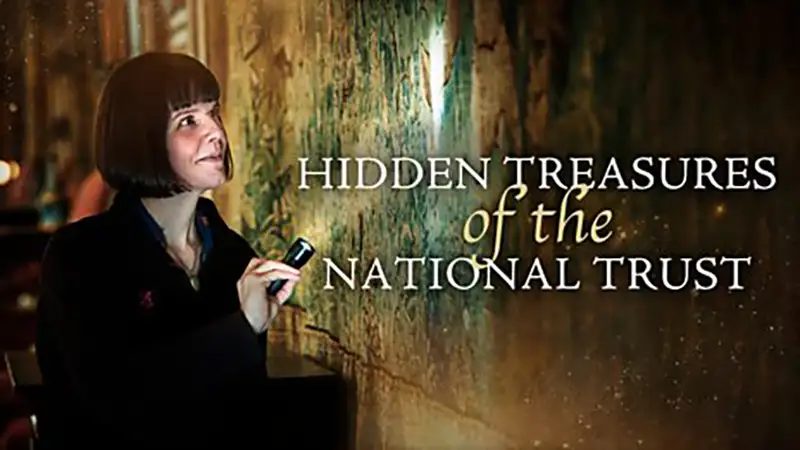
Hidden Treasures of the National Trust 2025 episode 5 reveals the extraordinary lives of three visionary men whose radical ideas fundamentally transformed British society, culture, and architecture during pivotal moments in history. This latest installment in the acclaimed documentary series takes viewers behind the scenes at some of Britain’s most significant historic properties, where dedicated conservators work tirelessly to preserve the legacies of these remarkable individuals.
The three men featured represent different eras of innovation and social change. Erno Goldfinger revolutionized modern living through his pioneering architectural designs in 1930s Hampstead. Walter Samuel, the 2nd Viscount Bearsted, democratized access to fine art while using his vast Shell oil fortune to save lives during World War II. Thomas Carlyle reshaped Victorian literature and historical writing from his modest Chelsea home, becoming the era’s most celebrated intellectual celebrity. Their stories interweave themes of artistic vision, social responsibility, and cultural transformation that continue to resonate today.
Hidden Treasures of the National Trust 2025 episode 5 focuses particularly on the meticulous conservation work required to preserve these men’s most treasured possessions. From a malfunctioning kinetic sculpture by Argentinian artist Hugo Demarco in Goldfinger’s collection to a darkened 16th-century Tintoretto masterpiece owned by Samuel, the documentary showcases the complex scientific and artistic processes involved in restoration. Meanwhile, the discovery of a previously unknown letter from William Makepeace Thackeray provides new insights into the literary salon culture that flourished around Thomas and Jane Carlyle.
The National Trust’s conservation efforts represent far more than simple preservation; they constitute acts of cultural archaeology that unlock hidden stories and restore lost meanings. These historic properties serve as time capsules, containing not only physical artifacts but also the ideas, relationships, and social movements that shaped modern Britain. Each conservation project becomes an investigation into the past, revealing how these three men challenged conventional thinking and pushed society toward progress.
The documentary demonstrates how conservation work requires both cutting-edge scientific analysis and traditional craftsmanship. Advanced imaging techniques, including X-ray analysis and specialized solvents, work alongside centuries-old restoration methods to breathe new life into aging masterpieces. This blend of modern technology and artisanal skill reflects the same innovative spirit that characterized the three historical figures themselves.
These preservation efforts ensure that future generations can experience the full impact of these men’s revolutionary contributions. From Goldfinger’s space-age furniture designs to Samuel’s philanthropic correspondence documenting the Kindertransport rescue operation, every restored object tells part of a larger story about how individual vision can reshape society.
Hidden Treasures of the National Trust 2025 episode 5
Erno Goldfinger and Modernist Living at Willow Road
Number 2 Willow Road in Hampstead stands as a brick-and-glass manifesto for modern living, designed by Hungarian-born architect Erno Goldfinger in the 1930s. This radical departure from traditional Georgian architecture initially faced fierce local opposition, with residents objecting to its stark modernist aesthetic in the leafy suburban setting. However, Goldfinger’s vision extended far beyond mere architectural style to encompass a complete reimagining of domestic space and daily life.
Goldfinger’s innovative spatial thinking permeated every aspect of the house’s design, from his ingenious 360-degree rotating drawers that eliminated the need to “scrounge for things at the back” to the strategic placement of his avant-garde art collection. His study wall still displays the hat of his mentor, Auguste Perret, the pioneering French architect who introduced Goldfinger to the revolutionary potential of reinforced concrete. This personal touch reflects Goldfinger’s belief that living spaces should seamlessly integrate functionality with aesthetic and emotional significance.
The house became a gathering place for Hampstead’s progressive intellectual community, hosting sophisticated parties where guests discussed politics, art, and philosophy over champagne and smoked salmon. These social gatherings, remembered fondly by Goldfinger’s granddaughter Pippa, exemplified the architect’s vision of modern living as inherently social and culturally engaged. The recently restored kinetic artwork by Hugo Demarco, with its mysteriously floating metal discs, perfectly captures this blend of technological innovation and artistic expression that defined Goldfinger’s aesthetic philosophy.
Walter Samuel’s Philanthropic Vision at Upton House
Walter Samuel transformed the 80-room Upton House in Warwickshire into something unprecedented: a private residence that functioned simultaneously as a world-class art gallery accessible to the public. His collection of nearly 200 artworks by 124 artists represents one of England’s finest assemblages of Old Master paintings, including works by Tintoretto, El Greco, Canaletto, and Hieronymus Bosch. Samuel’s democratic vision extended far beyond mere collecting; he actively loaned works to public exhibitions and served as chairman of both the National Gallery and Whitechapel Gallery.
The crown jewel of Samuel’s collection, Tintoretto’s “The Wise and Foolish Virgins,” exemplifies both his discerning taste and the complex conservation challenges facing historic artworks. This 480-year-old painting, depicting a biblical parable about spiritual preparedness, had grown increasingly dark under layers of yellowed varnish that obscured its original vibrancy. Advanced X-ray analysis revealed mysterious dark lines that conservators initially couldn’t explain, leading to a fascinating detective story about the painting’s hidden history.
Samuel’s philanthropic activities during World War II demonstrated his commitment to action over mere words, reflecting the family motto “Deeds, Not Words.” Using his vast Shell oil fortune, he personally loaned £60,000 (equivalent to £3.5 million today) to help fund the Kindertransport operation that rescued 10,000 Jewish children from Nazi persecution. He also arranged for Upton’s artworks to be safely stored in Welsh slate quarries alongside national collections, ensuring that cultural heritage would survive the war’s destruction.
Thomas Carlyle’s Literary Legacy at Cheyne Row
Thomas Carlyle’s five-story terraced house at 24 Cheyne Row represented the epicenter of Victorian intellectual life, where the era’s most celebrated writer held court for decades. Carlyle achieved unprecedented fame through his revolutionary approach to historical writing, particularly his three-volume “The French Revolution, A History,” which invited readers to imagine themselves witnessing historical events through vivid sensory descriptions. This immersive style, now commonplace, was groundbreaking in 1837 and established Carlyle as what contemporaries called “the Sage of Chelsea.”
The recently discovered letter from William Makepeace Thackeray, author of “Vanity Fair,” provides remarkable new evidence of the Carlyles’ position within London’s literary elite. Through careful historical detective work, scholars have determined that this invitation likely refers to a dinner party on June 12, 1850, where Charlotte Brontë was introduced to London’s intellectual society. According to memoirs by Thackeray’s daughter, this gathering proved spectacularly unsuccessful, with the celebrated author of “Jane Eyre” failing to provide the brilliant conversation everyone expected.
Carlyle’s attic study, with its ink-stained writing desk and walls covered in portraits of historical figures, reveals his immersive creative process. He surrounded himself with images of the characters featuring in his histories, believing this visual inspiration enhanced his writing. His famous camel hair coat, which he wore constantly while writing, has undergone careful conservation to repair 150-year-old moth damage using innovative felting techniques that match the original texture.
The Science and Art of Conservation
The conservation work featured in Hidden Treasures of the National Trust 2025 episode 5 demonstrates how modern scientific analysis can unlock centuries-old mysteries while respecting artistic integrity. The Tintoretto restoration revealed that the mysterious dark lines visible in X-rays were actually the remains of painted scrolls that had been deliberately removed at some point in the painting’s history. By comparing the work with another version in Rotterdam’s Boijmans Museum, conservators discovered that these scrolls originally contained text directly relating to the biblical parable.
This discovery presented conservators with a complex ethical dilemma: should they recreate the missing scrolls or preserve the painting as Walter Samuel knew it? The team ultimately decided to fill in the damaged areas without recreating the scrolls, using reversible materials and careful documentation to ensure future researchers would understand the painting’s complex history. Senior paintings conservator Sarah employed painstaking techniques, using tiny dots of paint to simulate Tintoretto’s fluid brushstrokes while maintaining the painting’s authentic appearance.
The mechanical restoration of Demarco’s kinetic sculpture required equally delicate work, as conservator Melvyn carefully disassembled the 1960s Meccano-based mechanism to replace worn bearings. The risk of never being able to reassemble such artworks makes systematic documentation crucial throughout the process. When the restored piece was finally switched on, its mysteriously floating metal discs once again created the mesmerizing movement that had captivated visitors to Goldfinger’s modernist home for decades.
Living Legacies: What Past Visionaries Teach Today’s Changemakers
Hidden Treasures of the National Trust 2025 episode 5 ultimately reveals something profound about the nature of lasting influence: the most transformative ideas often emerge from individuals willing to challenge established conventions, regardless of initial resistance or controversy. Each restored artifact tells a story that extends far beyond its physical form, connecting us to moments when bold thinking reshaped the very foundations of how we live, create, and understand our world.
The parallel between conservation work and social innovation proves particularly striking. Just as Sarah meticulously applied tiny dots of paint to restore Tintoretto’s masterpiece without compromising its authenticity, these three visionaries understood that meaningful change requires both bold vision and careful attention to detail. Goldfinger didn’t simply design buildings; he reimagined how families could live together in vertical communities. Samuel didn’t just collect art; he democratized access to cultural treasures while actively saving lives. Carlyle didn’t merely write history; he transformed how entire generations understood their past and imagined their future.
Their stories offer essential lessons for contemporary innovators facing similar resistance to transformative ideas. Goldfinger’s brutalist towers, once derided as eyesores, now stand as protected architectural landmarks appreciated by new generations. This trajectory mirrors how many groundbreaking concepts—from renewable energy to social media—initially face skepticism before becoming integral to modern life. The key insight lies not in the specific solutions these men proposed, but in their unwavering commitment to pursuing visions that served broader human needs rather than immediate popular approval.
Perhaps most importantly, the conservation work featured throughout Hidden Treasures of the National Trust 2025 episode 5 demonstrates that preserving the past requires active engagement with the present. Every decision about whether to restore missing scrolls or replace worn bearings reflects contemporary values and priorities. Similarly, the lessons we extract from these historical figures must be actively interpreted and applied to current challenges, whether in sustainable architecture, cultural accessibility, or innovative storytelling.
The National Trust’s dedication to preserving these properties ensures that future generations can continue discovering new insights within their walls. Yet the true treasure lies not in the buildings themselves, but in the ideas they represent: that individual vision can reshape society, that art and culture belong to everyone, and that challenging conventional wisdom often proves essential for genuine progress.
For modern readers, these stories suggest practical next steps. Visit these properties to experience firsthand how physical spaces can embody revolutionary ideas. Support conservation efforts that preserve not just objects but the stories they tell. Most importantly, consider how your own work might challenge existing assumptions and create lasting positive change. The next Hidden Treasures of the National Trust episode might someday feature the houses and artifacts of today’s visionaries—perhaps even your own contributions to society’s ongoing transformation.
FAQ Hidden Treasures of the National Trust 2025 episode 5
Q: What is Hidden Treasures of the National Trust 2025 episode 5 about?
A: Hidden Treasures of the National Trust 2025 episode 5 explores the extraordinary lives of three visionary men who fundamentally transformed British society through their radical ideas. The documentary takes viewers behind the scenes at significant National Trust properties, showcasing dedicated conservators working to preserve the legacies of architect Erno Goldfinger, art collector Walter Samuel, and literary giant Thomas Carlyle. Additionally, the episode highlights complex conservation projects involving priceless artworks and historical artifacts.
Q: Who are the three influential men featured in this National Trust documentary?
A: The episode features Erno Goldfinger, a Hungarian-born architect who revolutionized modern living through pioneering 1930s designs in Hampstead; Walter Samuel (2nd Viscount Bearsted), who democratized access to fine art while using his Shell oil fortune to save lives during World War II; and Thomas Carlyle, who reshaped Victorian literature and historical writing from his Chelsea home. Furthermore, each man challenged conventional thinking and pushed society toward progress.
Q: What makes Erno Goldfinger’s Willow Road house architecturally significant?
A: Number 2 Willow Road stands as a brick-and-glass manifesto for modern living, representing a radical departure from traditional Georgian architecture in 1930s Hampstead. Goldfinger’s innovative spatial thinking included ingenious 360-degree rotating drawers and strategic placement of avant-garde art. Moreover, the house became a gathering place for progressive intellectuals, hosting sophisticated parties where guests discussed politics, art, and philosophy over champagne and smoked salmon.
Q: What conservation challenges did Tintoretto’s “The Wise and Foolish Virgins” present?
A: The 480-year-old painting had grown increasingly dark under layers of yellowed varnish that obscured its original vibrancy. Advanced X-ray analysis revealed mysterious dark lines that conservators initially couldn’t explain, leading to a fascinating detective story about painted scrolls that had been deliberately removed. Subsequently, conservators faced an ethical dilemma about whether to recreate the missing scrolls or preserve the painting as Walter Samuel knew it.
Q: How does the National Trust approach historic artwork conservation?
A: National Trust conservation combines cutting-edge scientific analysis with traditional craftsmanship to preserve cultural heritage. Advanced imaging techniques, including X-ray analysis and specialized solvents, work alongside centuries-old restoration methods to restore aging masterpieces. Conservation teams use reversible materials and careful documentation to ensure future researchers understand each artwork’s complex history. Additionally, conservators employ systematic approaches to minimize risks during restoration processes.
Q: What was Walter Samuel’s impact on art accessibility and wartime philanthropy?
A: Walter Samuel transformed Upton House into an unprecedented private residence that functioned simultaneously as a world-class art gallery accessible to the public. His collection of nearly 200 artworks by 124 artists represents one of England’s finest Old Master assemblages. During World War II, he personally loaned £60,000 (equivalent to £3.5 million today) to fund the Kindertransport operation that rescued 10,000 Jewish children from Nazi persecution.
Q: Why was Thomas Carlyle considered the most celebrated Victorian intellectual?
A: Thomas Carlyle achieved unprecedented fame through his revolutionary approach to historical writing, particularly “The French Revolution, A History,” which invited readers to imagine themselves witnessing historical events through vivid sensory descriptions. This immersive style was groundbreaking in 1837 and established him as “the Sage of Chelsea.” Furthermore, his house at 24 Cheyne Row became the epicenter of Victorian intellectual life, hosting salons for major literary figures.
Q: What advanced techniques do National Trust conservators use for restoration?
A: Conservators employ sophisticated scientific methods including X-ray imaging to reveal hidden layers and damage in artworks. They use mild solvents to carefully remove aged varnish while protecting original paint layers beneath. For textile conservation, specialists develop innovative techniques like felting patches to match original textures. Moreover, systematic documentation throughout each process ensures that restoration work can be understood and potentially reversed by future conservators.
Q: How can visitors experience these National Trust Hidden Treasures properties today?
A: Visitors can explore Willow Road in Hampstead to experience Goldfinger’s modernist vision firsthand, including his restored kinetic artwork by Hugo Demarco. Upton House in Warwickshire offers access to Walter Samuel’s magnificent art collection, including the newly restored Tintoretto masterpiece. Additionally, Carlyle’s House in Chelsea provides insight into Victorian literary culture, complete with his preserved attic study and recently conserved camel hair coat.
Q: What makes National Trust conservation work unique compared to other institutions?
A: National Trust conservation represents cultural archaeology that unlocks hidden stories and restores lost meanings within historic properties. Each project becomes an investigation into the past, revealing how visionary individuals challenged conventional thinking. The organization’s approach preserves not just physical artifacts but also the ideas, relationships, and social movements that shaped modern Britain. Consequently, these preservation efforts ensure future generations can experience the full impact of revolutionary contributions.