The Power of Art episode 2 delves into the tumultuous life and groundbreaking work of Gian Lorenzo Bernini, a sculptor who redefined the possibilities of marble. His art, pulsating with life and emotion, captured the zeitgeist of 17th-century Rome, leaving an indelible mark on the city and the trajectory of Western art. Understanding Bernini’s journey, as explored in this Documentary, offers profound insights into the intersection of genius, ambition, faith, and human passion, all of which fueled the creation of his enduring masterpieces. This exploration reveals not just the artist, but also the complex cultural and religious environment that both nurtured and challenged him, a key focus for students of art history.
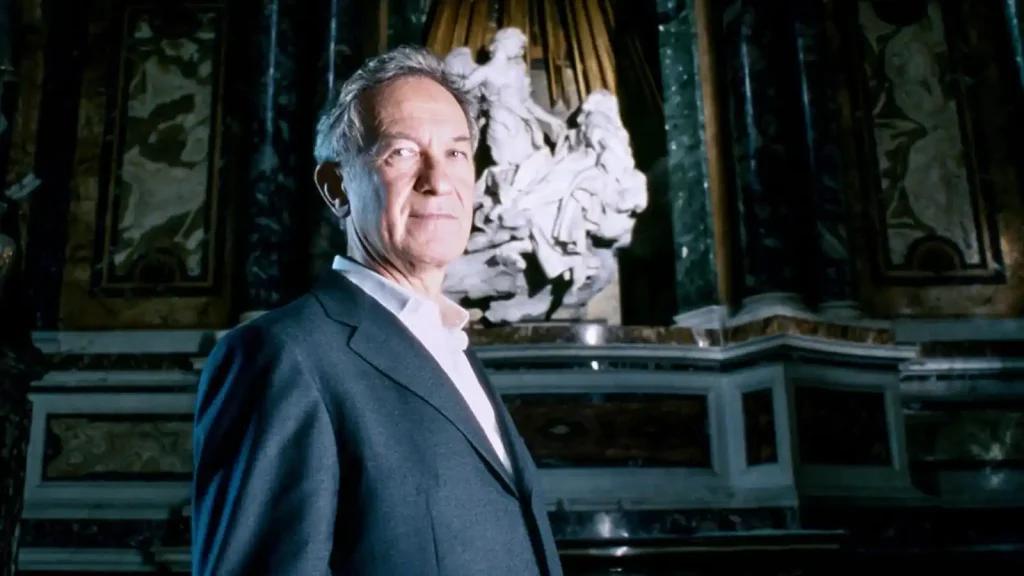
The Power of Art episode 2 meticulously charts how Bernini’s unique ability to infuse stone with carnal and spiritual intensity transformed sculpture from static representation to dynamic, emotional narrative. We witness the artist’s progression from a prodigious youth, already marked as the next Michelangelo, to the dominant figure in Roman Baroque art. The narrative, often guided by the insights of historian Simon Schama as presented in the transcript, examines how Bernini navigated the intricate web of papal patronage, intense rivalries, and his own volatile temperament to produce works that continue to astound.
This article will explore key facets of Bernini’s career and personal life as detailed in the Documentary. It will examine his revolutionary artistic techniques, the patronage that enabled his most ambitious projects, and the intense personal dramas that nearly derailed his career. Furthermore, it will focus on pivotal masterpieces, including the controversial yet celebrated “Ecstasy of St. Teresa,” analyzing their creation, reception, and lasting significance. The discussion will also touch upon his fierce rivalry with contemporary Francesco Borromini and how their contrasting visions shaped the architectural landscape of Rome.
Born with prodigious talent, Gian Lorenzo Bernini was recognized early for his exceptional skill. His father, Pietro, also a sculptor, though of lesser renown, quickly understood his son’s immense potential. By the age of eight, a sketch of St. Paul’s head presented to the Pope led to an astonished prediction that the boy would be the “next Michelangelo”.
This early recognition set the stage for a career that would see Bernini become a dominant force in the Roman art world, a journey meticulously detailed in Power of Art episode 2. Arriving in Rome in 1605, Bernini entered an artistic scene electrified by Caravaggio’s visceral street dramas, which were encouraging the Church to embrace a more emotionally charged, earthy depiction of faith.
Bernini quickly distinguished himself, demonstrating an unparalleled ability to make marble “carnal”. His figures seemed to “flutter and stream, quiver and sweat,” a stark contrast to the “divine but bloodless” quality of much classical sculpture. He possessed an alchemical ability to transform marble into flesh, hair, and leaves, imbuing his subjects with a “hot breath of life”. This dynamism was evident even in his early works, such as a depiction of St. Lawrence being martyred, created when Bernini was just sixteen. In this piece, he captured the transcendent moment where pain and sweetness merge, a theme that would recur in his later, more famous explorations of ecstasy.
Power of Art episode 2 – Bernini
The Meteoric Rise of a Sculptural Virtuoso
Gian Lorenzo Bernini’s early career was marked by an astonishing display of talent that quickly captured the attention of Rome’s most influential figures. Even as a teenager, he produced works of remarkable skill and playful energy, such as “two little angels” embracing, a piece he kept in his home throughout his life, and “The Goat Amalthea and the Infant Jupiter,” which transformed standard mythology into a lively romp. These early sculptures already showcased his ability to infuse traditional subjects with unprecedented vitality and “nursery-school naughtiness”. His talent was so apparent that an admiring cardinal once warned Bernini’s father, Pietro, that “the boy will surpass his master”.
A pivotal moment in Bernini’s ascent was his association with Cardinal Scipione Borghese, a major figure in the Roman art scene who sought to make his villa the premier destination for great art. For Borghese, Bernini created a series of masterpieces that solidified his reputation. Among these, “Apollo and Daphne” stands out as an “all-action sculpture”.
It captures the dramatic moment of Daphne’s transformation into a laurel tree to escape Apollo, her hair and fingers already metamorphosing into leafy twigs while her mouth is open in a scream. Bernini masterfully teases the viewer with the silky nude form, made available just as it disappears into tree bark, a “painfully thwarted consummation”. So potent was its effect that a French cardinal reportedly refused to have it in his house for fear it would arouse anyone who saw it, a reaction that pleased Bernini.
Bernini’s genius lay not just in his technical skill but in his revolutionary approach to sculpture itself. He sought to make marble defy its inherent properties, to make it appear fluid, dynamic, and intensely alive. Unlike classical sculpture, which aimed to grant mortal flesh the “heavyweight smoothness of immortality”, often resulting in figures that looked “divine but bloodless”, Bernini’s creations wept, shouted, and twisted in spasms of sensation.
He effectively challenged the traditional notion that sculpture should convey gravity; instead, his figures seemed to “break lose from their plinths, flying away into space”. This physical intensity, the ability to render marble so carnal, was what would transform the very nature of sculpture. Even Michelangelo’s David appeared “immobile beside Bernini’s whirling, twisting tornado”. This innovative approach to art is a central theme in Simon Schama‘s analysis.
His portraiture was equally groundbreaking. When sculpting Cardinal Scipione Borghese, Bernini aimed for a “speaking likeness,” believing people revealed their character most just before or after speaking. He captured the Cardinal’s imposing physical presence with remarkable acuity, from the “bull-like neck” and “jumbo body” to the subtle detail of a button straining against satin, conveying the flesh “tight-packed” inside. Details like the fringe of hair, “chipmunk cheeks,” fleshy lips, and even a film of sweat on the nose brought the Cardinal vividly to life, making the holy man primarily a physical, almost chef-like presence. This pursuit of realism and psychological depth in portraiture was another hallmark of Bernini’s innovative spirit.
Ambition, Rivalry, and the Darker Side of Genius
Bernini possessed not only artistic genius but also a formidable array of personal attributes that facilitated his success in the competitive environment of 17th-century Rome. He was described as “witty, charming, extremely well-connected, frighteningly cultured, ferociously disciplined,” always delivering on his promises, and notably, he did not drink. This made him the antithesis of the volatile Caravaggio. These characteristics, documented by his first biographer Filippo Baldinucci, allowed him to thrive in a city where painters, sculptors, and architects vied for the patronage of powerful popes and cardinals, the “Rothschilds of their day”.
However, Bernini’s path was not without significant conflict, most notably his intense and bitter rivalry with Francesco Borromini. Borromini was a brilliant architect, known for his “taciturn, neurotic, introverted, depressive” nature and lack of social graces. He created buildings with walls that curved and bulged unconventionally and ceilings that seemed to “sing and throb”, often employing “eye wizardry” like exaggerated perspective. Together, Bernini and Borromini were largely responsible for creating the look of baroque Rome.
Despite their shared impact, they “hated each other”. Initially, the rivalry was one-sided, with Borromini resenting Bernini’s immense popularity and tendency to hog the limelight. This was not a case of a lesser talent overshadowed, as both were considered geniuses in their respective fields. Their contrasting styles are evident in their churches, located mere yards apart: Borromini’s San Carlo alle Quattro Fontane is austere, based on “higher geometry,” while Bernini’s is colorful, theatrical, and “showy, visceral and sexy”.
The rivalry escalated in 1624 with the appointment of the new architect for St. Peter’s, a role that included building the enormous baldacchino over St. Peter’s tomb. Borromini, with more architectural training, was the obvious candidate. However, the “plummiest job in town” went to the Pope’s best friend, Bernini. Borromini was undoubtedly furious at this perceived injustice. Ironically, Bernini, facing the serious engineering challenges of the baldacchino, had to turn to Borromini for help.
Though Borromini contributed significantly, with virtually all drawings for the structure being his, he did not receive the credit he felt he deserved, a slight he “neither forgives nor forgets”. This ungenerous instinct for “monopolising the glory” was a recurring issue for Bernini, who even angered an assistant working on Daphne’s leaves by not giving him due credit. His own mother complained about his “cavalier way with his assistants”.
Bernini’s personal life was equally dramatic, particularly his affair with Costanza Bonarelli, the wife of one of his assistants, Matteo Bonarelli. The bust Bernini created of Costanza in 1637, at the height of their affair, is an entirely new kind of European sculpture, intensely intimate and passionate. Unlike traditional respectable busts, often for tombs, this portrait captures a “spitfire” whose passion is “written on her face and her body”. Bernini seems to relive his caresses with his chisel, the falling blouse an incredibly “sexy invitation”.
Costanza, from the proud Piccolomini family, is depicted with a firm jaw and a mouth in the act of speaking, not deferentially. She is a “wild thing,” junking traditional notions of demure womanhood, and the sculptor was “hooked on her temper”. However, the affair ended in shocking violence. Discovering Costanza was also involved with his younger brother, Luigi, Bernini, in a jealous rage, pursued Luigi into St. Peter’s and beat him severely with an iron bar, breaking two ribs. Later that day, he sent a servant to slash Costanza’s “perfect face to ribbons”.
Despite attempted murder and grievous bodily harm, Bernini’s punishment was a fine waived by his friend, Pope Urban VIII, who then “sentenced” him to marry Caterina Tezio, purportedly the most beautiful girl in Rome. Luigi was banished, while Costanza and the servant were jailed. The bust of Costanza, unbearable for both Bernini and his new wife to look at, was sold to a Medici buyer and now resides in Florence.
From Disgrace to Divine Art: The Ecstasy of St. Teresa in Power of Art episode 2
The Power of Art episode 2 highlights a critical turning point where Bernini’s seemingly untouchable status crumbled. Following the violent episode with Costanza, things took a downturn, particularly concerning his most ambitious architectural project at St. Peter’s Cathedral. The 17th-century popes desired grand bell towers for the facade of St. Peter’s. While initial designs were modest, Bernini, “constitutionally incapable of deference,” proposed towering structures, three storeys tall and six times heavier than originally planned. A significant problem arose: the towers were to be built on swampy ground. Bernini, surrounded by sycophants, ignored the risks, failing to consult Borromini, who knew the dangers of such an undertaking on unstable foundations.
The unveiling of the first tower in July 1641 was soon followed by disaster; two months later, cracks began to appear. Bernini fell ill from the stress, and the situation worsened as cracks spread to the main church facade. The death of Pope Urban VIII in 1644, Bernini’s staunch supporter, marked a true catastrophe.
The new Pope, Innocent X, favored Borromini and initiated an inquiry into Bernini’s towers. Borromini provided damning evidence, detailing how the tower was too tall, too heavy, and recklessly built. In February 1646, the Pope ordered the demolition of the south tower, a process that took eleven months and turned Bernini from a celebrated artist into “something like a laughing stock”. At fifty, an advanced age for the time, Bernini faced humiliation, though he continued to receive some commissions.
Redemption arrived through a commission from Cardinal Federico Cornaro for a family chapel in the church of Santa Maria della Vittoria. This presented Bernini with the challenge of depicting St. Teresa of Avila, a Spanish mystic known for her intense spiritual experiences, including levitations and visions. St. Teresa’s autobiography, a bestseller in Catholic Rome, described her encounters with an angel in remarkably graphic terms: “In his hands I saw a large golden spear, and at its iron tip there seemed to be a point of fire.
I felt as if he plunged this into my heart several times… it left me totally enflamed with a great love for God. The pain was so severe that it made me moan several times”. Bernini, understanding that Teresa meant the soul’s longing for union with God, recognized that her writing made body and soul seem indivisible.
This commission offered Bernini a chance for a spectacular comeback, resulting in “The Ecstasy of St. Teresa,” one of the most daring dramas of the body ever conceived in sculpture. The Power of Art episode 2 explores how Bernini translated Teresa’s written ecstasy into visual form. The sculpture portrays Teresa with her head thrown back, mouth open, and eyes half-closed in a state of divine rapture, while an angel delicately uncovers her breast.
A French art lover, upon seeing it a century later, remarked, “Well, if that’s divine love, I know all about it”. Bernini masterfully blurred the lines between spiritual and physical experience, suggesting that passion works through both body and soul. He made the saint “unforgettably beautiful,” matching the “exquisite seraph angel lover,” with the arrow pointed not at her breast but lower on her torso. The crucial insight was to turn Teresa’s habit, a symbol of chastity, into a representation of her internal state – a “storm-surge of churning sensation”.
This artwork, depicting the “face of a woman at the height of sexual euphoria,” aimed to make visible what Bernini knew of bodily ecstasy, transforming “carnal sin into carnal blessing”. The entire chapel became a theatrical stage, with members of the Cornaro family sculpted as an audience and dramatic lighting, even the ground appearing to open as the dead emerge. With this masterpiece, Bernini not only silenced critics who doubted his architectural skills by creating a chapel that seemed to explode with dramatic force, but also resurrected his own “disgraced” reputation. The Cornaro family loved it, and word spread: “the dazzler was back”.
Bernini’s Enduring Imprint on Rome and Art History, as revealed in Power of Art episode 2
Following the triumph of “The Ecstasy of St. Teresa,” Bernini’s stature was firmly re-established, and his influence on the visual landscape of Rome became even more profound. The success of the Cornaro Chapel softened even Pope Innocent X, who had previously favored Borromini. Consequently, as the Power of Art episode 2 illustrates, wherever one goes in Rome, one is essentially in “the Cavaliere’s city”. His creative genius extended beyond individual sculptures to grand architectural schemes that continue to define Rome. Approaching St. Peter’s Basilica over the Ponte Sant’Angelo, one is accompanied by Bernini’s angels.
Though denied his bell towers at St. Peter’s, he later designed the magnificent colonnades, which act as embracing arms, gathering believers into the heart of the faith. Inside the basilica, past his towering baldacchino, the eye is drawn towards Bernini’s “great light,” the Cathedra Petri, representing the Holy Spirit at the seat of St. Peter. Popes changed, but Bernini’s artistic dominance endured.
The later years of Bernini’s life reportedly saw a transformation in his personal conduct. He “gave up sinning, became a model Christian, fathered 11 children,” and supposedly never strayed again. It is said that when troubled, he would seek solace by praying before his shrine to St. Teresa in Santa Maria della Vittoria. His artistic output remained significant, including the “Blessed Ludovica Albertoni,” a work created to secure a Papal pardon for his wayward brother Luigi. Luigi, after his exile, returned to Rome and, even in his sixties, was caught in “acts of violent sodomy” within the precincts of St. Peter’s. Costanza Bonarelli, her face scarred, eventually was released from jail with her husband’s help.
Francesco Borromini, Bernini’s great rival, continued to create brilliant and eccentric churches. However, he never felt he achieved true recognition and could not overcome his bitterness regarding Bernini’s ultimate triumph and comeback. Consumed by “jealousy and disappointment,” Borromini tragically ended his own life. This starkly contrasts with Bernini’s enduring legacy, which cemented his place in art history.
Reflecting on his vast body of work, Bernini himself considered “The Ecstasy of St. Teresa” the “least bad thing I ever did”. Its power lies in its ability to make tangible a profound, almost ineffable human experience: the fusion of intense physical sensation with spiritual or emotional transcendence. The sculpture bypasses intellectual analysis to evoke a visceral understanding of bliss, something that has often led to “excruciating poems” and awkward interpretations by art historians attempting to avoid its obvious sensual power.
It is not merely a depiction of “erotic chemistry” but a profound visualization of ecstasy where physical craving and spiritual longing become one. The 18th-century French connoisseur who recognized his own experiences in the depiction of divine love was perhaps not making a sly joke, but acknowledging Bernini’s unparalleled success in using the “power of art” to visualize “pure bliss”. This profound achievement underscores why Bernini remains a monumental figure, his masterpieces continuing to engage and provoke centuries later.
The Eternal Dance Between Flesh and Spirit
Standing before “The Ecstasy of St. Teresa” today, visitors often find themselves caught in the same spell that has captivated audiences for centuries. Here lies the ultimate paradox of Bernini’s genius: a man whose personal scandals nearly destroyed him created art that transcends the very human frailties he embodied. His story reminds us that artistic brilliance and moral complexity aren’t mutually exclusive—they’re often inextricably intertwined, each feeding the other in ways that pure virtue never could.
Bernini’s journey from celebrated prodigy to disgraced architect to redeemed master illustrates something profound about the nature of creative transformation. His affair with Costanza Bonarelli, violent though its conclusion was, taught him about passion’s double-edged nature. His architectural humiliation with the bell towers forced him to confront his own fallibility. These experiences, painful as they were, became the raw material for his greatest triumph. When he approached St. Teresa’s mystical writings, he understood viscerally what she meant about divine love working through the body—because he had lived the intoxicating, destructive power of earthly passion.
This intimate knowledge of ecstasy in all its forms allowed Bernini to achieve what countless artists had attempted but never accomplished: making the spiritual tangible without diminishing its mystery. He didn’t just carve marble; he choreographed an eternal moment where heaven and earth collide. The sculpture succeeds precisely because it doesn’t shy away from the physical reality of transcendence—it embraces the uncomfortable truth that our most profound spiritual experiences often manifest through our very human bodies.
Perhaps most remarkably, Bernini’s personal redemption story mirrors the artistic renaissance he sparked in Roman sculpture. Just as he transformed cold marble into warm flesh, he transmuted his own disgrace into lasting glory. The man who once wielded an iron bar in jealous rage learned to channel that same intensity into creating art that speaks to the soul. His rivalry with Borromini, destructive though it became, pushed both artists to innovations that continue to define Rome’s visual identity centuries later.
For contemporary creators facing their own struggles with ambition, failure, and personal demons, Bernini’s story offers both warning and hope. Artistic genius doesn’t excuse destructive behavior, but neither does human fallibility negate the possibility of creating something transcendent. The key lies in learning to alchemize our experiences—both dark and light—into work that serves something greater than our immediate desires.
Walking through Rome today, we inhabit Bernini’s vision made manifest. His angels guide us across bridges, his colonnades embrace us at St. Peter’s, and his fountains animate the city’s piazzas with eternal movement. This is the true measure of artistic immortality: not just creating beautiful objects, but reshaping how we experience the world itself. In the end, Bernini achieved what every artist dreams of—his inner vision became our shared reality, his personal search for redemption transformed into humanity’s ongoing dialogue between the sacred and the sensual.
FAQ Power of Art episode 2 – Bernini
Q: Who was Gian Lorenzo Bernini and why is he significant in art history?
A: Gian Lorenzo Bernini (1598-1680) was an Italian sculptor, architect, and painter who dominated the Roman Baroque art scene for over six decades. Furthermore, he revolutionized sculpture by transforming static marble into dynamic, emotionally charged masterpieces that seemed to breathe with life. Additionally, his architectural contributions to Rome, including St. Peter’s colonnade and numerous fountains, continue to define the city’s visual identity today.
Q: What made Bernini’s sculptural technique revolutionary compared to classical works?
A: Bernini possessed an alchemical ability to make marble appear carnal and alive, contrasting sharply with classical sculpture’s “divine but bloodless” quality. Moreover, his figures seemed to “flutter and stream, quiver and sweat,” defying marble’s inherent properties. Consequently, even Michelangelo’s David appeared immobile beside Bernini’s “whirling, twisting tornado” of movement and emotion, fundamentally transforming sculpture’s expressive possibilities.
Q: How early was Bernini’s artistic genius recognized?
A: Remarkably, Bernini’s talent emerged extraordinarily early in his childhood. At age eight, his sketch of St. Paul’s head presented to the Pope led to the astonished prediction that he would be the “next Michelangelo.” Subsequently, an admiring cardinal warned his father Pietro that “the boy will surpass his master.” Indeed, by sixteen, Bernini created sophisticated works like his depiction of St. Lawrence’s martyrdom, showcasing mature artistic vision.
Q: Why is “Apollo and Daphne” considered one of Bernini’s masterpieces?
A: “Apollo and Daphne” represents Bernini’s genius in capturing transformation mid-motion, depicting Daphne’s metamorphosis into a laurel tree while escaping Apollo. Additionally, the sculpture masterfully teases viewers with her silky nude form just as it disappears into bark, creating “painfully thwarted consummation.” Furthermore, its erotic power was so potent that a French cardinal reportedly refused to house it, fearing it would arouse anyone who saw it.
Q: What caused the intense rivalry between Bernini and Francesco Borromini?
A: The rivalry intensified when Bernini received the prestigious St. Peter’s architect position in 1624, despite Borromini having superior architectural training. Moreover, Bernini’s tendency to “monopolize the glory” created lasting resentment when Borromini contributed significantly to the baldacchino’s design but received insufficient credit. Consequently, their contrasting personalities—Bernini’s charismatic showmanship versus Borromini’s taciturn, neurotic genius—fueled a bitter competition that shaped baroque Rome’s architectural landscape.
Q: What scandal nearly destroyed Bernini’s career and reputation?
A: Bernini’s passionate affair with Costanza Bonarelli, his assistant’s wife, culminated in shocking violence when he discovered her involvement with his brother Luigi. Subsequently, Bernini pursued Luigi into St. Peter’s and beat him with an iron bar, breaking two ribs. Furthermore, he sent a servant to slash Costanza’s face, committing attempted murder and grievous bodily harm. However, Pope Urban VIII waived his punishment, instead “sentencing” him to marry Rome’s most beautiful girl.
Q: How did Bernini’s bell tower project at St. Peter’s lead to his downfall?
A: Bernini’s hubris led him to design towering bell tower structures six times heavier than originally planned, ignoring warnings about the swampy foundation. Additionally, he failed to consult Borromini, who understood the engineering risks. Consequently, cracks appeared two months after the July 1641 unveiling, spreading to the main church facade. When Pope Urban VIII died in 1644, the new pope ordered the tower’s demolition, transforming Bernini from celebrated artist into “something like a laughing stock.”
Q: How did “The Ecstasy of St. Teresa” restore Bernini’s reputation?
A: This masterpiece offered Bernini spectacular redemption by translating St. Teresa’s mystical writings into revolutionary visual form. Moreover, he masterfully blurred spiritual and physical experience, depicting the saint’s divine rapture with unprecedented intimacy and passion. Furthermore, the sculpture transformed her chaste habit into a representation of internal ecstasy, creating a “storm-surge of churning sensation.” Consequently, the Cornaro Chapel became a theatrical stage that silenced critics and announced “the dazzler was back.”
Q: What is Bernini’s lasting impact on Rome’s architectural landscape?
A: Rome today essentially remains “the Cavaliere’s city,” with Bernini’s vision permanently embedded in its fabric. Additionally, his angels guide visitors across the Ponte Sant’Angelo, while his magnificent colonnades embrace believers at St. Peter’s like welcoming arms. Furthermore, his fountains animate piazzas with eternal movement, and his baldacchino towers majestically within the basilica. Consequently, wherever one travels in Rome, they experience Bernini’s transformative artistic vision made manifest in stone and space.
Q: Why do art historians consider Bernini one of the greatest sculptors in history?
A: Bernini achieved what countless artists attempted but never accomplished: making the spiritual tangible without diminishing its mystery. Additionally, he transformed sculpture from static representation into dynamic emotional narrative, imbuing marble with unprecedented life and passion. Moreover, his personal journey from disgrace to redemption mirrors his artistic evolution, demonstrating how human experience can be alchemized into transcendent art. Ultimately, Bernini reshaped how we experience the world itself, achieving true artistic immortality.