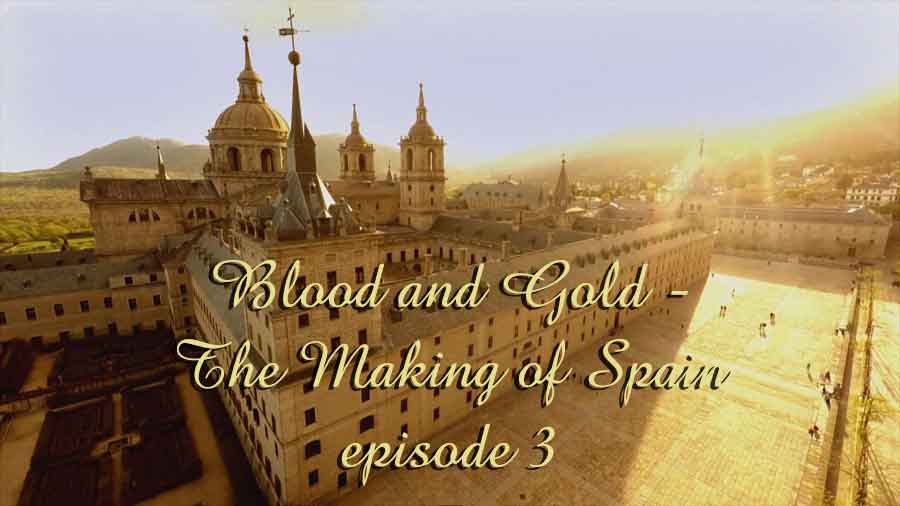
The exploration in Blood and Gold – The Making of Spain episode 3 charts a tumultuous journey. It spans from the pinnacle of global power under Philip II to the bloody divisions of the twentieth century. This period defines the nation’s character. It moves from a unified Catholic empire to a modern, democratic state. The story is one of ambition, faith, decline, and rebirth.
This complex history provides crucial context for understanding the nation today. The making of Spain was forged in conflict. These conflicts were not just external wars against empires like the Ottomans. They were also deep, internal struggles. These included battles over faith, regional autonomy, and political ideology. The path from imperial glory to modern democracy was neither short nor simple.
The narrative of Blood and Gold – The Making of Spain episode 3 focuses on these pivotal moments. It examines the reign of Philip II, the apogee of the Spanish Golden Age. It then follows the decline under his Habsburg successors. The article will explore the arrival of the Bourbon dynasty and the trauma of the Napoleonic invasion. Finally, it will analyze the loss of empire, the bitter Spanish Civil War, and the long dictatorship of Francisco Franco.
The story begins in 1543 with a secret letter from a father to his son. The father was Charles V, Holy Roman Emperor and King of Spain. The son was the teenage Philip II. Charles V advised his son to follow God’s will, avoid anger, and maintain his health. This advice set the stage for a ruler who would see himself as more than just a king. He would become the champion of Catholicism.
Philip II ruled a world empire at the very height of its golden age. His ambitions for his faith and for Spain knew no limits. Born in 1527 in Valladolid, his parents were Charles V and Isabella of Portugal. They ruled a vast empire on the move, lacking a permanent capital. His mother famously endured 13 hours of labor to give birth to him. She refused to scream, stating, “I would rather die than make any noise.”
Philip’s mother died when he was 12. His father was often away fighting. Despite a personal love for dancing and painting, Philip’s vision was clear. He saw himself as God’s vice-regent on Earth. He was dedicated to serving the monarchy and Catholicism. In 1554, his father arranged a dutiful marriage for him. This match was designed to gain yet another kingdom for God and the Habsburgs: England.
The Prudent King and His Global Empire
Philip’s English bride was Queen Mary I, the daughter of Henry VIII and Catherine of Aragon. She was known as “Bloody Mary” for her fervent execution of Protestant heretics. For Spain, this was a very favorable match. The contract was negotiated before they met. Philip was reportedly disappointed by her appearance. She was described as pale, paunchy, and plain. Mary, however, was thrilled with her young husband.
Philip spent months in England. He encouraged Mary’s restoration of Catholicism and her persecution of Protestants. They both knew they needed a Catholic heir to inherit England. Mary eventually believed she was pregnant. Her belly swelled, but it was a false pregnancy. It was likely the beginning of the cancer that later killed her. Mary died in 1558. Under their marriage contract, Philip ceased to be King of England. The throne passed to Mary’s Protestant half-sister, Elizabeth.
Meanwhile, Philip had already become King of Spain in 1556. His father, weary and gout-ridden, abdicated. At 29, Philip II ruled Spain, the Netherlands, Milan, Sicily, Naples, and the New World. It was the greatest empire on Earth. He called himself the “Prudent King” and was determined to rule in his own way. He governed from his desk, a micromanager who obsessed over details. One chronicler wrote, “He could make the world spin from his seat.” His vast archive at the castle of Simancas, holding 14 miles of royal documents, attests to his methods.
In 1561, Philip made a crucial decision. He saw that his government needed a permanent center. He chose Madrid to be the new capital. Until then, the capital was simply wherever the king was. Philip wanted a formal capital in the middle of the country. He compared its location to the heart in the middle of the body. At the time, Madrid was a provincial backwater. Yet, its insignificance was its strength. It was away from the vested interests of powerful grandees.
Philip also wished to create a palace that radiated his faith and power. He chose a site north-west of Madrid, at the foot of the Guadarrama mountains. This became San Lorenzo de El Escorial. Philip oversaw its construction from a nearby hilltop, micromanaging every detail. He sent hundreds of memos to his architects. He even worried about the lavatories, writing, “I wonder if bad smells will emanate from these holes.” For Philip, the devil was in the details, but God was even more so.
El Escorial was a political headquarters, a dynastic mausoleum, a library, and a monastery. Its design, a vast gridiron, commemorated his favorite saint, San Lorenzo. Its splendor was meant to emulate the Temple of Solomon. Philip saw his role as the champion of Catholicism. “God’s work and mine,” he said, “are the same thing.” This building symbolized the glory of Imperial Spain.
The Spanish Armada and the Legacy of the Spanish Golden Age in Blood and Gold – The Making of Spain episode 3
Philip II was a supreme warlord who commanded the best armies in Europe. During his 42-year reign, there were only six months of peace. His empire reached its greatest extent. It included the Philippines, named after him. He also added Portugal and its far-flung empire through his mother’s lineage. He now controlled 50 million citizens. His motto was “Non sufficit orbis” — a world is not enough.
He committed himself to war on several fronts. His first duty was to fight the infidel. In 1571, he assembled a holy alliance that annihilated the Ottoman fleet at the Battle of Lepanto. However, the biggest threat came from within Christendom itself: the tide of Protestantism. The greatest crisis of his entire reign was the revolt of the Protestant Dutch. He tried to crush them, but the revolt went on.
This war against the Dutch ultimately led to a greater war with England. Queen Elizabeth I defiantly undid Mary’s Catholic restoration. She funded Philip’s rebellious Dutch subjects. Her ships, furthermore, plundered Spanish colonies and fleets. Philip, who had once proposed marriage to Elizabeth, now decided to kill her. He declared her a tyrant and ordered her assassination. He planned to replace her with her Catholic cousin, Mary Queen of Scots.
For almost 20 years, Philip planned to send an armada to conquer England. In 1587, Elizabeth executed Mary Queen of Scots. This was the last straw. Philip excitedly ordered the building of the greatest fleet in history. His plan was reckless. The Duke of Medina Sidonia would sail from Spain with 130 ships. He was to join the Duke of Parma’s 30,000 men waiting at Dunkirk. Both commanders hated the plan. They questioned how they could possibly coordinate at the mercy of the English navy.
Philip swept aside all objections. “Human prudence may suggest uncertainties,” he said, “but God will remove them. After all, I do God’s work.” By August 1588, the armada was moored off Calais. Predictably, the message had not reached Parma in time. The armada was a sitting duck. English ships attacked, and a storm scattered the fleet. It was a total disaster. A third of the ships never returned. 15,000 men died.
After the armada’s failure, Philip’s health deteriorated. He retreated to his rooms, devoting himself to paperwork and prayer. As he lay dying, priests would lay holy relics on his aching limbs. He finally died on September 13, 1598. He left the monarchy at its zenith. However, he also left an expensive empire teetering on the edge of bankruptcy. Even the gold of the Americas could not cover its costs.
The Habsburg dynasty itself was also in trouble. Its nemesis came from within. The Habsburgs were made by marriage, but they were also destroyed by it. Generations of family intermarriage had a fatal effect on the bloodline. This culminated in Philip’s son, Charles II, known as “the Bewitched.” He was grotesque in appearance. His “Habsburg jaw” was so huge he could barely eat. Geneticist Professor Gonzalo Alvarez confirms the severe effects of this interbreeding. Charles II’s parents were as closely related as an uncle and a niece. When Charles II died, his autopsy revealed a brain full of water and no blood in his veins. His death, without a direct heir, plunged Europe into the War of Spanish Succession.
The Rise of Favourites and Diplomatic Follies
The challenge of maintaining the empire fell to Philip II’s heirs. In 1621, Philip IV inherited the throne at age 16. He lacked the talent to rule in his own right. Instead, he relied on trusted courtiers, or validos, to rule for him. These favourites were often hated for their power and corruption. They were compared to mushrooms that grew overnight from a bed of excrement.
The greatest of them all was Gaspar de Guzman, the Count-Duke of Olivares. Olivares knew that to rule Spain, he needed to rule Philip IV. The court painter Diego Velazquez captured both men. His portrait of Philip IV shows a man who “mistrusts himself, and defers to others too much.” In contrast, Olivares’s portrait betrays no hint of doubt. Upon Philip’s accession, Olivares declared, “Now everything is mine.”
Olivares was a larger-than-life character. He was flamboyant, neurotic, hypochondriacal, and explosive, but also brilliant. He was a supreme courtier. Once, when a young Philip shouted that he was sick of him, Olivares simply kissed the brimming royal chamber pot and withdrew. He would take the young king on rowdy escapades in Madrid’s backstreets. But Olivares was truly all about business.
His statesmanship was tested in 1623 by one of history’s strangest diplomatic crises. Two Englishmen, calling themselves Thomas and John Smith, arrived at the British Ambassador’s residence. They were in disguise with false beards. The ambassador was stunned to discover they were actually the Marquis of Buckingham, King James I’s favourite, and Charles, the Prince of Wales.
This reckless escapade was the culmination of negotiations for the Protestant Charles to marry the Catholic infanta, Mariana. They had placed themselves in the power of the ruthless Olivares. Everyone in Madrid assumed Charles must be willing to convert to Catholicism. The infanta, however, had no intention of marrying a heretic. Olivares saw the complexities. He demanded that all Catholics in England be liberated. This was more than Charles and Buckingham could deliver. The two favourites, Buckingham and Olivares, soon hated each other. Charles was a prisoner in Spain for six months. He only escaped by pretending to agree to Olivares’s terms.
Olivares, now more trusted than ever, launched his master plan: “to resuscitate Your Majesty’s monarchy.” He built the colossal Buen Retiro Palace as an expression of a resurgent Spain. In its Hall of Kingdoms, he celebrated the far-flung territories of the empire. His ambition was to unite these kingdoms in a military “Union of Arms” to fund the empire’s wars. This vision meant entering the devastating Thirty Years’ War. As the monarchy began losing, Olivares’s scheme did not unite Spain. It brought it to the verge of destruction. The Portuguese rebelled. Catalonia rebelled. Olivares’s gamble had failed. In 1643, Philip IV dismissed him. Olivares went almost mad with bitterness and died two years later.
A New Dynasty and the Napoleonic Storm
The War of Spanish Succession put a new dynasty on the throne: the Bourbons of France. They brought French Enlightenment ideas and a new style. For the first time, they united the separate kingdoms into one “Kingdom of Spain.” This stability was shattered by the French Revolution in 1789. As Europe’s monarchs tried to suppress the revolution, Spain needed a strong ruler.
Unfortunately, the king was Charles IV. He was nicknamed “the Hunter” because he did little else. The real ruler of Spain was the Queen, Maria Luisa. The man she wanted at her side was not the king. It was a handsome, ambitious young royal guardsman named Manuel Godoy. Godoy almost certainly became the queen’s lover. She appointed him Chief Minister at age 25. Spain was now ruled by a menage a trois. The Queen proudly called it “the Earthly Trinity.”
Godoy, however, was juggling more than just powerful women. He was also dealing with the greatest soldier-statesman in European history: Napoleon Bonaparte. In 1808, Godoy and Napoleon agreed to cooperate in a carve-up of Portugal. But when the French troops arrived in Madrid, they never left. 100,000 French soldiers poured into Spain. Godoy, his king, and his queen had to flee.
On May 2nd, 1808, a mob gathered outside the Royal Palace in Madrid. Rumors spread that the French were murdering the rest of the royal family. A locksmith named Jose broke in and cried, “Death to the French!” The mob went crazy, attacking the French troops. The French opened fire on the crowds. Hundreds were killed as French and Spanish blood ran in the gutters.
The French general ordered immediate and ruthless reprisals. Men were rounded up at random. The next day, May 3rd, 1808, all 43 men were executed by firing squad. Their deaths were immortalized in Goya’s famous painting. Their actions were glorious but futile. Spain became a mere province of the French Empire. Napoleon forced the Bourbon family to abdicate. He then appointed his own brother, Joseph, as King of Spain.
The Spanish people rose up against the French. They launched the first “guerrilla” war. The word “guerrilla” itself comes from this conflict. As King Joseph tried to rule from the Royal Palace, Spain got help from its old enemy. Britain sent Sir Arthur Wellesley, its best general. He defeated the French, earning the title Duke of Wellington. He drove Joseph Bonaparte out of Madrid and contributed to Napoleon’s final downfall.
A Century of Division and Imperial Collapse
Spain was left weakened and divided. A new liberal constitution delighted half the country. The other half, however, preferred Catholic absolutism. Spain was tortured by these conflicting visions and a humiliating international decline. One of the biggest effects of the Napoleonic Wars was the loss of empire. Between 1810 and 1825, 90% of the American Empire declared its independence.
Spaniards lived on the fantasy that they were still an imperial power. They still held Cuba, the Philippines, and Puerto Rico. But in 1898, they lost those as well. Professor Jose Alvarez Junco notes the effect was “enormous, tremendous.” Spain suddenly realized it was no longer a great power.
The 19th century was disastrous. It was filled with constant military coups, civil wars, and vast socioeconomic inequality. The Catholic Church in Spain became widely hated. This division made it impossible to have common national symbols. To this day, the Spanish national anthem has no words. Conservatives and liberals could never agree on lyrics. Conservatives wanted to sing of empire and Catholicism. Liberals wanted to sing of freedom.
Early in the 20th century, Spain stayed out of World War I. Economic depression, however, reinforced its schisms. The hapless King Alfonso XIII was discredited. In 1931, he was deposed. Spain became a republic, and the Bourbons went into exile. This Second Republic was the first time in Spanish history the country was ruled by a leftist, moderate government elected in a true democracy.
The Republic brought in many progressive measures. These included votes for women, workers’ rights, and running water in working-class districts. Yet, the right—from landowners to industrialists—believed the Republic was a communist conspiracy. They felt it was designed to destroy traditional Spanish values. The Republic’s anti-Catholic measures proved to its enemies that it was an anathema. The generals, the Church, and growing fascist militias were determined to stop it.
The Spanish Civil War: A Rehearsal for World War
In 1936, the Socialists won the elections. This was the last straw. Tit-for-tat killings by leftist and fascist death squads gave the generals an excuse. They planned a nationalist coup. The Republic was doomed. The Spanish Civil War had begun.
Among the generals, a leader emerged. He was the 43-year-old commander of the Canary Islands. He was uncharismatic, paunchy, and had a high, womanly voice. But Francisco Franco was not all he seemed. He had been Europe’s youngest general since Napoleon. He made his name as a brutal commander in Morocco. He loathed socialists, Marxists, and Masons, believing they should be annihilated. Above all, he possessed the will to power.
Franco planned to deploy his devoted Moroccan Legion to crush the Republic. He lacked transport, so he appealed to the fascist dictators Hitler and Mussolini. They saw a way to promote fascist power. Hitler sent the planes for what he called “Operation Magic Fire.” While Britain and France remained neutral, the extreme ideologies of the 20th century began a war of annihilation in the bloody bullring of Spain.
As Franco marched north, the killing started. 20,000 were executed in the first days. Franco diverted his troops to Toledo, the ancient capital. He was making a point. He felt he was launching a new Christian reconquest of Spain. “This is not a civil war,” he declared. “This is a holy war.” The Church blessed his cause.
The Nationalist forces fought their way into the center of Madrid. The Republic desperately needed arms and men. The arms came from Stalin’s Soviet Russia. The men came as the International Brigades. These were individual volunteers from all over the world, united in the fight to stop fascism. Madrid held out for three years, a symbol of Republican resistance.
Franco fought on, backed by 80,000 Italian troops and Hitler’s Nazi Condor Legion, which invented terror bombing. Writers poured in to cover the agony of Spain. Ernest Hemingway was the most famous. He publicized the desperate glamour of the Republican side. His novel For Whom The Bell Tolls captures the folly, heroism, and chaos of the war.
The reality was savage. The ghost town of Belchite is haunted by atrocities from both sides. For the Republicans, the greatest symbol of hatred was the Church. They destroyed churches and exhumed the bodies of nuns and priests. They also killed 13 bishops and 6,000 clergy in what became known as “the greatest clerical blood-letting in history.” Republicans killed 55,000 people in total.
The Nationalists were better organized. “I will occupy Spain,” said Franco, “town by town, village by village.” Half the Spanish people were to be treated as aliens and annihilated. Anyone suspected of socialism or liberalism was hunted down and executed. During the war, 200,000 people were murdered by the Nationalists. In March 1939, Franco marched into Madrid and declared total victory. In the next five years, he ordered the execution of an estimated 200,000 more enemies of Spain. There was no reconciliation.
The Era of Francisco Franco
With his regime secured, Francisco Franco was keen to promote his place in Spain’s imperial history. He announced a plan to build a monument to his fallen soldiers. He chose a valley right next to Philip II’s El Escorial. Franco saw himself among the great conqueror-kings of Spain. This monument, the Valley of the Fallen, is dominated by a 500-foot cross. It encapsulates Franco’s Spain: a mix of Catholic, imperial, fascist, and nationalist symbolism.
As Europe plunged into World War II, Franco identified with Hitler and Mussolini. He called himself “El Caudillo,” the leader, to match the Fuhrer and the Duce. He wanted to emulate their style and conquests. He created an anti-Semitic, fascistic party. He wanted to build a new Spanish Empire.
On October 23, 1940, Franco and Hitler met at Hendaye to discuss terms. Franco demanded a long shopping list of territories. He wanted Gibraltar and Portugal, but also parts of French Morocco, Algeria, and West Africa. Hitler was outraged. He despised Franco, calling him a “Jesuitical swine.” He flew into one of his foam-flecked rants. Hitler later said he would prefer to have teeth pulled than spend another minute with Franco. Spain did not get its empire. Franco stayed neutral.
When Hitler fell, Franco adapted. He swiftly dropped his fascist style. He embraced a Catholic authoritarianism instead. For over 30 years, he lived at the El Pardo Palace. His name was on stamps and coins. He was protected by a Moroccan bodyguard. He was king in all but name. He never abolished the monarchy. His plan was to restore the Bourbons after his death in a new “Francoist monarchy.” In 1969, he announced his successor: the young Prince Juan Carlos. While Franco thought he was playing the prince, the prince was also playing the old dictator.
From Dictatorship to Democracy: A New Chapter in Blood and Gold – The Making of Spain episode 3
On November 20, 1975, the last dictator of the 1930s died. Franco was buried like a warrior-king in the giant basilica at his Valley of the Fallen. Two days later, the young Bourbon, Juan Carlos, took the oath as King of Spain.
The nation was hungry for freedom. The young king immediately started to move towards a new Spain. He never intended to be a figurehead for the Francoists. He oversaw the dismantling of the dictatorship. He guided the creation of a parliamentary democracy. Critically, he accomplished this without a single drop of blood being spilt. Within 18 months, Spain held its first democratic elections in 41 years.
Today, Spanish democracy is established. Its society is diverse. The nation has offered citizenship to the descendants of Jews expelled in 1492. It was the third country in the world to allow same-sex marriages. Catholicism still has its place, but it no longer dominates the state.
For millennia, Spain has been a borderland, a crossroads, and a battlefield. Its extreme position at the edge of Europe has intensified the extremity of its conflicts. Carthaginians fought Romans. Muslims fought Christians. Catholics fought Protestants. Fascists fought communists. Spain has always been a cauldron of civilizations and a furnace of faiths. The scars of its civil war are still raw. Regionalism remains strong. Yet, from the blood and gold of its past, the modern making of Spain is a story of a nation that has finally found a democratic future.
The Enduring Paradox: How Spain’s Bloodiest Chapters Forged Its Democratic Soul
The trajectory traced in Blood and Gold – The Making of Spain episode 3 reveals a profound historical truth: nations that survive their darkest hours often emerge with unexpected wisdom. Spain’s journey from Philip II’s God-ordained empire to Juan Carlos’s bloodless transition stands as one of history’s most dramatic transformations—a 400-year arc that bends, sometimes violently, toward democratic renewal.
What makes Spain’s story so compelling isn’t just the spectacle of its rise and fall, but the recurring pattern of how extremity breeds its own correction. Philip II’s imperial overreach bankrupted his successors. The Bourbon consolidation invited Napoleonic occupation. The Republic’s progressive reforms triggered fascist backlash. Each apex of power or ideology contained the seeds of its own undoing. Spain’s history reads like a masterclass in the dangers of absolutism—whether religious, monarchical, or dictatorial.
Yet within this cycle of blood and upheaval lies a quieter, more hopeful narrative. The same geographic position that made Spain a battlefield of civilizations—a borderland between Europe and Africa, Christianity and Islam, empire and modernity—also made it a laboratory for reconciliation. By the time Franco died in 1975, Spaniards had learned what happens when ideological purity trumps pragmatism, when religious or political orthodoxy refuses to bend. The civil war’s 500,000 dead became an indelible lesson written in blood: compromise isn’t weakness; it’s survival.
King Juan Carlos understood this implicitly. His dismantling of Franco’s dictatorship “without a single drop of blood being spilt” wasn’t just politically shrewd—it was a conscious rejection of Spain’s violent past. The young monarch had witnessed firsthand how Franco’s “holy war” mentality perpetuated division for decades. By choosing dialogue over domination, he offered Spain something it had rarely experienced: a peaceful transition that honored both its complex past and its democratic future.
Today’s Spain—welcoming descendants of expelled Jews, embracing same-sex marriage, navigating regional autonomy with (mostly) democratic tools—represents the hard-won maturity of a nation that has finally internalized its own cautionary tales. The fact that its national anthem remains wordless is no longer just a symbol of division, but perhaps of wisdom: some things are better left open to interpretation rather than codified in stone.
The scars remain visible, of course. The Valley of the Fallen continues to provoke fierce debate. Catalan separatism tests democratic institutions. Economic inequality persists. But these are the tensions of a living democracy grappling with its contradictions, not the death throes of a failed state.
For those seeking to understand contemporary Spain—its wariness of authoritarianism, its complex relationship with nationalism, its sometimes-ambivalent embrace of both European integration and regional identity—the history charted in this episode provides essential context. You cannot comprehend Spanish politics today without understanding Philip II’s micromanaging absolutism, Franco’s brutal consolidation of power, or the Republic’s failed idealism.
The making of Spain teaches us that nations, like individuals, are shaped as much by their traumas as their triumphs. The difference lies in whether those wounds fester or heal. Spain chose healing, however imperfectly. From the blood and gold of empires lost and civil wars fought, it forged something rare: a democracy that remembers what it cost to achieve. That memory, uncomfortable as it may be, remains Spain’s greatest safeguard against repeating its darkest chapters—and perhaps its most valuable gift to a world still grappling with the seductions of extremism.
FAQ Blood and Gold – The Making of Spain episode 3
Q: What time period does Blood and Gold – The Making of Spain episode 3 cover?
A: Episode 3 spans approximately 450 years, beginning with Philip II’s reign in the mid-16th century and concluding with Spain’s transition to democracy after Franco’s death in 1975. This comprehensive timeline examines Spain’s transformation from the world’s dominant Catholic empire under Philip II through the Habsburg decline, Bourbon reforms, Napoleonic occupation, imperial collapse, and the devastating Spanish Civil War. The episode ultimately traces how centuries of conflict, both external and internal, shaped modern Spain’s democratic character and complex regional identity.
Q: Why was Philip II considered such a significant ruler in Spanish history?
A: Philip II represented the pinnacle of Spanish imperial power, ruling over 50 million subjects across four continents with the motto “a world is not enough.” Beyond territorial expansion, he fundamentally shaped Spain’s identity as Catholicism’s defender, viewing himself as God’s vice-regent on Earth. His establishment of Madrid as the permanent capital and construction of El Escorial symbolized Spain’s Golden Age. However, his relentless wars, particularly the disastrous 1588 Spanish Armada against England, also planted seeds of imperial decline by draining Spain’s treasury despite New World gold.
Q: How did Habsburg inbreeding affect Spain’s monarchy?
A: The Habsburg dynasty’s strategic marriages, which initially built their empire, ultimately caused its genetic collapse through generations of intermarriage. This culminated disastrously in Charles II, “the Bewitched,” whose parents were as closely related as uncle and niece. His severe physical and mental disabilities—including the notorious “Habsburg jaw” that prevented proper eating—rendered him unable to produce heirs. When Charles II died in 1700, his death without succession triggered the War of Spanish Succession, ending Habsburg rule and bringing the French Bourbon dynasty to Spain’s throne.
Q: What role did Napoleon play in transforming Spain?
A: Napoleon’s 1808 invasion fundamentally disrupted Spain’s political order and inadvertently sparked both nationalism and independence movements. After tricking Spain’s rulers into exile, he installed his brother Joseph as king, triggering widespread Spanish resistance. The guerrilla warfare that emerged—the term itself originated from this conflict—demonstrated popular rejection of foreign rule. Additionally, Napoleon’s occupation weakened Spain’s grip on its American colonies, which declared independence between 1810-1825. Though Britain’s Duke of Wellington eventually expelled French forces, Spain emerged from the Napoleonic era permanently weakened and deeply divided between liberal and absolutist factions.
Q: Why couldn’t Spain agree on lyrics for its national anthem?
A: Spain’s wordless national anthem symbolizes the nation’s profound ideological divisions that persisted throughout the 19th and 20th centuries. Conservatives envisioned lyrics celebrating Catholic faith and imperial glory, while liberals advocated for themes of freedom and democratic values. These irreconcilable visions reflected deeper conflicts over Spain’s identity following its imperial collapse. Rather than forcing consensus through one faction’s dominance, Spain left the anthem instrumental. This absence of words represents not merely indecision but rather the impossibility of crafting shared national symbols in a country fractured by civil wars, regional tensions, and opposing political philosophies.
Q: What were the main causes of the Spanish Civil War?
A: The 1936-1939 Spanish Civil War erupted from deep societal fissures between progressive and traditional forces. The leftist Second Republic introduced reforms including women’s suffrage, workers’ rights, and anti-Catholic measures that terrified conservative landowners, industrialists, and the Church hierarchy. When Socialists won the 1936 elections, right-wing generals led by Francisco Franco launched a military coup, framing their rebellion as a “holy war” to save Spain from communism. International involvement escalated the conflict, with Nazi Germany and Fascist Italy supporting Franco while the Soviet Union backed Republicans, transforming Spain into a rehearsal battlefield for World War II’s ideological struggles.
Q: How many people died during the Spanish Civil War and Franco’s regime?
A: The Spanish Civil War’s death toll reached approximately 500,000, with both sides committing atrocities. Republicans executed 55,000 people, including 13 bishops and 6,000 clergy in history’s greatest anti-clerical massacre. Nationalists under Franco murdered 200,000 during the war itself through systematic executions as they captured territory. Following Franco’s 1939 victory, reprisals continued relentlessly with an estimated 200,000 additional executions over five years. Franco’s systematic elimination of political enemies—anyone suspected of socialism or liberalism—demonstrated his determination to physically annihilate half of Spain’s population rather than pursue reconciliation.
Q: What was Franco’s relationship with Hitler and Nazi Germany?
A: Franco initially aligned closely with Hitler, receiving crucial support during the Civil War including the Condor Legion that pioneered terror bombing. Styling himself “El Caudillo” to match Hitler’s “Fuhrer,” Franco created fascistic institutions and harbored imperial ambitions. However, their infamous 1940 meeting at Hendaye revealed fundamental differences. Franco demanded Gibraltar, Portugal, and North African territories as payment for entering World War II. Hitler, outraged by these demands and Franco’s negotiating style, reportedly preferred having teeth pulled to further conversations. Consequently, Spain remained officially neutral, though Franco adapted his regime toward Catholic authoritarianism after Hitler’s defeat.
Q: How did Spain transition from dictatorship to democracy?
A: Spain’s democratic transition after Franco’s November 1975 death stands as history’s most successful peaceful regime change. King Juan Carlos, whom Franco appointed as successor expecting a Francoist monarchy, instead dismantled the dictatorship systematically. Working with reformist politicians, he legalized political parties, released political prisoners, and established parliamentary structures. Remarkably, this transformation occurred “without a single drop of blood being spilt,” contrasting sharply with Spain’s violent history. Within 18 months, Spain held free elections for the first time in 41 years. Juan Carlos’s commitment to democracy rather than authoritarian continuity proved decisive in breaking Spain’s cycles of violence.
Q: What does modern Spain’s democracy reveal about its historical journey?
A: Contemporary Spain embodies lessons learned from centuries of extremism and conflict. The nation’s progressive policies—welcoming descendants of expelled Jews, legalizing same-sex marriage third globally, and limiting Church influence—demonstrate rejection of past absolutism. However, ongoing debates surrounding the Valley of the Fallen monument and Catalan separatism reveal unhealed wounds. Spain’s democracy succeeds precisely because it remembers the cost of achieving it through 500,000 Civil War deaths. This institutional memory serves as safeguard against authoritarianism’s return. Spain’s journey from Philip II’s religious empire to Juan Carlos’s peaceful transition ultimately proves that nations shaped by trauma can choose healing over perpetual conflict.