Civilisations – Rome: The Twilight of the Eternal City
Imagine a city built of marble, gold, and absolute confidence. For centuries, it stood as the unshakeable center of the known world. Its legions were undefeated, and its walls seemed impenetrable. However, history teaches us that even the mightiest foundations eventually crack. In the grand tapestry of human civilisations, few tales resonate as hauntingly as the fall of Rome. It is a story of hubris, betrayal, and a slow, agonizing decay.
At the turn of the fifth century, the Roman world faced a nightmare. It was a crisis unlike anything seen in 800 years. Specifically, the year 410 AD marked a seismic shift in human history. The sack of Rome was not just a military defeat; it was a psychological shattering. The “Eternal City” had fallen. Consequently, this cataclysmic event signaled the beginning of the end for the Western Roman Empire. The sun was finally setting on the ancient world.
To understand this collapse, we must look back a few years earlier. In 395 AD, the political landscape shifted dramatically. The child emperor Honorius inherited a crown that was far too heavy for his young head. He became the ruler of a vast empire. Yet, this empire was actually a fragile giant. It stretched across continents, but its joints were stiff and brittle. Honorius was merely a figurehead, a boy lost in a sea of sharks.
Fortunately, he had a protector. General Stilicho stood by the young emperor’s side. He was a brilliant military mind in a time of chaos. In fact, Stilicho was the only thing holding the fractured system together. He acted like a dam holding back a raging flood. Nevertheless, his task was nearly impossible. He had to navigate a toxic court plagued by elite corruption and bitter rivalries.
Meanwhile, the rot from within was spreading. The Roman economy was in a breathless decline. Taxes soared, yet the treasury remained empty. The poor suffered, and the rich retreated to their villas. Rebellion simmered in the provinces like a dormant volcano. The fractured system could barely support its own weight. Still, the greatest threat did not come from the economy alone. It came from a familiar face turned hostile.
The Gothic peoples were not strangers to Rome. Originally, the Roman state recruited them as allies and soldiers. They fought for the eagle standard. They bled for the empire. However, the Romans mistreated them, viewing them as disposable tools rather than human beings. Promises of land and food were broken repeatedly. As a result, resentment grew in the hearts of the Gothic warriors. They had been pushed too far.
Leading them was Alaric, a commander of immense skill and determination. He was once a man who sought to be part of the Roman system. Yet, the system rejected him. Therefore, he transformed into its executioner. Alaric did not want to destroy Rome initially; he wanted a seat at the table. But when Rome closed its doors, he decided to kick them down.
The march against Rome was a slow, terrifying inevitability. It was like watching a storm gather on the horizon. You know it is coming, but you are powerless to stop it. Alaric and his forces swept through Italy. The legions, once the terror of the world, could not halt their advance. Consequently, fear gripped the heart of the empire. The invincible city was suddenly very vulnerable.
Inside the walls, panic set in. The elite, who had spent years in luxury, now faced the sharp edge of reality. Food became scarce. Disease ran rampant through the crowded streets. The golden veneer of civilisations often hides a rotting core, and Rome was no exception. The people looked to Honorius for salvation. Sadly, the emperor remained safe in Ravenna, detached from the suffering of his capital.
Then, the unthinkable happened. In August of 410 AD, the gates opened. Some say it was treachery; others say it was desperation. Regardless of the cause, the Goths poured into the city. For the first time in eight centuries, a foreign army walked the streets of Rome as conquerors. The shockwave was felt as far away as Jerusalem. St. Jerome, writing from his cell, wept for the city that had taken the whole world.
The sack itself was a release of pent-up rage. Valuables were seized. Palaces were looted. The symbols of imperial power were stripped away. However, Alaric ordered his men to spare the churches. Even in destruction, there was a strange reverence for the city’s legacy. Yet, the psychological damage was done. The spell of invincibility was broken forever. Rome was just a city, and it could burn like any other.
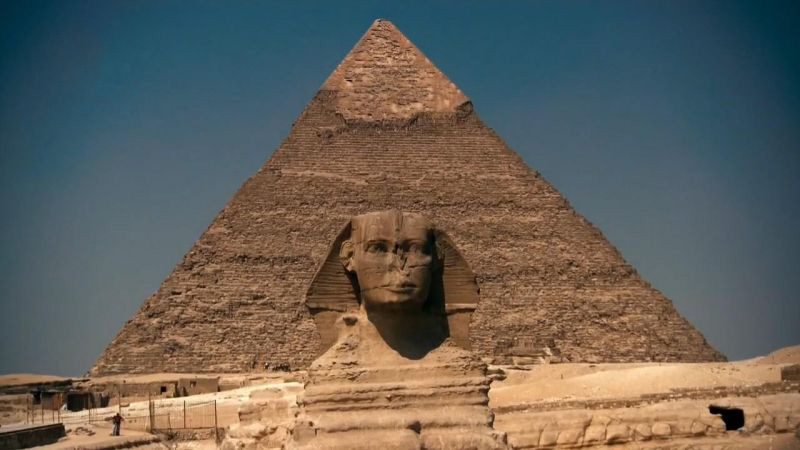
This event is a crucial chapter in our series on four mighty civilisations. We explore the rise and fall of Rome, Egypt, Japan’s Samurai, and the Aztecs. Each of these cultures believed they would last forever. Their legends remain etched in our collective memory. But legends can be deceiving. We must look closer to understand the truth.
Civilisations – Rome
Now, priceless artefacts reveal what truly led them to fall into the echoes of history. These objects are silent witnesses to the catastrophe. A chipped sword, a buried hoard of gold, a letter written in haste—these items tell the real story. They strip away the myth and show us the human cost of collapse. Through them, we see that the fall of Rome was not an accident. It was a complex tragedy of errors.
The story of Honorius and Alaric serves as a grim warning. It shows us what happens when a state fails its people. It demonstrates the danger of ignoring allies and mistreating the vulnerable. Furthermore, it highlights how quickly stability can vanish. One moment, you are the master of the world. The next, you are a footnote in a history book.
In our series, we peel back the layers of time. We connect the dots between the sands of Egypt and the hills of Rome. We compare the honor of the Samurai with the rituals of the Aztecs. Although these civilisations were worlds apart, they shared common vulnerabilities. They all faced the turning of the tide. And eventually, they all succumbed to the relentless march of time.
Therefore, as we examine the sack of 410 AD, we see more than just a battle. We see the fragility of human achievement. The fall of the Western Roman Empire reminds us that nothing is guaranteed. It urges us to cherish what we build and to remain vigilant against the cracks in our own foundations.
Join us as we delve into these epic stories. Let the artefacts speak. Listen to the voices from the past. They have much to teach us about power, glory, and the inevitable end. The echoes of history are loud, if only we take the time to listen. This is the story of Rome, and it is a story that belongs to us all.
Civilisations – Rome
The story of Civilisations – Rome often conjures images of eternal marble and unshakable power, yet the reality of its conclusion is far more volatile and human. On August 24, 410 AD, the sun began to set on the ancient capital of the mightiest empire on earth. The magnificent city, which had dominated Europe for five centuries and viewed itself as possessing an immortal destiny, found itself under attack. This was not merely a military defeat; it was a psychological cataclysm that shattered the perceived invincibility of the Western world. The sack of the city became one of the most iconic events in history, marking the moment when the ancient order finally gave way to chaos.
At the heart of this collapse were fateful decisions made by three specific men: a refugee driven to violence by prejudice, a weak emperor blinded by the isolation of his palace, and a wily general caught between two worlds. The year 410 AD was the culmination of decades of internal rot and external pressure. While the empire projected an image of strength through its monuments and military, the seeds of its destruction were sown within the society itself. No civilisation ever believes it will fall, yet history provides a repository of memory that reveals how even the greatest powers have expiry dates.
The crisis that befell the roman empire in the fifth century was not a sudden accident but the result of long-standing structural failures. Challenges such as climate catastrophe, pandemics, and war plagued ancient societies just as they do modern ones. The British Museum holds the human traces that survived these disasters, offering a record of how power rises and spectacularly falls. In the case of Rome, the artifacts reveal a society that had become brittle, hollowed out by wealth inequality and paralyzed by political paranoia.
By the late fourth century, the city of rome was still the largest in the world, home to over 700,000 people. It remained a monumental metropolis filled with temples, the Forum, and the Colosseum, reflecting a history of emperors who built grand structures to assert their dominance. However, beneath this veneer of splendor, the social fabric was disintegrating. A staggering 40 million people lived under Roman rule, held together by ruthless military might and the benefits of shared technology like aqueducts and roads. Yet, the prosperity was far from evenly distributed.
A small handful of aristocratic families in western rome had profited immensely from imperial success, creating a dangerous imbalance. These elites required a strong emperor to maintain the status quo, but instead, they got Honorius. Young, inexperienced, and born in the East, Honorius was a child ruler in a political system that had never before tolerated such weakness. He was not a battle-hardened leader but a figurehead who spent his youth among courtiers, eventually relying entirely on others to wield power in his name.
The dynamics between a child emperor, a suspicious aristocracy, and a marginalized immigrant population created a perfect storm. The ancient civilisations that endure in our collective memory often share this trajectory of hubris followed by a failure to adapt. As the year 410 approached, the eternal city was running out of time, and the decisions made by its leaders would determine whether the empire could reinvent itself or if it would be swept away by the forces of history.
The Hollow Foundations of Civilisations – Rome
To understand the fall of rome, one must look past the marble facades and into the lives of its citizens. By the fourth century, wealth inequality had reached unprecedented levels. The empire was split into East and West, and in the western half, the gap between the super-rich and the rest of the population had widened into a chasm. Recent excavations have uncovered luxurious urban residences dating to this period, proving that for the top one percent, life was a continuous cycle of leisure and ostentation.
A prime example of this extravagance is the Projecta Casket, a silver wedding chest belonging to a woman named Projecta and her husband Secundus. This artifact, discovered in a hoard buried during the crisis, vividly illustrates the lifestyle of the elite. Elaborately carved with scenes of Venus rising from her bath and processions to Roman bathhouses, the casket was an object designed to show off status. It belonged to a stratum of society that owned vast swathes of land—some estimates suggest just twenty families owned all of Southern France and Italy.
While the rich lived la dolce vita, the vast majority of Romans lived in squalor. Most residents of the city were crammed into tenement blocks that were infested with rats and cockroaches. This stark disparity corroded the social fabric. Crucially, as the wealthy accumulated more assets, they became adept at tax avoidance. Those with connections found ways to dodge their financial obligations, forcing the state to lean heavily on the lower classes to fund the empire. This inequality hollowed out the society, leaving it a brittle shell susceptible to shocks from disease, climate change, and invaders.
The disconnection between the elite and the reality of the empire contributed significantly to imperial decline. The rich hoarded their treasures, burying silver in the ground to hide it from looming threats, rather than investing in the stability of the state. When the crisis arrived, this accumulated wealth became a target. The Projecta Casket itself was part of a hoard of nearly sixty silver objects, likely buried as Alaric’s forces stood at the gates. It remains a testament to a fractured society where the elite prioritized the preservation of their luxury over the survival of their civilisation.
Migration Challenges and the Gothic Invasion
The immediate catalyst for the crisis facing Civilisations – Rome appeared on the banks of the Danube River years before the sack. Soldiers manning the northern border witnessed a migration on a scale never before encountered. Around 100,000 men, women, and children gathered at the river, begging for entry. These were the Goths, a people who had lived as farmers and warriors in the regions of modern-day Romania and Ukraine. Driven from their homelands by the attacking Huns, they were refugees seeking safety within the empire’s borders.
The Roman response to this displacement was a catastrophic failure of management and humanity. While the empire had a history of integrating diverse populations, this massive influx triggered deep-seated fears and prejudices. Local officials saw the refugees not as people in need but as opportunities for profit. They demanded payment for food, often selling the Goths dog meat in exchange for their children, whom they then sold into slavery. This cruelty was exacerbated by racial stereotypes that pervaded ancient history.
To the Romans, the Goths were “barbarians,” a term loaded with cultural disdain. The Greeks had invented the word to mock the sound of foreign languages, but the Romans adopted it to describe anyone from outside their environmental comfort zone. Theater masks from the period depict barbarians with distinct, exaggerated features, such as the “man bun” hairstyle, which served as a visual shorthand for savagery. These stereotypes allowed the Romans to dehumanize the refugees, treating them as a resource to be exploited rather than potential citizens.
This mistreatment inevitably led to blowback. Humiliated and starving, the Goths rose up. In a shocking turn of events, they defeated the Roman army at the Battle of Adrianople, killing perhaps 20,000 soldiers. This victory meant the Goths were now inside the empire to stay. The Romans were forced to cut a deal, granting them land in the Balkans in exchange for military service. However, this was a temporary fix that created a two-tier society. The Goths were used as soldiers but denied respect, creating a simmering resentment that would eventually boil over under the leadership of Alaric.
Lessons from Ancient History and the Head of Augustus
The concept of imperial overreach and its consequences was not new to Rome. Centuries before Honorius, the first emperor, Augustus, had established the template for one-man rule. Augustus was a brilliant political strategist who ended civil wars and used imagery to cement his power. A bronze statue head of Augustus, found in the British Museum, still possesses its eyes, giving it a haunting, evocative gaze. It depicts a young, god-like leader, a stark departure from previous traditions that valued the wisdom of age.
However, this specific artifact tells a story of the dangers of aggressive expansion. In 30 BC, Augustus invaded Egypt and pushed south into the Kingdom of Kush. The Kushites resisted, looting Roman treasures and carrying the bronze head of Augustus back to their capital, Meroe. There, they buried it under the steps of a temple. For centuries, every worshiper who entered the temple literally walked over the face of the Roman emperor.
This microscopic evidence—grains of sand embedded in the bronze—serves as a physical record of “blowback.” The term, used by modern military strategists, describes the unintended negative consequences of a political or military action. By invading his neighbors, Augustus created new enemies. This lesson from ancient history was one that the later rulers of the western rome failed to heed. The aggressive expansion and the arrogance of empire-building often sowed the seeds of future conflict.
By the time of Honorius, the empire was reaping the whirlwind of centuries of such policies. The Goths, like the Kushites before them, were reacting to Roman aggression and exploitation. The difference was that the Goths were now inside the borders, armed and trained by Rome itself. The failure to learn from the past, to understand that creating enemies on the frontier eventually brings war to the homeland, was a fatal error that accelerated the trajectory toward 410 AD.
Leadership Vacuums in Western Rome
As the gothic invasion loomed, the Western Empire was crippled by a leadership vacuum. Honorius, the child emperor, needed to project authority to survive. His regime launched a propaganda campaign, minting gold coins that circulated throughout the empire. These coins depicted Honorius in profile with a diadem, looking regal and powerful. On the reverse, he was shown standing with his foot on the neck of a defeated soldier, receiving a crown from Victory.
This imagery was a brazen lie. Honorius was not battle-tested; he was a young man completely at sea, controlled by his handlers. The disconnect between the propaganda and the reality was palpable. The true power behind the throne was General Stilicho, a man of immense capability who had married into the imperial family. Stilicho was the only figure keeping the empire together, navigating the treacherous politics of court while managing the military threat.
However, the atmosphere in the court was thick with paranoia. The Lycurgus Cup, a masterpiece of late Roman glassmaking, serves as a metaphor for this toxic environment. The cup changes color from green to red depending on the lighting, illustrating the myth of King Lycurgus, who was punished by the gods for his hubris. The message was clear: do not get too big for your station. For a weak ruler like Honorius, such myths reinforced the fear of betrayal. He was raised on stories of murdered emperors and palace coups, leading him to view competence as a threat.
This paranoia made Honorius susceptible to the whispers of courtiers who envied Stilicho’s power. They played on the emperor’s insecurities, painting the general’s successes as evidence of ambition rather than loyalty. In a system where authority was fragile and centered on a single, isolated figure, trust became a scarce commodity. This psychological frailty at the top of the hierarchy paralyzed the state just when it needed decisive leadership the most.
Prejudice and the Betrayal of Alaric
The tragedy of the fall of rome is deeply personal, centered on the relationship between Stilicho and Alaric. Alaric was not a wild savage bent on destruction; he was a Roman-trained commander who had served the empire for years. He sought recognition, land for his people, and a fair position within the Roman hierarchy. His rebellion began only after a profound betrayal. At a battle in the Alps, Roman commanders had used Alaric and his Goths as cannon fodder, sacrificing 10,000 of them while holding Roman troops back. Alaric survived, bitter and determined to force Rome to honor its debts.
Stilicho, Alaric’s adversary, shared a surprisingly similar background. He was half-Roman and half-Vandal, a man who had risen through the ranks on merit. Stilicho represented the empire’s ability to assimilate talent, regardless of origin. He was a Roman by culture and allegiance, dedicated to protecting Honorius. Yet, his “barbarian” blood made him a target for the xenophobic faction at court.
The two men clashed at the Battle of Pollentia, where Stilicho defeated Alaric but failed to capture him. This failure was weaponized by Stilicho’s enemies, who claimed he was conspiring with a fellow barbarian. Succumbing to paranoia, Honorius ordered Stilicho’s arrest and execution. It was a catastrophic error. Stilicho refused to spark a civil war and accepted his fate, dying as a loyal servant of a state that rejected him.
The execution triggered a bloodbath. Anti-barbarian hysteria swept through Italy, leading to the massacre of the wives and children of barbarian soldiers serving in the Roman army. This senseless cruelty backfired spectacularly. Instead of submitting, 10,000 leaderless soldiers flocked to Alaric’s banner, seeking protection and revenge. By removing Stilicho and alienating the military, Honorius had cleared the path for Alaric to march on Rome unopposed.
The Fall of Rome and the End of an Era
With Stilicho dead and the Roman army in disarray, Alaric moved against the city. He did not initially want to destroy Civilisations – Rome; he wanted a deal. He besieged the city, cutting off food supplies and demanding gold, silver, and the title of Commander in Chief. Inside the walls, the population suffered horrific deprivation. Starvation became so acute that sources mention cannibalism. Yet, in the safety of Ravenna, Honorius refused to negotiate, declaring he would never treat with a barbarian.
Alaric, tired of waiting and out of options, finally entered the city on August 24, 410 AD. The sack lasted for three days. The Goths targeted the noble houses, stripping them of the wealth that had been hoarded for generations. They took not just gold and silver, but people—human trafficking was a standard form of booty. The shock of the event rippled across the Mediterranean. The idea that the eternal city could fall was inconceivable to those who lived under its shadow.
A famous anecdote encapsulates the absurdity of the imperial decline. When news reached Honorius that “Rome had perished,” the emperor reportedly wept, thinking they meant his favorite chicken, which he had named “Rome.” When clarified that it was the city that had fallen, he was relieved. While likely apocryphal, the story highlights the profound disconnect between the ruler and his responsibilities.
The sack of 410 AD was not the absolute end of the empire, but it was the point of no return. It shattered the psychological hold Rome had over its subjects. Alaric showed that the empire was vulnerable, and the Goths eventually carved out their own kingdom within imperial borders. This model was followed by other groups, leading to the fragmentation of western rome.
The collapse was a result of a refusal to adapt to a changing world, a toxic reliance on social inequality, and a failure to manage a refugee crisis with humanity. The fall of rome serves as a stark reminder that no world order is permanent, and the seeds of collapse are often sown by the very civilisations that believe they will endure forever.
FAQ Civilisations – Rome
Q: What caused the fall of Rome in 410 AD?
A: The sack of Rome in 410 AD resulted from a perfect storm of internal decay and external pressure. Wealth inequality had created a brittle society where the elite hoarded resources while avoiding taxes. Additionally, the empire’s cruel treatment of Gothic refugees sparked a violent backlash. The child emperor Honorius lacked leadership skills, and his paranoid execution of General Stilicho removed the only competent military commander. Furthermore, anti-barbarian massacres drove 10,000 soldiers to join Alaric’s forces. These interconnected failures transformed Rome from an invincible power into a vulnerable target ripe for conquest.
Q: Who was Alaric and why did he attack Rome?
A: Alaric was a Roman-trained Gothic commander who initially sought integration into the empire rather than its destruction. He had served Rome faithfully for years, but the Romans betrayed him at a battle in the Alps, sacrificing 10,000 Gothic soldiers as cannon fodder. Consequently, he demanded recognition, land for his people, and a fair position within the Roman hierarchy. However, Honorius refused to negotiate with someone he deemed a barbarian. After three unsuccessful siege attempts to force a deal, Alaric finally entered Rome on August 24, 410 AD, targeting the wealth that aristocrats had hoarded for generations.
Q: How did wealth inequality contribute to Rome’s collapse?
A: By the fourth century, approximately twenty families owned vast territories including all of Southern France and Italy. The Projecta Casket exemplifies this extravagance—a silver wedding chest elaborately carved for the elite class. Meanwhile, most Romans lived in rat-infested tenements, creating a dangerous social chasm. The wealthy became adept at tax avoidance, forcing the state to lean heavily on lower classes for revenue. This inequality hollowed out society’s foundations, leaving it susceptible to shocks from disease, climate change, and invasion. When crisis arrived, the rich buried their treasures rather than investing in collective survival.
Q: What role did the Gothic refugee crisis play in Rome’s fall?
A: Around 100,000 Goths gathered at the Danube River seeking refuge from Hun invasions. Rome’s catastrophic mismanagement of this crisis sealed the empire’s fate. Local officials exploited the refugees, selling them dog meat in exchange for their children, whom they enslaved. This cruelty stemmed from racial prejudice—Romans viewed Goths as barbarians and dehumanized them completely. Predictably, the humiliated and starving Goths revolted, defeating 20,000 Roman soldiers at Adrianople. They secured land in the Balkans but remained second-class citizens. This simmering resentment eventually exploded under Alaric’s leadership, demonstrating how refugee mismanagement can destabilize entire civilizations.
Q: Why was Emperor Honorius unable to save Rome?
A: Honorius inherited the throne as a child with no military experience or political acumen. He was essentially a figurehead controlled by handlers and paralyzed by paranoia. His propaganda coins depicted him triumphantly standing on defeated enemies, yet this imagery was a brazen lie. The emperor remained isolated in Ravenna while Rome starved under siege. Moreover, his insecurity made him susceptible to courtiers who manipulated his fears. When they accused General Stilicho of conspiracy, Honorius ordered his execution—removing the empire’s best defender. His refusal to negotiate with Alaric stemmed from stubborn pride rather than strategic thinking, ultimately dooming the eternal city.
Q: What was General Stilicho’s role in defending Rome?
A: Stilicho was half-Roman, half-Vandal—a brilliant military strategist who served as the empire’s last great defender. He defeated Alaric at the Battle of Pollentia but failed to capture him, which his enemies weaponized as evidence of conspiracy. Despite his loyalty and competence, Stilicho became a victim of xenophobic paranoia at court. Honorius ordered his arrest and execution in 408 AD. Rather than spark civil war, Stilicho accepted his fate, dying as a loyal servant of an ungrateful state. His death triggered anti-barbarian massacres that drove thousands of soldiers to Alaric’s banner, effectively opening Rome’s gates to invasion.
Q: What happened during the three-day sack of Rome?
A: Alaric’s forces entered Rome on August 24, 410 AD, after Honorius refused all negotiations. The Goths systematically targeted noble houses, seizing gold, silver, and precious objects that generations of aristocrats had accumulated. Human trafficking occurred extensively, as captives represented valuable booty. Interestingly, Alaric ordered his men to spare churches, showing reverence even in destruction. The psychological impact transcended the physical damage—news reached as far as Jerusalem, where St. Jerome wept for the fallen city. The sack shattered Rome’s perceived invincibility and proved that the eternal city could burn like any other, marking an irreversible turning point in Western civilization.
Q: How did ancient Roman prejudice against barbarians backfire?
A: Romans inherited the Greek term “barbarian” to mock foreign languages and cultures, using it to dehumanize anyone outside their comfort zone. Theater masks depicted barbarians with exaggerated features like man buns, creating visual shorthand for savagery. This prejudice enabled horrific exploitation of Gothic refugees and military allies. After Stilicho’s execution, anti-barbarian hysteria resulted in massacres of barbarian soldiers’ wives and children throughout Italy. This senseless cruelty spectacularly backfired—10,000 leaderless soldiers immediately joined Alaric seeking protection and revenge. The Romans’ inability to see refugees and immigrants as potential citizens rather than threats directly contributed to the military force that ultimately conquered them.
Q: What does the Head of Augustus teach about imperial overreach?
A: The bronze head of Augustus found at the British Museum illustrates the concept of “blowback”—unintended negative consequences of aggressive expansion. When Augustus invaded Egypt and pushed into the Kingdom of Kush, the Kushites resisted fiercely. They looted Roman treasures and buried Augustus’s statue head under temple steps, forcing every worshiper to literally walk over the emperor’s face. Sand grains embedded in the bronze provide physical evidence of this humiliation. This ancient lesson—that creating enemies on frontiers eventually brings war home—was one that later Rome ignored. By the time of Honorius, the empire reaped consequences from centuries of exploitation and aggressive policies.
Q: What long-term lessons does Rome’s fall teach modern civilizations?
A: Rome’s collapse demonstrates that no world order is permanent, regardless of perceived invincibility. Extreme wealth inequality corrodes social fabric from within, making societies brittle and vulnerable. Additionally, mismanaging refugee crises with cruelty rather than humanity creates enemies that eventually retaliate. Leadership matters critically—weak, paranoid rulers surrounded by manipulative courtiers make catastrophic decisions. Furthermore, prejudice and dehumanization of outsiders blinds civilizations to potential allies and solutions. The British Museum’s artifacts serve as physical reminders that power rises and spectacularly falls when societies refuse to adapt. Rome believed it would last forever, yet its arrogance and structural failures ensured its demise within decades of seeming invincible.