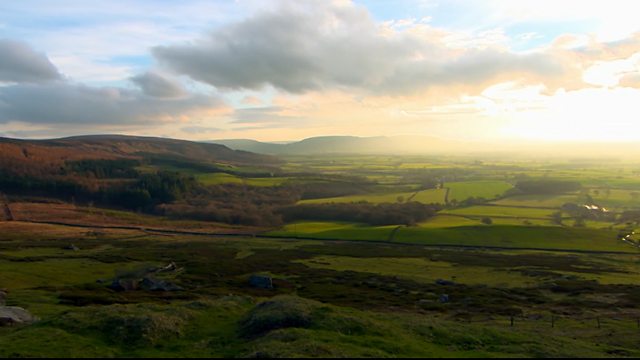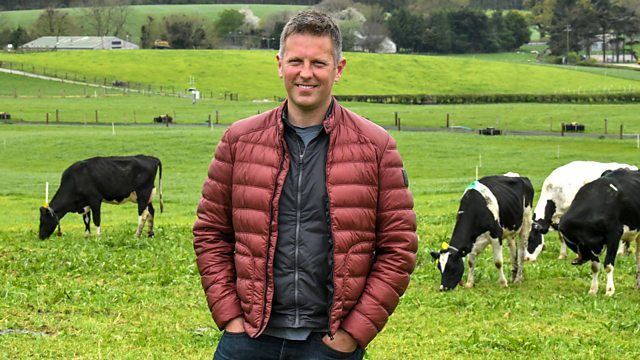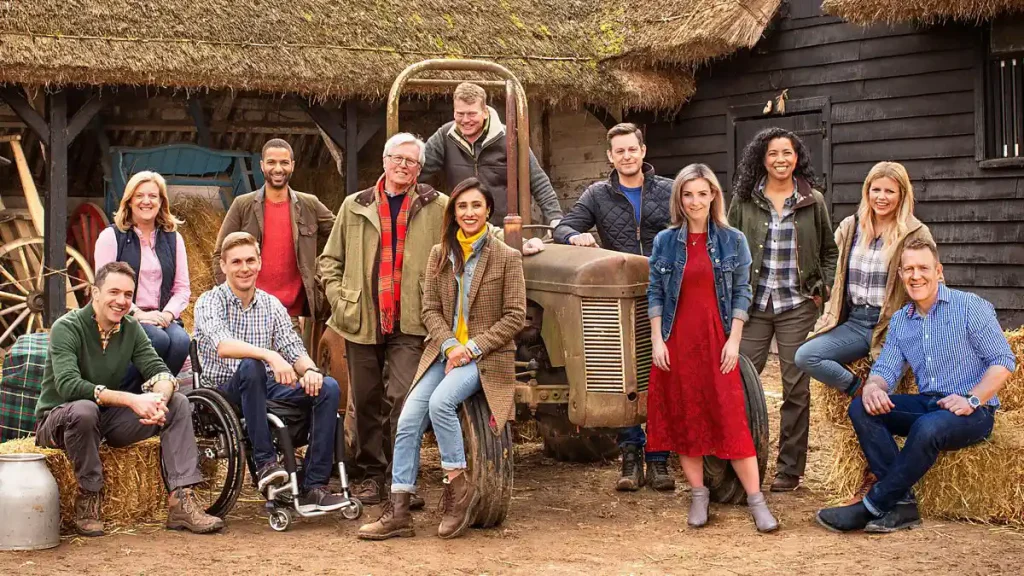
Countryfile — A Critical Season in the Forest brings Matt Baker and Sammi Kinghorn to Gethin Forest in the county borough of Merthyr Tydfil at a moment when the South Wales valleys face pressures that mount with every degree of warming. As spring gives way to summer, the steep, wooded river valleys that lie in the shadow of Bannau Brycheiniog become both a wildlife sanctuary in full bloom and a landscape at acute risk — from wildfires burning with terrifying speed, from the sheer weight of visitor numbers, and from a biodiversity quietly slipping away over decades.
The people working inside these forests, from fire crews and mountain bikers to conservationists and classroom tutors, are doing something more ambitious than maintenance. They are rebuilding country life from the ground up, shaping what Wales’s valleys will look like for the next generation.
Meanwhile, Tom Heap heads to the Devon and Cornwall coastline to investigate a very different kind of natural resource — Britain’s stalled seaweed farming industry — and asks whether the UK is sitting on an untapped green gold mine, or a dream that has been strangled by red tape, community opposition, and a brutal funding gap nobody warned investors about.
The figures land hard. Last year alone, more than 3,000 wildfires burned across South Wales. The majority are thought to have been set deliberately; others were sparked by careless barbecue use. For the uninitiated, those numbers are shocking. For Geraint Pryce, who manages over 8,000 hectares of forest including the 856-hectare Gethin Forest, they are simply the rhythm of his working year. He has spent decades helping protect these environments and carries the weight of first-hand experience — the sight of trees he has watched grow for 30 years turning to ash.
The topography of the Welsh valleys makes everything worse. These steep, narrow gorges act as funnels, channelling and intensifying wind speeds, turbo-charging any fire that takes hold and allowing it to spread at a pace that can overwhelm even experienced crews. A grass fire at the edge of a hillside can become a canopy fire within minutes if the conditions align.
Countryfile — A Critical Season in the Forest spends time with Geraint as he demonstrates the two-pronged approach he uses to keep Gethin Forest intact: aerial surveillance using a state-of-the-art search drone, and old-fashioned physical intervention on the ground. The drone is a genuine game-changer. Where inspecting the 28 kilometres of fire and fuelbreaks that surround and dissect Gethin Forest once demanded an exhausting, time-consuming series of on-foot patrols, the drone now provides a comprehensive bird’s-eye view in a fraction of the time. Geraint and his spotter Harry can zoom in closely, checking for tree disease, needle discolouration, and critically, the condition of the vegetation at the forest’s most exposed boundaries.
Countryfile – A Critical Season in the Forest
How Drone Technology and Firebreaks Are Holding the Line
Geraint’s firebreak system works on a simple but powerful principle: no fuel, no fire. Across the forest map, brown lines mark the forest roads — surfaces without vegetation where a fire loses its purchase — while blue lines denote the managed firebreaks, bands of land where vegetation has been deliberately reduced to interrupt a blaze before it can race through the canopy. The logic is as much biological as it is mathematical. By removing combustible material in strategic corridors, the team creates hard stops that a spreading wildfire cannot easily cross.
There is an ecological benefit too, one that might seem counterintuitive. Those same cleared strips, thinned of dense conifer cover, allow light to reach the ground and encourage ground-nesting birds and butterflies. Firebreaks are not merely a loss of habitat; managed correctly, they create new habitat within the forest’s interior.
On this visit, the drone survey flags a specific area of concern at the southernmost tip of the estate — overgrown sitka spruce whose lowest branches reach all the way down to the ground. Beside the open hill, molinia grass provides an easy ignition point. The combination creates a textbook ladder effect, where ground-level fire climbs the lower branches and carries directly into the canopy above. The site has already had a narrow escape; scorch marks are visible. Geraint immediately identifies the fix: pruning those lower branches away, cutting the rungs of the ladder and creating a physical disconnect that stops a ground fire from becoming something catastrophic.
The South Wales Fire Service Trains to Fight Fire with Fire
Prevention is only part of the equation. When a wildfire takes hold across valley woodland, water is often useless — crews can be a mile or more from the nearest road, and getting water to a raging forest fire is close to impossible. That is where Rhian and Rikki from the South Wales Fire and Rescue Service come in, working with local crews from Aberdare and Treorchy who specialise specifically in wildfire response.
Their training exercise for Countryfile — A Critical Season in the Forest demonstrates a technique that surprises anyone unfamiliar with it: the tactical backburn. Rather than fighting directly towards a wildfire, crews deliberately light a controlled burn behind a cleared firebreak. As this new fire burns forward into the space where the approaching blaze is heading, the two fires draw towards each other through heat convection, consume all available fuel between them, and effectively put each other out.
Using a drip torch fuelled by diesel and petrol, Rhian pours a line of fire across straw positioned to simulate the forest floor. The principle holds even in damp conditions. Wind direction is everything — even a small shift can push a tactical backburn off its intended path — and the planning required before a single drip of flame hits the ground is meticulous. When it works, it works completely. The result is a burned-out corridor that the oncoming fire cannot cross, protecting everything on the other side.
The lesson for visitors using these landscapes is blunt: no campfires, no discarded glass, no cigarettes, and barbecues only where they are explicitly permitted.
BikePark Wales Turned a Commercial Forest Into a £500,000-a-Year Maintenance Operation
Wildfire is not the only pressure these forests carry. As visitor numbers rise with the season, the challenge of managing human impact becomes its own full-time occupation. Thirteen years ago, a group of passionate mountain bikers spotted something in the steep topography of Gethin Forest that others had overlooked: an exceptional natural mountain bike park, waiting to be built.
Husband and wife Martin and Anna Astley are two of the founders of BikePark Wales, which today hosts over 50 purpose-built trails and attracts approximately 80,000 riders every year. Martin spent a long search period driving Anna’s purple Fiesta across every hillside in South Wales, looking for the combination they needed — good topography, the right soil type, and a landowner willing to collaborate. Finding that in Natural Resources Wales, the body responsible for managing Gethin, was pivotal.
The park now requires over £500,000 a year simply to keep its existing trails in condition. A single beginner-level green trail — the long, stone-surfaced route called Kermit — cost £250,000 to build. Rowan Sorrell, another co-founder who designs and maintains the trail network, is candid about the financial reality: maintenance is always the bigger part of the job. Keeping people coming back means the trails must be consistently good, and good trails do not maintain themselves.
Importantly, the park’s relationship with Natural Resources Wales has evolved to include an active conservation dimension. When commercial timber crops reach maturity and are clear-felled, the cleared ground is now replanted with native woodland species — sessile oak, suited to upland habitat, replacing the monoculture conifer stands. The 33-year lease agreement funds that replanting work, and contracts manager Gareth Rosser monitors the progress as the trail network expands. Without the park’s revenue, he believes, the conservation push almost certainly would not have reached the intensity it has.
Great Crested Newts Are Making a Quiet Comeback in Gethin
Protected under UK law and in decline across Britain for at least a century, the great crested newt — the largest of the UK’s three native species — is establishing itself in and around the woodland ponds of Gethin Forest. Jon Price from Natural Resources Wales is at the centre of the conservation effort, creating and protecting the water bodies these animals depend on.
The causes of their long decline are familiar from broader discussions of agricultural life: loss of ponds, intensification of land use, and the wider terrestrial habitat changes that have made movement and feeding much harder for amphibians that spend most of their time out of the water. In Gethin, the conservation approach starts with identifying existing records, creating new ponds in suitable areas, and managing the surrounding scrub and ground cover to give the population room to grow and expand.
Senior ecologist Amy Williams Schwartz surveys the older ponds, where populations are already recording 20 to 30 individuals per visit — healthy numbers for small sites. Each great crested newt carries a unique belly pattern, as individual as a fingerprint, which means photographs of their undersides, cross-referenced with AI-powered identification software, can track specific animals over years. A male in breeding condition carries a dramatic jagged crest and a white flash along his tail, used in courtship displays. Females lack the crest entirely.
Four or five new ponds are currently being created across the forest, the first step being a nine-tonne excavator digging the initial void. In South Wales, rainfall tends to do the rest. Within two to three years, a newly dug pond typically begins to look like established habitat, ready for newts migrating from nearby populations.
The Seaweed Farming Industry the UK Was Promised Has Not Arrived
Tom Heap’s investigation shifts the programme out to sea, four miles off the North Devon coast, where one of the UK’s largest commercial seaweed farms operates as a demonstrator site. Algapelago, co-founded by Olly Hicks, grows rope-cultivated kelp in lines beneath the surface. This year, the farm expects to harvest 10 to 15 tonnes — from approximately 10% of the available site. At full capacity, with denser line spacings and a more sophisticated system, the figure could reach around 3,000 tonnes.
The ambition is not food production. Agriculture, not cuisine, is the primary target market. Kelp-based biostimulants — liquid concentrates derived from processed seaweed — have been used in crop growing for centuries, and Europe is the global market leader for this category. The biostimulant has shown genuine effectiveness at reducing stress induced by heat, drought, and cold: useful properties as climate change makes unpredictable growing seasons the norm rather than the exception. Algapelago is running product trials with Dyson Farming Research and Ribena, among others, and has raised nearly £3 million over five years. It has not yet made a single sale of its biostimulant product. The co-founder describes the coming year as a tipping point.
The WWF’s Francesca Batt describes the UK seaweed farming sector as sitting in a “valley of death” in financing terms. After an initial wave of excitement and innovation, translating that innovation into product, then into a market, has proved far harder than the sector’s early boosters anticipated.
Licensing processes are costly, unclear, and inconsistent across England, Scotland, Wales, and Northern Ireland. In the past decade, Countryfile’s research found that just 28 companies or individuals have been granted commercial seaweed farm licences across the entire UK — nine in England, 16 in Scotland, two in Wales, and one in Northern Ireland. Of those 28 businesses, only 15 were confirmed to be actually growing seaweed, with a further 30 licence applications withdrawn, refused, or undecided.
Community Opposition at Port Isaac and Port Quin Signals Deeper Tensions
On the North Cornwall coast, the theoretical benefits of seaweed farming run directly into practical community resistance. Film and TV actor Barnaby Kay, representing the Save Our Bays group, has campaigned for two years against plans for seaweed farms near Port Isaac and Port Quin. The Port Quin proposals — two adjacent 50-hectare farms occupying roughly a kilometre square of bay, with over 3,000 plastic buoys holding 358 miles of rope on the surface — raised serious concerns about light pollution from flashing navigational buoys, safe anchorage for vessels in distress, and the practicality of maintaining infrastructure in waters that regularly exceed eight-metre wave heights, well above the six-metre tolerance threshold for seaweed aquaculture installations.
One Port Quin scheme was withdrawn. The other had its application refused. The Port Isaac scheme received a licence but then had it modified late last year following new expert advice. Mike Cohen of the National Federation of Fishermen’s Organisations raises a separate practical issue: seaweed farms placed on primary fishing routes force boats on longer journeys in bad weather, and a rope that breaks free can wrap around a propeller and strand a vessel with no power. These are not minor inconveniences. They are genuine safety risks for inshore fishing communities that already operate on thin margins.
The WWF and the UK Seaweed Network argue that better siting, standardised licensing, and proper engagement with communities could resolve much of the conflict — that seaweed farming done in the right place, with the right preparation, can bring jobs and economic diversity to coastal areas that are frequently overlooked. The Scottish Government estimates that its seaweed farming sector could generate £70 million annually by 2040. But getting from demonstration site to national industry requires regulatory clarity that currently does not exist.
Mountain Biking in the Welsh Forest as a Mental Health Practice
Beyond the mechanics of land management, the forests of South Wales carry a quieter significance for many of the people who use them. Mountain biking ambassador Liz Greaves rides the trails at BikePark Wales not simply for the physical challenge but for the psychological reset the experience provides. She describes arriving at a state of total presence — what she calls the flow state — where the trail demands complete concentration and everything else falls away. The sounds of the bike, the feel of the terrain, the smell of the forest. All of it drawing you further in, further away from whatever held tension you arrived carrying.
Liz came back to the sport in her early 30s, took to national-level racing within a year, and has since built an online following through trail guides shot in these same Welsh woodlands. She talks about the spring season in particular — the bracken returning, the moss intensifying, everything in the forest preparing to show its best. For many riders, country life spent on two wheels in the forested valleys of South Wales represents something more than recreation. It is, in her words, a new beginning every year.
Black Mountains College Is Training the Next Generation for a Timber Town Future
The Welsh Valleys carry a specific industrial memory. Less than 50 years ago, the land around Treherbert in the Rhondda was coal mining country. Today the forest that has grown across former coal tips is the region’s dominant landscape, and Black Mountains College — co-founded seven years ago by Ben Rawlence after his experience covering climate change in Africa — is training students to work within it.
The college, currently the only provider of forestry education in South Wales, has around 120 students and is aiming for 300. Three days a week are spent in practical, hands-on learning — chainsaw qualifications, tree identification, sawmill operation, woodland management. The student profile is deliberately broad: teenagers fresh from school who struggled in conventional classrooms sit alongside career-changers like animator Tad Davies, who enrolled to find a different direction. Tutor Ceri Evans describes what the forest does for students who were previously written off: they learn to name every tree species, create objects with their hands, and discover that their brains simply work differently, better here, away from test papers and rigid structures.
Ben Rawlence frames the college’s mission in terms that go beyond skills training. Forestry is one of the fastest-growing sectors in Wales. Community consultations in Treherbert produced a clear preference: a timber town future, replacing the identity the mines once gave this place. If the forest can eventually be managed on a semi-commercial basis, supporting local timber processing operations, Treherbert could become known for what grows here now rather than what was extracted before. That transition is not guaranteed. But in Countryfile — A Critical Season in the Forest, you see the people actively building toward it, one pond, one pruned branch, one trained student at a time.
FAQ Countryfile – A Critical Season in the Forest
Q: Why are wildfires so common in South Wales and how many happen each year?
A: South Wales recorded more than 3,000 wildfires in a single year, with the majority thought to have been started deliberately. Others are linked to careless barbecue use. The region’s steep valley topography makes the problem significantly worse — the gorges act as funnels that intensify wind speeds, accelerating any fire that takes hold and allowing it to spread across woodland at dangerous speed.
Q: What is a firebreak and how does it protect forests from wildfires?
A: A firebreak is a managed strip of land where vegetation has been deliberately reduced, removing the fuel a fire needs to spread. In Gethin Forest, 28 kilometres of fire and fuelbreaks surround and dissect the site. These corridors give firefighters a chance to intervene before a blaze reaches the forest canopy. As a secondary benefit, the cleared strips allow more light to reach the ground, encouraging butterflies and ground-nesting birds.
Q: What is a ladder fuel effect in wildfire management?
A: A ladder fuel effect occurs when low-hanging branches connect ground-level vegetation to the tree canopy above, providing a continuous path for fire to climb. In sitka spruce plantations, branches that reach down to the ground alongside dry molinia grass create a high-risk combination. Foresters counter this by pruning the lowest branches away, cutting the ladder’s rungs and breaking the connection between ground fire and canopy.
Q: How do firefighters use the backburn technique to contain wildfires?
A: A tactical backburn involves deliberately lighting a controlled fire behind a cleared firebreak, in the path of an approaching wildfire. As both fires burn toward each other, heat convection draws them together faster. When they meet, all available fuel between them has been consumed and the fires extinguish each other. The technique is used because getting water to remote forest fires is often impossible — crews can be two miles or more from the nearest road.
Q: How is drone technology changing forest management in South Wales?
A: Drones allow foresters to survey vast areas that would previously have required exhausting on-foot inspections. At Gethin Forest, a search drone surveys the full network of firebreaks, checks for tree disease and needle discolouration, and identifies high-risk vegetation zones in a fraction of the time ground patrols require. The aerial footage can pinpoint specific problem areas, allowing crews to focus intervention precisely where it is needed most.
Q: How much does it cost to build and maintain mountain bike trails in a commercial forest?
A: BikePark Wales spends well over £500,000 per year maintaining its existing trail network. A single beginner-level green trail — Kermit, one of the longest on site — cost approximately £250,000 to construct, largely due to the stone required to build a stable surface. New trails are added continuously, as the park’s co-founders believe standing still risks losing the visitors who make the operation financially sustainable.
Q: Why has the UK seaweed farming industry stalled despite strong early interest?
A: Industry insiders describe a “valley of death” in financing — an initial wave of excitement followed by severe difficulty translating innovation into saleable products. Licensing is costly, unclear, and inconsistent across England, Scotland, Wales, and Northern Ireland. In the past decade, just 28 companies or individuals received commercial seaweed farm licences across the entire UK, and only 15 were confirmed to be actively growing seaweed. A further 30 applications were withdrawn, refused, or remain undecided.
Q: What are the main objections to seaweed farms near coastal communities?
A: Opposition centres on several practical concerns: proposed farms positioned in safe anchorage areas used by vessels in distress, infrastructure that would be destroyed by wave heights regularly exceeding the six-metre tolerance threshold for seaweed installations, light pollution from flashing navigational buoys, and the risk of broken ropes tangling boat propellers. Fishing organisations warn that poorly sited farms could cost inshore fishermen 10 to 20 percent of their income.
Q: What are great crested newts and why are they being protected in Gethin Forest?
A: The great crested newt is the largest of the UK’s three native newt species and has been in decline for at least a century, primarily due to pond loss, agricultural intensification, and habitat degradation. In Gethin Forest, Natural Resources Wales is actively creating new ponds and managing surrounding habitat to support a recovering population. Each individual carries a unique belly pattern — as distinctive as a fingerprint — which allows AI-assisted software to track specific animals across multiple survey seasons.
Q: How is Black Mountains College preparing young people for careers in Welsh forestry?
A: Black Mountains College in Treherbert is the only provider of forestry education in South Wales, currently teaching around 120 students with ambitions to reach 300. Three days a week are spent in practical, outdoor sessions covering chainsaw qualifications, tree identification, sawmill operation, and woodland management. The college specifically attracts students who struggled in conventional classrooms, giving them hands-on skills in one of Wales’s fastest-growing employment sectors — while also contributing directly to the management of the surrounding forest.