In Digging for Britain 2025 episode 3, we embark on a thrilling exploration of some of the most breathtaking archaeological sites scattered across Britain’s magnificent islands. From ancient tombs to sunken ships, the discoveries featured this week promise to shed light on mysteries spanning thousands of years.
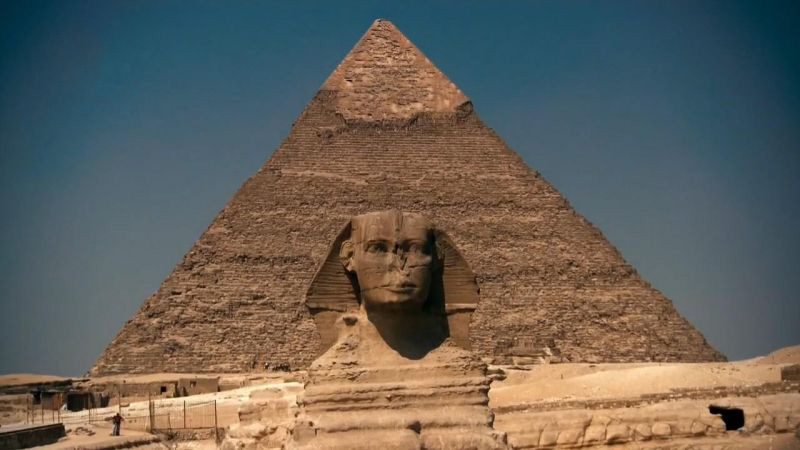
Our journey begins in the Orkney Islands, where presenter Alice Roberts joins a team of archaeologists uncovering a tomb as ancient as Egypt’s Great Pyramids. This Neolithic burial site, dating back nearly 5,000 years, holds secrets buried deep within its chambers. As the team meticulously removes layers of earth, they unveil burial chambers packed with intact skeletons. Each bone tells a story, whispering clues about the lives and deaths of the people who once called this remote island home. The sight of these ancient remains, preserved so remarkably, is both haunting and awe-inspiring, evoking a powerful connection to our distant ancestors.
Next, we pivot to an incredible maritime discovery off the Isles of Scilly. Fifty miles from shore lies the wreck of the USS Jacob Jones, a historically significant World War I destroyer. As the first U.S. ship to be sunk by enemy action, its story is one of tragedy and resilience. A coalition of archaeologists, naval experts, and the Ministry of Defence have come together in an international effort to preserve this underwater time capsule.
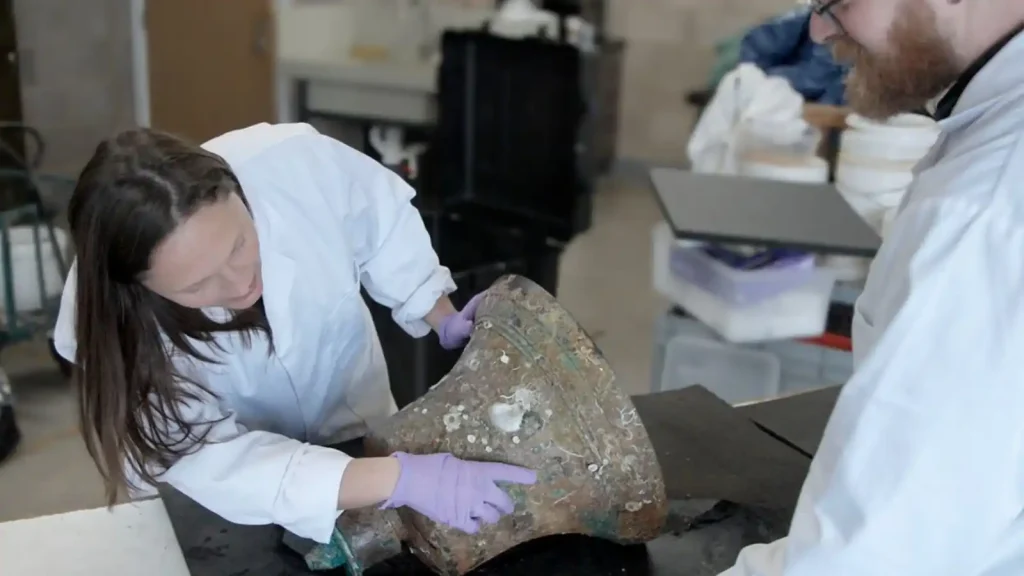
Central to their mission is the recovery of the ship’s bell, a poignant artifact that symbolizes both the ship’s legacy and the lives lost on that fateful day. Historian Yasmin Khan delves into the events leading to the ship’s sinking, piecing together the human drama behind the cold facts. The combination of cutting-edge underwater technology and heartfelt storytelling brings this long-forgotten chapter of history vividly back to life.
Our adventure continues two miles offshore from Jersey, where archaeologists are exploring a hidden world that emerges only during the lowest spring tides. Known as the Violet Bank, this intertidal reef is a jagged, otherworldly landscape of sharp rocks and shallow pools. Twice a month, when the tides recede far enough to reveal this elusive terrain, a dedicated team braves the elements to investigate its secrets. Among their discoveries are ancient tools and remnants of human activity, hinting at a time when this submerged area may have been dry land. The fleeting nature of these explorations, dictated by the rhythm of the tides, adds an almost magical quality to their work.
Heading north, we find ourselves on the windswept Shetland Islands, where one of Britain’s most inaccessible archaeological sites clings precariously to a rocky headland. Rising 38 meters above the crashing waves of the North Sea, this dramatic location holds the remains of an ancient settlement. Was it a secluded Christian monastery, a place of quiet devotion perched on the edge of the world?
Or was it a Viking stronghold, a fortress braving the relentless elements? As the team battles fierce winds and treacherous terrain to uncover the site’s secrets, their findings paint a vivid picture of life on this desolate outcrop. The sense of isolation and danger adds a palpable tension to their quest for answers.
Digging for Britain 2025 episode 3
Finally, we turn our focus to the enigmatic Iron Age towers known as brochs, which dot the Scottish landscape. These mysterious structures, with their circular stone walls and towering heights, have long puzzled archaeologists. This episode spotlights a groundbreaking investigation into one particular broch, where a team has made remarkable strides in understanding how its inhabitants lived.
From the remains of hearths to tools and everyday artifacts, each discovery provides a glimpse into the daily lives of the Iron Age people who once called this fortress home. The broch’s sturdy construction and ingenious design stand as a testament to the skill and resourcefulness of its builders, while the artifacts within bring their world vividly to life.
Through stunning visuals, compelling narratives, and cutting-edge science, this episode of Digging for Britain 2025 takes viewers on an unforgettable journey through time. Each site reveals a piece of the puzzle that is Britain’s rich and diverse history, connecting us to the lives of those who came before. From the depths of the ocean to the windswept cliffs of the North Sea, these discoveries remind us that the past is always waiting to be uncovered, just beneath the surface.
Conclusion Digging for Britain 2025 episode 3
The treasures unearthed in this episode of Digging for Britain 2025 remind us of the profound stories buried beneath our feet, waiting patiently to be told. From the ancient tombs of Orkney to the submerged wreck of the USS Jacob Jones, each discovery breathes new life into Britain’s rich history. These sites, like pages from a forgotten book, unfold tales of resilience, ingenuity, and survival, connecting us across time to those who walked this land long before us.
The Orkney tomb, with its preserved skeletons and millennia-old secrets, feels like a whisper from a world long gone. It tells of lives lived under the same skies we gaze upon today, reminding us of our shared humanity. Meanwhile, the Violet Bank’s fleeting tides expose echoes of a bygone era, a poignant reminder of nature’s rhythm and its role in shaping human destiny. The tools and remnants found there offer glimpses of lives once vibrant, now etched into the stone and sand.
The wreck of the USS Jacob Jones anchors us to a more recent past, its bell a symbol of loss and hope. It connects generations through shared stories of courage and sacrifice. And on Shetland’s rocky cliffs, the ruins of ancient settlements hold an almost mythical allure, where each artifact discovered weaves threads of faith, defense, or survival into the tapestry of our understanding.
Then there are the brochs—silent sentinels of Scotland’s rugged beauty—standing as both architectural marvels and windows into Iron Age life. These towering structures reveal not just how people lived, but how they thrived in a challenging world. The evidence of hearths and tools feels intimate, as though the echoes of laughter, labor, and daily life still linger in their shadows.
Together, these discoveries illuminate a truth as enduring as the stones themselves: history is not just the story of kings and wars but of people—ordinary and extraordinary—shaping their world. Each site explored this week bridges the distance between past and present, reminding us that the ground beneath our feet holds untold wonders.
As we leave these remarkable places, we carry their lessons with us. The past, though buried, is never far away, always waiting for the curious to uncover its timeless secrets.
FAQ Digging for Britain 2025 episode 3
Q: What is the significance of the Neolithic tomb discovered in Orkney, and how does it compare to other ancient sites?
A: The Neolithic tomb in Orkney is a remarkable find. Firstly, it dates back nearly 5,000 years, making it as old as the Egyptian pyramids. Furthermore, the tomb contains remarkably well-preserved skeletons. Consequently, these remains offer invaluable insights into the lives of the people who inhabited Orkney millennia ago. In contrast to many other Neolithic burial sites, the Orkney tomb provides a unique window into the past due to the exceptional preservation of its contents. Ultimately, the tomb’s significance lies in its ability to connect us to our distant ancestors and deepen our understanding of their culture and society.
Q: Can you tell me more about the USS Jacob Jones and why its discovery is so important?
A: The USS Jacob Jones was a World War I destroyer. Sadly, it was the first US ship sunk by enemy action. Therefore, its wreck serves as a poignant reminder of the sacrifices made during wartime. Moreover, the ship is a time capsule of historical information. For instance, the recovery of the ship’s bell is a key focus for the team. This bell symbolizes the ship’s legacy and honors the lives lost. In conclusion, the discovery of the USS Jacob Jones allows us to remember and learn from a significant event in maritime history.
Q: What makes the Violet Bank such a unique archaeological site, and what challenges do archaeologists face when exploring it?
A: The Violet Bank, located off the coast of Jersey, presents unique challenges and rewards for archaeologists. First and foremost, it’s an intertidal reef, meaning it’s submerged most of the time. However, during the lowest spring tides, the reef is exposed. As a result, archaeologists have limited windows to explore this “hidden world.” Despite these challenges, the Violet Bank offers tantalizing glimpses into the past. For example, researchers have discovered ancient tools and evidence of human activity, suggesting that this area was once dry land. In essence, the Violet Bank is a race against time, where archaeologists must work quickly to uncover its secrets before the tide returns.
Q: The Shetland Islands site seems very remote. What are the theories about this ancient settlement?
A: Indeed, the Shetland Islands site is incredibly remote and exposed to the elements. Because of its location, archaeologists have two main theories about its origins. On the one hand, it may have been a Christian monastery, offering a place of solitude and devotion. On the other hand, it could have been a Viking stronghold, built to withstand the harsh conditions. Ultimately, the ongoing excavations aim to uncover the truth behind this enigmatic site. Each artifact found helps to paint a clearer picture of life on this windswept headland.
Q: What are brochs, and what have archaeologists learned about them in this episode of Digging for Britain?
A: Brochs are fascinating structures from the Iron Age. Specifically, they are tall, circular stone towers found throughout Scotland. In this episode, archaeologists focus on one particular broch. Through meticulous excavation, they have uncovered remarkable details about the lives of its inhabitants. For example, the discovery of hearths, tools, and everyday objects provides valuable insights. Essentially, these findings bring the Iron Age to life, showcasing the ingenuity and resourcefulness of the people who built and lived in these impressive structures.
Q: How does Digging for Britain 2025 connect viewers to the past?
A: Digging for Britain 2025 offers a captivating journey through time. Firstly, it uses stunning visuals to bring archaeological sites to life. Secondly, the program features compelling narratives that weave together historical facts and human stories. Lastly, it showcases cutting-edge scientific techniques used in modern archaeology. Through this combination, viewers connect with the past on multiple levels. From the Orkney tomb to the Shetland Islands settlement, each site reveals a piece of Britain’s rich and diverse history. In short, Digging for Britain 2025 makes the past accessible and engaging for everyone.