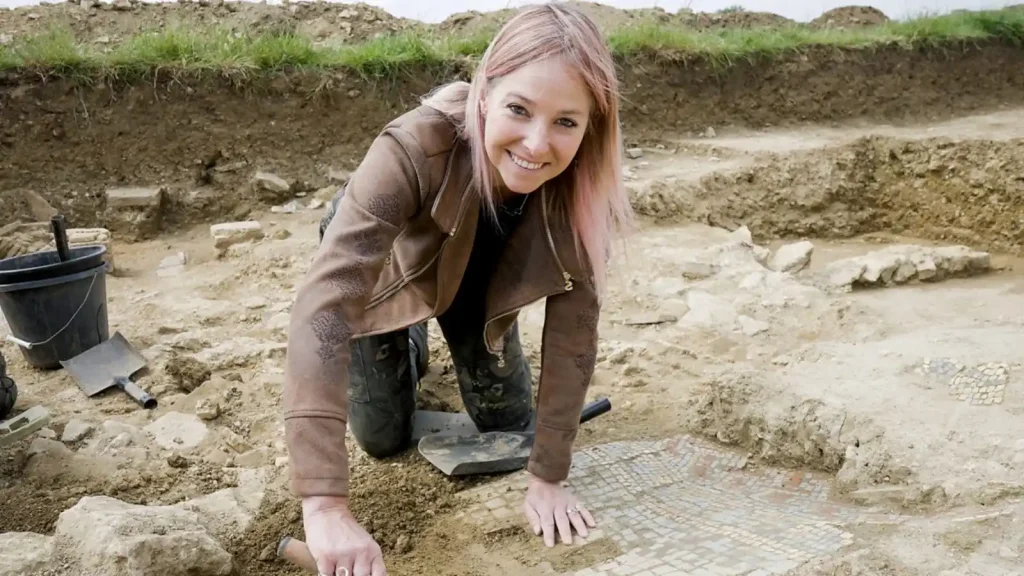
Digging for Britain 2025 episode 5 returns with an enthralling exploration of ancient sites, vibrant histories, and unexpected revelations. This journey through the western reaches of Britain offers a close look at Roman legacies, medieval faith, and the echoes of industries that once shaped entire communities. Alice Roberts guides us across expansive fields, secluded coastlines, and bustling city centers, always uncovering relics that provoke deep questions about the nation’s shared past. Like a detective on the trail of hidden stories, she follows every lead until fragments of pottery, remnants of farmsteads, and traces of lost buildings come together as vivid windows onto centuries long gone.
West of Oxford, archaeologists have uncovered a previously unknown Roman villa complex that beckons visitors into an era dominated by Imperial might. Towering stone foundations, carefully pieced together, reveal a villa whose precise layout has survived with remarkable clarity. These newly revealed outlines suggest rooms once filled with the bustle of daily life, from the aroma of freshly prepared food in busy kitchens to the echoes of Latin prayers and conversations in grand halls.
Locals marvel at the site’s impressive condition, which hints at a vanished world where wealthy owners managed estates that fed thriving cities. The very soil seems to whisper tales of power, ambition, and artful engineering, reminding onlookers that centuries can slip away, yet human stories remain timeless.
Meanwhile, on the island of Anglesey, a World War II airbase takes on new significance for those fascinated by Britain’s Iron Age history. Although this base was once a place of roaring aircraft and wartime strategy, it has now revealed glimpses of a more distant chapter. MOD metal detectorists, surveying the ground with meticulous care, stumbled upon a fully articulated horse bridle and a fragment of what experts believe to be a chariot.
The discovery sparks vivid imaginings of ancient warriors racing across the landscape, their horses’ hooves pounding the earth like distant thunder. Indeed, Anglesey itself has often been associated with crucial Iron Age finds, and this new evidence reinforces its reputation as a place where the distant past still shimmers just beneath the surface.
Further along the coast, Alice travels to Llantwit Major, a site humming with local lore and centuries of ecclesiastical tradition. There, archaeologists carefully unearth traces of a long-lost monastery associated with the revered Celtic saint, St Illtud. Legend holds that this early religious center once stood as a beacon of learning and devotion, with scholars journeying from afar to study in what was arguably the spiritual heart of Britain.
As trowels scrape against centuries of earth, researchers unearth stone fragments that may have formed chapel walls or sleeping quarters for pious monks. This glimpse into a quieter, more reflective world feels like stepping into the hush of ancient prayer books, where every page invites reflection on faith, community, and enduring legacy.
In Ilfracombe, a picturesque seaside town perched on the north coast of Devon, archaeologists peel back layers of soil to reveal the remains of a sturdy 17th-century farmhouse. The construction site may be modern, but the stories told by these artifacts belong to an era of wooden ships and global trade. Unearthed documents and buried objects suggest that Devonshire merchants once played a hand in the transatlantic slave trade, casting a solemn shadow over the farmhouse’s quaint facade.
Historians and community members now grapple with evidence of how local wealth ties to oppressive systems that spanned oceans. Although the pretty harbor continues to draw tourists, Ilfracombe’s past now demands a deeper reckoning with tales of those who found profit in human suffering.
Meanwhile, not far from the idyllic scenery of the Cotswolds, a massive road infrastructure project has exposed another intriguing discovery. Archaeologists have stripped back around 60 hectares of land, revealing the foundations of a building that once stood by Ermine Way, a Roman road known for its strategic importance. This solitary structure sparks theories about its function. Some scholars propose it might have served as a lodging house or trading outpost, where travelers on horseback might pause for rest or commerce. Others see hints of an official presence, possibly an administrative checkpoint that oversaw the steady pulse of goods and ideas moving through the Empire. Each hypothesis adds dimension to a puzzle that only further excavation can solve.
Digging for Britain 2025 episode 5
Finally, Alice returns to her hometown of Bristol, where layers of urban development hide a wealth of history. In the densely populated neighborhood of Bedminster, a proposed shopping center led to archaeological investigations that uncovered the remnants of an 18th-century water mill. Here, the whirring of machinery and the rush of water once powered the local economy, setting in motion trades and industries that shaped the city’s growth. Even though modern skyscrapers loom and the hum of traffic reverberates, this mill’s sunken ruins reveal a time when harnessing natural forces felt like a magic trick. Today, developers must reconcile the region’s push for modernization with a respect for the stories these stones continue to tell.
Throughout this westward odyssey, Alice Roberts remains the steadfast guide who breathes life into each discovery. Her curiosity propels both viewers and researchers to interpret every shard of pottery, every foundation stone, and every hidden corner with fresh eyes. She reminds us that archaeology is not just about stacking clues into a neat timeline. Instead, it is a process of empathy that bridges gaps between ancient and modern lives, between fields of science and realms of the heart. Each site offers a lesson in humility, showing how time can both erase and preserve, hide and reveal, and sometimes deliver unimaginable surprises to those who are willing to listen.
In every location, the uncovering of artifacts weaves together a tapestry that connects Britain’s past to its present. Roman engineering achievements, medieval sanctuaries, and centuries-old farmhouses do more than collect dust in museum cases. They echo with the voices of everyday people—farmers, monks, merchants, builders—who passed on their stories like torches in the night. As Digging for Britain 2025 shines a spotlight on these remarkable sites, it invites everyone to reflect on the deeper narratives buried in the ground beneath our feet. Like pages in an ancient manuscript, these landscapes offer chapters of intrigue, faith, struggle, and triumph, reminding us that history’s tapestry is forever unfolding, ready to reveal new patterns when we least expect them.
Conclusion Digging for Britain 2025 episode 5
The journey through the western reaches of Britain, as explored in Digging for Britain 2025, concludes with a profound sense of connection to the past. Each discovery—whether a Roman villa, a medieval monastery, or an 18th-century water mill—has revealed stories that resonate across centuries. These artifacts are more than remnants; they are vibrant threads in the intricate tapestry of British history.
The Roman villa complex west of Oxford invites us into a world of opulence and organization. Its carefully laid foundations whisper of bustling kitchens, grand halls, and lives intertwined with imperial ambition. These ruins, standing against the passage of time, remind us of the ingenuity and resilience that once shaped a vast empire. Similarly, Anglesey’s uncovered chariot fragment bridges the gap between distant Iron Age warriors and the modern landscapes they once roamed. The island’s ground—both battlefield and sanctuary—echoes with the spirit of those who shaped its history.
Meanwhile, the excavations in Llantwit Major offer glimpses of a quieter, contemplative era. The unearthing of Saint Illtud’s monastery highlights the role of faith and learning in building communities. These sacred stones, long hidden beneath layers of earth, are like pages from an ancient prayer book, each one inviting reflection on human devotion and shared purpose.
In Ilfracombe, history’s shadows take on a more somber tone. The 17th-century farmhouse and its ties to the transatlantic slave trade demand a reckoning with a painful chapter of human history. This site reminds us that the beauty of coastal towns often belies complex narratives of prosperity and exploitation. Confronting these stories ensures they are not forgotten, offering a chance to learn from the past while shaping a more just future.
The discoveries unearthed near the Cotswolds, including the Roman outpost along Ermine Way, highlight Britain’s role as a crossroads of cultures and ideas. Each foundation stone tells of travelers, traders, and administrators whose paths converged on these ancient roads. Finally, the remnants of Bedminster’s water mill reveal the ingenuity of 18th-century industry. These ruins, though overshadowed by modern skyscrapers, hold the essence of a time when harnessing nature felt like mastering magic.
Digging for Britain 2025 invites us to look beneath the surface—not just of the ground but of history itself. Each shard and structure is a reminder of the enduring human spirit. As Alice Roberts eloquently demonstrates, archaeology is not merely about studying the past; it’s about weaving it into the present, ensuring that the echoes of history continue to inspire and inform the future.
FAQ Digging for Britain 2025 episode 5
Q: What is the main focus of Digging for Britain 2025 episode 5?
A: This episode takes viewers on an exciting journey through the western regions of Britain. Furthermore, it explores a diverse range of archaeological sites. These include a Roman villa complex, an Iron Age chariot burial, and a medieval monastery. Ultimately, the episode reveals hidden layers of history.
Q: Who is Alice Roberts, and what is her role in the program?
A: Alice Roberts is a renowned archaeologist and television presenter. In this episode, she serves as the knowledgeable guide. She leads viewers through each discovery. Moreover, she explains the significance of the finds with enthusiasm and expertise. As a result, she helps viewers connect with the past.
Q: What makes the Roman villa complex discovered near Oxford so remarkable?
A: Firstly, the villa complex was previously unknown. Secondly, its layout has survived with exceptional clarity. Archaeologists have uncovered towering stone foundations. These reveal the organization of the villa. Consequently, we can imagine the daily life of its inhabitants. The site offers a captivating glimpse into Roman Britain.
Q: How does the discovery on Anglesey connect to Britain’s Iron Age past?
A: On Anglesey, a World War II airbase has yielded an unexpected find: a horse bridle and a possible chariot fragment. These artifacts date back to the Iron Age. Therefore, they provide tangible evidence of ancient warriors and their activities on the island. This discovery enhances Anglesey’s reputation as a significant Iron Age site.
Q: What can viewers expect to learn about in Llantwit Major?
A: In Llantwit Major, archaeologists are uncovering the remains of a monastery. This monastery is linked to Saint Illtud, a prominent figure in early British Christianity. The site offers a window into a period of religious devotion and scholarship. Indeed, it was potentially a major center of learning in early medieval Britain.
Q: Why is the discovery of the 17th-century farmhouse in Ilfracombe significant?
A: While seemingly ordinary, the farmhouse in Ilfracombe has a darker story to tell. Archaeological evidence suggests a connection between the farmhouse and the transatlantic slave trade. Consequently, the site prompts a difficult but necessary conversation about the origins of wealth in coastal communities like Ilfracombe. It serves as a reminder of the complex and often troubling legacies of the past.