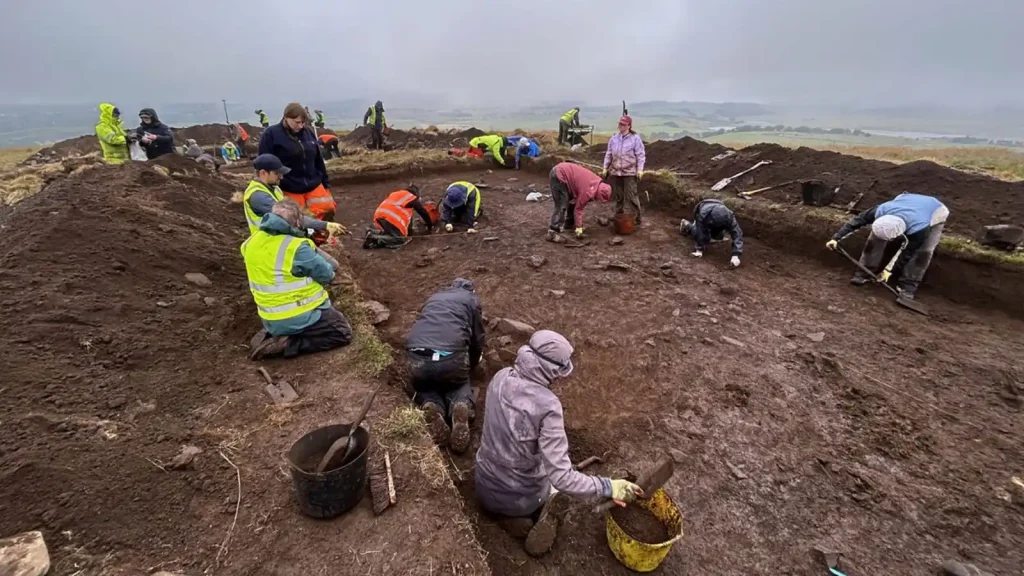
Digging for Britain 2026 episode 4 delivers one of the most extraordinary collections of archaeological revelations in the programme’s history, spanning four thousand years of human activity across England and Scotland. From the cremated remains of Bronze Age individuals to the industrial workshops of Roman Britain, and from the turbulent final days of Anglo-Saxon England to the medieval monks who first distilled whisky on British soil, this episode weaves together discoveries that fundamentally reshape understanding of these islands’ past. The breadth of material culture unearthed across these sites speaks to the remarkable depth of Britain’s heritage, preserved beneath fields, hillsides, and abbey ruins for centuries and now brought to light through meticulous excavation.
The significance of these findings extends far beyond academic interest. Each site featured represents a convergence of cutting-edge archaeological technique and historical detective work, producing artifacts that challenge existing assumptions about how people lived, worshipped, traded, and died in ancient and medieval Britain. The discoveries illuminate not only the grand sweep of history but also intimate human moments—a Bronze Age community carefully preparing a loved one for burial, Pictish craftspeople producing elaborate silver ornaments, Roman soldiers sharpening their weapons at an industrial-scale whetstone factory.
This episode of Digging for Britain 2026 episode 4 takes viewers from the rolling hills of Somerset to the windswept coasts of Fife, from the ecclesiastical ruins of Lindores Abbey to the crowded storage facilities where Gloucester Museum confronts a nationwide crisis in managing archaeological finds. The programme demonstrates how British archaeology operates at the intersection of professional excavation, community engagement, and institutional preservation, creating a complex ecosystem dedicated to recovering and protecting the material remains of the past.
The cultural implications of these discoveries resonate deeply. Harold Godwinson’s lost estate at Portbury offers tangible evidence of the last Anglo-Saxon king’s power and influence just years before the Norman Conquest transformed English society forever. Meanwhile, the Pictish treasures emerging from Rhynd in Fife reveal a sophisticated civilisation whose artistic achievements rival anything produced in contemporary Europe. These are not mere curiosities but windows into worlds that shaped the foundations of modern Britain.
Understanding these sites requires appreciating the methodology archaeologists employ. Ground-penetrating radar, careful stratigraphic analysis, and laboratory examination of organic remains all contribute to reconstructing past lives from fragmentary evidence. The discoveries presented here demonstrate archaeology’s capacity to surprise, revealing connections between distant periods and places that no documentary record could capture.
The transition from prehistory through Roman occupation to medieval religious communities represents a continuous thread of human adaptation and innovation. Each era left its mark on the British landscape, and each excavation recovers fragments of those vanished worlds. The artifacts themselves—pottery, metalwork, glass, bone—serve as direct physical links to individuals who lived centuries or millennia ago.
What emerges from this collection of sites is a picture of Britain as a place of constant change, where waves of people, ideas, and technologies washed across the landscape, leaving deposits that archaeologists now carefully sift and interpret. The work requires patience, expertise, and a willingness to revise established narratives when new evidence demands it.
These discoveries also highlight the challenges facing contemporary archaeology: limited funding, inadequate storage facilities, and the race against development and environmental change that threatens buried remains. The programme captures both the excitement of discovery and the sobering reality of preserving what has been found for future generations.
Digging for Britain 2026 episode 4
Harold Godwinson’s Lost Estate Revealed Through Digging for Britain 2026 Episode 4
The discovery at Portbury in North Somerset represents one of the most significant finds related to late Anglo-Saxon England in recent decades. Archaeologists have uncovered compelling evidence of a substantial estate belonging to Harold Godwinson, the last crowned Anglo-Saxon king of England, who fell at the Battle of Hastings in 1066. The excavation has produced material that illuminates the final years of Anglo-Saxon aristocratic life, offering a glimpse into the world that the Norman Conquest would soon sweep away.
Documentary evidence from the Domesday Book already indicated Harold’s connection to Portbury, but physical proof of his presence had remained elusive until this excavation. The archaeological team focused on land adjacent to the twelfth-century church, where geophysical surveys detected anomalies suggesting buried structures. What emerged from the soil exceeded all expectations—evidence of high-status occupation dating precisely to the period of Harold’s ownership.
The finds include fragments of pottery, metalwork, and architectural remains consistent with a manor of significant importance. Analysis of the material culture reveals connections to wider trade networks, demonstrating that Portbury was no isolated backwater but a node in systems of exchange spanning Britain and the Continent. The heritage significance of this site cannot be overstated, as it provides direct physical evidence of the infrastructure supporting Anglo-Saxon royal power.
Particularly striking is the evidence of destruction layers dating to the years immediately following 1066. The Norman Conquest did not merely transfer political authority but disrupted communities throughout England. Portbury’s archaeological record preserves traces of this upheaval, showing how the new regime dismantled or repurposed existing Anglo-Saxon structures. The discoveries at this site transform understanding of how Norman rule was imposed at the local level.
Scotland’s Pictish Treasures Transform Understanding of Early Medieval Culture
The hilltop excavation at Rhynd in Fife has yielded an unprecedented collection of Pictish artifacts that fundamentally alter scholarly understanding of this enigmatic civilisation. The Picts, who dominated much of Scotland from roughly the third to ninth centuries, left few written records but produced stunning material culture now emerging in remarkable quantities from this single site. The discoveries position Rhynd as potentially the most important Pictish site excavated in a generation.
Among the most spectacular finds is an elaborate silver chain, one of only a handful known to exist. These chains represent the pinnacle of Pictish metalworking skill, featuring intricate interlocking links that demonstrate technical mastery rivalling contemporary Byzantine craftsmanship. The Rhynd chain joins a select group of similar objects, each associated with sites of exceptional importance. Their exact function remains debated, but most scholars believe they served as symbols of royal or aristocratic authority.
The site has also produced remarkable evidence of metalworking activity, including moulds, crucibles, and partially finished objects. This assemblage indicates that Rhynd was not merely a consumption site where elites displayed wealth but an actual production centre where skilled craftspeople created luxury goods. The implications for understanding Pictish economy and social organisation are substantial, suggesting a more complex system of manufacture and distribution than previously recognised.
Excavation has revealed structural remains indicating long-term occupation and modification of the hilltop. Defensive features, domestic buildings, and workshop areas all occupy the site, creating a layered record of Pictish life spanning several centuries. The artifacts recovered include items demonstrating connections to Ireland, Scandinavia, and the Mediterranean, revealing extensive trade networks that linked this northern British site to far-flung regions.
The British archaeology community has responded to the Rhynd discoveries with considerable excitement. The combination of high-status metalwork, production evidence, and structural remains makes this site exceptional. Further excavation promises to reveal additional insights into Pictish society, culture, and the processes by which this civilisation eventually merged with the Scots to form the medieval kingdom of Scotland.
Lindores Abbey and the Origins of Scottish Whisky Production
The medieval ruins of Lindores Abbey in Fife have long held a special place in Scottish history as the documented birthplace of whisky distillation in Scotland. Recent archaeological investigation has now provided physical evidence supporting this historical claim, uncovering remains of distillation equipment and associated structures within the abbey precinct. The discoveries confirm that by the late fifteenth century, monks at Lindores were producing significant quantities of aqua vitae—the water of life that evolved into modern whisky.
The historical record has always pointed to Lindores. A 1494 entry in the Exchequer Rolls records malt being provided to Friar John Cor at Lindores Abbey to make aqua vitae, representing the earliest documented evidence of whisky production in Scotland. However, documentary evidence tells only part of the story. Archaeological excavation has now provided material confirmation, revealing the infrastructure that made monastic distillation possible.
The excavation uncovered fragments of distillation vessels, storage containers, and heating structures consistent with large-scale aqua vitae production. Analysis of residues detected on pottery fragments has identified chemical signatures associated with grain-based spirits. These findings demonstrate that whisky production at Lindores was not a minor sideline but a substantial operation requiring dedicated facilities and significant investment of resources.
Monastic communities throughout medieval Europe engaged in distillation, primarily for medicinal purposes. The technology arrived from the Islamic world, where alchemists had developed sophisticated techniques for concentrating alcohol and other substances. Benedictine monks, including those at Lindores, adapted these methods to produce remedies for various ailments. The transition from medicine to recreational beverage occurred gradually over subsequent centuries.
The heritage implications of the Lindores discoveries extend beyond academic interest. Scotland’s whisky industry represents a major cultural and economic asset, and establishing the historical foundations of this tradition carries considerable significance. The excavation has provided tangible links to the earliest days of Scottish distillation, grounding modern whisky culture in documented medieval practice.
Digging for Britain 2026 Episode 4 Explores Bronze Age Burial Rituals
Among the most moving discoveries featured in this episode is a completely intact Bronze Age cremation vessel recovered from a site in England. Dating to approximately four thousand years ago, the urn contains the carefully collected remains of one or more individuals, preserved exactly as Bronze Age mourners placed them. The discovery offers rare insight into prehistoric funerary practices and the beliefs that shaped how ancient communities treated their dead.
The vessel itself demonstrates considerable craftsmanship, featuring decoration consistent with regional Bronze Age pottery traditions. Its intact condition makes it exceptional—most cremation urns survive only as fragments, disturbed by later agricultural activity or natural processes. This example remained undisturbed for four millennia, protected by particular burial conditions that preserved both container and contents.
Laboratory analysis of the cremated remains has begun to yield information about the individuals represented. Specialists can determine approximate age, and sometimes sex, from burnt bone fragments. Evidence of pathology occasionally survives cremation, potentially revealing information about health conditions and causes of death. The Digging for Britain 2026 episode 4 coverage follows this analytical process, demonstrating how modern scientific techniques extract maximum information from ancient remains.
The burial context provides additional evidence of ritual practice. The careful positioning of the vessel, associated grave goods, and the preparation of the burial pit all reflect deliberate choices by Bronze Age mourners. These actions followed cultural conventions that, while not fully understood today, clearly held deep significance for the communities that performed them. The discoveries illuminate emotional and spiritual dimensions of prehistoric life that material culture rarely captures so directly.
Roman Industrial Production at an Unprecedented Whetstone Factory
The excavation of a Roman whetstone factory represents a remarkable addition to understanding of industrial-scale production in Roman Britain. Whetstones—the sharpening stones essential for maintaining metal tools and weapons—constituted a vital commodity in the Roman world, where military efficiency depended on well-maintained equipment. This site reveals the infrastructure and organisation behind mass production of these everyday but essential items.
The factory’s scale exceeds anything previously documented in Britain. Thousands of whetstones in various stages of manufacture have been recovered, from raw material blanks to finished products ready for distribution. The production sequence is legible in the archaeological record, with different areas dedicated to quarrying, rough shaping, fine finishing, and storage. This spatial organisation reflects sophisticated management of industrial processes.
The choice of location was determined by geology. The site sits atop deposits of stone particularly suited to whetstone production, combining hardness with the abrasive texture required for effective sharpening. Roman prospectors identified this resource and established the factory to exploit it systematically. The history of this site illustrates how the Roman economy identified and utilised natural resources across their empire.
Production at this scale implies markets extending far beyond the local area. Whetstones were relatively easy to transport given their durability and modest size, making them ideal candidates for long-distance trade. Analysis of whetstone finds from military and civilian sites across Britain may eventually establish distribution patterns linking this factory to users throughout the province.
The artifacts recovered include not only whetstones themselves but tools used in their manufacture and objects associated with the workers who staffed the facility. Personal items, pottery, and coins provide evidence of daily life at an industrial site, revealing the human dimension behind mass production. These discoveries contribute to British archaeology’s understanding of Roman economic organisation and the lives of ordinary workers in provincial industry.
Gloucester Museum Confronts the Archaeological Storage Crisis
Digging for Britain 2026 episode 4 addresses a challenge facing museums throughout Britain: the overwhelming volume of archaeological finds requiring storage and conservation. Gloucester Museum serves as a case study in this national crisis, demonstrating both the scale of the problem and potential solutions. The museum’s collections include millions of objects, from prehistoric flints to medieval manuscripts, each requiring appropriate environmental conditions and cataloguing.
The situation at Gloucester reflects broader patterns. Decades of rescue archaeology, developer-funded excavations, and systematic research have produced material faster than institutions can process and store it. Current storage facilities operate at or beyond capacity, forcing difficult decisions about what to retain and how to provide appropriate conditions. The discoveries that excite public imagination often end up in crowded warehouses, awaiting attention that stretched museum budgets cannot provide.
Museum staff at Gloucester have developed innovative approaches to managing their collections. Rationalisation programmes identify duplicate or low-priority material that can be responsibly deaccessioned, freeing space and resources for more significant items. Digital cataloguing improves access without requiring physical handling, while partnerships with universities and other institutions distribute the burden of care and study.
The heritage implications of the storage crisis extend beyond administrative convenience. Archaeological finds represent irreplaceable evidence of past human activity. Improper storage can result in deterioration or loss of information, effectively destroying the research value that justified collecting the material in the first place. Museums serve as stewards of this shared inheritance, but fulfilling that responsibility requires resources that have not kept pace with the volume of incoming material.
Public engagement offers one path forward. When people understand the value of archaeological collections, they become advocates for proper funding and care. Programmes at Gloucester that invite community involvement in cataloguing and interpretation build constituencies who appreciate why proper storage matters. These discoveries belong to everyone, and ensuring their preservation requires broad support.
Archaeological Methodology Advances Revealed in Digging for Britain 2026 Episode 4
The excavations featured in this episode showcase the range of techniques modern archaeology employs. Ground-penetrating radar identified the buried structures at Portbury before excavation began. Chemical analysis of pottery residues confirmed distillation activity at Lindores Abbey. Osteological examination of cremated remains reveals information invisible to the naked eye. Each method contributes to building comprehensive understanding from fragmentary evidence.
The integration of scientific analysis with traditional archaeological excavation represents a transformation in the discipline over recent decades. Where earlier generations relied primarily on visual examination and typological comparison, contemporary archaeologists command an arsenal of laboratory techniques capable of extracting information from minute traces. Radiocarbon dating establishes chronological frameworks, while isotopic analysis can reveal where individuals grew up and what they ate.
Geophysical survey has revolutionised site identification and planning. Technologies including magnetometry, resistivity, and ground-penetrating radar detect buried features without excavation, allowing archaeologists to target their interventions precisely. This efficiency matters practically—excavation is expensive and destructive—but also intellectually, enabling investigation of patterns and relationships across landscapes rather than isolated sites.
Digital documentation preserves excavation records with unprecedented precision. Three-dimensional scanning captures spatial relationships that two-dimensional photography cannot convey. Geographic information systems integrate excavation data with mapping, enabling analysis of sites within their wider contexts. These discoveries can be revisited virtually long after excavation has concluded, allowing future researchers to pursue questions that current investigators never considered.
The Enduring Significance of British Archaeological Research
The sites and artifacts presented in Digging for Britain 2026 episode 4 demonstrate archaeology’s capacity to illuminate every period of human occupation in these islands. From Bronze Age mourners carefully collecting cremated remains to medieval monks experimenting with distillation, from Pictish craftspeople fashioning silver chains to Roman workers mass-producing whetstones, the evidence recovered speaks to universal human experiences of loss, creativity, faith, and labour.
The culture represented in these finds spans four millennia but shares common threads. People throughout history have cared for their dead, created beautiful objects, sought meaning through religious practice, and organised economic activities to meet material needs. Archaeological evidence provides access to these experiences in ways that documentary sources often cannot, preserving physical traces of lives otherwise lost to memory.
The programme serves an important function in connecting professional archaeology with public interest. The excavation discoveries featured would otherwise reach only specialist audiences through technical publications. Television coverage brings these findings to millions, building appreciation for archaeology’s contributions to understanding the past. This popular engagement ultimately supports the political and financial conditions enabling continued research.
British archaeology faces genuine challenges, from the storage crisis highlighted at Gloucester to funding pressures that limit the scope and depth of investigation. Yet the achievements documented in this episode demonstrate the discipline’s vitality and the continuing richness of archaeological evidence preserved beneath the British landscape. Each excavation recovers new pieces of the vast puzzle of human history, and each discovery refines understanding of how people lived in these islands across the long sweep of time.
FAQ Digging for Britain 2026 episode 4
Q: What major discovery about Harold Godwinson does Digging for Britain 2026 episode 4 reveal?
A: The episode uncovers compelling evidence of Harold Godwinson’s lost estate at Portbury in North Somerset. Archaeologists found high-status pottery, metalwork, and architectural remains dating to his ownership. Additionally, destruction layers from post-1066 reveal how Norman rule disrupted this Anglo-Saxon community. This discovery provides the first physical proof of the last Anglo-Saxon king’s presence at this documented location.
Q: Where did archaeologists find the unprecedented Pictish treasures featured in the programme?
A: The remarkable Pictish discoveries emerged from Rhynd, a hilltop site in Fife, Scotland. Excavators recovered an elaborate silver chain, metalworking moulds, and crucibles indicating luxury craft production. Furthermore, the artifacts demonstrate trade connections spanning Ireland, Scandinavia, and the Mediterranean. Consequently, experts now consider Rhynd potentially the most significant Pictish excavation in a generation.
Q: How does Lindores Abbey connect to Scotland’s whisky heritage?
A: Lindores Abbey holds documented evidence as Scotland’s earliest whisky production site. A 1494 Exchequer Rolls entry records malt given to Friar John Cor for making aqua vitae there. Moreover, recent excavation uncovered distillation vessel fragments and chemical residues confirming large-scale spirit production. These findings provide tangible archaeological proof supporting the abbey’s historical significance in Scottish distilling tradition.
Q: What makes the Bronze Age cremation vessel discovery so exceptional?
A: The four-thousand-year-old urn survives completely intact, which is remarkably rare for such ancient burial containers. Most cremation vessels exist only as fragments due to agricultural disturbance or natural processes. However, this example remained undisturbed for four millennia, preserving both the decorated pottery and human remains exactly as Bronze Age mourners placed them.
Q: Why is the Roman whetstone factory considered unprecedented in British archaeology?
A: The factory’s industrial scale surpasses anything previously documented in Roman Britain. Thousands of whetstones in various production stages were recovered, from raw blanks to finished products. Specifically, the site reveals organised zones for quarrying, shaping, finishing, and storage. This spatial organisation demonstrates sophisticated Roman management of mass production processes for military and civilian markets.
Q: What storage crisis does Gloucester Museum face according to Digging for Britain 2026 episode 4?
A: Gloucester Museum confronts overwhelming volumes of archaeological finds requiring proper storage and conservation. Decades of excavations have produced material faster than institutions can process it. Subsequently, storage facilities operate beyond capacity, forcing difficult retention decisions. The museum has developed innovative solutions including rationalisation programmes, digital cataloguing, and university partnerships to address these challenges.
Q: What do the Pictish silver chains reveal about their civilisation?
A: The elaborate silver chains demonstrate Pictish metalworking skill rivalling contemporary Byzantine craftsmanship. Only a handful of these intricate chains exist worldwide, each associated with exceptionally important sites. Scholars believe they functioned as symbols of royal or aristocratic authority. Therefore, finding one at Rhynd confirms the site’s high-status significance within Pictish society.
Q: How do modern scientific techniques enhance the archaeological discoveries shown?
A: Contemporary archaeology employs ground-penetrating radar, chemical residue analysis, and osteological examination to extract maximum information. For instance, radar identified buried structures at Portbury before excavation began. Similarly, chemical analysis of pottery residues confirmed distillation activity at Lindores Abbey. These methods transform fragmentary evidence into comprehensive historical understanding.
Q: What time periods does Digging for Britain 2026 episode 4 cover?
A: The episode spans approximately four thousand years of British history. It begins with Bronze Age burial rituals and cremation practices. Subsequently, it explores Roman industrial production and Pictish early medieval culture. Finally, it examines late Anglo-Saxon aristocratic life and medieval monastic whisky distillation, demonstrating archaeology’s remarkable temporal range.
Q: Where can viewers watch this archaeological documentary episode?
A: Digging for Britain 2026 episode 4 airs as part of the BBC’s long-running archaeology series presented by Professor Alice Roberts. The programme typically broadcasts on BBC Two and becomes available on BBC iPlayer. Nevertheless, viewers should check current schedules as broadcast times vary. The series remains one of Britain’s most popular archaeology programmes.