Iolo’s River Valleys episode 4 – Journey Through the Vale of Clwyd: A Natural Treasure of North Wales
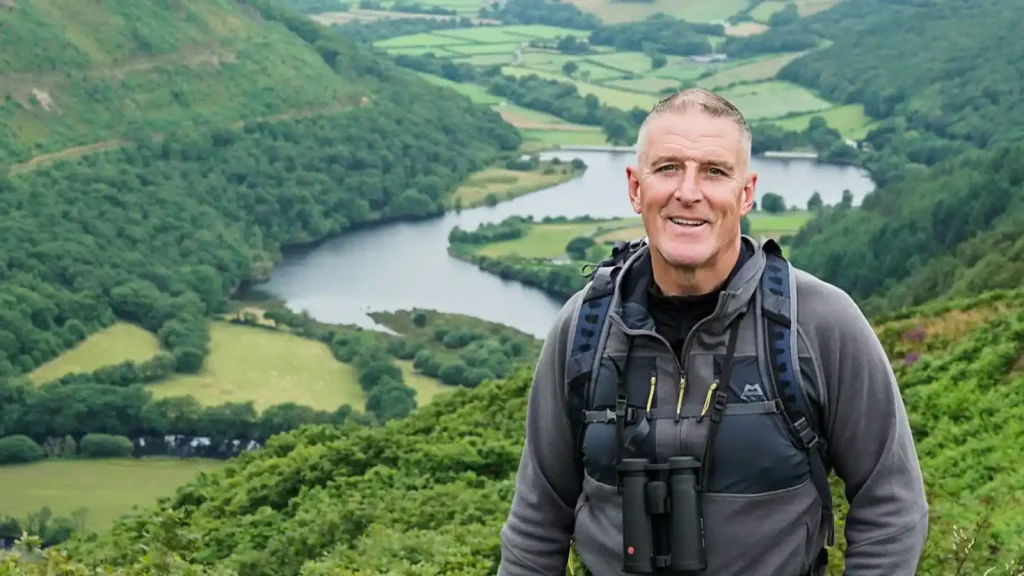
In his documentary series “Iolo’s River Valleys,” naturalist Iolo Williams takes viewers on a captivating exploration of four Welsh river valleys. The fourth episode focuses on the Vale of Clwyd, a landscape defined by its dramatic hills and wide, flat valley floor. The documentary presents a masterful blend of natural history, cultural heritage, and environmental awareness.
Williams begins his journey at the Clwyd Estuary where the river meets the Irish Sea at Kinmel Bay. Despite heavy development along the North Wales coast, nature persists. He immediately spots a common lizard basking on a rock, taking advantage of rare sunshine. Nearby, wheatears rest after their long migration from Africa.
The narrow estuary, though confined by urban development, still attracts remarkable birdlife. Redshanks feed along the shore while turnstones, perfectly camouflaged until they move, cluster nearby. Williams notes how these creatures thrive despite human encroachment.
Moving inland, Williams reveals how human history has shaped the landscape. The River Clwyd itself bears the mark of medieval engineering. During the construction of Rhuddlan Castle in the 13th century, workers straightened and dredged the river course. This massive undertaking allowed Edward I to supply his fortress directly by water.
As Williams travels upriver toward Denbigh, the valley broadens dramatically. Here, the river meanders through rich agricultural land. Thousands of years of flooding have deposited fertile alluvial soil across the valley floor.
Within this farming landscape, wildlife finds refuge in untouched corners. Williams celebrates a farmer who has preserved patches of thistles along field edges. These plants host numerous pollinators including green-veined white butterflies, soldier beetles, and hoverflies. “Big hand for the farmer for letting these be,” Williams remarks appreciatively.
Along the slow-moving river, Williams spots banded demoiselles. These stunning damselflies display metallic blue-green bodies. Males feature distinctive blue “thumbprints” on their wings. According to Williams, they rank among Britain’s most beautiful damselflies.
The River Clwyd supports sea trout, locally called sewin. These remarkable fish return from the Irish Sea to spawn upriver. Williams meets Ieuan Roberts from the Vale of Clwyd Angling Club to discuss their situation.
Roberts explains how sea trout and brown trout are genetically identical. For unknown reasons, some trout “smolt up,” turn silver, and migrate to sea before returning to spawn. Unlike salmon, sewin can spawn multiple times.
Though the Clwyd remains a good sewin river, pollution threatens their future. Roberts identifies intensive food production and sewage discharge as major concerns. “It looks like a pristine Welsh river,” Williams notes, “but like all of them, it’s suffering from pollution.”
Iolo’s River Valleys episode 4
The Clwydian Range: A Haven for Wildlife
The eastern edge of the vale features the Clwydian Range, a chain of summits dotted with ancient hill forts. Below Moel Arthur, Williams hears a distinctive call that stops him in his tracks—a cuckoo.
Williams observes the male cuckoo for an hour. He notes how many people haven’t heard this once-common bird for years. Cuckoos specialize in eating hairy caterpillars that other birds avoid. Their unique digestive system allows them to regurgitate the caterpillar hairs in pellets.
Higher up on the range, carefully managed heather moorland supports diverse wildlife. The UK holds three-quarters of the world’s remaining heather habitat. Late summer brings a spectacular purple bloom to these hills, providing vital late-season food for bees.
At Moel Famau, the “Mother Mountain” and highest point in the range, Williams encounters a surprisingly tame raven. The intelligent bird has learned that hikers often leave food. Williams watches in fascination as it manipulates a grape with its foot while pecking with its massive beak.
Rare Habitats and Species
The documentary highlights several ecological treasures within the valley. Coed Cilygroeslwyd represents one of Wales’s scarce yew woodlands. The forest floor hosts limestone-loving plants including herb robert and wood sanicle, once valued for medicinal properties.
Hidden within this wood grows the limestone woundwort, Denbighshire’s county flower. This exceptionally rare plant occurs at only three sites across the entire UK.
At Eyarth Rocks nature reserve, Williams searches for one of Wales’s rarest butterflies. The pearl-bordered fritillary, once common, now survives at just six Welsh sites. Conservation volunteers clear bracken to maintain habitat for dog violets, the caterpillars’ essential food plant.
An unexpected daytime sighting of a badger brings another special moment. Williams notes that in his extensive career, he has encountered badgers in daylight only three times previously.
The Last Stronghold of Red Squirrels
Williams concludes his journey at Clocaenog Forest, seeking one of north-east Wales’s last red squirrel populations. Despite numerous previous visits, he has never spotted one here.
Alongside red squirrel ranger Caro Collingwood, Williams visits a hide with feeding stations. Their patience rewards them with several sightings. Collingwood estimates the population at around 50 individuals.
The squirrels face constant threat from invasive gray squirrels that surround the forest. Grays not only outcompete reds for food but carry deadly squirrelpox virus. Controversial but necessary control programs help protect this isolated population.
Williams expresses joy at finally encountering Clocaenog’s red squirrels. For him, these rare animals represent both hope and concern for Welsh wildlife.
A Call to Conservation
Throughout the documentary, Williams balances celebration of nature with awareness of threats. The Vale of Clwyd contains remarkable biodiversity despite centuries of human modification. Yet pollution, habitat loss, and invasive species endanger many native creatures.
Williams concludes that despite these challenges, wildlife shows resilience when given opportunity. Recent conservation successes across Welsh river valleys—such as pine martens in Rheidol Valley and beavers along the Dyfi—demonstrate nature’s capacity for recovery.
The documentary serves as both showcase and warning. These river valleys hold immense natural wealth, but their future depends on continued conservation efforts.
Iolo Williams’ journey through the Vale of Clwyd reminds us that nature persists even in landscapes shaped by centuries of human influence. The documentary serves as both a celebration and a gentle warning. Like threads in a tapestry, each species contributes to the valley’s ecological fabric.
The resilience of wildlife in the Clwyd Valley inspires hope. Common lizards bask near busy coastal developments, while rare pearl-bordered fritillaries cling to their last strongholds. Meanwhile, ancient yew woodlands shelter plants found nowhere else in Wales. These survivors demonstrate nature’s remarkable tenacity.
Yet the challenges remain daunting. Pollution threatens the sewin’s annual migration, while invasive gray squirrels endanger their red cousins. Furthermore, once-common species like the cuckoo now bring surprise and delight simply because they’ve become so rare. Their declining calls echo the larger pattern of biodiversity loss across Britain.
Williams’ documentary ultimately delivers a powerful message about stewardship. The Vale of Clwyd belongs not just to farmers, anglers, and hikers, but to banded demoiselles, red squirrels, and limestone woundworts as well. Therefore, our actions determine whether these species thrive or vanish.
Conservation success stories across Welsh river valleys offer encouraging examples. Pine martens now roam the Rheidol, while beavers reshape habitats along the Dyfi. These recoveries showcase what happens when we give nature room to heal and flourish.
The documentary also highlights unsung conservation heroes. From volunteers clearing bracken for fritillaries to rangers monitoring red squirrels, dedicated individuals protect these precious ecosystems. Their efforts, though often invisible, make a tangible difference.
As viewers, we’re invited to see the Vale of Clwyd through Williams’ knowledgeable eyes. His enthusiasm for each encounter—whether with a majestic raven or tiny woodland flower—transforms our perspective. Through his lens, we appreciate the extraordinary diversity surrounding us.
The Vale of Clwyd stands as a living testament to what we can preserve when we recognize nature’s value. Despite centuries of modification, its river valley still harbors remarkable biodiversity. Our collective actions today will determine whether future generations experience these natural treasures or merely read about them in history books.
FAQ Iolo’s River Valleys episode 4
Q: What is the Vale of Clwyd and why is it significant?
A: The Vale of Clwyd is one of north Wales’s most distinctive landscapes, characterized by its broad, flat valley bottom and spine of hills. It extends about 20 miles from the North Wales coast up to Clocaenog Forest. Moreover, this valley houses important wildlife habitats, historical sites like Rhuddlan Castle, and rare species including the pearl-bordered fritillary butterfly. The area’s ecological significance stems from its diverse habitats ranging from coastline to forest, supporting many threatened British wildlife species.
Q: What wildlife can be found at the Clwyd Estuary?
A: Despite heavy coastal development, the Clwyd Estuary supports surprising biodiversity. Visitors might spot common lizards basking on rocks near Kinmel Bay and migratory wheatears resting after their journey from Africa. Additionally, the exposed riverbed attracts wading birds like redshanks and turnstones, which are perfectly camouflaged until they move. This local nature reserve demonstrates how wildlife can persist alongside urban development when given even small protected spaces.
Q: How has human activity shaped the River Clwyd?
A: Human intervention dramatically altered the River Clwyd during the 13th century. Workers straightened and dredged the river course during the construction of Rhuddlan Castle under Edward I’s reign between 1277-1282. This engineering feat allowed supplies to reach the castle directly by water. Furthermore, centuries of agriculture have transformed the valley floor into farmland, though the river still meanders through rich alluvial soil deposited by thousands of years of natural flooding events.
Q: What are sea trout (sewin) and why are they important to the Clwyd?
A: Sea trout, locally called sewin, are genetically identical to brown trout but migrate to sea before returning to spawn in the river. The Clwyd remains surprisingly good for these fish, which return from the Irish Sea in late spring. However, pollution from intensive agriculture and sewage threatens their population. Local anglers practice catch-and-release to support their recovery since sewin numbers have declined significantly in Welsh rivers over recent decades.
Q: What significant wildlife can be found in the Clwydian Range?
A: The Clwydian Range forms the eastern edge of the Vale with a chain of summits dotted with ancient hill forts. This area supports cuckoos, whose distinctive calls have become increasingly rare in Britain. The managed heather moorland is particularly important since the UK contains three-quarters of the world’s remaining heather habitat. Additionally, visitors might encounter red grouse feeding on young heather shoots and, at Moel Famau, unusually tame ravens that have learned to approach hikers for food.
Q: What rare plant species exist in the Vale of Clwyd?
A: Coed Cilygroeslwyd woodland harbors several rare plant species, most notably the limestone woundwort, which is Denbighshire’s county flower. This exceptionally rare plant occurs at only three sites across the entire UK. The yew woodland itself represents a scarce habitat in Wales and supports limestone-loving plants like wood sanicle, once valued for its medicinal properties. Furthermore, the woodland floor hosts hart’s tongue ferns, wild garlic, and herb robert growing in limestone-rich soil.
Q: Why is the pearl-bordered fritillary butterfly significant in this area?
A: The pearl-bordered fritillary butterfly represents one of Wales’s rarest species, now found at just six sites nationwide after a sharp decline. Eyarth Rocks nature reserve, managed by Butterfly Conservation, provides crucial habitat for this endangered species. These butterflies depend on dog violets as their caterpillars’ food source. Therefore, conservation volunteers regularly clear bracken to maintain suitable habitat, demonstrating how active management can preserve biodiversity in the face of habitat loss.
Q: What challenges do red squirrels face in Clocaenog Forest?
A: Red squirrels in Clocaenog Forest face a constant struggle for survival with only about 50 individuals remaining. They’re threatened primarily by invasive gray squirrels that surround the forest. Gray squirrels not only outcompete reds for food but also carry the deadly squirrelpox virus. Consequently, conservation programs include supplementary feeding, population monitoring, and controversial but necessary gray squirrel control. The National Lottery Heritage Fund supports this work until 2027, offering hope for this isolated population.
Q: How does pollution affect the Vale of Clwyd ecosystem?
A: Pollution poses a serious threat to the Vale of Clwyd’s ecosystem despite its pristine appearance. Agricultural runoff from intensive food production, including large dairy and chicken farms, contaminates the river. Additionally, sewage discharge further degrades water quality, endangering aquatic life such as sea trout. Local fishermen have observed declining fish populations as a result of these pressures. Nevertheless, wildlife shows remarkable resilience when given the opportunity to recover through conservation efforts.
Q: What conservation success stories exist in Welsh river valleys?
A: Several Welsh river valleys showcase successful conservation initiatives that offer hope. Pine martens now thrive in the Rheidol Valley after reintroduction efforts. Meanwhile, beavers have been established along the Dyfi, where they create habitats benefiting both biodiversity and people through natural flood management. Furthermore, the moorlands of Upper Conwy support hen harriers, while sea trout continue returning to the Clwyd each year despite challenges. These successes demonstrate nature’s capacity for recovery when given appropriate protection and management.