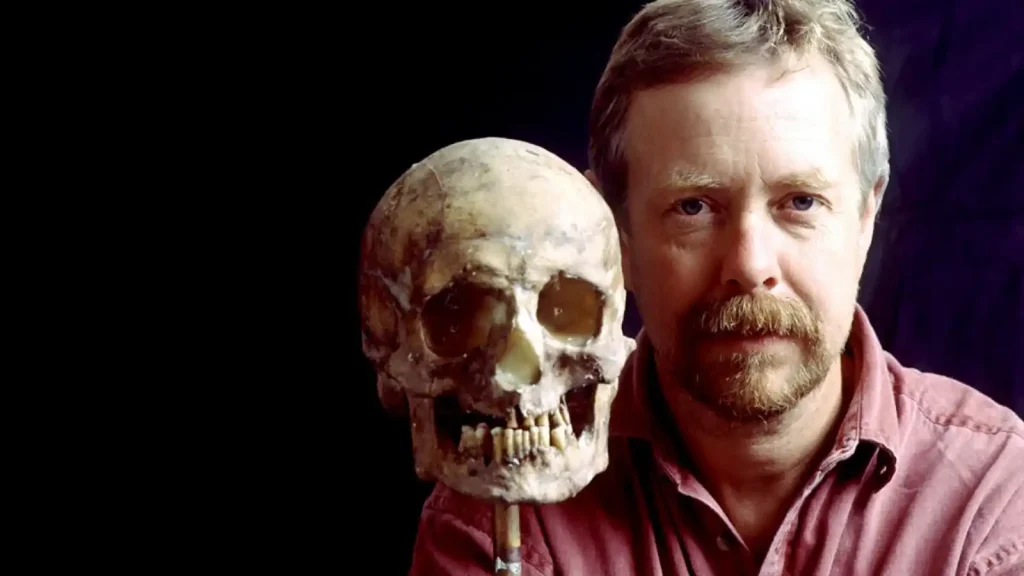
In Meet the Ancestors episode 5, titled Bones in the Barnyard, renowned archaeologist Julian Richards embarks on a journey to the quaint village of Bleadon, located near Weston-Super-Mare. What begins as a routine visit to a site with a rather unassuming backstory soon turns into an extraordinary discovery, shedding light on a forgotten chapter of history.
It all started when a property developer purchased a parcel of land from a local farmer, intending to transform it into something new. Yet, as is often the case when we dig beneath the surface, the land held secrets. Before any foundations could be laid, an archaeological survey was conducted—standard procedure in areas with historical significance. What the developer didn’t anticipate was that this particular piece of countryside would offer more than just soil and stone. Hidden just below the ground lay the remnants of ancient people, long forgotten, but suddenly thrust into the present.
Archaeologists uncovered several crouch burials—an eerie but fascinating discovery. These burials, characteristic of the Iron Age, reveal how people from thousands of years ago treated their dead. The bodies had been placed in a fetal position, a practice believed to signify rebirth or a connection with the Earth. However, before any of this could be fully understood, the remains needed to be carefully excavated, studied, and preserved. That’s where Julian Richards, with his experience and enthusiasm for unearthing history, came into the picture.
Joining a team of archaeologists and scientists, Julian observed as they meticulously removed the bones from their resting places. Each bone, each fragment, was handled with the utmost care, as if those long-lost souls could still speak to us through their remains. And in a way, they could. Modern DNA testing—an invaluable tool in archaeology today—allowed the team to go beyond the surface-level findings. The data revealed something astonishing: these bones were not just relics of a distant time; they were living evidence of the struggles, triumphs, and daily grind of Iron Age farmers.
Imagine life during the Iron Age—a time when survival was a constant battle against the elements. These farmers, who lived and worked on this very land, faced harsh conditions. Their bodies, now reduced to bones, still carried the marks of their laborious lives. DNA testing revealed signs of physical stress, worn joints, and a range of health conditions that reflect the tough life these individuals endured.
Farming in the Iron Age was no simple task; it was a test of endurance. Without the benefit of modern technology, these people relied on sheer willpower and rudimentary tools to eke out a living from the land. Every day, they would rise with the sun, laboring from dawn until dusk, doing whatever they could to feed their families and sustain their community.
But the bones told another story as well—a more personal one. It was not just their bodies that spoke of hardship, but their lineage, their DNA. The team’s analysis offered glimpses into their ancestry, revealing connections to other populations of the time. These farmers were not isolated; they were part of a broader web of human migration and interaction. Their DNA provided clues about where they came from, who they mingled with, and how their genetic legacy persisted through the ages.
Yet, despite the arduous life they led, there was something undeniably resilient about these people. The land they lived on was unforgiving, yet they carved out a place for themselves. Their bones, found centuries later, are a testament to their perseverance. They adapted, survived, and in their own way, thrived. These remains offer a glimpse into a world that is far removed from our own yet strikingly familiar. As we uncover their stories, we’re reminded that, despite the passage of time, human beings have always shared a common thread: the drive to survive, to care for our loved ones, and to leave a mark on the world.
Meet the Ancestors episode 5
Julian Richards and the team of archaeologists gave a voice to these ancient people. Through careful study, they were able to reconstruct not only the physical details of their lives but also the emotional and social dynamics of the time. The bones in the barnyard weren’t just archaeological finds—they were once people, just like us. They worked, laughed, struggled, and endured, leaving behind a legacy that waited patiently beneath the earth until the time was right to be rediscovered.
This excavation at Bleadon serves as a poignant reminder that history is never as far away as it seems. Even in the most unexpected places—a quiet village field, a future construction site—there’s always a story waiting to be told. The Iron Age farmers, whose bones were unearthed after centuries of silence, are a powerful example of how the past can suddenly come alive, offering us invaluable lessons about resilience, community, and the human spirit.
As we continue to develop the world around us, building homes, cities, and new futures, it’s worth remembering what lies beneath our feet. Every plot of land has a history, and sometimes, that history is more remarkable than we could ever imagine. In this episode of Meet the Ancestors, Julian Richards reminds us of the value in looking back, in paying respect to those who came before us, and in cherishing the discoveries that connect us to our distant past.
Through the careful work of archaeology, we are able to bridge the gap between then and now, turning bones into stories, and stories into a shared human legacy.
Conclusion Meet the Ancestors episode 5
In conclusion, Meet the Ancestors episode 5, Bones in the Barnyard, offers a profound reflection on the delicate intersection between progress and the past. What began as a routine archaeological survey in Bleadon turned into a remarkable journey into the lives of Iron Age farmers, whose stories had been buried beneath the soil for centuries. Julian Richards and the dedicated team of archaeologists painstakingly pieced together fragments of history, uncovering not only the physical remains but also the emotional and social landscapes of these ancient people.
The discovery of the crouch burials, paired with modern DNA analysis, provided a window into a world where survival was a daily battle. These people faced immense hardships, yet they endured, leaving behind a legacy etched into their very bones. The detailed study of their remains painted a vivid picture of resilience, community, and the universal human struggle for survival. The revelation of their ancestry connected them to a wider human narrative, reminding us that even thousands of years ago, people were part of larger networks of migration, interaction, and cultural exchange.
This excavation serves as a reminder that history is often just beneath our feet, waiting to be unearthed. The quiet field in Bleadon, destined to become a construction site, held within it a rich and valuable past, now brought to light for the world to see. It highlights the importance of respecting the land and the stories it holds, as we continue to build for the future.
Julian Richards and the team’s work encapsulates the beauty of archaeology—turning long-forgotten bones into stories that resonate across time. In doing so, they help us remember that while we may be separated from the Iron Age by centuries, the essence of humanity endures. The desire to provide for loved ones, to build communities, and to leave behind a legacy is as ancient as it is modern. Through their careful excavation, we are reminded of the shared human experience that connects us all, past and present.
Ultimately, Bones in the Barnyard is not just an exploration of the past—it’s a celebration of the enduring human spirit.
F.A.Q. Meet the Ancestors episode 5
Q.: What is the main focus of Meet the Ancestors episode 5, Bones in the Barnyard?
A.: The episode focuses on archaeologist Julian Richards’ exploration of an Iron Age burial site in Bleadon. It highlights the discovery of ancient crouch burials and reveals the lives of Iron Age farmers through DNA analysis and archaeological findings.
Q.: What was found during the archaeological excavation in Bleadon?
A.: Several crouch burials from the Iron Age were discovered during the excavation. These burial sites contained the remains of ancient farmers, offering insights into their lives, health, and ancestry.
Q.: How does modern DNA testing contribute to archaeological research in this episode?
A.: Modern DNA testing allowed researchers to uncover physical and genetic details about the Iron Age farmers. It provided information on their health conditions, physical stress, and connections to other populations, giving a comprehensive view of their lives and lineage.
Q.: What does the discovery at Bleadon reveal about Iron Age farming life?
A.: The discovery reveals that Iron Age farmers endured a harsh and laborious existence. Their bones showed signs of physical strain from their daily work, highlighting the difficult conditions under which they lived and worked to survive.
Q.: Why is the Bones in the Barnyard episode significant for modern viewers?
A.: This episode underscores the connection between past and present, showing how human resilience and community have been central throughout history. It also serves as a reminder that every piece of land has a rich history waiting to be uncovered, offering lessons from our shared human heritage.