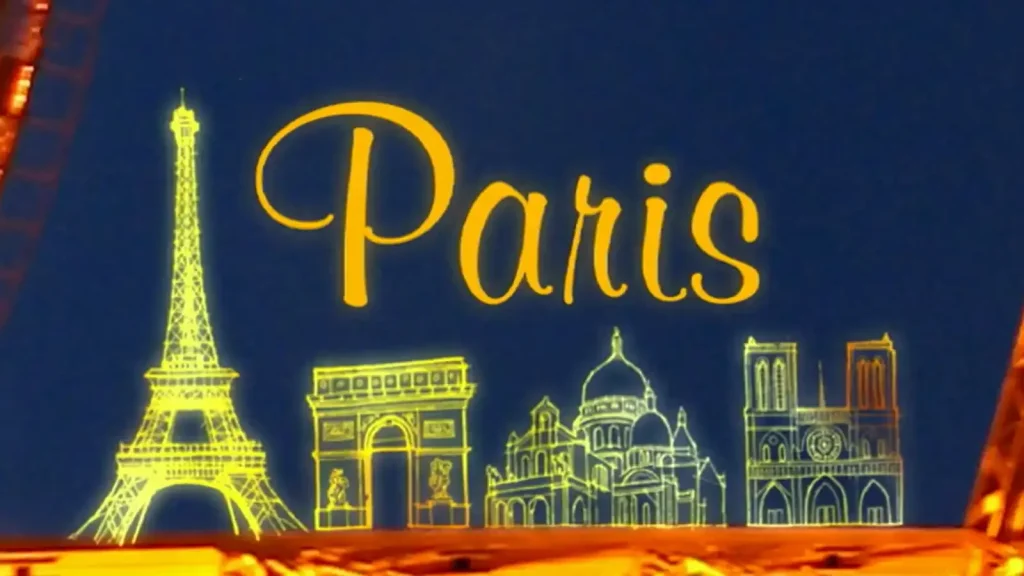
Paris episode 1 – City of Dreams: Art historian Sandrine Voillet narrates the captivating evolution of Paris, chronicling its transformation from the turbulent aftermath of the French Revolution to its emergence as the world’s foremost modern metropolis within just a century. Through a compelling blend of historical insight and cultural analysis, Voillet brings to life the dynamic changes that shaped the city, turning it into a beacon of innovation, art, and lifestyle.
In the first episode, “City of Dreams,” Voillet embarks on a journey through the heart of Paris, exploring how the city, once marred by the bloodshed and chaos of revolution, underwent a remarkable metamorphosis. She delves into the multifaceted aspects of Parisian life, from its culinary delights and architectural wonders to its artistic achievements and social transformations. This documentary series not only charts the historical milestones of France’s capital but also captures the essence of its spirit, highlighting why Paris is celebrated as the world’s most stylish and romantic city.
Voillet’s narrative begins with the immediate aftermath of the French Revolution, a period marked by upheaval and uncertainty. She paints a vivid picture of the streets of Paris, still stained with the memories of conflict, as they began to pave the way for a new era. The city was on the cusp of change, ready to embrace modernity while retaining its rich historical heritage.
One of the key highlights of this transformation was the culinary revolution that swept through Paris. Voillet takes us on a gastronomic tour, showcasing the emergence of restaurants as social and cultural hubs. These establishments became more than just places to eat; they were venues for intellectual discourse, political debate, and social interaction. Parisian cuisine, with its emphasis on quality and innovation, set new standards that influenced culinary practices worldwide.
The architectural landscape of Paris also underwent a dramatic change. Voillet explores the development of the city’s iconic boulevards, which were designed to facilitate both movement and aesthetic appeal. These grand avenues, lined with trees and adorned with elegant facades, became symbols of Parisian grandeur and sophistication. The modernization of the city’s infrastructure, including the construction of sewers, played a crucial role in improving public health and hygiene, a fact that Parisians took great pride in.
Art and culture were at the heart of Paris’s transformation. Voillet delves into the works of renowned artists such as Auguste Rodin, whose sculptures captured the human form with unprecedented realism and emotion. She also highlights the significance of photography, which emerged as a new medium of artistic expression and documentation. The advent of impressionist painters, including Claude Monet and Pierre-Auguste Renoir, revolutionized the art world with their innovative techniques and perspectives, further cementing Paris’s status as a cultural capital.
Paris episode 1 – City of Dreams
However, not all changes were universally welcomed. Voillet examines the mixed reactions to some of Paris’s most famous landmarks. The Sacré-Coeur Basilica, perched atop Montmartre, was met with resistance and controversy. Many Parisians viewed it as a symbol of conservative values imposed by the state, in stark contrast to the progressive spirit of the city. Similarly, the Eiffel Tower, now an iconic symbol of Paris, was initially derided by critics who considered it an eyesore and a blight on the city’s skyline. Voillet provides a nuanced understanding of these conflicts, illustrating how they reflect the broader tensions within Parisian society.
As the documentary unfolds, Voillet captures the essence of Parisian life and the city’s unique ability to blend tradition with modernity. She explores the vibrant café culture, where writers, artists, and thinkers gathered to exchange ideas and inspire one another. Bistros and brasseries became integral parts of the social fabric, offering spaces for leisure and camaraderie. The city’s nightlife, with its theaters, cabarets, and dance halls, added to its allure, making Paris a magnet for pleasure-seekers from around the world.
Voillet also addresses the darker aspects of Paris’s history, including the struggles faced by the working class and the impact of industrialization. She delves into the lives of courtesans, who played a prominent role in the social and cultural life of the city, often navigating the fine line between scandal and respectability. Through these stories, she sheds light on the complexities and contradictions that defined Paris during its rise to prominence.
“City of Dreams” is more than just a historical documentary; it is a celebration of Paris’s enduring charm and resilience. Voillet’s eloquent storytelling and keen eye for detail make for a riveting exploration of a city that has continuously reinvented itself while remaining true to its core identity. As she guides viewers through the streets of Paris, past and present, she reveals the layers of history and culture that have shaped its character.
In this first episode, Sandrine Voillet sets the stage for a series that promises to be both enlightening and enchanting. By tracing the trajectory of Paris from revolution to modernity, she offers a deeper appreciation of the forces that have made it a global icon. Through her engaging narrative, viewers are invited to experience the magic of Paris and understand why it continues to captivate the hearts and minds of people around the world.
The Allure of 19th Century Paris
A City of Romance and Adventure
Picture yourself strolling down cobblestone streets, the air filled with the aroma of freshly baked croissants and the melodic chatter of Parisian café-goers. This was the essence of 19th century Paris, a city that captivated the hearts and minds of locals and visitors alike.
Paris, during this transformative era, was a kaleidoscope of experiences. From the bustling street life to the charming cafés, every corner of the city exuded an irresistible charm. The French capital had an innate ability to weave romance into the fabric of everyday life, making even the simplest moments feel extraordinary.
The Birth of Modern Paris
As the 19th century unfolded, Paris began to shed its medieval skin and embrace modernity with open arms. This metamorphosis was not merely physical; it was a rebirth of ideas, culture, and societal norms. The city became a crucible of innovation, where old traditions melded with new concepts to forge a uniquely Parisian identity.
At the heart of this transformation was a spirit of rebellion and endless creativity. Paris became a beacon for artists, writers, and free-thinkers from across the globe. Consequently, the city’s intellectual landscape blossomed, giving birth to groundbreaking movements in art, literature, and philosophy that would shape the world for generations to come.
Napoleon’s Vision for the Capital
Napoleon Bonaparte, the enigmatic leader who rose to power in the aftermath of the French Revolution, harbored grand ambitions for Paris. His vision extended far beyond mere aesthetic improvements; he sought to mold Paris into the crown jewel of his vast empire.
Under Napoleon’s rule, Paris underwent a series of dramatic changes. The emperor commissioned magnificent buildings and monuments, each designed to showcase the glory and power of France. These architectural marvels, such as the Arc de Triomphe, still stand today as testaments to Napoleon’s ambitious vision.
Moreover, Napoleon’s influence reached beyond the realm of architecture. He revolutionized Parisian society, introducing sweeping reforms in education, law, and governance. These changes laid the foundation for Paris to become not just a beautiful city, but a center of learning, culture, and progress.
Transforming Paris: Haussmann’s Grand Design
The Demolition Artist’s Legacy
Baron Georges-Eugène Haussmann, often dubbed the “demolition artist,” left an indelible mark on Paris that still defines the city’s aesthetic today. His ambitious urban renewal project, commissioned by Napoleon III, was nothing short of revolutionary. Haussmann’s vision transformed Paris from a medieval labyrinth into a modern metropolis.
With a stroke of his pen and the swing of a wrecking ball, Haussmann carved wide boulevards through the heart of old Paris. These grand avenues, like arteries pumping life into the city, breathed new air into once-cramped neighborhoods. The result was a city reborn, with improved circulation, sanitation, and a sense of grandeur that would become synonymous with Parisian style.
Wide Boulevards and Star-Shaped Intersections
Haussmann’s boulevards were more than just roads; they were statements of modernity and progress. These wide, tree-lined avenues created sweeping vistas that showcased Paris’s most beautiful buildings and monuments. The star-shaped intersections, like the iconic Place de l’Étoile (now Place Charles de Gaulle), became focal points of the city’s new layout.
These intersections, with their radiating streets, weren’t just aesthetically pleasing. They served a practical purpose too, improving traffic flow and making it easier for authorities to control crowds. In essence, Haussmann’s design married form and function in a way that would influence urban planning worldwide for generations to come.
The Creation of Les Grands Magasins
As Paris’s streets widened, so did its commercial horizons. Haussmann’s renovations paved the way for a new kind of shopping experience: les grands magasins, or department stores. These palatial emporiums of commerce, such as Le Bon Marché and Printemps, revolutionized retail and became icons of Parisian consumer culture.
These grand stores weren’t just places to shop; they were destinations in themselves. With their elaborate window displays, elegant interiors, and vast array of goods, they captured the imagination of Parisians and visitors alike. Moreover, they embodied the spirit of the new Paris – modern, luxurious, and endlessly fascinating.
The Flaneur’s Paradise: A New Way of Experiencing the City
Haussmann’s Paris became a playground for the flaneur, that quintessentially Parisian figure who wandered the streets, observing and absorbing the city’s vibrant life. The wide sidewalks of the new boulevards provided the perfect stage for this urban spectator sport.
Flânerie, the art of strolling, evolved into more than just a pastime; it became a way of experiencing and understanding the city. The flaneur, like a living, breathing camera, captured the essence of Parisian life. From the fashionable promenaders to the street vendors, from the bustling cafés to the quiet corners, every aspect of the city became a subject for observation and reflection.
Green Spaces: The Lungs of Paris
Amidst the stone and steel of the renovated city, Haussmann didn’t forget the importance of nature. He created an extensive network of parks and gardens, providing Parisians with much-needed green spaces. These “lungs of Paris” offered respite from the bustle of urban life and became integral to the city’s new identity.
The Bois de Boulogne in the west and the Bois de Vincennes in the east bookended the city with vast wooded areas. Within the city proper, smaller parks like the Parc Monceau and the Parc des Buttes-Chaumont provided picturesque retreats. These green oases not only improved the city’s air quality but also democratized access to nature, allowing Parisians of all classes to enjoy the outdoors.
The Cultural Revolution of 19th Century Paris
The Rise of Impressionism and Modern Art
Picture yourself strolling through the sun-dappled streets of 19th century Paris, where every corner breathes creativity and every café buzzes with artistic discourse. This was the birthplace of a revolution that would forever change the art world: Impressionism.
As the city transformed under Haussmann’s grand design, so too did the artistic landscape. Traditional academic painting, with its rigid rules and historical subjects, began to feel stifling to a new generation of artists. These bold pioneers sought to capture the fleeting moments of modern life, the play of light on water, and the vibrancy of Parisian streets.
Manet’s Shock to the Art World
Enter Édouard Manet, the enfant terrible of the Parisian art scene. His painting “Le Déjeuner sur l’herbe” caused an uproar at the Salon des Refusés in 1863. Why? Because it dared to depict a nude woman casually picnicking with clothed men in a contemporary setting. This scandalous work broke all the rules of traditional art and sent shockwaves through Parisian society.
Manet’s bold brushstrokes and unconventional subjects paved the way for other artists to push boundaries. Soon, names like Monet, Renoir, and Degas would become synonymous with a new way of seeing and depicting the world. Their work captured the essence of modern Paris – its cafés, its boulevards, and its ever-changing light.
Monet and the Railway Cathedrals
Claude Monet, perhaps the most famous of the Impressionists, found beauty in the most unexpected places. His series of paintings of the Gare Saint-Lazare transformed the bustling railway station into a cathedral of modernity. Through Monet’s eyes, the steam and smoke became a dance of light and color, elevating the everyday into the realm of art.
Monet’s work exemplified the Impressionist ideal of capturing the fleeting moment. His quick brushstrokes and vibrant palette brought to life the energy and dynamism of modern Paris. From the water lilies in his garden to the façade of Rouen Cathedral, Monet showed that beauty could be found in the most ordinary of subjects.
Rodin’s Sensual Sculptures: Redefining Art
While the Impressionists were revolutionizing painting, Auguste Rodin was breathing new life into sculpture. His works, with their raw emotion and unfinished surfaces, broke free from the constraints of classical sculpture. Rodin’s figures seemed to emerge from the stone itself, caught in a moment of becoming.
Rodin’s most famous work, “The Thinker,” became an icon of modern art. This powerful figure, hunched in contemplation, spoke to the intellectual and philosophical spirit of the age. Meanwhile, “The Kiss” captured the sensuality and passion that simmered beneath the surface of polite Parisian society.
The Belle Époque: Cafés, Courtesans, and Creativity
As the 19th century drew to a close, Paris entered its golden age: the Belle Époque. This was a time of optimism, elegance, and joie de vivre. The city’s cafés became the beating heart of its cultural life, where artists, writers, and thinkers gathered to debate, create, and inspire one another.
In the smoky atmosphere of places like the Café Guerbois, the seeds of new artistic movements were planted. Here, over cups of absinthe, the Impressionists planned their exhibitions and defended their revolutionary ideas. Meanwhile, in the cabarets of Montmartre, a new form of entertainment was taking shape. The can-can dancers of the Moulin Rouge embodied the spirit of the age – bold, provocative, and utterly Parisian.
F.A.Q. Paris Episode 1 – City of Dreams
Q: What is the central theme of Paris Episode 1 – City of Dreams?
A: The central theme of Paris Episode 1 – City of Dreams is the transformation of Paris from the aftermath of the French Revolution to its establishment as the world’s first great modern metropolis within a century. Art historian Sandrine Voillet explores the dynamic changes in the city, focusing on its evolution in art, culture, architecture, and social life.
Q: How does Sandrine Voillet describe the changes in Parisian cuisine during this period?
A: Sandrine Voillet describes the changes in Parisian cuisine as a culinary revolution that played a significant role in transforming Parisian society. Restaurants emerged as social and cultural hubs where intellectual discourse and political debate flourished, and Parisian cuisine became known for its quality and innovation, influencing culinary practices worldwide.
Q: What architectural developments in Paris does Voillet highlight in the documentary?
A: Voillet highlights the development of Paris’s iconic boulevards, which were designed to enhance both movement and aesthetic appeal. These grand avenues, lined with trees and adorned with elegant facades, symbolized Parisian grandeur. The modernization of the city’s infrastructure, including the construction of sewers, significantly improved public health and hygiene.
Q: How did art and culture contribute to Paris’s transformation according to Voillet?
A: Art and culture were pivotal in Paris’s transformation. Voillet delves into the works of renowned artists like Auguste Rodin and the emergence of photography as a new medium of artistic expression. She also highlights the advent of Impressionist painters, such as Claude Monet and Pierre-Auguste Renoir, who revolutionized the art world with their innovative techniques, further cementing Paris’s status as a cultural capital.
Q: What were the public reactions to the Sacré-Coeur Basilica and the Eiffel Tower during their construction?
A: The public reactions to the Sacré-Coeur Basilica and the Eiffel Tower were mixed. The Sacré-Coeur Basilica, perched atop Montmartre, faced resistance and controversy, with many Parisians viewing it as a symbol of conservative values imposed by the state. Similarly, the Eiffel Tower was initially criticized and considered an eyesore by some critics before becoming an iconic symbol of Paris.
Q: What aspects of Parisian life does Voillet explore to illustrate the city’s unique blend of tradition and modernity?
A: Voillet explores various aspects of Parisian life, including the vibrant café culture, where writers, artists, and thinkers gathered to exchange ideas. She also delves into the significance of bistros and brasseries as social spaces, the city’s nightlife with its theaters and cabarets, and the darker aspects of its history, such as the struggles faced by the working class and the lives of courtesans.
Q: What makes the documentary series “City of Dreams” more than just a historical account of Paris?
A: The documentary series “City of Dreams” goes beyond being a mere historical account by celebrating Paris’s enduring charm and resilience. Sandrine Voillet’s eloquent storytelling and keen eye for detail offer a riveting exploration of a city that has continuously reinvented itself while remaining true to its core identity. The series invites viewers to experience the magic of Paris and understand why it continues to captivate hearts and minds worldwide.
Conclusion: The Legacy of 19th Century Paris
A City Transformed: From Medieval to Modern
Imagine stepping into a time machine and landing in 19th century Paris. You’d witness a city in the throes of an extraordinary metamorphosis, shedding its medieval cocoon to emerge as a dazzling butterfly of modernity. This transformation wasn’t just skin-deep; it was a complete overhaul that touched every aspect of Parisian life.
The narrow, winding streets that once defined the city gave way to broad, tree-lined boulevards. These new arteries pumped life and light into previously dark and congested neighborhoods. Moreover, the grand architecture that rose along these boulevards created a uniform and elegant cityscape that would become the envy of the world. As a result, Paris didn’t just change; it reinvented itself, setting a new standard for urban living that continues to inspire cities globally.
Paris as a Global Cultural Capital
As the physical landscape of Paris evolved, so too did its cultural terrain. The City of Light became a beacon for artists, writers, and thinkers from around the world. Consequently, Paris transformed into a crucible of creativity, where new ideas and artistic movements were forged in the fires of intellectual discourse and bohemian rebellion.
The cafes of Montmartre and the Left Bank became hotbeds of innovation, where the likes of Picasso, Hemingway, and Sartre would later gather to debate, create, and redefine art and literature. Furthermore, the birth of Impressionism in Paris revolutionized the art world, challenging traditional notions of representation and paving the way for modern art. This cultural effervescence wasn’t confined to the elite; it permeated every level of Parisian society, from the grand opera houses to the raucous cabarets of Pigalle.
The Enduring Influence on Urban Planning and Art
The legacy of 19th century Paris extends far beyond the city limits, influencing urban development and artistic expression worldwide. Haussmann’s radical redesign of Paris became a template for urban renewal projects across the globe. Cities from Buenos Aires to Bucharest emulated the wide boulevards, uniform building heights, and grand public spaces that characterized the new Paris.
In the realm of art, the Parisian revolution continued to ripple outwards long after the 19th century ended. The Impressionists’ emphasis on light, color, and everyday subjects laid the groundwork for subsequent movements like Post-Impressionism, Fauvism, and Cubism. Even today, artists around the world draw inspiration from the bold experimentation that characterized 19th century Paris.
The Paris we know and love today is, in many ways, a product of its 19th century reinvention. From its iconic cityscape to its reputation as a cultural powerhouse, modern Paris owes an immense debt to this transformative period. As we walk its streets, admire its art, or sip coffee at a sidewalk cafe, we’re not just experiencing the present; we’re connecting with a rich and vibrant past that continues to shape our world.