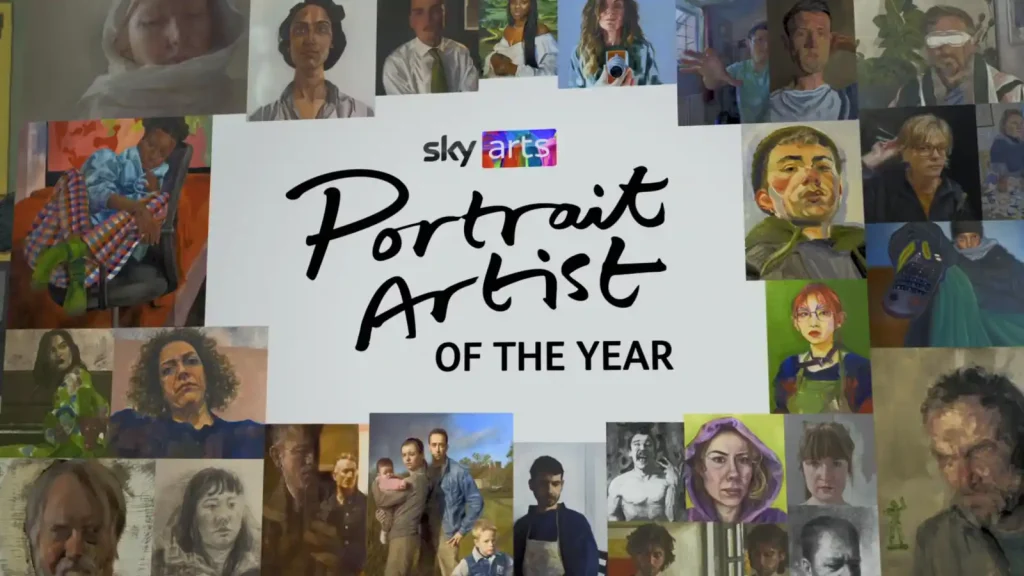
The Portrait Artist of the Year 2025 episode 1 launched the new series with an intense four-hour challenge, showcasing a diverse group of artists vying for a prestigious commission. Over 1,200 painters from Britain and Ireland submitted self-portraits for a chance to compete, but only 72 secured a place in the heats. This premiere episode highlights the immense pressure and remarkable talent involved in this premier art competition. The artists work against the clock to capture the essence of celebrity sitters, blending technical skill with creative interpretation. This series promises to explore the delicate balance between creating a faithful likeness and a compelling work of art.
The ultimate prize is a £10,000 commission to paint a portrait of the distinguished mathematician and broadcaster, Professor Hannah Fry. This significant commission is for the Royal Society, a fellowship of the world’s most eminent scientists. The resulting portrait will commemorate the 80th anniversary of the first women elected as fellows: Professor Kathleen Lonsdale and Professor Marjory Stephenson. This context elevates the competition beyond a simple prize, connecting the artists’ work to a legacy of pioneering women in science. Therefore, the search is for an artist who can create a lasting and meaningful piece of cultural significance.
Guiding this search are the three esteemed judges: art historian Kate Bryan, curator Kathleen Soriano, and award-winning artist Tai-Shan Schierenberg. Their collective expertise covers the breadth of the art world, from historical context to contemporary practice. The judges are not merely looking for technical perfection in portrait painting. Instead, they seek a great piece of art that also functions as a profound portrait. According to the judges, the winning work must tell the viewer something vital about what it means to be alive today.
This challenging brief set the stage for the first heat of the competition. Nine artists, each with a unique background and style, gathered to paint one of three celebrity sitters. The contestants included a self-taught tattoo artist, a retired financier, a full-time artist known for miniatures, and a semi-retired graphic designer, among others. Their diverse approaches were immediately evident in the self-portraits that earned them their spots. These submissions ranged from photorealistic paintings to expressive, abstract compositions, promising a dynamic and unpredictable day of painting. The journey of the Portrait Artist of the Year 2025 episode 1 began here.
The sitters for the day were television presenter Alex Jones, writer and actor Kyla Harris, and musician Youngblood. Each artist was tasked with completing their portrait in just four hours, a timeframe that tests both preparation and spontaneity. The session became a crucible of creativity, where some artists flourished under pressure while others struggled to reconcile their vision with the fleeting reality before them. This high-stakes environment is a hallmark of the Portrait Artist of the Year format.
As the day unfolded, the artists navigated the complex task of capturing a likeness while staying true to their own artistic voice. Their progress was closely monitored by the judges, who offered insightful commentary on their techniques and choices. This initial heat provided a compelling glimpse into the creative process, revealing the intellectual and emotional labor behind every brushstroke. The day would culminate in a difficult decision, with only one artist advancing to the semi-final.
Portrait Artist of the Year 2025 episode 1
The Celebrity Sitters and Their Personal Connections
The first heat featured a trio of distinct personalities, each providing a unique challenge for the artists. Alex Jones, a familiar face from her daily broadcasts on The One Show, sought a portrait that captured a warmth she could one day give to her children. To help the artists, she brought a personal item: a watch her parents gave her for her 18th birthday. She has worn it every day since, making it a constant connection to her family, even as her focus has shifted to her own.
Writer, producer, and actor Kyla Harris, known for the hit BBC comedy We Might Regret This, presented a “vampy” and engaging presence. Her chosen object was a Mexican wooden foot, a shoe last, given to her by her best friend and co-creator, Lee Getty. The object, covered in hammered tin and a large faux ruby, was both strange and beautiful. Kyla felt it held a bit of magic, reflecting a quality her friend perhaps saw in her. She engaged openly with the artists, hoping to be portrayed with the commanding presence of Beyoncé.
Finally, the global music sensation Youngblood brought an electrifying and fizzing energy that proved difficult to contain. He admitted that sitting still would be a problem, yet he was fascinated to see how other creatives perceive the world. His personal item was a large cross necklace given to him by the iconic Ozzy Osbourne. This “demonic necklace” added to his dark, edgy vibe. Youngblood did not have a specific vision for his portrait, trusting that the right one would hit him with undeniable impact.
A Diverse Assembly of Artistic Approaches
The nine artists assembled for the heat represented a remarkable spectrum of styles and backgrounds. Their self-portraits, which secured their places in the competition, offered a preview of this diversity. They included a photorealistic rendering with surrealist elements, a poignant miniature on a wooden panel, and an expressive, messy composition capturing life in motion. This variety ensured a rich and varied approach to the day’s portrait painting.
Edie Bound, a full-time artist from Wiltshire, was known for her miniature self-portrait. However, upon seeing Youngblood, she decided to work on a much larger canvas. She began her process by painting her subject upside down, a technique used to focus on abstract shapes and forms rather than a recognizable face. At the other end of the spectrum was David Weeks, a retired financier from London whose detailed self-portrait took 120 hours to complete. He used a simple palette of just three primary colors and white, aiming for simplicity under the four-hour time constraint.
Other unique methodologies included that of Natalie Charles, a former animator who worked on a circular canvas known as a Tondo. She used tinted graphite blocks to create a “punchy” and intense composition that demands the viewer’s attention. Ian Dorber, a semi-retired graphic designer, favored using a turquoise background, which he believes provides a strong contrast that enhances skin tones. Meanwhile, Bulgarian-born tattoo artist Angel Mitov, whose first tattoo client was his own mother, worked entirely from life, seeking a direct connection with his sitter.
The Four-Hour Challenge in Portrait Artist of the Year 2025 Episode 1
The four-hour time limit created an atmosphere of intense focus and rapid decision-making. As the clock started, artists quickly began mapping out their compositions. Some, like Ellis King, used a grid system to ensure accurate proportions, while others like Alice Hesketh embraced a more fluid process. Alice started on a large canvas but, disliking the composition, switched to a smaller one, preferring spontaneity over rigid planning. This flexibility proved essential for navigating the tight deadline.
As the first hour passed, the paintings began to take shape, moving from initial sketches to blocks of color and tone. Sonia Watts, a self-described “slow painter,” acknowledged that her work goes through a “very, very ugly phase” before the person emerges. David Weeks found himself wrestling to capture Alex Jones’s likeness, a common struggle for artists who typically work over much longer periods. The pressure mounted as the artists moved from the broad strokes to the finer details that truly define a portrait.
The final hour was a flurry of activity, with artists making bold choices to complete their work. Ian Dorber, having established a strong likeness of Kyla Harris against his signature turquoise, decided to paint over it with a vibrant red. Angel Mitov focused on capturing Youngblood’s jewelry in the final moments, aware that giving it too much attention could detract from the portrait itself. The countdown forced each artist to decide when to make their final mark, a critical judgment that can make or break a painting.
The Sitters’ Perspectives and Personal Choices
When time was up, the easels were turned for the much-anticipated reveal. The sitters were confronted with three distinct interpretations of themselves. Alex Jones was amazed by the quality achieved in just four hours. She praised Sonia Watts for capturing her warmth and the life in her eyes, and she was intrigued by the abstract, graphic quality of Ellis King’s work. She ultimately decided to take home the portrait by Alice Hesketh, although the transcript does not include her reasoning for this choice.
Youngblood’s reaction was effusive. He was captivated by Angel Mitov’s “dark, bruising character,” a vampiric interpretation he felt he could hang in his house “to mess with people.” He described Edie Bound’s work as being “like a photograph” and called all three artists “aliens” for their talent. His personal style aligned most with Angel’s painting, which he chose to keep.
The most emotional reveal came from Kyla Harris. She saw movement and wistfulness in Natalie Charles’s drawing and loved Alice Hesketh’s treatment of the sheer fabric of her top. However, it was Ian Dorber’s painting that moved her to tears. In it, she saw a sadness and a resilience that resonated deeply with her own life experiences. She felt Ian must have seen that in her, creating a powerful connection between artist and sitter. She chose Ian’s portrait to take with her.
The Judges’ Deliberation and Shortlist Selection
With the sitters’ choices made, the judges began the difficult task of evaluating the nine finished portraits to create their shortlist. They commended Angel Mitov for working entirely from life but wished the likeness was stronger. David Weeks’s painting was praised for its beautiful colors and mark-making, but the judges agreed it did not sufficiently capture Alex Jones. They felt Ellis King achieved a good likeness but that the body was not as resolved as the face.
Conversely, they were impressed with Sonia Watts’s portrait of Alex, noting the immense warmth and softness she had captured. For Kyla Harris’s group, they admired Natalie Charles’s use of blue tones and felt her work would have been even stronger with more time. Alice Hesketh’s portrait was praised for its freshness, loose treatment of hair and jewelry, and a wonderful sense of calm. Ian Dorber’s work was highlighted for its “magical touch,” where abstract brush marks came together beautifully to create a luminous portrait.
After careful consideration, the judges announced their shortlist of three artists. The first was Ian Dorber, for his insightful and moving portrait of Kyla Harris. The second was Alice Hesketh, for her fresh and calm depiction of the same sitter. The final artist selected was Edie Bound, for her cool and deftly painted portrait of Youngblood, which captured both his rockstar and matinee idol qualities.
The Winning Portrait in Portrait Artist of the Year 2025 Episode 1
In their final deliberation, the judges weighed the merits of the three shortlisted artists. Tai-Shan Schierenberg noted that Ian Dorber understands that personality is expressed through the mouth, a key element he captured successfully. He also praised Alice Hesketh’s rhythmic use of paint and her “magical bruises”—the strange moments of color she introduces that bring her work to life.
However, the judges returned to Edie Bound’s work. Tai-Shan Schierenberg was particularly impressed by the “brevity of the mark-making.” He explained that an artist’s signature lies in how they touch the canvas, and in Edie’s case, there was a speed and lightness to it. He pointed to glorious touches like the delicate shadow under an earring and the red lining of the inner eye. These small details, executed with precision and confidence, elevated the entire painting.
Ultimately, the judges chose the artist who conjured a striking portrait with an exceptional lightness of touch. They announced that the winner of the first heat was Edie Bound. They were impressed that such a young artist could go out on a limb yet still nail the likeness with a freshness that many artists struggle to achieve. By avoiding a labored approach, Edie could concentrate on the art itself, a quality the judges seek above all else. A shocked and overwhelmed Edie accepted the win, calling it one of the best days of her life as she became the first artist to advance to the semi-final.
The Art of Seeing: What Episode 1 Reveals About Creative Excellence
The first heat of Portrait Artist of the Year 2025 delivered far more than a competition—it offered a masterclass in what separates technical skill from transformative art. Edie Bound’s victory wasn’t simply about painting Youngblood’s likeness; it was about understanding that restraint can be more powerful than detail, that confidence shows in the economy of brushstrokes, and that true artistry lies in knowing when to stop.
This distinction runs through everything the episode revealed. Consider the contrast between David Weeks, who spent 120 hours on his self-portrait, and Edie, who painted upside down to see shapes before faces. Both approaches have merit, but under the crucible of a four-hour limit, the artist who could work with velocity and trust—who didn’t need to labor every inch of canvas—had the advantage. The judges weren’t looking for perfection; they were searching for that elusive quality Tai-Shan Schierenberg identified: an artist’s unique signature in how they touch the canvas.
What makes this competition so compelling is how it mirrors creative challenges far beyond portrait painting. Whether you’re a writer facing a deadline, a designer pitching concepts, or an entrepreneur refining your vision, the same principles apply. The pressure reveals who can synthesize their skills into something coherent and moving. Ian Dorber’s ability to capture not just Kyla Harris’s face but her hidden sadness and resilience—that’s the difference between completing a task and creating something that matters.
The episode also highlighted an often-overlooked truth: the relationship between artist and subject is a conversation, not a transaction. Kyla’s tears over Ian’s portrait, Youngblood’s delight at Angel’s “vampiric” interpretation, Alex’s warmth toward Sonia’s gentle rendering—these moments proved that great portraits don’t just show what someone looks like. They reveal what it feels like to be seen, truly seen, by another creative soul. That human connection, that moment of recognition, is what transforms craft into art.
For aspiring artists watching, the takeaway is clear: develop your voice, but don’t let it become a prison. Edie abandoned her signature miniature approach when she saw Youngblood. Alice switched canvases mid-competition. Ian painted over his own work with bold red in the final hour. Adaptability, informed by confidence in your fundamentals, creates space for magic to happen.
As the competition moves forward, the bar is set remarkably high. The Royal Society commission awaits—a portrait of Professor Hannah Fry that will honor generations of pioneering women in science. The artist who wins must balance technical excellence with emotional intelligence, historical awareness with contemporary relevance. If this first heat is any indication, the journey to that final portrait will showcase not just the best of British and Irish portraiture, but the profound ways art helps us understand what it means to be human.
The clock has stopped for heat one. But for the 71 remaining artists and the viewers captivated by their work, the real competition—the pursuit of that perfect intersection between skill, vision, and truth—has only just begun.
FAQ Portrait Artist of the Year 2025 episode 1
Q: What is Portrait Artist of the Year 2025 and what makes it significant?
A: Portrait Artist of the Year 2025 is a premier British art competition where painters from Britain and Ireland compete for a £10,000 commission to create a portrait of Professor Hannah Fry for the Royal Society. The competition gained prestige by connecting to cultural significance, as the winning portrait will commemorate the 80th anniversary of the first women elected as fellows of the Royal Society. Over 1,200 artists submitted self-portraits, but only 72 secured places in the heats, making it an exceptionally competitive showcase of contemporary portrait painting.
Q: Who are the judges evaluating the Portrait Artist of the Year contestants?
A: The three esteemed judges are art historian Kate Bryan, curator Kathleen Soriano, and award-winning artist Tai-Shan Schierenberg. Their collective expertise spans historical context to contemporary practice, ensuring comprehensive evaluation of each artwork. Importantly, these judges prioritize finding great art that functions as a profound portrait rather than merely technical perfection. According to their criteria, the winning work must convey something vital about what it means to be alive today, elevating the competition beyond traditional portrait painting standards.
Q: How does the four-hour time constraint affect the artists’ work?
A: The four-hour limit creates intense pressure that tests both preparation and spontaneity, functioning as a crucible for creativity. This constraint forces artists to make rapid decisions about composition, prioritize essential elements, and determine when to stop refining details. Some artists like Alice Hesketh switched canvases mid-competition, while Ian Dorber boldly painted over his work with vibrant red in the final hour. The time pressure reveals which artists can synthesize their skills effectively, separating those who flourish under constraints from those who struggle to reconcile vision with reality.
Q: Who were the celebrity sitters in episode 1 and what personal items did they bring?
A: Episode 1 featured three distinct personalities as sitters. Television presenter Alex Jones brought a watch her parents gave her for her 18th birthday, which she has worn daily as a connection to family. Writer and actor Kyla Harris, known for BBC comedy We Might Regret This, presented a Mexican wooden shoe last covered in hammered tin and a faux ruby, given by her best friend Lee Getty. Finally, musician Youngblood brought a large cross necklace gifted by Ozzy Osbourne, adding to his dark, edgy presence during the sitting.
Q: Why did Edie Bound win the first heat of Portrait Artist of the Year 2025?
A: Edie Bound won because she demonstrated exceptional lightness of touch and brevity in mark-making that impressed the judges. Tai-Shan Schierenberg highlighted how an artist’s signature lies in how they touch the canvas, and Edie’s speed and confidence created glorious details like the delicate shadow under an earring and the red lining of the inner eye. Despite being a young artist known for miniatures, she adapted by working on a larger canvas and painting upside down to focus on abstract shapes. Her ability to nail the likeness with freshness while avoiding a labored approach allowed her to concentrate on creating art itself.
Q: What unique techniques did artists employ during the competition?
A: The nine artists showcased remarkably diverse methodologies throughout the heat. Edie Bound painted her subject upside down to focus on shapes rather than recognizable features, while Ellis King used a grid system to ensure accurate proportions. Natalie Charles worked on a circular Tondo canvas with tinted graphite blocks for intensity. David Weeks limited himself to three primary colors and white for simplicity. Meanwhile, Ian Dorber favored turquoise backgrounds to enhance skin tones, and Bulgarian tattoo artist Angel Mitov worked entirely from life, seeking direct connection with his sitter rather than relying on photographs.
Q: How did the sitters react to their completed portraits?
A: The sitters’ reactions revealed deeply personal connections to the artwork. Alex Jones praised multiple portraits but chose Alice Hesketh’s work to take home. Youngblood enthusiastically described Angel Mitov’s interpretation as having a dark, vampiric character he could use to “mess with people,” ultimately selecting Angel’s painting. The most emotional response came from Kyla Harris, who was moved to tears by Ian Dorber’s portrait because she saw sadness and resilience that resonated with her life experiences, creating a profound connection between artist and subject that transcended mere likeness.
Q: What criteria do judges use beyond technical skill when evaluating portraits?
A: Judges evaluate portraits by seeking artwork that captures personality, emotional depth, and contemporary relevance alongside technical proficiency. They look for qualities like Sonia Watts’s warmth and softness, Alice Hesketh’s “magical bruises” of strange color moments, and Ian Dorber’s understanding that personality expresses through the mouth. Additionally, judges value adaptability, confidence in mark-making, and the ability to create luminous, fresh work that avoids appearing labored. The winning piece must function as both excellent art and a profound portrait that communicates something essential about being alive today.
Q: Who were the other artists shortlisted besides the winner?
A: Besides winner Edie Bound, two other artists made the judges’ shortlist from the first heat. Ian Dorber earned recognition for his insightful and moving portrait of Kyla Harris, featuring a “magical touch” where abstract brush marks created a luminous composition. Alice Hesketh was also shortlisted for her fresh depiction of Kyla Harris, praised for loose treatment of hair and jewelry, rhythmic paint application, and a wonderful sense of calm. Both artists demonstrated exceptional skill in capturing not just likeness but emotional resonance within the challenging four-hour timeframe.
Q: What makes the Portrait Artist of the Year prize commission historically significant?
A: The £10,000 commission to paint Professor Hannah Fry carries profound historical weight because it will hang in the Royal Society, commemorating the 80th anniversary of when Professors Kathleen Lonsdale and Marjory Stephenson became the first women elected as fellows. This context transforms the competition from a simple art contest into a search for an artist capable of creating lasting cultural significance. The winning portrait will honor pioneering women in science while representing contemporary excellence in portraiture, connecting the artist’s work to a legacy that extends far beyond the canvas itself.