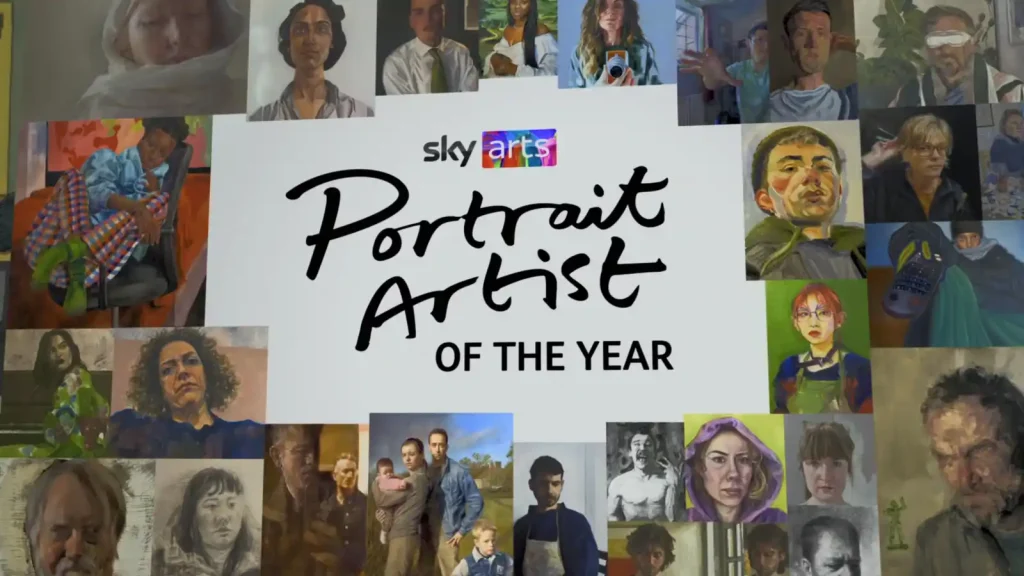
Portrait Artist of the Year 2025 episode 10 represents the dramatic conclusion to an intense search for the next great creative talent in the United Kingdom and Ireland. After eight weeks of grueling heats and a high-pressure semi-final involving Dame Mary Berry, the field of seventy-two initial contenders has been whittled down to just three exceptional finalists. The atmosphere is charged with a mix of anxiety and anticipation as the artists prepare to face their final and most significant painting challenge. This particular broadcast is not merely a television event but a showcase of resilience, technical skill, and artistic evolution.
The stakes for this finale are incredibly high, elevating the tension in the room from the moment the artists arrive. The winner of this prestigious art competition will receive a ten-thousand-pound commission to create a portrait of the award-winning mathematician and broadcaster, Professor Hannah Fry. This commission is destined for the permanent collection of the Royal Society, an institution steeped in history. The artwork will celebrate the eightieth anniversary of the first women elected to the society’s fellowship, Professors Kathleen Lonsdale and Marjorie Stevenson, adding a layer of historical weight to the prize.
For the three remaining artists, Katie Jones, Chloe Barnes, and Lauren Ross, the journey to this stage has been defined by their distinct stylistic approaches and their ability to capture likeness under extreme time constraints. Each artist has already navigated the complexities of painting celebrity sitters in previous rounds, yet the final demands a higher level of execution. They are tasked with capturing the likeness of a formidable subject in just four hours, a constraint that tests not only their painting technique but their psychological endurance.
The subject for this climactic session is none other than the acclaimed actor Brian Cox, known globally for his commanding screen presence and his role as the media tycoon Logan Roy in Succession. His arrival brings a palpable sense of gravity to the studio; he is a sitter who exudes power, history, and a no-nonsense demeanor. The finalists must navigate his strong features and the theatrical setting provided for the occasion, which includes heavy drapery and a throne-like armchair. This setup is designed to reflect the actor’s stage background and his imposing public persona.
As the clock begins to tick, the finalists embark on their respective creative processes, each wrestling with the unique difficulties of their chosen mediums. The episode offers a fascinating glimpse into the internal monologues of the creators, who move between moments of confidence and periods of acute self-doubt. The narrative of the episode weaves between the live painting challenge and the presentation of their commission pieces, providing a comprehensive view of their artistic range.
This finale serves as a testament to the enduring power of portrait painting in the contemporary art world. It highlights how traditional skills can be reinterpreted through modern lenses, from classical oil techniques to experimental printmaking. The interaction between the artist and the sitter remains the core of the drama, as the finalists attempt to penetrate the surface of a celebrity face to reveal the humanity beneath.
Ultimately, the episode is a celebration of artistic bravery, as one competitor risks everything on a high-stakes technique that allows for no corrections. The tension culminates in the final reveal, where the judges must weigh consistency against innovation. The journey of these three women, from their first tentative marks to the final unveil, encapsulates the spirit of the competition.
Portrait Artist of the Year 2025 episode 10
The Prestige and Pressure of the Royal Society Commission
The central driving force behind the intensity of Portrait Artist of the Year 2025 episode 10 is the magnitude of the prize on offer. Unlike the earlier heats where the immediate goal was simply survival in the competition, the final offers a career-defining opportunity. The winner secures a £10,000 commission to paint Professor Hannah Fry for the Royal Society.
This institution is not merely a gallery but a cornerstone of scientific history, and the commission is specifically tied to a significant milestone: the 80th anniversary of the admission of the first female fellows. This context places a heavy burden of responsibility on the finalists, as the winning work will become part of a legacy involving Professors Kathleen Lonsdale and Marjorie Stevenson.
The judges emphasize that this is an exceptional accolade, noting that the show is now in its twelfth year and the reputation of the prize has solidified within the art world. The winner needs to demonstrate not just the ability to capture a likeness in a quick sketch, but the capacity to deliver a museum-quality piece that can stand the test of time. The pressure is compounded by the fact that the artists are aware of the specific historical weight their work must carry. They are not just painting for a television audience; they are auditioning for a place in art history.
Throughout the episode, the finalists express their awareness of these stakes. The opportunity to have work displayed in such a revered institution serves as both a motivator and a source of immense stress. The competition requires them to channel this anxiety into their work, proving to the judges that they possess the professional maturity to handle a high-profile assignment. The narrative arc of the episode suggests that technical skill alone is insufficient; the winner must show the potential to handle the “huge job” of representing a major public figure for a national institution.
Theatricality and the Imposing Presence of Brian Cox
The choice of sitter for Portrait Artist of the Year 2025 episode 10 was calculated to provide a rigorous test for the finalists. Brian Cox, an actor of immense acclaim, presents a face that is well-lived-in, rugged, and instantly recognizable. The show’s producers designed a set that leaned heavily into his theatrical background, placing him in a “throne” surrounded by jute drapes. This “proscenium arch” setting was described by the judges as austere yet theatrical, perfectly matching the “no-nonsense” persona Cox is famous for inhabiting. The lighting was arranged to hit one side of the space, creating strong contrasts of light and shadow intended to give the artists rich tonal values to work with.
Brian Cox himself contributed significantly to the dynamic of the session. He brought with him a profound sense of personal history, encapsulated in his choice of a “special object”—a handbag dating back to 1929 that belonged to his mother or grandmother. He described this object as a “holy relic,” containing his junior secondary certificate and old family photographs.
This emotional weight added a layer of complexity to the sitting; Cox was not merely a celebrity face but a man deeply connected to his roots in Dundee and his family’s history in the jute mills. He shared stories of his ancestors, noting that 80% of Dundee’s working population in the 1850s were female spinners and weavers, a heritage he sat proudly within.
Despite the grandeur of the set and his formidable reputation, Cox revealed a vulnerability during the sitting. He admitted to the physical difficulty of holding the pose for four hours, fighting off sleep in the comfortable chair. He joked about the risk of “dribble” ruining the portrait, bringing a moment of levity to the high-pressure environment. His engagement with the process was evident; he observed the artists closely, noting the strangeness of being the subject of such intense scrutiny. He acknowledged that while he often hides behind characters, at his age, he is more comfortable presenting his true self, stating, “this is me.”
Chloe Barnes and the High-Risk Monoprint Strategy
One of the most compelling narrative threads in Portrait Artist of the Year 2025 episode 10 was the audacious strategy employed by finalist Chloe Barnes. Known for her work with monochrome inks on metal surfaces, Chloe chose to bring a printing press into the studio for the final. This decision introduced a massive element of risk.
Unlike painting, where mistakes can be corrected or painted over, monoprinting is a subtractive and additive process that culminates in a single, irreversible action. As Chloe explained, she could only make one print. If the transfer failed, or if the ink dried too quickly under the hot studio lights, the result would be unusable, and she would have nothing to present to the judges.
Chloe’s process involved painting directly onto a plate, which would then be run through the spectrum press to transfer the image onto paper. This method required her to think in reverse, as the final image would be a mirror reflection of her work on the plate. She described the process as “organic” and “unpredictable,” noting that not all the ink she applied would necessarily make it onto the paper. The judges, particularly Tai Shan Schierenberg, expressed admiration for this risk-taking but also significant anxiety. They noted that in the heat of the competition, working on aluminium had served her well, and switching to a method where the outcome was hidden until the final second was a dangerous gamble.
Throughout the four hours, Chloe was seen manipulating ink on her panel, using solvents to remove pigment and create highlights. The physical act of printing became a moment of high drama. With time ticking down, she had to commit to the press. The “reveal” moment, where she peeled back the paper to see if the image had transferred, was pivotal. The resulting print was described as atmospheric and “death-like” in its somber tones, capturing a different, perhaps darker side of the sitter. Later, she used the final ten minutes to add touches of pastel and watercolor, a mixed-media approach she had not previously utilized in the competition, further demonstrating her willingness to evolve under pressure.
Lauren Ross’s Colorist Approach and Symbolic Narrative
In contrast to Chloe’s monochromatic risk-taking, Lauren Ross brought a vibrant, color-forward aesthetic to Portrait Artist of the Year 2025 episode 10. Lauren had established herself as a “colorist who tells stories” in earlier rounds, using bold, sometimes “acid” hues to convey emotion. For the final, she was immediately drawn to the orange velvet chair Brian Cox was seated in. She used this striking color as the basis for her underpainting, intending to let it peek through the final layers to create a sense of warmth and vibrancy. She also noted a bluish tone in Cox’s jacket, planning to exploit the complementary contrast between the blue and orange to make the image “sing.”
Lauren’s approach was deeply rooted in storytelling. She viewed the set as “feminine” and reminiscent of a Shakespearean stage, aiming to capture the contradiction in Cox’s gaze—an intensity mixed with introspection. She expressed a desire to include elements of the “holy relic” handbag in her composition, hoping to weave the documents and photos into the background drapes to add narrative depth. However, the constraints of the four-hour limit forced her to simplify. As the deadline approached, she had to abandon the detailed inclusion of the handbag’s contents, focusing instead on the figure and the atmosphere.
The judges watched Lauren’s progress with a mix of excitement and concern. They worried that her ambition to include so many narrative elements might be her undoing in such a short timeframe. However, as the portrait resolved, they praised her ability to edit. By simplifying the background and allowing the flat planes of the gray jacket and orange chair to dominate, she created a semi-abstract composition that captured Cox’s “dourness”—a quality the Scottish actor jokingly appreciated. Her work was described as having an “early Renaissance” quality, a “strange language” of painting that set her apart from her peers.
Katie Jones and the Pursuit of Forensic Precision
The third finalist, Katie Jones, offered a masterclass in observation and precision during Portrait Artist of the Year 2025 episode 10. Known for her “coolness” and meticulous attention to detail, Katie’s strategy was to focus intensely on the topography of Brian Cox’s face. She began by sketching and gridding her board to ensure accurate proportions, a method that speaks to her desire for “correctness.” She abandoned her initial plan to have Cox look to the side, deciding instead that a direct, staring gaze was more characteristic of his powerful persona.
Katie’s painting style typically involves “bleached out” colors and stark backgrounds, a distinctive look that the judges feared might clash with the warm, theatrical lighting of the set. However, Katie remained true to her vision, focusing on the “well-lived-in furrows” of the actor’s face. She spent a significant portion of the four hours working exclusively on the eyes and skin tones, slowly building out from the center. This approach caused some alarm among the judges, who worried she might run out of time to complete the rest of the figure. At one point, realizing the head was “floating,” she rapidly blocked in the collar and chair to ground the image.
The resulting portrait was praised for its “forensic” quality. Brian Cox himself was struck by the likeness, noting that she had captured a version of him that was authentic. The judges admired the “exquisite” rendering of the features, even if the painting felt somewhat unfinished in the peripheral areas. Katie’s work highlighted the psychological aspect of the portrait artist’s job; she did not just paint a face, she analyzed it, seeking to understand the “psyche of the sitter” through the precise replication of their physical form. Her ability to maintain such high-resolution detail under the glare of the studio lights and the pressure of the final was a key point of discussion for the panel.
The Personal Commissions: Intimacy and Revelation
While the live painting of Brian Cox provided the immediate drama of Portrait Artist of the Year 2025 episode 10, the pre-painted commissions offered a deeper insight into the finalists’ capabilities. The artists were challenged to paint portraits of their loved ones, a task that allowed them to work without the strict four-hour time limit. These works were revealed to the judges alongside the live portraits, playing a crucial role in the final decision.
Katie Jones presented a diptych of her best friend, Kerris, who is also an artist. The judges were stunned by the “finishedness” of the work, noting that it went beyond the precision seen in her heat submissions. The double portrait showed Kerris in a relaxed, intimate setting, capturing a sense of shared humanity. The hands were described as “exquisite,” and the composition demonstrated Katie’s ability to create a complex, multi-figured arrangement. The judges felt this work proved she could deliver the high level of polish required for the Royal Society commission.
Lauren Ross chose to paint her two daughters, Mali and Frankie. Her commission was heavy with symbolism, incorporating flowers to represent their youth and beauty—a nod to the potential “young blood” of the next generation. The composition placed the girls in a stylized, almost religious arrangement, which one judge compared to an altarpiece with “two saints holding their flowers.” The painting showcased Lauren’s strength as a colorist and her commitment to imbuing her work with meaning, confirming her status as a “symbolist painter.”
Chloe Barnes’s commission was a portrait of her housemate, Matt. True to her experimental nature, she created this work using her printing press, transferring a painting from aluminium to paper. The piece was praised for its “delicacy,” a quality that had not been fully visible in her bolder heat submissions. The judges noted the way the figure occupied space and the beautiful, abstract marks that made up the composition. This work reassured the panel that Chloe’s risk-taking was grounded in a deep understanding of her medium and that she possessed a versatile range suitable for professional commissions.
The Final Critique and Resolution of Portrait Artist of the Year 2025 episode 10
As the four-hour countdown reached its conclusion, the atmosphere in the Battersea Arts Centre shifted from frenetic activity to critical analysis. The three finalists—Chloe Barnes, Lauren Ross, and Katie Jones—stepped away from their easels, leaving their interpretations of Brian Cox to face the scrutiny of the judges and the sitter himself. This moment of judgment in Portrait Artist of the Year 2025 episode 10 was not merely about comparing the three wet canvases on the stage; it required a holistic view, integrating the live work with the commission pieces of loved ones unveiled moments earlier.
The judges—Tai Shan Schierenberg, Kathleen Soriano, and Kate Bryan—approached the critique with a palpable sense of difficulty, acknowledging that all three artists had “overdelivered.” The standard was exceptionally high, described by the panel as a “masterclass.” Each artist had presented a distinct vision, making the decision process a complex weighing of disparate artistic values: precision versus atmosphere, narrative color versus monochromatic risk.
When examining Lauren Ross’s work, the judges were struck by her editorial choices. Despite their earlier fears that she would overcomplicate the image with narrative details from the handbag, Lauren had produced a painting defined by bold, simplified blocks of color. The “dourness” she captured in Brian Cox was praised by the actor himself, who remarked that she had caught a very specific, authentic side of him.
The judges noted that her live painting “sang” when viewed alongside her commission, proving her consistency as a colorist who understands how to balance vibrant hues—like the acid yellows and deep oranges—with emotional weight. Her work was celebrated for its “early Renaissance” feel, a unique visual language that felt both ancient and modern.
Katie Jones’s critique focused on the staggering level of detail she achieved in such a short window. Brian Cox was visibly moved by her portrait, eventually choosing it as the one he would take home. He described the likeness as “extraordinary,” stating, “It’s me.” The judges were equally impressed by the “forensic” nature of her observation.
They highlighted how she had constructed the head with an almost sculptural solidity, navigating the “well-lived-in furrows” of his face with confidence. Her commission piece, the diptych of her friend Kerris, further cemented her reputation for technical brilliance. The judges noted that while her live painting was less “finished” in the background, the head itself was a complete and powerful statement of psychological depth.
However, it was the evaluation of Chloe Barnes’s work that sparked the most intense discussion regarding the definition of a portrait artist. Chloe had taken the most significant risk of the competition by using a monotype process for the final. The judges debated the success of the likeness, with some questioning if the aluminium plate she painted on might have held a “better” image before it was transferred. Yet, they could not deny the “atmospheric” and “extraordinary” nature of the final print.
The image was described as having a “desiccated” quality, capturing a darker, more somber energy that contrasted sharply with the other works. Her commission of her housemate Matt revealed a “delicacy” that balanced her bold live work, proving she could handle sensitivity as well as drama. The judges recognized that her work pushed the boundaries of the genre, operating on the “border” of abstraction and realism.
The Verdict: Embracing Risk and Innovation
The climax of Portrait Artist of the Year 2025 episode 10 arrived with the announcement of the winner. After a difficult deliberation, the title was awarded to Chloe Barnes. This decision marked a significant moment in the history of the competition, as the judges explicitly celebrated her status as a printmaker—a medium less commonly associated with the traditional “portrait artist” title than oil or acrylic painting.
The judges’ rationale for choosing Chloe centered on her progression and her bravery. They highlighted that she had not just maintained her standard from the heats but had pushed her practice into new, dangerous territory. By bringing the printing press into the final, she demonstrated a commitment to her medium that was both “scary” and “exciting.” The panel noted that her work had a “career-defining” potential, suggesting that her unique approach to mark-making and her ability to navigate the tension between control and accident made her a standout talent.
Chloe’s reaction was one of genuine shock and ecstasy. She admitted she had been “hoping” but not expecting to win, given the strength of her competitors. The victory validated her “high-risk” process, proving that the unpredictability of monoprinting could coexist with the demands of high-stakes portraiture. The judges expressed excitement about what she would produce for the Royal Society commission, anticipating that her translation of Professor Hannah Fry onto paper would be a “pinnacle of achievement” for the series.
The Sitter’s Perspective: Brian Cox’s Reflection
Throughout Portrait Artist of the Year 2025 episode 10, Brian Cox provided a grounding presence, offering insights that bridged the gap between the artistic process and the subject’s experience. As an actor accustomed to interpreting characters, his commentary on being interpreted by others was particularly poignant. He likened the art competition to the themes of succession and inheritance, noting that the artists were “assuming the mantle” of the next generation of great painters.
Cox was not a passive observer; he engaged with the physicality of the ordeal, acknowledging the difficulty of remaining still and the vulnerability of being scrutinized. His appreciation for the “no-nonsense” set and the “rugged” portrayal of himself indicated a desire for honesty in art. When he selected Katie’s portrait to keep, he validated her pursuit of likeness, yet his praise for all three artists acknowledged the validity of their different “visions.” He remarked on the fascination of watching the artists work, contrasting their public performance with his own preference for closed rehearsals, thereby highlighting the unique pressure of the Portrait Artist of the Year format.
His contribution extended to the narrative of the episode through the “holy relic” of his handbag. Although the physical object did not feature prominently in the final visual outcomes—Lauren simplified it out, and the others focused on the face—the story of the Dundee jute spinners provided a thematic backdrop of labor and craft that resonated with the artists’ own intense labor in the studio.
The Legacy of the Episode and Future Implications
Portrait Artist of the Year 2025 episode 10 concludes not just with a winner, but with a reaffirmation of the vitality of the portraiture genre. The diversity of the finalists—a printmaker, a symbolist colorist, and a forensic realist—demonstrates that the definition of a “portrait artist” is expansive and evolving. The episode underscored that contemporary portraiture is as much about the artist’s process and risk-taking as it is about the faithful replication of features.
The commissioning of a portrait for the Royal Society serves as a bridge between this modern televised competition and the established institutional art world. By selecting Chloe Barnes, the judges signaled a willingness to embrace less traditional mediums within these hallowed halls. The “young blood” of the art world, represented by these finalists, is shown to be respectful of tradition—evidenced by their engagement with the history of the Royal Society and Cox’s personal history—while simultaneously disrupting it with new techniques and bold aesthetic choices.
As the credits rolled, the audience was left with the image of Chloe Barnes, a uniquely modern artist, preparing to take her place alongside the greats. The episode successfully dramatized the act of creation, turning the solitude of the studio into a communal, electric event. It proved once again that the question of “who captures the likeness” is far less interesting than “how the likeness is captured,” and what that process reveals about both the artist and the subject. The 2025 finale will be remembered as the year the printmaker’s roller triumphed, proving that in the world of high-stakes art, fortune favors the brave.
The Artists’ Final Reflections
In the aftermath of the challenge, the finalists’ reflections provided a window into the emotional toll of the competition. Lauren Ross described the day as significantly more stressful than previous rounds, the weight of the “time pressure” sitting heavily on her shoulders. Yet, she also framed it as an “amazing opportunity,” maintaining her gratitude despite the intensity. Her journey highlighted the difficulty of balancing complex conceptual ideas—symbolism, narrative, allegory—with the brutal reality of a four-hour stopwatch.
Katie Jones, despite feeling “up against it” and worrying that she wouldn’t finish, found satisfaction in the directness of her engagement with the sitter. Her admission that she might be “more competitive” than she originally thought revealed the transformative nature of the contest. It pushed her from a place of technical observation to a desire for victory, sharpening her focus.
Chloe Barnes, the victor, articulated the specific anxiety of her medium. Her description of the process—painting, removing ink, risking the dry-out, and finally the blind “reveal”—encapsulated the drama of the entire series. Her win was a validation of “organic” art, where the artist collaborates with the machine and the materials, accepting that they cannot control every micro-millimeter of the outcome.
These personal narratives, woven through Portrait Artist of the Year 2025 episode 10, humanized the artistic struggle. They transformed the finalists from mere contestants into complex protagonists, each fighting their own battle against time, materials, and self-doubt. The episode stands as a comprehensive document of this struggle, offering a detailed and empathetic look at what it takes to be named the Portrait Artist of the Year.
FAQ Portrait Artist of the Year 2025 episode 10
Q: What is the prize for winning Portrait Artist of the Year 2025?
A: The winner receives a £10,000 commission to paint Professor Hannah Fry for the Royal Society. This artwork celebrates the 80th anniversary of the first women elected to the society’s fellowship. Furthermore, the piece becomes part of a historical legacy involving Professors Kathleen Lonsdale and Marjorie Stevenson. The commission represents a career-defining opportunity for the artist to create a museum-quality piece.
Q: Who are the finalists in Portrait Artist of the Year 2025 episode 10?
A: The three exceptional finalists competing in this intense finale are Katie Jones, Chloe Barnes, and Lauren Ross. Each artist reached this stage after navigating eight grueling heats and a high-pressure semi-final involving Dame Mary Berry. Specifically, their journey is defined by distinct stylistic approaches and the ability to capture likenesses under extreme time constraints. They faced a final challenge that tested both their painting technique and psychological endurance.
Q: Who is the celebrity sitter for the 2025 finale?
A: The subject for the climactic session is acclaimed actor Brian Cox, known globally for his role as Logan Roy in Succession. His arrival brought a palpable sense of gravity to the studio, as he exudes power and history. To reflect his stage background, producers designed a theatrical set featuring heavy drapery and a throne-like armchair. Additionally, Cox brought a “holy relic” handbag belonging to his mother to the sitting.
Q: What artistic strategy did finalist Chloe Barnes use?
A: Chloe Barnes employed an audacious, high-risk monoprint strategy by bringing a printing press directly into the studio. This unique process involves painting onto a plate and running it through a press to transfer the image onto paper. Because monoprinting is irreversible, she could only make a single print, meaning any mistake would be permanent. Consequently, the judges admired her bravery in using such an unpredictable technique under pressure.
Q: How did Lauren Ross approach the portrait of Brian Cox?
A: Lauren Ross utilized a vibrant, color-forward aesthetic, focusing on the striking orange velvet chair for her underpainting. She aimed to let this color peek through to create warmth, contrasting it with the bluish tone of Cox’s jacket. Although she initially planned to include narrative elements like the handbag, time constraints forced her to simplify the composition. Ultimately, she created a semi-abstract piece that captured the actor’s “dourness” through bold blocks of color.
Q: What characterizes Katie Jones’ painting style in the finale?
A: Katie Jones demonstrated a masterclass in forensic precision, focusing intensely on the topography of Brian Cox’s face. She began by gridding her board to ensure accurate proportions, prioritizing “correctness” over atmospheric effects. While the judges worried about her slow pace, she successfully constructed the head with sculptural solidity. In fact, Brian Cox himself was struck by the extraordinary likeness, stating simply, “It’s me”.
Q: Who won Portrait Artist of the Year 2025?
A: Chloe Barnes was crowned the winner of Portrait Artist of the Year 2025 after a difficult deliberation by the judges. The panel selected her based on her progression and the bravery she showed by using a printing press. They noted that her work pushed the boundaries of the genre, operating on the border of abstraction and realism. Consequently, her victory validates her high-risk process and innovative approach to portraiture.
Q: What did the finalists paint for their commission pieces?
A: The artists created portraits of loved ones to demonstrate their capabilities without strict time limits. Katie Jones presented a highly finished diptych of her best friend, Kerris, showcasing exquisite technical skill. Meanwhile, Lauren Ross painted her two daughters using heavy symbolism and floral elements to represent youth. Finally, Chloe Barnes produced a delicate monoprint of her housemate, Matt, proving her versatility and sensitivity.
Q: How did Brian Cox react to the portraits?
A: Brian Cox engaged deeply with the process, noting the difficulty of holding a pose while fighting off sleep. He praised Lauren for capturing his authentic “dourness” and admired the atmospheric quality of Chloe’s print. However, when asked to choose one portrait to take home, he selected Katie Jones’s work. He felt her forensic approach captured a version of him that was truly authentic.
Q: Why was Chloe Barnes’ victory considered significant?
A: Chloe Barnes’s win marked a significant moment as the judges celebrated her status as a printmaker, a medium less common in portraiture. The decision highlighted that contemporary portraiture is about process and risk-taking as much as faithful replication. Furthermore, the judges felt her unique mark-making approach had “career-defining” potential suitable for the Royal Society commission. Thus, the finale proved that fortune favors the brave in high-stakes art.