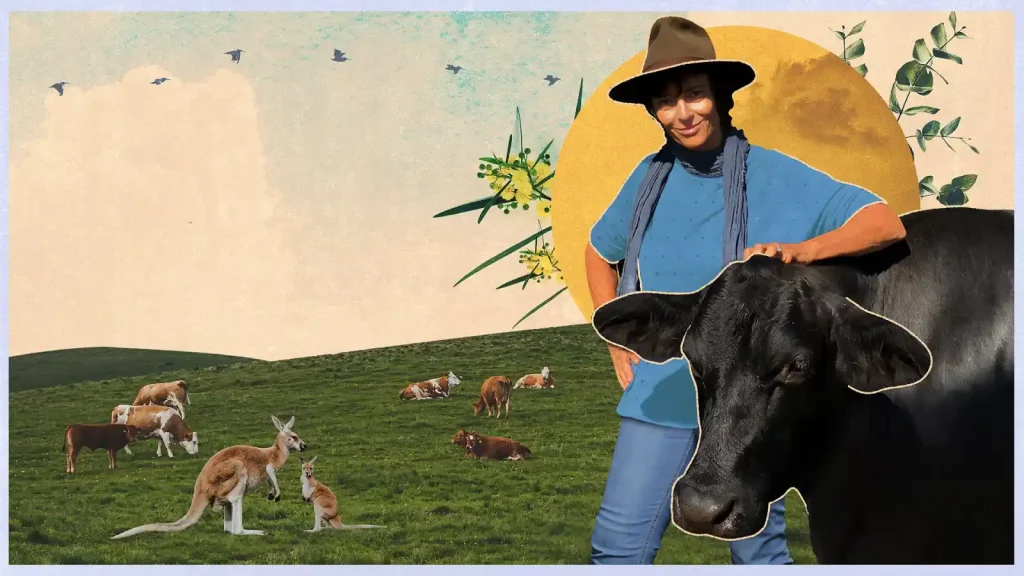
Rachel’s Farm: Rachel Ward, an acclaimed director and actress, is the last person most would associate with the world of farming. Yet, when faced with relentless droughts, devastating bushfires, and mounting ecological despair, she decided to take an extraordinary leap. Rather than succumbing to the challenges around her, Rachel found solace, inspiration, and ultimately hope in an unexpected place: the soil beneath her feet. This marked the beginning of a transformative journey—one that would reshape not only her Australian farm but also her perspective on life.
Nestled in the heart of Australia’s rugged landscape, Rachel’s farm had endured the brunt of environmental hardships. The once-vibrant fields seemed like a canvas stripped of its colors, reduced to barren patches of earth. For many, such dire conditions would signal the end of the road, a reason to give up. But for Rachel, it was a call to action—a chance to embrace something new and profoundly meaningful.
Her journey into the world of regenerative agriculture began as a quest for survival but quickly evolved into a mission of hope. Unlike conventional farming methods that often exhaust the land, regenerative agriculture focuses on restoring and enhancing the soil’s natural fertility. Through practices like crop rotation, composting, and holistic grazing, farmers can breathe new life into their land, ensuring sustainability for generations to come. For Rachel, this philosophy resonated deeply, aligning with her desire to create not just a productive farm but a thriving ecosystem.
Stepping into this new realm was no easy feat. As someone whose career had flourished in the world of film and storytelling, Rachel found herself in uncharted territory. She exchanged scripts and cameras for spades and seeds, immersing herself in the intricacies of soil health, water retention, and biodiversity. It was a steep learning curve, but one that proved immensely rewarding. Each step forward brought a sense of empowerment, a feeling that she was not only healing her land but also reconnecting with the earth in a profound way.
The transformation of Rachel’s farm is nothing short of remarkable. What was once dry, lifeless soil began to teem with activity. Earthworms, insects, and other signs of biodiversity returned, signaling the land’s revival. Native grasses and crops flourished where only dust had lingered before, creating a mosaic of greens and golds that painted the landscape anew. For Rachel, these changes were more than just visual; they were symbolic of a deeper renewal—one that extended to her own sense of purpose and well-being.
Rachel’s journey also highlights the power of resilience and adaptability in the face of adversity. Much like the land she worked to regenerate, she found herself undergoing a personal transformation. Farming became more than a means of survival; it became a form of therapy, a way to ground herself amidst the chaos of modern life. “I didn’t just learn how to farm,” she reflects, “I learned how to hope again.”
Her story serves as an inspiration for others facing similar challenges. In a world increasingly grappling with the effects of climate change, Rachel’s experience underscores the importance of sustainable practices and the profound impact individuals can make. By adopting regenerative methods, farmers worldwide can contribute to healthier soils, reduced carbon emissions, and greater food security—all while fostering a deeper connection to the planet.
Rachel’s Farm
Beyond the physical transformation of her farm, Rachel’s journey is a testament to the enduring spirit of human innovation and determination. She didn’t have all the answers when she began, but she was willing to learn, adapt, and grow. This mindset proved to be her greatest asset, allowing her to overcome obstacles and celebrate victories, no matter how small.
Today, Rachel’s farm stands as a beacon of hope and possibility. It’s a living testament to what can be achieved when we embrace change and commit to working in harmony with nature. Her story is a reminder that even in the face of overwhelming challenges, there is always a way forward—a path that leads not only to recovery but to regeneration.
Rachel Ward’s journey from the film industry to the fields of Australia is a narrative of courage, resilience, and renewal. It’s a story that speaks to the heart, reminding us that when we care for the earth, it has an incredible capacity to care for us in return. Through her dedication and determination, Rachel has not only revitalized her farm but also ignited a movement, showing that hope can indeed be found—even in the most unlikely places.
Conclusion Rachel’s Farm
Rachel Ward’s journey from actress to farmer is nothing short of extraordinary. It’s a story of grit, transformation, and an unyielding belief in renewal. Her leap into the unknown—swapping the glamour of the silver screen for the raw unpredictability of the land—wasn’t just about survival. It was about finding purpose, redefining success, and rediscovering the profound bond between humanity and the earth.
Today, Rachel’s farm tells a tale as vivid as any of her films. Once barren, the land now breathes life, with golden grasses swaying like dancers in the breeze and insects humming their quiet symphony. The soil, once cracked and lifeless, now teems with vitality, a testament to the power of regenerative farming. Through her relentless efforts, she’s transformed not just her land but also her sense of self—becoming a steward of hope and a voice for change.
Her story reminds us that resilience often blooms in the face of adversity. Like a seed buried deep in dry soil, Rachel found her strength by digging in and nurturing growth, even when the odds seemed insurmountable. Each challenge she faced became a stepping stone, guiding her toward a deeper understanding of the delicate interplay between soil, water, and life itself. The farm became her canvas, and regeneration, her masterpiece.
Rachel’s journey is more than a personal triumph. It’s a call to action for all of us to rethink how we treat the planet. In her transition to regenerative agriculture, she’s shown how small changes—composting, rotating crops, holistic grazing—can create ripples that inspire broader transformation. These practices not only restore the land but also combat climate change, secure food supplies, and forge a healthier relationship with nature.
For anyone feeling overwhelmed by environmental despair, Rachel’s story is a reminder that change is possible. It doesn’t require grand gestures or perfect knowledge, just the courage to start and the patience to persevere. Her farm stands as proof that when we work with nature, rather than against it, the results can be breathtaking—a vibrant, living testament to hope.
Rachel’s tale invites us to pause and reflect. In the soil beneath her feet, she found not only a path to renewal but also a profound lesson: when we care for the earth, it nurtures us in return. Her story is a beacon for anyone seeking a way forward, illuminating a path of resilience, sustainability, and boundless possibility.
FAQ Rachel’s Farm
Q: What is regenerative agriculture, and how is it different from conventional farming?
A: Regenerative agriculture is a holistic approach to farming that focuses on revitalizing the soil and the entire ecosystem. Unlike conventional farming, which often depletes the land and relies heavily on synthetic inputs, regenerative agriculture aims to enhance soil health, increase biodiversity, and improve water cycles. Furthermore, it prioritizes practices such as composting, crop rotation, and minimal soil disturbance. These methods work in harmony with nature to create a more sustainable and resilient farming system. Ultimately, regenerative agriculture seeks to not only produce food but also to heal the land and mitigate climate change.
Q: What challenges did Rachel Ward face when she started farming, and how did she overcome them?
A: Rachel Ward, despite her successful career in film, faced numerous obstacles when she transitioned to farming. Firstly, she had to grapple with the harsh realities of drought and bushfires that had ravaged her Australian farm. Additionally, she had to acquire new skills and knowledge, transitioning from scripts and cameras to the intricacies of soil health and water management. However, Rachel’s determination and willingness to learn allowed her to persevere. She embraced regenerative agriculture principles, and through consistent effort, she transformed her barren land into a thriving ecosystem. In essence, Rachel’s journey exemplifies the power of resilience and adaptability in the face of adversity.
Q: What specific regenerative farming practices did Rachel Ward implement on her farm?
A: Rachel Ward employed a variety of regenerative farming practices to revitalize her land. Firstly, she integrated crop rotation to improve soil fertility and break pest cycles. Secondly, she implemented composting to recycle organic matter and enhance soil health. Moreover, she adopted holistic grazing, allowing livestock to move strategically across the land to mimic natural grazing patterns. This, in turn, promotes healthy soil and vegetation growth. By implementing these practices, Rachel fostered biodiversity and created a more sustainable and resilient farming system.
Q: How did regenerative agriculture impact Rachel Ward’s farm and her personal well-being?
A: Regenerative agriculture had a profound impact on both Rachel Ward’s farm and her personal life. The once-depleted soil on her farm became teeming with life, with earthworms, insects, and native grasses returning. Consequently, this transformation signaled the land’s revival and increased its productivity. Moreover, for Rachel, the process of regenerating her land became a form of therapy, providing solace and a renewed sense of purpose. In other words, she not only healed the land but also experienced a personal transformation, rediscovering hope and a deeper connection to the earth.
Q: How does Rachel Ward’s story inspire others to embrace sustainable practices?
A: Rachel Ward’s story serves as a powerful inspiration for those seeking to adopt sustainable practices. Despite having no prior farming experience, she demonstrates that individuals can make a tangible difference in combating climate change and environmental degradation. Furthermore, her journey highlights the transformative potential of regenerative agriculture, showcasing its ability to restore land, improve livelihoods, and foster a deeper connection with nature. In conclusion, Rachel’s experience encourages others to embrace change, learn from the land, and contribute to a more sustainable future.
Q: Where can I learn more about regenerative agriculture and how to implement it?
A: Rachel Ward’s story is a fantastic introduction to the power of regenerative agriculture. To delve deeper, numerous resources are available to help you learn more and get started. Firstly, you can explore online platforms and organizations dedicated to regenerative agriculture, such as the Regenerative Agriculture Initiative and the Savory Institute. These resources offer valuable information, case studies, and educational materials. Secondly, consider connecting with local farmers and organizations in your area who are already practicing regenerative agriculture. They can provide firsthand insights and guidance. Lastly, attending workshops and conferences on regenerative agriculture can offer valuable learning opportunities and connect you with a community of like-minded individuals.
I very much enjoyed watching Rachel’s Farm, resilience and willingness to learn in the face of adversity showed what can be achieved. As a farmer’s daughter from a long line of farmers, I can resonate with the importance of working with nature to preserve our planet.
As a child in the fifties I remember walking around the farm with my father looking at the corn germinating and he explaining how it would stool out to grow more stalks therefore more wheat, barley, oats etc when sheep grazed it. He was a typical mixed farming advocate of the time. We had a small dairy herd, sheep, cattle, my mother looked after the hens and sold eggs to the Egg Marketing Board, my brother had a few pigs and turkeys. After the war he grew potatoes, under instructions from the Ministry of Agriculture I believe. Mushrooms grew in a 17 acre old turf field. He gave me a love of nature, pointing out birds, animals, trees and everything nature provided, it gave me a sense of how to care for the soil to grow crops, he also had a large vegetable patch, fruit bushes, an orchard with apples, pears and plums and a huge walnut tree. There were crabapples and damsons growing in the native hedges. He gave my sisters and me sweet pea seeds to learn how to grow and care for plants, I still grow them now plus fruit and vegetables.
We were never bored, so much to learn and do around the farm, a great sense of freedom, happy times, although the old farmhouse was very cold in wintertime, ice patterns on the inside of our bedroom windows!
Regenerative farming seems to make such sense, I would love to see more of it in the UK instead of so many solar farms, panels should be on the roofs of houses, factories and all suitable buildings. Farmers should be given more support to grow food locally to avoid the huge carbon footprint of importing so much food. The war in Ukraine has shown what happens to the price of flour, cooking oil etc. People benefit so much from being outside in nature, gardening etc. With all the housebuilding, often in flood plains, it is sad to see the loss of this green and pleasant land.
FFS stop D.Motion videos automatically playing. People can perfectly well click the appropriate button if they want to watch it.
FFS D.motion starts everywhere automatically
So does Youtube, unless ‘auto-play’ is turned off. Surely people themselves are quite able to decide if they wish to watch a particular video or not.
However, I appreciate your making these videos available on HDClump. Thanks.