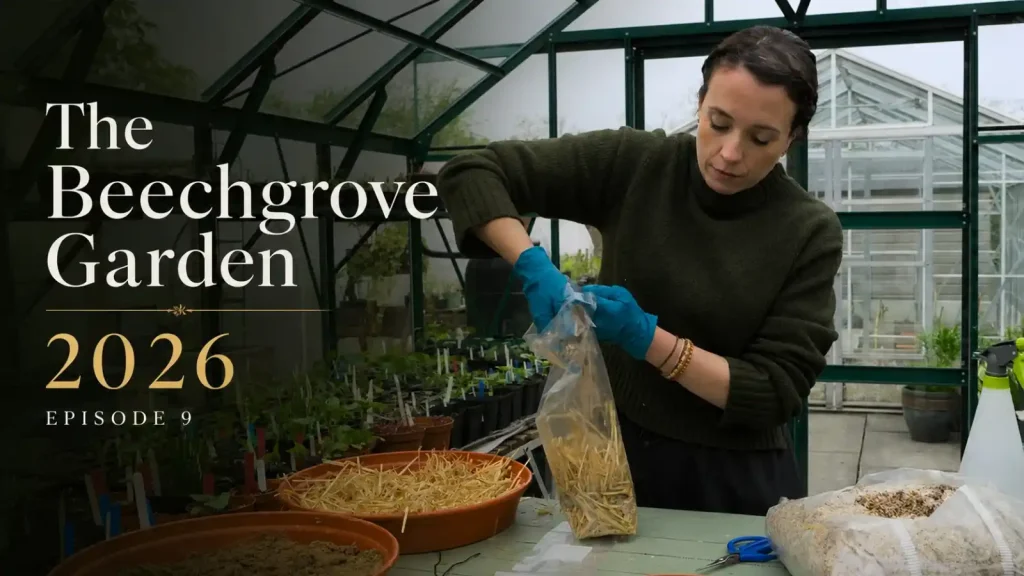
The Beechgrove Garden 2026 episode 9 arrives on a soaking spring day at the plot just outside Aberdeen, and it makes a virtue of the weather by turning attention to growing methods that thrive whatever the sky is doing. Rain hammers the borders, yet the focus stays sharp: unusual ways to get plants going, a coastal planting refresh that copes with wind and salt, a kitchen-counter mushroom crop, a celebration of Scotland’s finest bonsai, and a hands-on masterclass in turning ordinary conifers into living sculpture. It is a episode built for gardeners who want results, not excuses.
The strongest thread running through The Beechgrove Garden 2026 episode 9 is resilience. Every plant chosen for the seaside garden has to survive battering wind and relentless salt spray. Every mushroom culture has to be protected from competing bacteria. Every bonsai represents decades of patient stewardship. The message is consistent and quietly ambitious: good gardening is less about controlling nature than working with its tougher instincts.
That practical confidence carries the half-hour. Brian Cunningham refreshes a long-loved coastal plot and then sculpts plants with topiary, Calum Clunie demystifies growing edible fungi at home, and a trip to Troon reveals a hobby where horticulture and art collide. Add the week’s handy hints, and the result is a generous, useful watch.
The seaside garden is one of the longest-standing favourite plots at Beechgrove, and Brian Cunningham treats it with obvious affection. Growing up on the east coast of Scotland, he understands the brief instinctively. Plants here have to be tough. They face constant wind, salt spray and a kind of relentless abuse that would finish off softer specimens.
His starting point is a hard decision. A lovely eucalyptus pauciflora, prized for its glaucous foliage and ornamental bark, had grown too tall and developed decay in the trunk. The garden team chose to take it out. Yet removal is not the end of the story. Brian points out the red shoots already breaking from the base, and he turns that into a lesson for anyone planting eucalyptus near the coast.
These trees grow fast, but wind topples tall specimens easily. His advice is to coppice them hard every three or four years, chopping right down to encourage vigorous young growth from the base. It is a counterintuitive move that keeps the plant stable and looking its best rather than letting it become a liability.
Removing one large plant also changes the lives of its neighbours. Beside the old eucalyptus stood a golden privet, Ligustrum ovalifolium Aureum, its leaves edged in yellow. Starved of light for years, it had become leggy, with bare stems showing through. Rather than scrap it, Brian recommends cutting one to two feet off each stem to encourage fresh shoots and a denser, more compact shape. It is restoration, not replacement.
The Beechgrove Garden 2026 episode 9
Coastal Planting Choices That Survive Wind And Salt Spray
The trickiest corner is a spot where the garden team could never get anything to establish. This problem is common in coastal gardens, where the soil is predominantly sand, free-draining and stubbornly unwelcoming to new plants. Brian’s solution is refreshingly simple: stop fighting the conditions and copy what already works.
Almost everything thriving in that bed had self-seeded. So the plan is to add plants that behave the same way. A tree lupin, around a metre tall with yellow flowers, was already seeding around happily. To that, Brian introduces Centranthus ruber, with its ruby-red blooms, urging gardeners to let it scatter seed freely so it colonises wherever it likes, even the cracks in a wall.
He also rehabilitates a plant with a poor reputation. Pampas grass gets a bad press, but the compact pumila variety earns its place. With more dead yellow foliage than living green on show, Brian combs it out with a springtime rake, giving it a brisk haircut before the fluffy seed plumes begin to form. Done now, that tidy-up protects the winter interest those flower heads will bring.
For inland gardeners craving the coastal look, he offers clever tricks. Top dressing soil with rounded river stones suppresses weeds and mimics a beach. A gravel path crunches underfoot like shells. The Beechgrove team even replaced a fence with an old fish net for climbers to scramble up, finished with a length of chain that makes the whole scene feel like boats anchored in a harbour.
The plant list for exposed sites is specific and tested. Cytisus performs well, but Brian plants a smaller specimen rather than a large one, because big plants catch the wind, tear their roots and never settle. Leathery-leaved plants such as hebe conserve moisture and shrug off intense sunlight. He pairs a Pittosporum Tom Thumb, with its purple-tinged foliage, alongside the silvery artemisia already in place. Dianthus loves the gritty, free-draining soil, and he gambles on an erigeron in the gravel, because sometimes gardeners simply have to push the boundaries. His parting tip is universal: work organic matter into sandy soil at planting time to hold moisture until roots establish, after which the plants can look after themselves.
Growing Pink Oyster And Lion’s Mane Mushrooms At Home
One of the most engaging segments of The Beechgrove Garden 2026 episode 9 takes growing indoors. Calum Clunie revives something Beechgrove had not attempted in a long while: cultivating edible mushrooms from scratch. Ready-made kits exist in supermarkets and garden centres, but he wants to show how to mix your own recipe and understand what is actually happening.
Two varieties take the spotlight. Pink oysters are big, fleshy and delicious. Lion’s mane is the more unusual choice, a shaggy, distinctive fungus worth the experiment. The starting material looks strange at first. Grain spawn resembles bird feed mixed with mushroom spawn, fed to sustain the culture in transit and ready for planting. Odd-looking, but exactly right.
The method is methodical and clean. For pink oysters, the substrate is sterilised straw, available from pet shops, steamed or heated to kill off bugs and bacteria. Calum builds what he calls a lasagne, layering straw with handfuls of grain spawn. He adds gypsum to balance pH and prevent acidity or toxicity building up, then a feedstock such as rice husk or oatmeal for extra energy. The layers repeat until the bag is about half full, leaving room for the oxygen the growing fungus needs.
Hygiene drives everything. Gloves, clean hands and clean scissors all reduce the risk of rival bacteria or fungi outcompeting the crop. A spray bottle keeps humidity high, around 80 to 90 per cent. The bag is sealed with air trapped inside, then pierced with holes where the mushrooms will eventually push through. Stored somewhere dark and warm at roughly 20 to 22 degrees, it is checked every couple of days. Once white, fluffy mycelium appears, the bag moves into indirect, north-facing light to encourage fruiting. Lion’s mane, importantly, prefers a hardwood substrate of oak wood pellets rather than straw, a reminder to match substrate and feedstock to the species you have chosen.
Inside Scotland’s Thriving Bonsai Scene At Troon
The trip to Troon delivers the episode’s most reflective moment. The Ayrshire Bonsai Club’s opening event, held at Troon Concert Hall, reaches its tenth year, drawing dozens of clubs and hundreds of enthusiasts from across Scotland. They come to display strikingly varied trees, a parade of species shaped by individual taste and patience.
For the growers, the appeal runs deep. One describes coming home from a stressful job and spending an hour or two simply working with his trees, a slow-paced hobby that helps him switch off. Another frames bonsai as the crossover between horticulture and art: the discipline of keeping something living healthy and watered, fused with the creativity of styling it to look beautiful. Junipers and pines dominate many collections, prized for their form.
Technique is demystified rather than mystified. Careful pruning decides what stays and what goes. Copper or aluminium wire lets growers manipulate branches into position, with neatness itself becoming part of the craft, especially for trees destined for exhibition. There is no single correct model, no rigid template. Everyone’s eye differs, and that freedom is exactly the point.
Cost need not be a barrier. The word bonsai loosely translates as planting in a shallow tray, so anything in a small pot qualifies. While trees in Japan can sell for a million pounds, a garden centre specimen with potential might cost just ten. Take it home, add wire, shape it, and the journey begins. One grower traces his own start to watching Mr Miyagi’s little trees in The Karate Kid, a charming reminder that great obsessions often have humble triggers.
Bonsai As Living Heritage Passed Between Generations
What lifts the Troon report beyond technique is its emotional weight. These trees are not ornaments. They are responsibilities passed through hands and across years. One grower cares for a Japanese white pine imported in 2015, possibly around fifty years old, and speaks of being the custodian of something alive. The word he keeps returning to is responsibility.
Nearby stands an ancient apple tree gifted to him by a dear friend who died, a tree that had itself been handed from person to person before reaching him. Inheriting something with that history, he says, means you have to be the right type of person. It is horticulture and living art at once, a piece that demands both skill and care to keep healthy.
The story also reveals bonsai as a bridge between generations. A father describes how his daughter Ella began joining him on Sunday mornings at the bonsai club, an interest he never expected to share. She has not missed a session since. For a dad whose forte was never dancing, the shared hobby became a genuine social bond. She explains it plainly as squishing big trees into little pots, and finds the work therapeutic whenever life feels stressful.
The closing sentiment resonates well beyond the exhibition hall. These trees will outlive their keepers, so younger growers matter enormously. The more children involved, the better, because the future generations are the ones who will take the trees on and ensure they remain cared for. It reframes a niche hobby as quiet stewardship of living heritage.
Topiary Techniques That Turn Conifers Into Living Sculpture
Back at Beechgrove, Brian Cunningham returns to the terrace garden with a fresh ambition: shaping plants through topiary. Terraces, he explains, tame steep banks and slopes by creating a series of mini gardens held by walls or sleepers. They stop soil washing away and let gardeners reach every level safely. The first plants into the ground should provide year-round structure, which is where topiary earns its place.
He begins with structural choices. A Juniperus Skyrocket signals its upright growth immediately, planted in odd numbers, with three dotted around for balance. A Cotoneaster Decorus contributes arching sprays that will carry white flowers and berries. These can be left natural or trimmed once a year to hold their shape. Importantly, Brian advises walking around and viewing plants from every level of a terrace before committing, since you might admire them from the top or the bottom.
Then come the intricate forms. Lollipops and spirals demand patience. A young Thuja occidentalis, an evergreen conifer, has string tied to guide a future spiral, with trimming planned once it grows to reveal the stem beneath. Brian clearly relishes the process, noting that although he could simply buy a finished topiary piece, all the fun lies in creating it yourself.
His showpiece is a tiered cake stand cut from a single-stemmed hornbeam, chosen because it holds its leaves through winter, though yew would work for a fully evergreen effect. He maps the design with tape first, since once foliage is cut it cannot go back on. A pedestal of foliage rises to roughly 60cm, followed by gaps and tiers of around 25cm each, though he lets the plant suggest where cuts should fall. To keep the form even, he ties string cut to 45cm to work around the plant in a circle as it fills out, aiming for an overall width near 80cm. The result emerges layer by layer, and his confidence visibly grows with every careful snip.
Designing A Garden Around Sound In The Competition Plot
A lighter, inventive strand follows Ruth Vichos in the presenters’ competition plot, where this year’s theme challenges each presenter to build a garden around one of the senses. Ruth drew sound, which initially sounded easy and quickly proved anything but. Her response was bold: create an orchestra that plays the symphony of the season.
The design reads like sheet music laid out in soil. A wind section uses ornamental grasses, dark green molinias and variegated Calamagrostis rescued from elsewhere, which swoosh as breezes pass through them. A string section delivers energy through RHS Plants for Pollinators such as echinaceas, rudbeckias and cosmos, drawing in insects to generate a literal buzz alongside pretty self-seeders like nigella.
The cleverest flourishes are interactive. A path of different gravel sizes becomes a percussion section, crunching louder as you walk, crescendoing in the middle before tapering off. For bass, Ruth plans a buried wormery that can be lifted out, fitted with a microphone and headphones so visitors can hear the underground at work. Insects, she argues, give a garden its real oomph. With judging due in September, it is a witty, thoughtful entry that hunts for that essential little twist.
Practical Handy Hints For The Spring Garden
The week’s handy hints close the episode with quick, transferable wins. In the wildlife garden, two methods of establishing wild flowers are compared on a bare patch of soil. The sown seed side looks decent but slightly patchy, suggesting more seed was needed lower down. The trowelled-in wild flower mat, by contrast, impresses with even coverage from top to bottom, showing healthy borage and the ferny foliage of phacelia. As long as wildlife wins, the verdict is happy either way.
A second tip tackles training fruit. At an Asian pear, now is the ideal time to shape growth into a fan against a fence. The trick is reusable Velcro, cut to size depending on stem thickness, simply wrapped around and stuck on. Working steadily around the plant builds the desired shape without damaging the stems, and the ties can be loosened or reused as the tree develops.
The episode signs off in a burst of colour on a miserable spring day, with a rhododendron aptly named Golden Flare living up to its title. Looking ahead, next week promises fragrant planting in Calum’s competition plot, timely pruning advice, and an update from the Perth allotment the team is following this season. As ever, The Beechgrove Garden 2026 episode 9 leaves viewers with more confidence, a fuller plant list, and the reassuring sense that even a soaking Aberdeen sky is no reason to stop growing.
FAQ The Beechgrove Garden 2026 episode 9
Q: Why should you coppice eucalyptus in a coastal garden?
A: Eucalyptus grows fast but blows over easily in coastal wind, so cutting it right down every three or four years keeps it stable. Hard coppicing encourages vigorous young growth from the base, producing fresh red shoots instead of a tall, top-heavy tree that becomes a liability. It is a simple way to enjoy the foliage without risking collapse.
Q: What plants survive wind and salt spray in a seaside garden?
A: Tough, drought-tolerant plants handle coastal conditions best. Cytisus, hebe, Pittosporum Tom Thumb, artemisia, dianthus and erigeron all cope well with wind and salt. Leathery-leaved plants like hebe conserve moisture and tolerate intense sunlight, while dianthus thrives in gritty, free-draining soil. Choosing smaller specimens helps roots establish before the wind can tear them loose.
Q: Why plant a smaller shrub instead of a large one near the coast?
A: Large plants catch the wind constantly, which tears their roots and prevents them settling. A specimen that never establishes wastes energy regrowing roots instead of putting on healthy top growth. Smaller plants sit lower, suffer less buffeting and anchor themselves more quickly. Consequently, they often overtake bigger ones planted at the same time on exposed sites.
Q: How do you grow pink oyster mushrooms at home?
A: Start with sterilised straw as the substrate, steamed or heated to kill bugs and bacteria. Layer it like a lasagne with handfuls of grain spawn, add gypsum to balance pH and a feedstock such as rice husk or oatmeal. Fill the bag halfway, mist for humidity, seal it, then poke holes where mushrooms will fruit.
Q: Why is hygiene so important when growing mushrooms?
A: Rival bacteria and fungi compete aggressively with the mushroom you want, so cleanliness decides success. Gloves, clean hands and clean scissors reduce contamination at every stage. Without good hygiene, unwanted organisms can outcompete the spawn before it ever fruits. Giving the fungus a clean start means it can colonise the substrate fully and develop into a healthy crop.
Q: Does lion’s mane need a different substrate from oyster mushrooms?
A: Yes. Lion’s mane prefers hardwood rather than straw, so oak wood pellets make a far better substrate than the straw used for pink oysters. Matching the substrate and feedstock to the species is essential, since each mushroom has different needs. Checking the requirements of your chosen variety before starting gives the culture the best chance of fruiting well.
Q: How much does it cost to start growing bonsai?
A: Bonsai does not need to be expensive. While prized trees in Japan can sell for a million pounds, a garden centre specimen with real potential might cost just ten. Take it home, add copper or aluminium wire, and shape it yourself. The word bonsai loosely means planting in a shallow tray, so anything in a small pot can begin the journey.
Q: Why is bonsai considered both horticulture and art?
A: Bonsai combines keeping a living plant healthy with styling it to look beautiful. The horticultural side covers feeding, watering and maintaining the tree, while the artistic side involves pruning and wiring to shape its form. There is no single correct model, so personal taste guides every decision. That blend of care and creativity makes each finished tree a living art piece.
Q: How do you create a tiered topiary shape from a hornbeam?
A: Map the design with tape first, because cut foliage cannot be replaced. Build a pedestal of foliage to roughly 60cm, then alternate gaps and tiers of around 25cm, letting the plant suggest where cuts fall. Tie string cut to 45cm to work evenly around the plant in a circle, aiming for an overall width near 80cm.
Q: What is the best way to establish wild flowers in a bare patch?
A: A trowelled-in wild flower mat gives more even coverage than scattered seed, which often turns patchy. Mats produce consistent growth from top to bottom, supporting plants like borage and phacelia. Sown seed can still work but may need extra seed in thinner areas. Either method feeds bees, butterflies and hoverflies, so wildlife benefits whichever approach you choose.