The Greatest Adventure part 1: Across the globe, a silent, epic story unfolds every single day. It is a story of courage, sacrifice, and unwavering love. This is The Greatest Adventure of them all: the journey of Parenthood. In the vast, untamed world of wildlife, this journey is fraught with peril. Every habitat presents a unique gauntlet of challenges. However, for every challenge, nature reveals a parent with a unique and brilliant strategy. As the legendary David Attenborough has shown us time and again, the stakes are monumental. For these dedicated parents, success means more than just their own survival. Indeed, their triumph secures the very future of life on our planet.
The first great quest for any parent is finding a safe home. This fundamental need drives some of the most remarkable behaviors in the animal kingdom. Imagine the sun-scorched plains of the Kalahari Desert. Here, a lioness does not face motherhood alone. Instead, she belongs to a powerful sisterhood. The lion mothers of a pride raise their cubs collectively. Consequently, if one mother falters, another is there to offer a life-saving meal. This cooperative crèche is their key to survival. However, their task involves more than just protection. These mothers must also teach their young to become giant hunters, transforming playful cubs into the future kings and queens of the savannah.
In stark contrast, we travel to the open grasslands of Texas. Here, a tiny predator faces a world of giants. A pair of burrowing owls has chosen an ingenious solution. They make their home underground. This subterranean nest shields their vulnerable chicks from the dangers above. While the chicks are safe below, the parents work tirelessly around the clock. Their life becomes a relentless shuttle service. They deliver a constant supply of insects and small rodents. Therefore, they demonstrate that good parenting is often a story of tireless work and clever engineering, ensuring safety in a world full of risk.
After securing a home, the unending search for food begins. This quest is vital to every parent’s success, pushing many to their absolute limits. In the lush waterways of Tanzania, a mother hippopotamus enjoys the relative safety of her pool by day. Her newborn calf stays close, protected by her immense size. The night, however, tells a different story. Under the cloak of darkness, the mother must leave this sanctuary. She ventures onto the plains to find enough grass to sustain them both. Consequently, every single night she runs a terrifying gauntlet. Hungry lions and hyenas lie hidden in the shadows, waiting for any opportunity. Her nightly journey is a heart-stopping display of courage for her child.
Some parents, however, take providing to the extreme. Deep in the African wilderness, we witness a truly astonishing act of sacrifice. An African social spider mother has a unique way of feeding her newly hatched spiderlings. She regurgitates a life-giving ‘milk’ for them. This incredibly nutritious liquid is made from her own dissolved body parts. As a result, her young thrive and grow stronger. Soon, however, they need more substantial food. In a final, ultimate act of parental devotion, she offers her own body. The spiderlings consume her, a sacrifice that ensures their survival. It is a sobering, yet profound, example of a mother giving everything for her children.
Protection is another cornerstone of successful Parenthood. This often requires cleverness and ingenuity. On a vibrant coral reef in Indonesia, a small boxer crab mother has developed a fascinating defense. She cultivates living sea anemones, holding them in her claws like a pair of pom-poms. These are not for show; they are living weapons. Their stinging tentacles provide a formidable defense against predators. During one encounter, a hungry fish steals one of her precious anemones.
Undeterred, the clever mother performs a miracle of nature. She meticulously tears her remaining anemone in half. Amazingly, each half regenerates into a whole new one. She effectively clones her weapon, ensuring she has just enough protection to see her eggs through to independence.
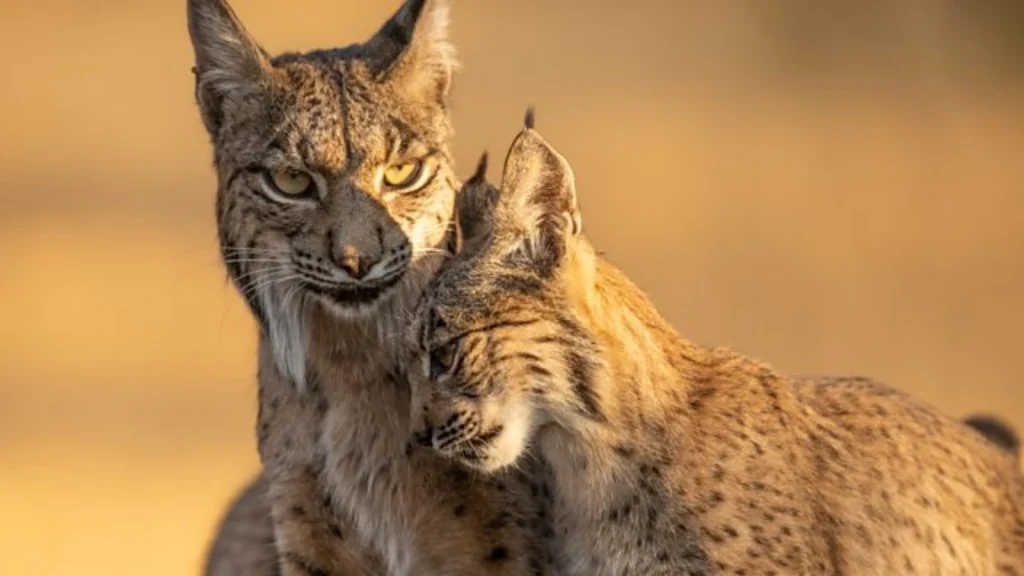
These incredible animals now face a world that is changing faster than ever before. Human activity presents new and enormous challenges. Yet, amidst these struggles, there are powerful stories of hope. The recovery of the Iberian lynx in southern Spain is one such remarkable success story. Once on the very brink of extinction, this beautiful cat has been brought back. This incredible comeback was only possible through dedicated conservation efforts. Humans worked to restore their habitats and protect the lynx mothers and their kittens.
Ultimately, this story shows how we can help animal parents not just survive, but thrive. It proves that when we choose to help, we can make a profound difference in the lives of the wildlife we share this planet with. Their greatest adventure can continue, ensuring that the rich tapestry of nature endures for generations to come.
The Greatest Adventure part 1
The Greatest Adventure part 1 explores the monumental journey of parenthood across the untamed world of wildlife. Across the globe, this silent, epic story unfolds every single day through acts of courage, sacrifice, and unwavering love. For these dedicated parents, success means more than just their own survival; it ensures the very future of life on our planet. This daily struggle highlights the raw, unfiltered essence of nature.
Indeed, the stakes are monumental. As the legendary David Attenborough has often shown, the natural world presents a gauntlet of unique challenges for every species. From the scorched grasslands of the Kalahari to the competitive depths of the ocean, animal parents must develop brilliant and often risky strategies to protect their young. Their triumph against these odds is a testament to the power of instinct and adaptation.
This exploration of The Greatest Adventure part 1 delves into the diverse and ingenious methods animals employ to raise their offspring. It examines cooperative strategies within large family groups, where the burden of care is shared among relatives. Furthermore, it highlights the remarkable problem-solving skills of solitary parents who must rely on their own wits to overcome threats. Finally, it touches upon the ultimate sacrifices some parents make for their young.
The journey of Parenthood is perhaps the most fundamental narrative in the animal kingdom. It is a story driven by the instinct to provide constant food and safety for the next generation. For many animals, this responsibility begins with establishing a secure home, a sanctuary against a hostile world. This commitment is full of uncertainty and requires complete dedication, as parents navigate a world filled with predators and environmental hardships.
These challenges push animal parents to the limits of their endurance. Some must contend with extreme climates, where resources are scarce for months on end. Others face a constant barrage of predators, requiring them to develop clever defense mechanisms for themselves and their vulnerable young. The responsibility can be all-consuming, a journey of constant vigilance where a single mistake can have the greatest of consequences.
Ultimately, the strategies that emerge are as varied as the environments these creatures inhabit. From forming powerful family alliances to wielding living weapons, the solutions are a masterclass in evolutionary design. These stories of wildlife reveal that whether through teamwork, individual brilliance, or profound sacrifice, the core mission remains the same: to give the next generation the best possible start in life.
Cooperative Care and The Greatest Adventure part 1: Lions and Spiders
In the vast grasslands of the Kalahari, a mother lion begins her journey of Parenthood within a formidable family unit. Her pride, numbering around 20, is a matriarchy ruled by her and her sisters, each with their own cubs. This mighty family structure allows them to help one another through the harshest of conditions, from scorching 45-degree heat to the arrival of life-giving seasonal rains. The mothers must teach their young that patience is a critical ally in this environment.
The arrival of water transforms their territory, attracting huge herds of Cape buffalo from the surrounding savanna. These one-tonne animals, moving in herds that can stretch for three miles, are essential prey but also a significant danger. Here, a mother lion has the added pressure of teaching her growing cubs how to hunt giants. The cubs must watch and learn as the lionesses take the lead, knowing a single swipe from a buffalo’s horns could be fatal.
This cooperative model provides a crucial safety net. After a successful hunt, the younger lions are allowed to eat first. However, hunting such large prey is not without risk. In one instance, a mother is fatally gored by a buffalo while trying to provide for her young. Her death leaves her cubs, too young to hunt for themselves, in a vulnerable position. Yet, they do not have to face the future alone; the matriarchs of the pride take on the responsibility for the orphans, raising them alongside their own offspring.
In Namibia, a different form of cooperative living and sacrifice is demonstrated by the female African social spider. After laying her eggs, she has a brood of 30 spiderlings completely dependent on her for food. Initially, she feeds them by regurgitating a milky liquid directly into their mouths. To fuel their rapid growth, she must hunt, and luckily, she can rely on her 50 adult sisters who share her nest and hunt in perfect unison.
This mother’s journey takes a turn toward the ultimate sacrifice. As her spiderlings grow, their appetite becomes insatiable. The constant demands of parenthood take their toll, and her body begins to fail. In her final act, her struggling movements mimic the vibrations of distressed prey, and she offers herself as the main course for her hungry offspring. This final gift ensures the survival of the next generation, which then consumes the remaining adults in the colony.
Ingenious Individual Efforts in Parenthood
While some animals rely on family, others must face the challenges of parenthood alone, armed with unique and ingenious strategies. In the competitive ocean waters of Indonesia, the female boxer crab is one of the most resourceful parents. She carries her brood of over 1,000 eggs on her underside, facing the dual challenge of keeping them safe while also finding enough food for herself. Her solution is to come prepared.
Like a boxer ready for a fight, she wields live anemones on her claws. These anemones serve a dual purpose. First, they act as fishing nets, filtering food from the water which the crab mother then steals for herself. Second, they are a potent defensive weapon. The anemones’ venomous stings can deter most predators, such as the cunning cuttlefish, providing essential protection for a vulnerable mother.
However, these living tools are highly prized among the crab community, and this mother must defend them from rivals. After losing one of her anemones in a fight, she demonstrates remarkable problem-solving. Exhausted and vulnerable, she meticulously dissects her remaining anemone, creating a perfect clone to re-arm herself. This incredible ability allows her to survive until her crablets are ready to be released into the current, having been given an excellent start in life thanks to her care.
In the wild lands of Arizona, teamwork is the key for a pair of burrowing owls. To win over a female, a young male must first secure a decent burrow, often using holes abandoned by other animals. Once she approves the home, she lays her eggs and incubates them while he takes on the responsibility of providing a constant supply of food. Their teamwork pays off when their chicks hatch.
As the chicks grow, both parents must work tirelessly to hunt and meet their seemingly endless demands. Their burrow offers some protection, but they still face threats from predators like the wily roadrunner, which could kill an entire brood. The chicks, however, have their own clever defense mechanism. When danger approaches, they emit a high-frequency call that mimics the sound of an angry rattlesnake, a formidable deterrent for many would-be attackers.
Parenthood becomes even harder when the environment itself works against you. In Tanzania, the Ruaha River provides a lifeline for most of the year, but during the dry season, it nearly disappears. This leaves a mother hippo and her two-month-old calf with a serious dilemma. The few remaining pools of water deep enough to shield them from the sun become crowded and unsanitary.
The mother’s primary challenge is finding food. Hippos require 50kg of vegetation every day, and in the dry season, good grazing is nearly a mile and a half away from the safety of the river. The journey is too hot during the day, so she must wait for the cool of the night. She cannot leave her calf alone, so the pair must make the slow, uncertain walk into the darkness, where unknown dangers lurk.
Though a mother hippo is a formidable bodyguard with 20cm ivory tusks for defense, her young calf is still vulnerable. Their situation becomes perilous when they encounter a pride of lions. Though a male hippo joins them for defense, he panics and breaks their formation, leaving them exposed. While the mother and her calf narrowly escape, the other male is not so lucky. This encounter highlights the constant threat these animals face as their refuge shrinks.
In a world where over 80% of the Earth’s landmass is affected by human activity, some animal parents are learning to adapt to new realities. In Spain, an endangered Iberian lynx named Audrina has found an unlikely sanctuary in an abandoned barn to raise her five kittens. This refuge is so ideal that her mother and daughter have also chosen to raise their young there, creating a rare phenomenon of three generations living together.
The recovery of this wildlife population was made possible by a crucial change in human behavior. Less than a decade ago, local farmers chose to alter their practices to support native animals. They stopped hunting and began creating natural habitats amongst their crops. Quicker than anyone imagined, native animals returned, first the prey and then predators like the lynx. This transformed the farm into a safe place for parents like Audrina to raise their young in a world redesigned with them in mind.
The Complexities of Choosing a Mate: The Greatest Adventure part 1 Continues
For the female western lowland gorilla in Gabon, the journey of parenthood involves careful planning for the future. After helping her young for nearly four years, she must allow him to become more independent and learn the rules of gorilla social life. This transition gives her the opportunity to consider the next stage of her own journey and assess her current partner, the silverback.
At 34 years old, the father of her young one is old for a silverback, and he is under her constant assessment. Her decision to stay with him boils down to several key factors. First, she considers his physique, as her future offspring will inherit his genes, giving them a good head start in life. His brawn isn’t the only thing that matters; though males play little part in raising young, females prefer males with a degree of tolerance, and the old silverback has always been good with kids.
She also assesses what his territory has to offer. Good and plentiful food is crucial for any mother, and variety helps parents teach their young what to eat. His territory scores highly, even featuring a swamp where grasses provide much-needed protein for their diet. Furthermore, she looks for protection. His willingness to stand up to bigger animals, like a forest elephant, is certainly an attractive quality in a partner.
Finally, she must weigh the significant risks of leaving. Any new male she might associate with could kill an infant that is not his own, meaning she would have to leave her child behind. It would also take months to establish herself within a new troop. Here, she already has a partner, albeit a slightly mature one. For now, it seems he has passed her test, securing her commitment to continue their family and embark on the next chapter of parenthood.
The Enduring Legacy of Nature’s Greatest Teachers
As we witness these extraordinary tales unfold across continents and species, one truth emerges with crystalline clarity: parenthood in the wild is both the most perilous and most profound adventure on Earth. From the sun-baked Kalahari where lionesses forge unbreakable bonds of sisterhood, to the hidden burrows of Arizona where owl parents orchestrate elaborate deceptions to protect their young, every story reveals the same fundamental drive—the relentless pursuit of giving the next generation not just survival, but the best possible start in life.
What strikes me most powerfully about these animal parents is how their strategies mirror our own deepest instincts, yet often surpass our imagination in their ingenuity and sacrifice. The boxer crab mother who literally clones her defensive weapons, the spider mother who offers her very body as sustenance, the hippo mother who braves lion-stalked darkness for a single blade of grass—these aren’t just survival mechanisms. They’re masterclasses in resourcefulness, cooperation, and unconditional love that transcend species boundaries.
But perhaps the most hopeful thread woven throughout these stories is the proof that change is possible. The remarkable recovery of the Iberian lynx didn’t happen by accident—it happened because humans chose to see themselves not as separate from nature, but as partners in its continuation. When Spanish farmers transformed their destructive practices into life-giving sanctuaries, they didn’t just save a species; they rewrote the entire narrative of human-wildlife coexistence.
This transformation offers us more than hope—it provides a blueprint. In a world where over 80% of landmass bears the fingerprint of human activity, we’re not passive observers of nature’s greatest adventure. We’re active participants, capable of being either the predator in the shadows or the protective sanctuary. The choice, quite literally, determines whether future generations will inherit a world where such extraordinary parental journeys can continue.
The gorilla mother’s careful assessment of her aging partner reminds us that even in nature, the future is built on thoughtful decisions made today. As we face our own environmental crossroads, we might ask ourselves the same questions she does: What kind of territory are we providing? What protection are we offering? What legacy are we passing down?
These animal parents don’t have the luxury of second chances, backup plans, or safety nets. Yet they persist, adapt, and triumph through sheer determination and evolutionary wisdom. Their greatest adventure continues not despite the odds, but because of an unshakeable commitment to tomorrow.
In their courage, we find our calling. In their sacrifice, we discover our responsibility. And in their success, we glimpse the extraordinary future that becomes possible when we choose to be guardians rather than merely witnesses of life’s most magnificent journey.
FAQ The Greatest Adventure part 1
Q: What makes animal parenthood the greatest adventure in nature?
A: Animal parenthood represents the ultimate test of survival, combining courage, sacrifice, and unwavering love in the face of monumental challenges. Furthermore, these dedicated parents must secure not only their own survival but ensure the continuation of life on our planet. Their journey encompasses finding safe homes, providing constant nourishment, and protecting vulnerable offspring from countless predators and environmental threats.
Q: How do lion mothers create successful cooperative parenting systems?
A: Lion mothers form powerful sisterhoods within their pride, typically numbering around 20 individuals in a matriarchal structure. Additionally, this cooperative model provides crucial safety nets where if one mother falters, another steps in with life-saving support. The lionesses collectively teach their cubs to hunt massive prey like Cape buffalo, transforming playful young into future rulers of the savannah through shared wisdom and protection.
Q: What ingenious strategies do solitary animal parents use for protection?
A: Solitary parents develop remarkable defensive innovations, such as the boxer crab mother who wields living sea anemones as venomous weapons. Moreover, when she loses one anemone to predators, she demonstrates extraordinary problem-solving by meticulously cloning her remaining weapon. Similarly, burrowing owl chicks mimic rattlesnake sounds to deter attackers, while their parents create underground sanctuaries away from surface dangers.
Q: How do environmental challenges affect wildlife parenting success?
A: Environmental hardships push animal parents to their absolute limits, requiring extraordinary adaptations for survival. For instance, hippo mothers must venture nearly two miles from safety during Tanzania’s dry season to find sufficient vegetation. Consequently, they face terrifying nightly gauntlets through lion and hyena territories, demonstrating that successful parenting often demands heart-stopping displays of courage for their offspring’s survival.
Q: What is the most extreme example of parental sacrifice in nature?
A: The African social spider mother represents the ultimate parental sacrifice, literally offering her own body as nourishment for her offspring. Initially, she feeds her 30 spiderlings with regurgitated ‘milk’ made from her dissolved body parts. However, when their appetite becomes insatiable, she performs her final act of devotion by allowing them to consume her entirely, ensuring their survival through her complete self-sacrifice.
Q: How are human activities impacting wildlife parenting strategies?
A: Human activity affects over 80% of Earth’s landmass, forcing animal parents to adapt to rapidly changing environments. Nevertheless, positive stories emerge like the Iberian lynx recovery in Spain, where three generations now raise young together in abandoned barns. This remarkable comeback occurred because local farmers transformed their practices, creating natural habitats that allowed native species to return and thrive.
Q: What factors do animal mothers consider when choosing mates?
A: Female animals make calculated decisions based on multiple critical factors that affect their offspring’s future success. For example, female gorillas assess their partner’s physique for strong genetic inheritance, territory quality for abundant food sources, and protective capabilities against larger threats. Additionally, they must weigh the significant risks of leaving, including potential infanticide by new males and months required to establish themselves in different troops.
Q: How do cooperative species ensure orphaned young survive?
A: Cooperative species create robust support systems that protect orphaned offspring through extended family networks. When lion mothers die during dangerous hunts, pride matriarchs immediately adopt the vulnerable cubs alongside their own young. Similarly, African social spiders rely on their 50 adult sisters for hunting support, ensuring that even if one parent fails, the collective effort maintains the survival of the next generation.
Q: What role does human conservation play in supporting animal parents?
A: Human conservation efforts prove essential for supporting wildlife parenting success, particularly for endangered species facing habitat loss. The Iberian lynx recovery demonstrates how dedicated restoration work and farmer cooperation can transform agricultural landscapes into thriving sanctuaries. Furthermore, when humans choose to become partners rather than adversaries in nature’s continuation, they enable extraordinary parental journeys to persist for future generations.
Q: What lessons can humans learn from wildlife parenting strategies?
A: Wildlife parents teach us that successful child-rearing requires resourcefulness, cooperation, and unwavering commitment to the next generation’s welfare. Their strategies reveal that whether through teamwork, individual brilliance, or profound sacrifice, the core mission remains giving offspring the best possible start in life. Moreover, their adaptability and persistence in the face of overwhelming odds provide blueprints for human resilience and community support systems.