Welcome to The Greatest Adventure part 3, where we explore life’s ultimate challenge. In the open grasslands of our world, a timeless drama unfolds. These vast landscapes offer a bounty of food. They also provide space for families to grow. However, this beautiful stage presents immense danger. For parents raising the next generation, life is a constant balancing act. They must weigh immense risk against vital rewards. This is a story of incredible wildlife parenting, set against the backdrop of our planet’s stunning savanna habitats.
In an English meadow, an amazing artist gets to work. An ingenious potter wasp is building a cradle from clay. She expertly shapes the pot with meticulous care. Then, she embarks on a vital hunt for caterpillars. She carefully paralyzes each one before packing them inside. This larder will feed offspring she will never meet. Hers is a parenting strategy of perfect preparation and ultimate sacrifice. She provides everything her young need to begin life. Consequently, she ensures her legacy without ever meeting her family. This is a solitary yet profound act of nature.
Meanwhile, on the sun-drenched savanna of Kenya, a different lesson is underway. A cheetah mother uses the open stage for a vital classroom. She must teach her cubs the art of the hunt. Their very survival depends on these crucial skills. Today’s lesson involves a wildebeest calf. With incredible patience, she demonstrates the stalk. She shows them how to use cover and when to explode into a sprint. The cubs, in turn, watch with a mixture of excitement and clumsiness. This hands-on parenting is essential for their future.
For some wildlife, however, achieving balance is even harder. In the plains of the Lower Zambezi, a large wild dog pack has a clear advantage. With thirty members, their teamwork is a powerful force. The adults are skilled and experienced hunters. Still, their energetic pups can be a huge liability. The parents must therefore instill discipline in the youngsters. An ill-timed yelp or a premature chase could ruin everything. This means their parenting must be firm and consistent. Every hunt is a high-stakes test of family cohesion.
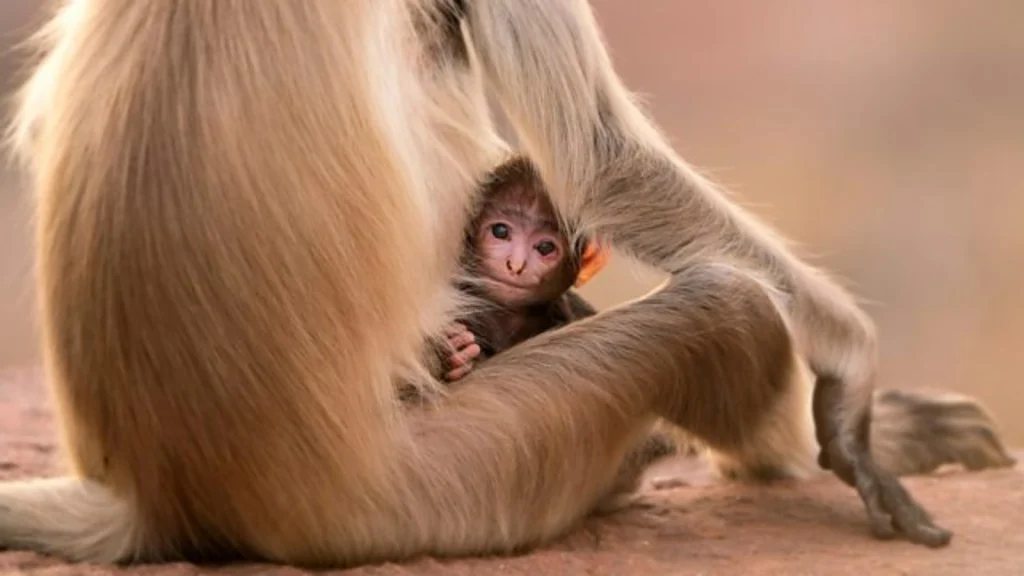
Furthermore, not all parenting instincts are immediate. In the forests of India, female langur monkeys must first learn on the job. Before becoming mothers, they practice as babysitters. They take care of the infants of other females in the troop. This experience is absolutely crucial for their development. However, the role does not come easily to everyone. Some young females are clumsy or inattentive. Through these trials, they learn the patience and vigilance that true parenting demands in the wild.
The Greatest Adventure part 3
Unfortunately, our changing planet is shifting the delicate balance. New and difficult choices confront parents across the grasslands. In the searing Kalahari Desert, sociable weavers build the largest nests on Earth. These incredible structures act as communal shields from the sun. But an unbearable heatwave tests their social bonds. The intense heat causes order to break down completely. Suddenly, disgruntled neighbors begin to evict helpless chicks. This is a heartbreaking example of how climate change impacts nature.
Similarly, other animals face more tangible, human-made obstacles. In wild Patagonia, a guanaco mother faces a desperate journey. She must join thousands of others on a migration to winter feeding grounds. Their survival depends on reaching this seasonal haven. Yet, their ancient path is now blocked. Mile upon mile of fencing slices through the landscape. This modern barrier turns their natural journey into a deadly gauntlet. It is a stark reminder of our impact on wildlife. This is where conservation becomes so critical.
The challenges for animal parents are indeed growing more intense. The stories from our grasslands are both inspiring and cautionary. We see incredible resilience and devotion in the face of mounting pressure. However, these struggles also highlight a profound vulnerability. The future of the cheetah, the wild dog, and so many others hangs in the balance. Ultimately, their fate is intertwined with our own actions. Thoughtful conservation efforts and simple solutions from humans can help restore stability. We can determine the future of life on our magnificent savannas.
The Greatest Adventure part 3 review
The Greatest Adventure part 3 explores the profound challenges of raising a family in the world’s vast grasslands. These sprawling landscapes are a world of paradox. They offer an abundance of food, with grass that grows continuously like a self-stocking fridge. This bounty supports numberless families, providing the fuel needed for the next generation to grow and thrive. However, this open-air nursery comes with an ever-present threat. On the exposed plains, there are very few places to hide from danger.
For parents, this environment creates a constant, high-stakes balancing act between risk and reward. They face the daily problem of keeping their young safe while they search for food. Every decision is fraught with peril, from predators that are experts in this terrain to unexpected environmental shifts. This dynamic is central to the ongoing drama of wildlife parenting. The strategies parents employ are as diverse as the grasslands themselves, showcasing remarkable adaptations and heart-wrenching sacrifices in the service of their offspring.
This installment of The Greatest Adventure part 3 reveals the varied and ingenious tactics animals use to navigate these challenges. We witness the solitary dedication of an insect architect who builds a perfect nursery she will never see used. We also observe the hands-on education provided by a dedicated cheetah mother on the African savanna. The series further examines the complex social structures of wild dogs and monkeys, where raising the young becomes a shared, community-wide responsibility that requires discipline and practice.
The very nature of grasslands sets the stage for these parental trials. The immense, open spaces are home to expert predators like African wild dogs, who can make quick work of a vulnerable young animal. For a zebra foal, the appearance of these hunters is a parent’s nightmare. In a stunning display of sacrifice, a father may intentionally hang back to become the target himself. This extraordinary act allows the rest of his family to escape, highlighting the extreme lengths parents will go to in order to protect their lineage.
These inherent dangers are now being amplified by a rapidly changing world. Unusual environmental conditions can make the already difficult task of parenting much harder. A changing climate and the expanding footprint of human activity are continually shifting the balance. This forces wildlife parents everywhere to forge new paths and make difficult choices to ensure a future for the next generation. From extreme weather to man-made barriers, the hurdles are becoming more intense, testing the resilience of families across the globe.
The struggle to adapt is a universal theme, connecting parents across different continents and species. In California, a sudden change in climate creates a grassland not seen for generations, posing a serious problem for a mother adapted to the desert. In Africa, rising temperatures push a highly social species to the brink, causing their cooperative society to fracture under stress. And in South America, an ancient migration route is now bisected by modern obstacles, forcing a mother to navigate a deadly new landscape.
Adapting to Unfamiliar Terrain: The San Joaquin Kit Fox
In the winter of 2023, California experienced historic rainfall, receiving nearly 200 trillion liters of rain. This was almost double the average, creating a lush, tall grassland not seen for generations. While this bloom might seem appealing, it presented a grave challenge for parents adapted to desert conditions. The San Joaquin kit fox, an animal about the size of a house cat, suddenly found her environment completely transformed. For a mother with five young kits to protect, the new landscape was fraught with hidden dangers.
The tall grass fundamentally altered her world. It muffled sounds and smells, effectively blunting the sharp senses she relied upon for survival. In a normal year, she would be able to see for miles around her den, easily spotting approaching threats. But now, predators could lurk unseen just feet away. This novel environment made it incredibly difficult for her to protect her playful and curious kits, who remained a constant distraction. She could not watch over them forever.
As night fell, she faced a serious dilemma. Her kits were hungry, and she had to find food for them. Her primary prey, giant kangaroo rats, only emerge at night. To hunt them, she had to leave her young alone and unsupervised. The journey was perilous, covering nearly seven miles through the tall grass that made locating prey harder than ever. While she was away, her kits continued to play well into the night, their activity drawing some unfortunate attention.
A coyote, one of the kit fox’s main predators and an animal twice her size, was drawn to the den. Catching the scent of danger, the pups managed to escape into their underground den just in time. The mother returned with a single rat, only to find her family safe but still hungry. One rat was not enough for five kits, so she had to head out again. But this time, the coyote knew where to find them. Hidden by the tall grass, the predator ambushed her family, and there was nothing she could do. In the aftermath, she found her four surviving kits, a stark lesson in the dangers of this strange, new grassland.
Divergent Parenting Styles: The Potter Wasp and the Cheetah
In the grasslands of Southern England, a single mother employs a remarkable and well-tested method for protecting her young: architecture. A potter wasp is engaged in her life’s work, building the last of 25 major constructions before the end of autumn. Using her own saliva to soften clay, she meticulously builds a nursery pot. This structure is designed to provide her young with both shelter and food. In her signature style, she carefully flutes the edges of the pot before preparing for the next crucial step.
Inside the completed nursery, she spins a single thread of silk. On it, she lays a single egg, which will hatch in a couple of days. But her job has only just begun. She must now fill the pot with enough food to sustain her offspring until it can emerge as an adult in the spring. This requires her to hunt for caterpillars, which she paralyzes with her sting and places into the pot alive.
She is in a race against the unreliable British weather; she cannot fly when it is cold and wet, and time is slipping by. After finally stuffing one last caterpillar inside, she seals the pot. Her work is done. Within a week, she will die, never meeting the offspring for whom she provided a safe home and a full larder.
In sharp contrast to the wasp’s solitary preparation, a cheetah mother on the plains of Kenya must provide a hands-on education. For eight long months, she has singlehandedly fed her three cubs. But in another ten months, they must be able to feed themselves. Play-fighting helps them develop essential physical skills. They also learn about different kinds of prey through trial and error, such as which ones are most likely to fight back. However, there is one critical skill they must be taught directly.
Cheetah cubs do not instinctively know how to make a kill. Even making contact with prey can be dangerous. To teach this lesson safely, the mother provides something her cubs can tackle without risk: an abandoned fawn too young to run far. She does not kill it herself, instead allowing her cubs to practice. With the lesson over, it is time for a real test. She spots a wildebeest calf, an animal too large for her cubs to bring down by themselves. She leads the chase, but the calf begins to escape. Realizing his mother needs help, one cub holds onto the prey, enabling her to reposition and secure the meal.
Collective Responsibility in The Greatest Adventure part 3
For some families, even two parents are not enough to ensure survival. African wild dogs rely on the help of their entire family to raise their young. A single breeding pair cannot do it alone; the whole pack is responsible for parenting the next generation. One pack in particular has been unusually successful. At 30 members strong, it is three times the average size. Such numbers should be a major asset during a hunt.
However, over half of the members in this large pack still have some growing up to do. The teenagers are something of a liability. Their inexperience and unbridled enthusiasm can ruin a hunt before it even starts, and their parents have a big job ahead to control them. The pack’s matriarch is nursing another ten puppies back in the den, so she and her partner must find enough food for the entire family. With so many mouths to feed, the bigger the prey, the better.
They set their sights on a herd of buffalo. These animals are seldom attacked by wild dogs because their size, horns, and numbers make them potentially very dangerous. But the pack’s size could give them a chance if the youngsters behave properly. The adults steer the pack into a strategic position at the edge of a forest, where they can get closer to the herd. The matriarch knows they must be patient, as timing is key. But once again, the youngsters break cover too soon.
Their premature charge gives the buffalo time to form a defensive group. Worse, the young dogs have moved too close, too quickly, and are now chasing the biggest buffalo in the herd, an animal that could kill one of them with a single kick. The youngsters have wasted their chance. The experienced parents, however, keep watching for a weak buffalo to make a wrong move. They spot an unprotected calf. It will not be a meal for everyone, but it is better than nothing. It will take many more failed hunts before the teenagers are of any real help.
The Importance of Practice: Langurs and Demoiselle Cranes
For many parents in the natural world, practice is essential for success. In India, a Hanuman langur is pregnant for the first time. It will not be long before she gives birth, but she is not ready yet. For langurs, many parenting skills are not instinctive. If this young female wants to give her newborn the best start in life, she must learn how to be a mother before her baby arrives. Fortunately, being part of a large troop provides the perfect opportunity for her to practice.
It is time for some prenatal classes, but langur parents are often choosy about who they allow to babysit. The expectant mother has to persuade someone to give her a chance, and she must take a gentle approach. Babysitting is harder than it looks; mishandling an infant could be fatal for both the baby and her own social standing within the troop. Through practice, she learns how to handle a baby properly and even recognizes when an exhausted mother could use a helping hand. These newly acquired skills prepare her for parenthood just in time.
Last night, she moved away from the troop and gave birth. These tender moments create a bond with her baby, but away from the troop, the pair is vulnerable. Feral dogs on the lookout for an easy meal pose a serious threat. A newborn baby monkey is an obvious target. She needs to find a way back to the safety of the troop without injuring her baby. Her practice pays off, and upon her return, the troop rallies around her. Now, she has as many trusted babysitters as any mother could wish for.
Parenting also requires teamwork on the Eurasian Steppe, the biggest grassland on the planet. Demoiselle cranes travel over 3,000 miles to nest here, where grass and insects are plentiful. Protecting their eggs in such an exposed place requires two diligent parents. One stays with the eggs while the other feeds. However, they must now face an unexpected threat.
The number of domesticated livestock has tripled globally over the last century, leaving far less space for wild animals. One wrong hoof from a clumsy sheep, and their eggs could be lost. One parent tries to redirect the herd, but the sheep are not taking the hint. The parents have no choice but to fight together, deploying the crane kick to protect their future family.
When Social Structures Fracture: The Sociable Weaver
Where conditions are hostile, parents may need to band together to survive. In the Kalahari desert, temperatures can exceed a formidable 45 degrees Celsius. In response, sociable weaver parents have joined forces with other families. Together, they build a climate-controlled home for their young. The nest they produce is the largest built by any bird. It features a thatched roof weighing over a tonne, which serves as a very effective shield against the worst of the heat. A single pair could not possibly build such an enormous construction; it takes a whole community.
Their society is highly cooperative. At least half of the parents also have helpers, which are offspring from previous years who stick around to babysit. These helpers feed the chicks, maintain the nest, and watch out for danger. As the day gets hotter, snakes like the cobra become more active. A single cobra could eat every chick in the colony in a matter of days. But the community acts as a neighborhood watch with wings, mobbing the predator to drive it away.
However, a less visible threat is building. The temperature is rising. It is only a couple of degrees above average, but as the heatwave drags on, every family is affected. Even a small rise in temperature can have big consequences. Parents and helpers alike are too hot to look for food, maintain the nest, or watch out for danger. It becomes every bird for itself.
The chicks are left alone for hours at a time. An adult from a different family shows up, but it is not there to help. It ejects a chick from the nest. Scientists do not know exactly why, but more chicks are ejected from colonies during heatwaves than at any other time. The social order starts to break down, revealing that these families are living on the very edge of what is tolerable.
At the end of summer on the high Patagonian plateau, a guanaco mother faces a difficult journey. She needs to feed constantly to produce milk for her calf, and she is also pregnant with her next one. Snow comes early at these high altitudes, covering what is left of the grass. Grazers are driven downhill in search of food. When they reach the lowest elevations, they will have enough shelter and food to see them through the winter. They just need to get there.
But their ancient migration routes are now cut by modern fences. There are nearly 100,000 miles of fences in Patagonia, making them almost impossible to avoid. Adult guanaco can often get across them, but calves usually cannot. In her haste to move on, the mother jumps a fence, leaving her calf on the wrong side. The demands of pregnancy and milk production are high, and good winter grazing is so close. Yet, she knows her calf will not survive alone. She makes the difficult choice to go back, rejoining him for a longer, less certain path.
This problem is widespread, and it drew the attention of the team filming The Greatest Adventure part 3. Guanaco scientist Malena Candino, who studies their use of habitat, explained that many of these fences are relics. Ranching in Patagonia peaked in the 1950s, but since then, livestock numbers have nearly halved, and many ranches have been abandoned. The fences remain, however, and are estimated to be responsible for the deaths of at least 30,000 guanaco in Patagonia every year.
Fortunately, there are simple conservation solutions. According to Sofia Heinonen of Rewilding Argentina, fences no longer in use can be removed entirely. For those that must remain, the solution is even easier. By just snipping the top wire, it allows safer passage for guanacos and their young. The film crew witnessed firsthand that this simple modification works. In a world where up to 70% of grasslands support livestock, such a simple change can have a huge and profound impact, demonstrating that we have the power to help nature recover.
The Circle of Life Demands Our Circle of Care
Watching these grassland dramas unfold, from the potter wasp’s solitary devotion to the guanaco mother’s fence-line dilemma, reveals a profound truth: parenting in the wild has always been about navigating impossible choices with imperfect information. But what makes The Greatest Adventure part 3 so compelling—and urgent—isn’t just the timeless struggle of raising young in open landscapes. It’s how rapidly the rules of this ancient game are changing.
Consider the breathtaking paradox these stories present. The same grasslands that offer life’s greatest abundance—endless grass, space to grow, room to learn—simultaneously expose families to their greatest vulnerabilities. It’s nature’s ultimate high-stakes classroom, where a single mistake in timing, positioning, or judgment can mean the difference between a bloodline continuing or ending. The cheetah mother teaching her cubs to hunt, the wild dog pack learning patience, the langur practicing motherhood—each represents millions of years of evolutionary fine-tuning, strategies honed across countless generations.
Yet within a single generation, we’re witnessing these finely calibrated systems pushed to their breaking points. The sociable weavers’ community fracturing under just two degrees of additional heat. Historic rainfall transforming familiar desert into alien grassland, leaving kit fox mothers navigating a world their instincts never prepared them for. Ancient migration routes severed by miles of forgotten fence wire, forcing split-second decisions between survival and sacrifice.
Here’s what strikes me most about these stories: they mirror our own parenting challenges in unexpected ways. Like the langur learning through practice, we’re all figuring it out as we go. Like the wild dog pack, we’re discovering that raising the next generation requires the whole community. And like the guanaco mother at the fence, we’re constantly weighing immediate needs against long-term consequences, often with incomplete information and mounting pressures.
But unlike these wild parents, we possess something unprecedented: the power to change the rules of the game itself. The film crew’s simple demonstration—snipping a fence wire to create safe passage—offers hope wrapped in humble action. When 30,000 guanacos die annually from obstacles we created but no longer need, the solution isn’t complex technology or massive funding. It’s basic stewardship.
This is where the grassland metaphor becomes most powerful. Just as these vast landscapes connect distant places—the English meadow to the Kenyan savanna, the Kalahari to Patagonia—our choices ripple across ecosystems we may never see. The rancher who removes unused fencing, the conservationist who maps migration routes, the viewer who supports wildlife-friendly policies—each represents a thread in a vast web of possibility.
The greatest adventure, it turns out, isn’t just about surviving in the grasslands. It’s about ensuring future generations—both wild and human—inherit landscapes where that survival remains possible. In a world where up to 70% of grasslands now support livestock, every conscious choice toward coexistence becomes an act of hope. The question isn’t whether we can make a difference. It’s whether we’ll choose to make one while there’s still time to write a different ending to these ancient stories.
FAQ The Greatest Adventure part 3
Q: What is The Greatest Adventure part 3 about?
A: The Greatest Adventure part 3 explores the extraordinary challenges of wildlife parenting in the world’s grasslands. Furthermore, it showcases how animal families navigate the delicate balance between finding abundant food and avoiding constant danger in these exposed landscapes.
Q: Which animals are featured in The Greatest Adventure part 3?
A: The documentary features diverse species including potter wasps in England, cheetahs in Kenya, African wild dogs in Zambezi, langur monkeys in India, sociable weavers in the Kalahari, and guanacos in Patagonia. Additionally, it showcases kit foxes in California and demoiselle cranes on the Eurasian Steppe.
Q: How does climate change affect grassland wildlife families?
A: Climate change dramatically disrupts wildlife parenting strategies by creating unfamiliar conditions. For instance, historic rainfall in California transformed desert into tall grassland, leaving kit fox mothers unable to protect their young effectively. Moreover, rising temperatures cause cooperative societies like sociable weavers to fracture under stress.
Q: What makes grassland parenting so challenging for wildlife?
A: Grasslands present a paradox of abundance and vulnerability. While they offer endless food sources, they provide virtually no hiding places from predators. Consequently, parents must constantly balance feeding their young with protecting them from danger in these exposed environments where every decision carries life-or-death consequences.
Q: How do different species approach parenting in grasslands?
A: Species employ vastly different strategies based on their needs. Potter wasps create perfect nurseries they’ll never see used, while cheetah mothers provide hands-on hunting education. Meanwhile, wild dogs rely on pack cooperation, and langur monkeys practice parenting skills through community babysitting before having their own offspring.
Q: What human-made obstacles do grassland animals face?
A: Human activities create significant barriers for wildlife families. In Patagonia, nearly 100,000 miles of fencing block ancient migration routes, killing approximately 30,000 guanacos annually. Similarly, livestock expansion reduces available space for wild animals, forcing parents to make increasingly difficult survival choices.
Q: What conservation solutions does the documentary highlight?
A: The documentary emphasizes simple yet effective conservation solutions. Specifically, removing unused fences or simply snipping the top wire allows safer animal passage. These straightforward modifications demonstrate how small human actions can have profound positive impacts on wildlife survival and migration patterns.
A: Social cooperation typically provides crucial advantages for grassland families. For example, sociable weavers build massive communal nests with community helpers, while wild dog packs share parenting responsibilities. However, extreme stress can cause these beneficial social structures to collapse, leaving families more vulnerable than ever.
Q: What role does learning play in grassland wildlife parenting?
A: Learning proves essential for successful grassland parenting across species. Cheetah cubs must be taught hunting techniques they don’t instinctively know, while langur mothers practice childcare skills before giving birth. Furthermore, wild dog teenagers require extensive training to avoid ruining hunts with their inexperience and enthusiasm.
Q: Why is The Greatest Adventure part 3 relevant to conservation efforts?
A: The documentary reveals how rapidly changing environmental conditions threaten millions of years of evolutionary adaptation. Since 70% of grasslands now support livestock, it demonstrates that thoughtful human intervention can restore balance. Ultimately, it shows that simple conservation actions today determine whether future generations inherit thriving or devastated ecosystems.