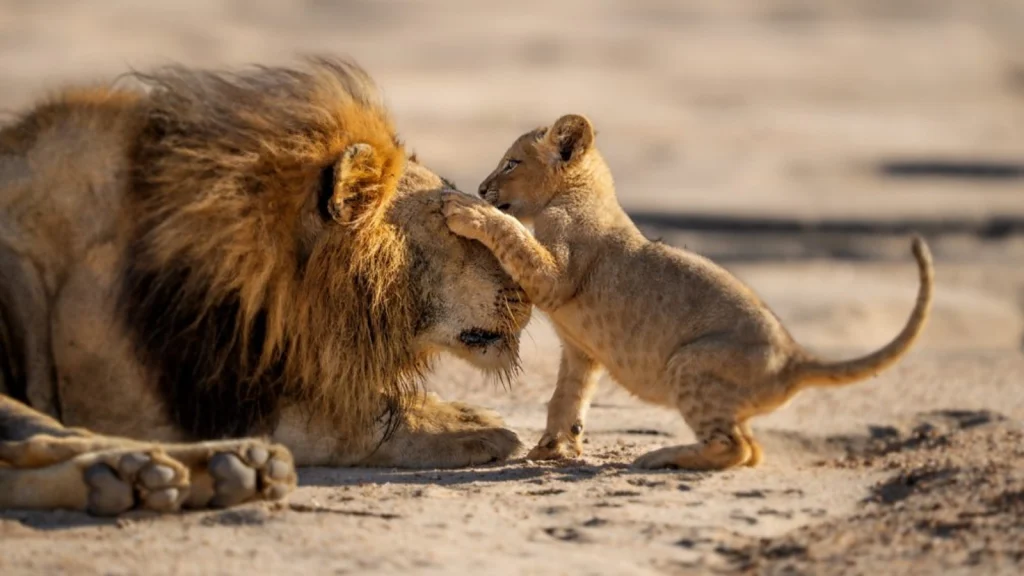
The Greatest Adventure part 4: Water is the lifeblood of our planet. In fact, every living creature depends on this simple molecule for survival. Yet, for countless species, securing freshwater is a relentless, life-or-death struggle. The Greatest Adventure part 4 delves into this elemental challenge. It explores the incredible dedication and bravery of animal parents. Consequently, their stories reveal the profound importance of water in the natural world. This journey into the heart of wildlife parenting showcases a world of astonishing animal behavior.
In the lush expanse of the Brazilian Amazon, a breathtaking spectacle is about to unfold. Thousands of giant river turtle mothers gather on the sandy banks. Their task is one of immense consequence. They must predict the arrival of the seasonal rains with perfect accuracy before laying their eggs. If they are wrong, their entire legacy could be washed away. A premature rain will tragically drown their hatchlings underground. Conversely, a correctly timed arrival triggers one of Earth’s most magnificent events. Thousands of tiny turtles emerge from the sand. They then follow their mothers’ calls on a perilous journey to the life-giving freshwater.
Meanwhile, across the globe in Namibia, the landscape tells a different story. Here, the sun beats down on a world defined by drought. A devoted Namaqua sandgrouse father faces this challenge head-on. Waterholes are rare oases, providing a vital resource for his thirsty chicks. However, these lifelines are also deadly traps, attracting hungry raptors. Every day, the father must make a perilous flight. He soaks his specialized belly feathers in water to carry it home. Consequently, he must time his visit perfectly. A single moment of hesitation could mean becoming prey, leaving his young to perish in the heat.
Some parents, however, try to master the power of water itself. In a crystal-clear Caribbean river, a tiny tri-tri goby displays remarkable ingenuity. He carefully builds a nest among the stones. Then, he harnesses the river’s currents to deliver a constant flow of oxygen to his precious eggs. This clever example of animal behavior shows a parent using his environment to his advantage. But nature is unpredictable. Suddenly, a once-in-a-lifetime storm rages through the valley. The resulting flood sweeps him and his perfectly crafted home far downstream. Yet, his parental drive is unbreakable. He must now begin an impossible climb. To get another chance, he must ascend over 1,000 feet of roaring waterfalls.
Not all solutions rely on brute strength. Sometimes, cleverness is the key to survival. In the dense swamplands of Florida, a swamp canary parent faces an immediate threat. Danger lurks just inches from her nest of vulnerable hatchlings. With mere moments to spare, she must act decisively. Instead of fighting, she uses a brilliant strategy. She finds tasty snacks and uses them to entice her young away from the jaws of danger. This remarkable act of parenting demonstrates that quick thinking is just as important as physical power. Her creative solution ensures her family lives to see another day.
The search for water can often lead to conflict and uneasy alliances. This is especially true in drought-ridden Kenya, where a wise elephant matriarch leads her family. A prolonged drought has shrunk their water sources to a few precious pools. Consequently, they are forced to share this dwindling resource with another desperate species: humans. The tension is palpable as wildlife and people gather at the water’s edge. This delicate balance highlights a growing global issue. As climate change intensifies droughts, the competition for freshwater becomes more acute for everyone. This shared struggle underscores the urgent need for water conservation.
Then, after a seemingly endless wait, the rains finally come. The parched earth rejoices, and for a moment, there is relief. However, this relief is tragically short-lived. The life-giving water arrives with terrifying force, threatening to turn deadly. Flash floods carve through the landscape, transforming gentle streams into raging torrents. The elephant matriarch’s ordeal is far from over. Now, she must navigate this new danger. She must guide her family, especially the vulnerable calves, through the powerful currents. Her story shows that water is a double-edged sword. It is both a savior and a destructive force.
The Greatest Adventure part 4
These powerful stories from The Greatest Adventure part 4 are more than just tales of survival. They are a profound reflection of our changing world. Due to climate change, freshwater is becoming alarmingly unpredictable. The seasonal patterns that wildlife have relied upon for millennia are shifting. As a result, both humans and animals are struggling to adapt to these new realities. The incredible resilience of these animal parents serves as both an inspiration and a warning. Their struggles mirror our own impending challenges.
We witness the delicate dance of life that depends entirely on reliable freshwater. From the Amazon to the African savanna, the theme is universal. Effective parenting in the wild requires an almost prophetic understanding of water. This intimate knowledge is being tested like never before. Therefore, the animal behavior we see is not just instinctual; it is a desperate adaptation. These creatures are on the front lines of a global crisis. Their fight for survival is a direct consequence of a changing climate.
Ultimately, we are not just spectators in this unfolding drama. We share this planet and its precious resources. We can choose to make a difference. By focusing on water conservation, we can help restore balance. We can work to protect the freshwater ecosystems that all life depends on. By doing so, we improve the life chances for countless wildlife species. We also secure a more stable future for the next human generation. Their world, and ours, depends on the choices we make today.
The Greatest Adventure part 4 review
The Greatest Adventure part 4 reveals that life cannot exist without water. For animal parents across the globe, however, this essential element presents a constant, formidable challenge. Too much or too little freshwater can be equally disastrous, and its availability can change in a perilous instant. Parents everywhere must therefore relentlessly adapt to the whims of water if they are to successfully raise their young. The dedication and perseverance required to navigate this unpredictable world are truly remarkable, showcasing some of the most fascinating animal behavior on the planet.
This critical balance is becoming even more precarious in our modern world. As the global climate heats up, rainfall patterns are growing less reliable. This instability creates significant challenges for all forms of wildlife. The stories of parenthood in the freshwater world are not just tales of survival; they are urgent dispatches from the front lines of a changing environment. These accounts underscore the profound connection between water stability and the continuation of life itself, a central theme of this episode.
The journey through The Greatest Adventure part 4 spans from the dense jungles of the Amazon to the arid landscapes of the Namibian desert. It follows a diverse cast of animal parents, each facing a unique set of water-related trials. Some must gamble on the timing of seasonal floods. Others must brave deadly predators at a shared oasis. This exploration highlights the universal pressures that freshwater exerts on families in the wild, forcing them to develop ingenious strategies and display immense courage.
At its core, this is a story about the universal drive of parenting. The lengths to which these animals go to secure a future for their offspring are both astonishing and deeply moving. Whether it involves an epic climb up a waterfall or a daily gauntlet of aerial predators, the commitment is absolute. This look into the world of animal families demonstrates how the quest for freshwater shapes every aspect of their existence, from choosing a nesting site to teaching essential survival skills.
The narrative begins in the Brazilian Amazon, where the dry season exposes vast sandbanks along the river. This annual event signals a crucial opportunity for the giant Amazon river turtle. Thousands of mothers gather for the largest assembly of freshwater turtles on the planet. They have come to lay their eggs, but their success hinges on a prediction of immense consequence. Each female must make her best guess as to when the annual rains will return and submerge the banks once more.
Their task is a high-stakes gamble with life and death. If the rains arrive too early, the rising river will flood the nests and drown the hatchlings deep underground. Conversely, if there is too little rain, the sun-baked sand will form an impenetrable crust, trapping the babies. For the mothers waiting in the river, it is a period of great uncertainty. In two of the last five years, early rains have already led to devastating losses, highlighting the increasing unpredictability they face.
The High-Stakes Gamble of the Amazon River Turtle
For the giant Amazon river turtles, the timing must be perfect. After a mother finds a suitable location, she digs a deep chamber and lays nearly one hundred eggs a meter beneath the surface. For six weeks, the eggs incubate under the sand, which the sun bakes into a protective crust. This year, however, the rain clouds gather early, bringing a palpable sense of tension. As the first drops fall, the river begins its slow, inexorable rise, putting millions of lives in jeopardy.
Deep below, the baby turtles have hatched from their eggs. Before they can dig their way out, however, they must first absorb the remainder of their yolk sacs. This process takes precious time that they may not have. As the river swells, some nests begin to flood before all the eggs have even hatched. The sand becomes increasingly waterlogged, and the hatchlings realize they cannot wait any longer. They must make a desperate bid for the surface.
Three days after hatching, the baby turtles finally see sunlight for the first time. Yet their mother’s job is not finished. Waiting just offshore, the adult females begin to call to their young. This maternal song appears to guide the vulnerable hatchlings toward the safety of the group in the water. This year, many mothers timed their nesting perfectly. As a result, over two million hatchlings emerge from the sand and join their mothers, adding their own voices to the chorus in a triumphant spectacle of survival.
Even where water levels are stable, freshwater environments present other dangers for young animals. In a steaming swamp in South Carolina, a family of swamp canaries has chosen what seems to be a perfect home. The parents built their nest in a slim tree surrounded by water. This location makes it difficult for predators on land, in the water, or in the air to reach their seven baby chicks. However, this safe haven soon presents its own set of problems as the chicks begin to grow.
The small nest quickly becomes overcrowded, forcing the young canaries to leave. Their departure requires them to take their first flight, a daunting prospect. The moat of water that once protected them now becomes a major obstacle, especially since predators lurk below, waiting for an easy meal. The nearest tree is at least ten meters away. The strongest chicks, who hatched first, lead the way. Later-hatched chicks, smaller and weaker, struggle to make the journey, and one inevitably falls into the water below.
Although the chick makes it to the base of a tree, it is still in immense danger. At this point, its parents can finally intervene. They employ a clever parenting strategy, using rewards to help their stranded offspring. With tasty morsels of food, they coax the exhausted chick bit by bit up the tree trunk. After a few more steps, it is out of immediate danger. The parents then guide the rest of their brood to safe hiding places throughout the swamp, where they will continue to feed them for five more weeks.
In the smaller, safer pools away from the main Amazon River, another family faces its own challenges. A pair of cichlids has laid its eggs on a carefully chosen rock that helps camouflage them. As the eggs begin to hatch, however, their wriggling tails risk attracting unwanted attention. The mother gently picks up the hatchlings and moves them to a hiding place under a leaf. Though the father tries to help, he mostly gets in her way, and she eventually finishes the job herself.
Her need for his help, however, becomes critical when their wrigglers become swimmers. Together, both parents must guide their school of offspring to the edge of the pool where there is more cover. Their journey requires them to navigate through a dangerous shoal of much larger fish, a job that requires two adults. After successfully passing this obstacle, they drift into the territory of another cichlid. The neighbor turns dark, a sign of aggression, and threatens the tiny fry. The parents must coordinate their attack to win the fight and lead their family to the safety of their new home.
Parental Devotion in Extreme Environments
In the jungle, freshwater pools are everywhere, but finding the right one is a challenge. Big pools attract predators, while small ones are likely to dry out. This is the problem facing a poison dart frog known as a tinctorius. He is a father carrying a tadpole on his back, and he must find a suitable pool for it quickly. He first investigates a shallow, exposed palm leaf. Though convenient, it could dry out before the tadpole can develop, so he leaves one tadpole there but continues searching for better accommodation for his others.
He spreads his bets by seeking different pools for each of his young. A deeper spot might be safer from dehydration, but it lacks an adequate food source. He can do better. Scientists believe that when a male tinctorius hears the calls of a milk frog, he may decide that the milk frog’s pool would suit one of his own tadpoles. The only problem is that the milk frog’s pool is twenty meters up in a tree. Undeterred, the tinctorius father begins the long, arduous climb with a single tadpole clinging to his back.
It is a huge effort for just one of his offspring. After a difficult journey, he finally makes it. This high-rise nursery offers more than just safety. It also comes with a built-in food supply, because milk frog tadpoles are a good source of food for tinctorius tadpoles. Even after this success, the father’s work is not done. He still has one last tadpole that needs a home, and he will go to extreme heights to find the best possible pools for his young.
In the Namibian desert, a different kind of parental devotion is on display. Here, freshwater is exceedingly rare. A father Namaqua sandgrouse, however, has a remarkable adaptation. His breast feathers are specially designed to absorb and hold up to 25 milliliters of water. This allows his family to nest in remote corners of the desert, far from predators. His chicks must drink at least once every day to survive, so he must make a perilous 20-mile flight to a waterhole each day to fetch it for them.
This waterhole is a lifeline, but it is also a trap. A lanner falcon, a booted eagle, and an African hawk eagle have all taken up positions around it. The sandgrouse know not to head straight for the water. Instead, they settle at a safe distance, where the flock’s many eyes can scan for lurking threats. Parents are especially vulnerable because they need at least five minutes in the water to fully saturate their feathers.
The birds of prey seldom stop until they make a catch, keeping the flock in a state of high alert. After a successful hunt, when the predators are focused on eating, the father sees his opportunity and makes his move. Even then, another eagle attacks, but he holds his nerve until he has collected enough water and wings his way home.
Unpredictable Waters in a Changing World: The Greatest Adventure part 4
When freshwater isn’t reliable, the journey to parenthood itself can be laborious. In the Caribbean, a tri-tri goby has climbed 300 meters upstream to reach a near-perfect nursery pool. The water is clear, oxygenated, and full of food. He meticulously arranges pebbles on the riverbed to alter the current, creating ideal conditions for his partner’s eggs. His hard work, however, is undone by a force he cannot fight. A once-in-a-lifetime storm turns the gentle stream into a torrent, flushing him miles back downstream. Yet he still has a chance to become a father if he can make the difficult climb once again.
In Thailand, another parent must adapt to sudden environmental shifts. A lily-trotter father builds a floating nest for his egg, but he mistakenly places it in the busiest part of the lake. Constant boat traffic threatens to crush it, so he decides to move to a quieter neighborhood. Building a new nest is easy, but moving an egg without hands is significantly harder. He painstakingly nudges it to its new location, only to face another, more devastating threat. Almost overnight, a plague of inedible caterpillars has invaded the lake, destroying the lily pads and the insects his chick needs to eat. He must once again lead his young on a journey to find a new home.
The father and chick must walk across the devastated lily pads, as the chick cannot yet fly. They finally reach the last remaining patch of lilies in the lake. While not perfect, it offers enough insects for his chick to survive and thrive. Lily-trotters are not the only parents who must settle for less than perfect in our changing world. These stories from The Greatest Adventure part 4 show how instability requires constant adaptation.
In East Africa, rainfall has become less predictable, leading to prolonged drought. An elephant matriarch has kept her family alive through two years of these harsh conditions. She leads them to the Ewaso Nyiro River, the last flowing water she knows of. For miles around, it is the only place with water or food. After days without drinking, the family finally gets relief. The cool, calm river provides a chance for a mother to demonstrate proper trunk technique to her calf, who is still learning how to get water from its trunk to its mouth.
The elephants are not the only ones seeking refuge. Herders have also brought their livestock to the river. Wild elephants and humans usually avoid one another, but in this drought, they have no choice but to share the river and grass until the rain returns. This competition takes a heavy toll on the land, stripping it bare. So many mouths to feed puts both people and elephants under immense pressure. This conflict over resources is becoming one of the biggest challenges for wildlife.
Finally, the matriarch senses rain on the distant mountains that feed the river. This should be a good sign, but hotter air stores more moisture. Consequently, when rain finally comes after a long, hot drought, there is much more of it. The deluge runs off the parched earth and becomes a flash flood. The sudden torrent catches the elephant family on the wrong side of the river.
To follow the rain to fresh grazing, the matriarch must lead them across the dangerous current. She tests the flow, and the adults use their bodies to shield the calves from the swiftest parts of the river. When a calf loses its footing, she makes a critical decision. The risks of crossing have become greater than the pangs of hunger, and she leads her family back to safety.
The stories unfolding across our planet’s freshwater landscapes reveal a truth both beautiful and sobering: we are all connected by the same fundamental need for water. From the Amazon’s giant river turtles gambling on seasonal rains to Namibian sandgrouse fathers braving aerial predators for a few precious drops, these tales of parental devotion illuminate something profound about life itself. They show us that survival isn’t just about individual strength—it’s about reading the rhythms of our environment and adapting when those rhythms change.
What makes these wildlife stories particularly compelling is how they mirror our own emerging reality. The elephant matriarch in drought-stricken Kenya, forced to share dwindling water sources with desperate humans, embodies a future where competition for freshwater will define more than just animal behavior. Her wisdom in turning back from a dangerous river crossing—choosing safety over immediate gratification—offers a lesson in the kind of long-term thinking our species desperately needs to embrace.
The ingenuity we witness in these animal parents is remarkable. The tri-tri goby engineering water currents to oxygenate his eggs, the poison dart frog father climbing twenty meters to find the perfect nursery pool, the swamp canary using food rewards to guide her chick to safety—these behaviors reveal that successful parenting in an unpredictable world requires both creativity and resilience. As climate change makes freshwater patterns increasingly erratic, these same qualities will become essential for human communities navigating their own water challenges.
Perhaps the most striking revelation from The Greatest Adventure part 4 is how quickly reliable becomes unreliable. The storms that wash away carefully built nests, the droughts that force unlikely alliances, the flash floods that transform life-giving rivers into deadly torrents—these aren’t anomalies anymore. They’re previews of our new normal. The difference is that while wildlife must rely purely on instinct and adaptation, we have the power of conscious choice.
This power comes with profound responsibility. Every conservation effort we support, every water-saving practice we adopt, every policy decision we influence creates ripples that extend far beyond our immediate communities. When we protect wetlands, we’re securing nurseries for countless species. When we invest in sustainable water infrastructure, we’re reducing the competition that forces elephants and farmers into conflict. When we address climate change seriously, we’re helping ensure that turtle mothers won’t have to make increasingly desperate gambles with their offspring’s survival.
The courage displayed by these animal parents—the sandgrouse father’s daily flights through predator gauntlets, the cichlid parents coordinating their defense against larger fish, the elephant matriarch’s careful navigation of both drought and flood—reminds us that protecting the next generation often requires taking calculated risks and making difficult sacrifices.
As we face our own uncertain water future, we can choose to learn from these remarkable examples of dedication and adaptability. The question isn’t whether freshwater patterns will continue changing—they will. The question is whether we’ll respond with the same unwavering commitment to the future that we see in nature’s most devoted parents. Their stories suggest that with enough courage, creativity, and cooperation, even the most daunting challenges can be overcome. The choice, and the responsibility, is ours.
FAQ The Greatest Adventure part 4
Q: What is The Greatest Adventure part 4 about?
A: The Greatest Adventure part 4 explores the critical relationship between freshwater and wildlife parenting across the globe. Furthermore, it showcases how animal parents must relentlessly adapt to water-related challenges to ensure their offspring’s survival. Additionally, the episode highlights how climate change is making freshwater patterns increasingly unpredictable for both wildlife and humans.
Q: How do Amazon river turtles predict seasonal rains?
A: Giant Amazon river turtles must make a high-stakes gamble when timing their egg-laying with seasonal rains. Specifically, mothers gather on sandy riverbanks and must predict rain arrival with perfect accuracy. However, if rains come too early, rising waters will drown hatchlings underground, while delayed rains create sun-baked sand crusts that trap babies permanently.
Q: Why do Namaqua sandgrouse fathers risk their lives daily?
A: Namaqua sandgrouse fathers possess specialized breast feathers that absorb up to 25 milliliters of water for their chicks. Consequently, they must make perilous 20-mile flights to desert waterholes daily, navigating aerial predators like eagles and falcons. Moreover, these fathers need five minutes of uninterrupted time to fully saturate their feathers while remaining vulnerable to attack.
Q: How does climate change affect wildlife water access?
A: Climate change is making freshwater patterns alarmingly unpredictable for wildlife species worldwide. Additionally, seasonal patterns that animals have relied upon for millennia are shifting dramatically. For instance, prolonged droughts force elephants and humans to compete for the same water sources, while intensified storms destroy carefully built nests and nurseries.
Q: What ingenious strategies do animal parents use for water challenges?
A: Animal parents display remarkable creativity when facing water-related obstacles. For example, tri-tri gobies engineer river currents to oxygenate their eggs by arranging pebbles strategically. Similarly, poison dart frog fathers climb twenty meters up trees to find perfect nursery pools. Meanwhile, swamp canary parents use food rewards to guide chicks away from water-based dangers.
Q: Why are freshwater environments both safe havens and dangerous traps?
A: Freshwater environments present a paradox for wildlife families seeking safety and resources. Specifically, water provides essential hydration and protection from land predators, yet simultaneously attracts aquatic dangers and aerial hunters. Furthermore, stable water levels can suddenly become flash floods, while reliable sources may dry up unexpectedly, forcing constant adaptation and risk assessment.
A: Elephant matriarchs demonstrate exceptional wisdom when facing water extremes in Kenya’s changing climate. Initially, they lead families to share scarce water sources with humans during prolonged droughts. However, when torrential rains finally arrive, these leaders must carefully assess flood risks, often choosing safety over immediate gratification by turning back from dangerous river crossings.
Q: What role does timing play in freshwater wildlife survival?
A: Timing is absolutely critical for freshwater wildlife survival, often determining life or death outcomes. For instance, turtle mothers must synchronize egg-laying with rain predictions, while sandgrouse fathers time waterhole visits between predator feeding periods. Additionally, many species must coordinate breeding cycles with seasonal water availability, making split-second decisions that affect entire generations.
Q: How do small fish parents protect their young in competitive waters?
A: Small fish parents like cichlids employ coordinated defense strategies to protect vulnerable offspring in competitive aquatic environments. Specifically, both parents work together to guide young through dangerous shoals of larger fish. Moreover, when territorial disputes arise, parents coordinate attacks against aggressive neighbors while maintaining protective formations around their fry throughout treacherous journeys.
Q: What can humans learn from wildlife water conservation behaviors?
A: Wildlife demonstrates essential lessons about water conservation through adaptive behaviors and long-term thinking. Importantly, their strategies show that successful resource management requires creativity, cooperation, and calculated risk-taking. Furthermore, as these animals face increasingly unpredictable water patterns, their resilience reminds us that protecting freshwater ecosystems benefits both wildlife and human communities facing similar climate challenges.