This Farming Life 2025 Episode 11: Handing Over the Reins
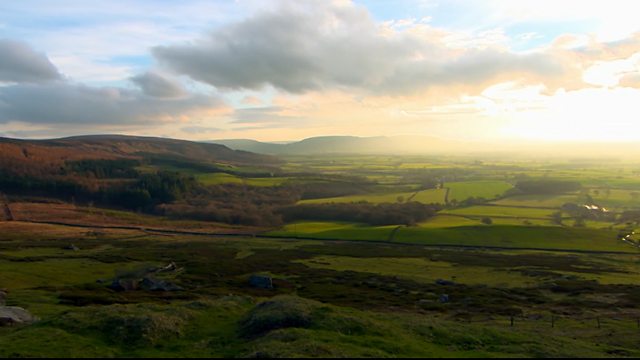
The gentle hills of Dumfries and Galloway roll out like a verdant carpet as morning breaks over the Thomson family farm. Nick Thomson, who has worked this land for over three decades, stands at the edge of his field, contemplating the future. Today marks a pivotal moment for the family as they gather to discuss succession plans—a conversation years in the making. However, recent months have witnessed a significant shift in Nick’s perspective about handing over the reins.
“I always thought I’d be ready by now,” Nick confides to the camera, his weathered face reflecting years of early mornings and late harvests. “But something inside me has changed. The connection to this land runs deeper than I ever realized.” This unexpected change of heart has created a delicate situation for the family, particularly for Nick’s son Andrew, who has been preparing to take over operations for the past five years.
Meanwhile, dark clouds gather over the Imrie family farm near Glasgow. Despite the threatening weather, an atmosphere of excited anticipation fills their renovated barn. Emma and Robert Imrie have spent months preparing to co-host their first-ever gourmet dining event, showcasing their award-winning lamb. Their partnership with celebrated local chef Martin Douglas has generated considerable buzz in Scotland’s farm-to-table community.
“We’ve been planning this for so long,” Emma explains while arranging wildflowers on rustic wooden tables. “Our lamb has always been popular at the farmers’ market, but this event takes everything to another level.” Unfortunately, as final preparations accelerate, weather reports indicate an approaching storm system that could potentially disrupt their carefully orchestrated evening.
Robert checks his phone anxiously. “The forecast doesn’t look promising,” he admits. “But we’ve weathered worse storms than this—literally and figuratively.” Their determination to proceed reflects the resilience that has characterized their fifteen years of farming together.
Far to the north in Caithness, where the rugged Scottish landscape meets the North Sea, four-year-old Jamie clutches his mother Sally’s hand as they prepare for a significant milestone. Today, Jamie will sell his very first lambs at market alongside twenty of Sally’s own. The moment represents an informal initiation into farming life for the youngster, who has shown remarkable interest in the family business despite his tender age.
“He’s been helping me since he could toddle after me in the fields,” Sally shares proudly. “These lambs have been his project from the beginning—feeding them, checking on them every morning.” Jamie’s excitement is palpable as he carefully helps load his lambs into the trailer, solemnly counting each one.
The day holds additional significance for Sally as her mother Julie returns home after months away helping her sister recover from surgery. Julie’s arrival brings welcome support during the busy season and offers Jamie a chance to share his growing farming knowledge with his grandmother.
Back in Dumfries and Galloway, the Thomson family meeting unfolds with unexpected emotional intensity. Andrew, who has gradually taken on more responsibility over recent years, listens intently as his father articulates his newfound uncertainty.
“I’ve started to question whether I’m truly ready to step back completely,” Nick explains, his voice occasionally catching. “This wasn’t the plan, I know that. But the thought of no longer being at the center of farm decisions—it’s harder than I anticipated.” His wife Margaret reaches for his hand, understanding the complex emotions at play.
Andrew responds with surprising equanimity. “Dad, I’ve learned everything from you. There’s no rush here.” This moment of intergenerational understanding demonstrates the deep bonds that characterize many farming families, where the business and family relationships are inextricably intertwined.
This Farming Life 2025 Episode 11
Near Glasgow, the Imrie family watches nervously as the sky darkens ominously. With just hours before their first guests are scheduled to arrive, they make rapid adjustments to their plans, moving tables away from vulnerable windows and reinforcing the event tent. Chef Martin arrives early, bringing calm professionalism to the increasingly tense atmosphere.
“We’ve invested too much to postpone,” Emma declares, determinedly lighting candles as wind begins to rattle the barn doors. “Besides, there’s something authentically Scottish about dining during a proper storm.” Her attempt at levity masks genuine concern about the evening’s prospects.
In Caithness, market day brings a flurry of activity. Sally helps Jamie present his lambs to potential buyers, beaming with pride as the young boy earnestly describes their care regimen to an amused livestock dealer. Julie captures the moment on her camera, moved by the continuation of family tradition.
“My father taught me, I taught Sally, and now she’s teaching Jamie,” Julie reflects. “There’s something beautiful about that cycle.” When Jamie’s lambs sell for a respectable price, his excitement is uncontainable. Sally helps him count his earnings, using the opportunity to introduce basic financial concepts.
“Some of this goes back into the farm,” she explains gently. “That’s how farming works—we always invest in the future.” Jamie nods seriously, already developing the forward-thinking mindset essential to agricultural success.
As evening falls, the storm in Glasgow intensifies just as the Imries’ first guests arrive. However, rather than detracting from the experience, the dramatic weather creates an unexpected atmosphere of cozy intimacy. Guests huddle together over exquisitely prepared dishes, trading farming stories as rain lashes against the windows.
Robert toasts the gathering. “This is farming—unpredictable, challenging, and ultimately rewarding.” The event, despite nature’s intervention, exceeds their expectations, with several guests booking future private dining experiences before departing.
The episode concludes with a thoughtful montage across all three farms: Nick and Andrew walking the fields together, discussing potential compromise arrangements; the Imries clearing up after their successful event, already planning improvements for the next one; and little Jamie carefully placing his earnings in a special box labeled “Farm Fund,” with Sally and Julie looking on proudly.
Each family, in their own way, demonstrates the evolving nature of Scottish farming life—balancing tradition with innovation, facing challenges with resilience, and above all, nurturing the precious connections that sustain them through the changing seasons.
The Timeless Rhythms of Rural Life
The stories of the Thomson, Imrie, and Sally’s families reveal a tapestry of agricultural life woven with threads of tradition, challenge, and renewal. Through their experiences in “This Farming Life,” we glimpse the authentic pulse of rural Scotland, where the land itself becomes an extension of family identity.
Family farms, after all, are not merely businesses. They are living legacies that flow through generations like the streams that cut across their pastures. Nick’s struggle with succession mirrors what countless farming families face worldwide—the emotional complexity of passing down not just land and livestock, but a way of being in the world.
Meanwhile, the Imries demonstrate how modern farming must evolve to thrive. Their innovative farm-to-table event, although threatened by nature’s unpredictability, showcases the creative adaptations necessary in today’s agricultural landscape. Furthermore, their resilience in the face of the storm embodies the steadfast spirit that has sustained farming communities for centuries.
Perhaps most touching, however, is young Jamie’s introduction to market life. In his wide-eyed excitement and careful counting of lambs, we see the first sparks of agricultural passion being kindled. Thus, Sally and Julie’s guidance represents the critical transmission of knowledge that keeps farming traditions alive across generations.
The intersection of these three narratives illuminates several universal truths about agricultural life. First, change is inevitable yet often arrives with emotional complexity. Second, adaptability remains essential for survival. And finally, the continuation of farming knowledge requires deliberate mentorship from one generation to the next.
Beyond these practical lessons, however, lies a deeper message about connection—to the land, to family history, and to the natural cycles that govern agricultural life. In an increasingly disconnected world, these farming families remind us of what it means to be rooted, both literally and figuratively.
As viewers witness these authentic stories unfold, they gain insight into the profound challenges and rewards of modern farming. More importantly, they glimpse the extraordinary ordinary moments that define rural life—moments of tenderness, perseverance, and quiet triumph against the backdrop of Scotland’s breathtaking landscapes.
These farmers don’t just cultivate crops and raise livestock; they nurture relationships, preserve traditions, and ultimately, cultivate hope for agriculture’s future in an uncertain world.
FAQ This Farming Life 2025 Episode 11
Q: What challenges do Scottish farming families face with succession planning?
A: Scottish farming families often struggle with the emotional complexity of transferring both land and legacy to the next generation. In fact, many farm owners like Nick Thomson experience a profound sense of identity tied to their agricultural role, making the transition particularly challenging. Furthermore, succession involves transferring not just physical assets but generations of knowledge, relationships with neighboring farms, and deep personal connections to the land itself. Additionally, practical concerns such as financial viability, shifting agricultural policies, and changing market conditions can complicate the already delicate process. Most importantly, successful transitions require open family communication and often professional guidance to navigate both the emotional and legal aspects of farm succession.
Q: How are Scottish farms innovating to remain financially sustainable?
A: Scottish farms are increasingly diversifying their revenue streams beyond traditional agriculture to ensure long-term viability. For example, many farmers like the Imries are embracing farm-to-table experiences, hosting gourmet dining events that showcase their produce directly to consumers. Meanwhile, others are developing agritourism opportunities, offering farm stays, educational tours, or hands-on experiences that capitalize on growing interest in rural life. Additionally, some Scottish farmers are exploring value-added products, transforming raw materials into premium goods such as artisanal cheeses, specialty meats, or craft spirits. Consequently, renewable energy projects including wind, solar, and biomass have become important secondary income sources on many properties. Most significantly, these innovations allow farmers to maintain their agricultural heritage while adapting to changing economic realities.
Q: What role do children play in preserving Scottish farming traditions?
A: Children serve as vital links in the chain of agricultural knowledge that stretches across generations in Scottish farming communities. For instance, young Jamie’s initiation into market life at age four represents how early exposure to farming practices cultivates both practical skills and emotional connections to the land. Moreover, children often become repositories of specific local knowledge about soil conditions, weather patterns, and livestock management techniques unique to their family farms. Additionally, they frequently bridge traditional methods with modern approaches, having access to both ancestral wisdom and contemporary education. Therefore, their dual perspective helps farms evolve while maintaining cultural continuity. In essence, children like Jamie don’t merely inherit land—they inherit stewardship responsibilities, becoming guardians of both physical resources and intangible agricultural heritage.
Q: How do Scottish farmers adapt to increasingly unpredictable weather patterns?
A: Scottish farmers have developed remarkable resilience strategies to manage climate uncertainty, which has always been characteristic of the region. First, many farmers diversify their crops and livestock to spread risk across different agricultural activities. Similarly, investments in modern drainage systems and water management infrastructure help mitigate both flooding and drought conditions. Moreover, farmers increasingly rely on technology, including weather monitoring stations and predictive software to anticipate changing conditions. Additionally, flexible planning allows for last-minute adjustments, as demonstrated by the Imries who quickly repositioned their dining event when faced with an approaching storm. Consequently, Scottish farmers often maintain strong community networks that enable resource sharing and mutual support during extreme weather events. Furthermore, traditional knowledge passed through generations contains valuable insights about local microclimates that complement modern meteorological information.
Q: What economic challenges do small Scottish family farms currently face?
A: Small Scottish family farms confront numerous economic pressures that threaten their long-term viability in today’s agricultural landscape. Primarily, they must compete with large-scale industrial operations that benefit from economies of scale and can produce at lower costs. Furthermore, fluctuating commodity prices create income uncertainty, particularly challenging for farms with limited financial reserves. Meanwhile, rising input costs for essentials like feed, fertilizer, and fuel continuously squeeze profit margins. Additionally, accessing sufficient capital for modernization or expansion remains difficult for many small operations without substantial collateral. Consequently, market access can be restricted as large retailers often prefer working with bigger producers offering consistent volume. Moreover, regulatory compliance adds administrative burdens and associated costs that disproportionately impact smaller farms. Despite these challenges, many Scottish family farms survive through specialization, direct marketing, and diversification.
Q: How does farm-to-table movement benefit Scottish agriculture?
A: The farm-to-table movement provides numerous advantages to Scottish agricultural producers seeking to strengthen their economic position. Most importantly, this approach eliminates multiple middlemen, allowing farmers like the Imries to capture a greater percentage of the final food dollar. Additionally, direct consumer relationships build brand loyalty and create premium pricing opportunities for high-quality, locally-produced foods. Furthermore, these connections offer farmers immediate feedback on products, enabling rapid adaptation to market preferences. Meanwhile, shortened supply chains reduce transportation costs and minimize food waste, improving overall operation efficiency. Consequently, farm-to-table initiatives highlight the distinctive qualities of Scottish agricultural products, including unique regional flavors and traditional production methods. Moreover, these experiences create powerful educational opportunities, helping consumers understand farming challenges and justifying premium prices for sustainably-produced food.
Q: What role does intergenerational knowledge transfer play in Scottish farming?
A: Intergenerational knowledge transfer forms the backbone of Scottish agricultural continuity, preserving irreplaceable local wisdom accumulated over centuries. For instance, Julie’s reflection that “My father taught me, I taught Sally, and now she’s teaching Jamie” exemplifies this living chain of practical education. Furthermore, this transfer encompasses understanding of specific land characteristics that cannot be found in textbooks—such as which fields drain poorly or which areas are most vulnerable to certain weather conditions. Moreover, older generations pass down specialized animal husbandry techniques, particular to local breeds and conditions. Additionally, younger farmers gain insights into community relationships, historical land agreements, and unwritten local customs crucial for successful integration into rural communities. Consequently, this knowledge exchange creates resilience, as farms benefit from both time-tested practices and contemporary innovations. Most significantly, this transfer represents not just practical information but embodied wisdom about living harmoniously with the land.
Q: How do Scottish farming communities maintain resilience through difficult times?
A: Scottish farming communities have developed robust social structures that foster collective resilience during challenging periods. First, informal support networks facilitate resource sharing, whether equipment, labor, or technical expertise during critical times. Additionally, multi-generational perspectives within families provide historical context for current difficulties, reminding younger farmers that hardships are cyclical rather than permanent. Moreover, diversification of farm activities creates multiple income streams, buffering against failure in any single agricultural sector. Furthermore, strong cultural traditions, including communal celebrations and shared rituals, strengthen social bonds that communities draw upon during crises. Meanwhile, pragmatic adaptability, exemplified by Robert’s statement that farming is “unpredictable, challenging, and ultimately rewarding,” reflects a cultural mindset prepared for constant change. Finally, deep connections to place and purpose provide psychological resilience, helping farmers weather difficulties by maintaining focus on their role as land stewards for future generations.