Amazon with Bruce Parry episode 3: A Journey of Discovery and Connection
In the captivating third episode of “Amazon with Bruce Parry,” viewers are transported to one of Earth’s last frontiers—the remote reaches of the Brazilian Amazon rainforest. This compelling documentary follows adventurer Bruce Parry as he explores the complex and often challenging interactions between isolated indigenous tribes and the encroaching outside world. Throughout this journey, Parry navigates the delicate balance between preservation and progress, offering viewers rare insights into lives and landscapes few outsiders have witnessed.
The episode begins with Parry’s emotional reunion with the Matis tribe, a community he developed close bonds with during previous expeditions. Once known as the “cat people” due to their distinctive facial ornaments and hunting prowess, the Matis have experienced profound cultural transitions since their first contact with outsiders in the 1970s. Initially, this contact proved devastating, with diseases like influenza decimating nearly two-thirds of their population within just a few years.
Despite these historical traumas, the Matis have demonstrated remarkable resilience. Parry’s return allows viewers to witness how the tribe has adapted while still maintaining crucial elements of their cultural identity. During his stay, he participates in traditional hunting practices, where the Matis demonstrate their exceptional skills with blowpipes and poison darts. Furthermore, Parry joins in sacred ceremonies that remain vital to their spiritual worldview, though some practices have evolved in response to external influences.
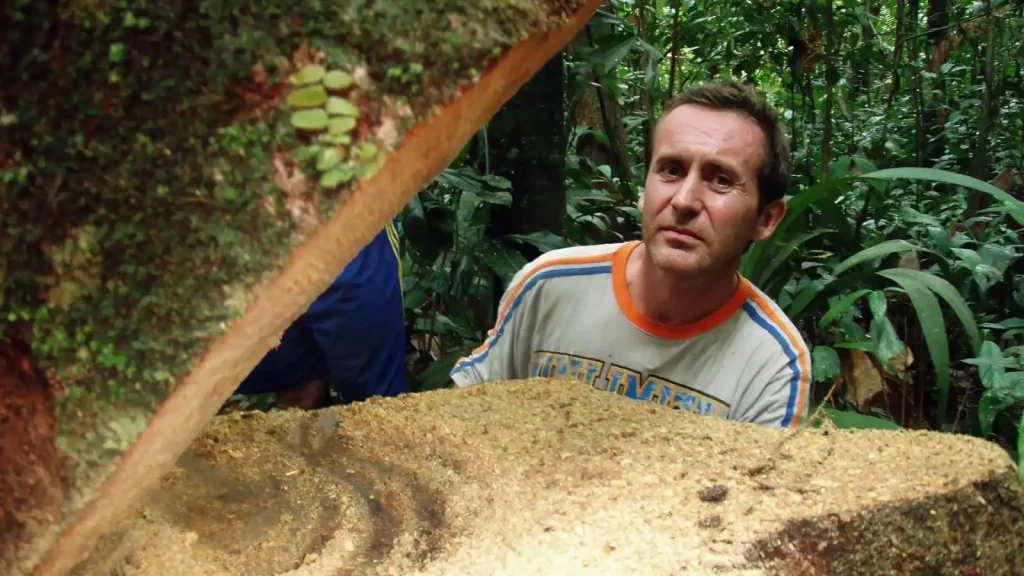
In addition to reconnecting with the Matis, Parry ventures into another reality of Amazonian life by embedding himself with a logging crew working deep within the forest. This segment of the documentary presents a striking contrast to his time with the indigenous community. The loggers, many of whom come from impoverished backgrounds themselves, cut timber in challenging conditions to support their families. Their work represents one of the primary economic engines in the region, yet simultaneously contributes to deforestation that threatens both the ecosystem and indigenous ways of life.
Through thoughtful interviews and immersive participation, Parry avoids simplistic judgments about this complex situation. Instead, he creates space for multiple perspectives to be heard. The loggers share their economic necessities and personal aspirations, while tribal elders express concerns about the shrinking forest boundaries that have sustained their communities for countless generations.
The documentary excels in highlighting how these seemingly separate worlds increasingly overlap. As logging roads penetrate deeper into previously inaccessible areas, they create pathways for other forms of development and cultural exchange. Consequently, even the most isolated communities must navigate rapid changes to their traditional lifeways.
Perhaps most compelling is Parry’s exploration of the middle ground—where tradition and modernity meet in unexpected ways. Some Matis youth express interest in education and technology from the outside world, while maintaining deep connections to their cultural heritage. Similarly, several loggers demonstrate respect for the forest despite their role in harvesting its resources, often following practices passed down through generations of Amazonian inhabitants.
Amazon with Bruce Parry episode 3
Throughout the episode, stunning cinematography captures both the breathtaking beauty of the Amazon rainforest and its ongoing transformation. Aerial shots reveal the patchwork of cleared areas spreading through once-unbroken canopy, while intimate footage within Matis homes illustrates how community life continues amid change.
By journey’s end, viewers gain a nuanced understanding of the complex challenges facing the Amazon and its people. Parry’s respectful approach and genuine connections with both the Matis and the logging community allow for an authentic portrayal that avoids romanticization or condemnation. Instead, the documentary invites reflection on universal questions about progress, cultural preservation, and the future of our planet’s most biodiverse ecosystem.
“Amazon with Bruce Parry” ultimately reminds us that environmental and cultural challenges in the rainforest mirror global issues of sustainability, identity, and coexistence. Through this third episode, audiences not only witness a fascinating exploration of remote landscapes but also confront essential questions about how traditional and modern worlds might find sustainable ways to connect in our increasingly interconnected global society.
As Bruce Parry’s journey through the Brazilian Amazon comes to a close, we are left with powerful impressions that linger long after the credits roll. The third episode of this remarkable documentary series offers far more than spectacular visuals of an exotic locale. Instead, it presents a nuanced portrait of a world in transition, where ancient traditions and modern pressures converge in complex and sometimes unexpected ways.
The Matis tribe’s story stands as a testament to both human vulnerability and resilience. Despite suffering devastating population losses following initial contact with outsiders, they have adapted while maintaining their cultural essence. Their experience reminds us that cultural identity is not static but rather evolves continually in response to changing circumstances.
Similarly, the logging crews Parry encounters reveal another dimension of Amazonian reality. These workers, often from humble backgrounds themselves, navigate their own difficult balance between economic necessity and environmental impact. Through their stories, we understand how global demand for resources creates ripple effects that reach even the most remote corners of our planet.
What emerges most clearly from Parry’s exploration is the interconnectedness of seemingly disparate worlds. The paths cut through the forest for timber extraction become literal and figurative connections between isolated communities and the wider world. Consequently, no decision about the Amazon’s future can be made in isolation.
Perhaps the most valuable aspect of this documentary is its refusal to offer simplistic solutions to complicated challenges. Instead of positioning indigenous communities and loggers as opposing forces, Parry reveals the human faces on all sides of these issues. Furthermore, he shows how many individuals are themselves navigating multiple identities and priorities in this changing landscape.
The Amazon, therefore, serves as both a specific place and a powerful metaphor for our global situation. Just as the rainforest’s ecological systems depend on countless interdependent relationships, our human future depends on finding sustainable ways for different cultures and economies to coexist.
Through Parry’s respectful and immersive approach, viewers aren’t merely passive observers but rather invited participants in considering essential questions about preservation, development, and cultural exchange—questions that will shape not only the Amazon’s future but our collective human journey.
FAQ Amazon with Bruce Parry episode 3
Q: Who are the Matis tribe and why are they significant in Bruce Parry’s Amazon documentary?
A: The Matis tribe, also known as the “cat people” due to their distinctive facial ornaments, are an indigenous community living in the remote Brazilian Amazon rainforest. They hold particular significance in Bruce Parry’s documentary because he developed close bonds with them during previous expeditions. Moreover, their story powerfully illustrates the impact of outside contact on isolated tribes, having lost nearly two-thirds of their population to diseases like influenza following their first contact with outsiders in the 1970s. Despite these devastating losses, the Matis have shown remarkable resilience, adapting to changes while maintaining crucial elements of their cultural identity, including traditional hunting practices with blowpipes and poison darts, as well as sacred ceremonies central to their spiritual worldview.
Q: How does Bruce Parry approach the complex relationship between logging and indigenous communities?
A: Bruce Parry approaches this complex relationship with remarkable nuance and respect for multiple perspectives. Rather than passing simplistic judgments, he immerses himself in both worlds—living with the Matis tribe and then embedding with logging crews working deep in the forest. Through thoughtful interviews and direct participation, he creates space for different voices to be heard authentically. For instance, he allows loggers to share their economic necessities and personal aspirations, while also capturing tribal elders’ concerns about shrinking forest boundaries. This balanced approach reveals how logging, while providing essential economic opportunities for impoverished workers, simultaneously threatens the ecosystem and indigenous ways of life. Parry’s documentary excellence lies in highlighting the human faces on all sides of these complicated issues without romanticization or condemnation.
Q: What cinematographic techniques make this documentary visually compelling?
A: The documentary employs a rich variety of cinematographic techniques that capture both the breathtaking beauty and ongoing transformation of the Amazon rainforest. Sweeping aerial shots reveal the striking contrast between untouched forest and cleared areas, creating a patchwork effect across the once-unbroken canopy. Additionally, intimate handheld footage within Matis homes provides viewers with an immersive glimpse into their daily lives amidst cultural change. The filmmakers juxtapose these contrasting visual elements—the macro and micro perspectives—to tell a more complete story. Furthermore, the documentary uses natural lighting to enhance authenticity, while carefully composed shots of traditional practices, modern logging operations, and human interactions create powerful visual metaphors about the collision of worlds taking place in this remote region.
Q: What evidence of cultural adaptation does the documentary showcase among the Matis tribe?
A: The documentary reveals several fascinating examples of cultural adaptation among the Matis tribe. First and foremost, some Matis youth express interest in education and technology from the outside world while simultaneously maintaining deep connections to their heritage. Furthermore, certain traditional practices have evolved in response to external influences, though the community has preserved the core spiritual significance of their ceremonies. The Matis have also demonstrated pragmatic adaptation in their hunting and gathering techniques, incorporating some modern tools while retaining traditional knowledge of the forest. Perhaps most importantly, they’ve developed strategies for engaging with outside visitors and researchers like Parry himself, selectively sharing aspects of their culture while protecting sacred knowledge. This balance of preservation and adaptation exemplifies their remarkable resilience in the face of rapid change.
Q: How does the documentary portray the logging industry’s impact on the Amazon?
A: The documentary offers a multifaceted portrayal of the logging industry’s impact on the Amazon. On one hand, it shows how logging roads penetrate previously inaccessible areas, creating pathways for additional development and cultural exchange that accelerate change for isolated communities. Visually striking aerial footage reveals cleared areas spreading through the once-unbroken forest canopy, highlighting the physical transformation of the landscape. However, the documentary also humanizes the loggers themselves, many of whom come from impoverished backgrounds and work in challenging conditions to support their families. Interestingly, several loggers demonstrate respect for the forest despite their role in harvesting its resources, often following practices passed down through generations. This nuanced approach helps viewers understand logging not simply as environmental destruction but as part of a complex economic and social ecosystem.
Q: What universal themes does the documentary explore beyond its specific Amazonian context?
A: The documentary transcends its specific Amazonian setting to explore profound universal themes relevant to our global society. First, it examines the delicate balance between preservation and progress—a tension felt worldwide as communities navigate economic development alongside cultural and environmental concerns. Additionally, it explores how identity evolves in response to external pressures, revealing that cultural continuity often requires adaptation rather than rigid preservation. The documentary also illuminates the interconnectedness of seemingly separate worlds, showing how decisions made in one context inevitably affect others. Furthermore, it challenges viewers to consider questions of sustainability and responsibility across generations. Perhaps most powerfully, it explores the middle ground where tradition and modernity meet, suggesting that our collective future depends on finding sustainable ways for different cultures and economies to coexist harmoniously.
Q: How does Bruce Parry’s personal connection with the Matis enhance the documentary’s narrative?
A: Bruce Parry’s personal connection with the Matis tribe significantly enhances the documentary’s narrative in several ways. First, his established relationship creates an atmosphere of trust, allowing for more authentic and intimate footage than would be possible for a first-time visitor. The emotional reunion that opens the episode immediately draws viewers into a human story rather than a detached anthropological study. Moreover, Parry’s prior knowledge of the community enables him to observe and highlight meaningful changes over time, adding historical depth to the narrative. His willingness to participate fully in traditional practices—from hunting to sacred ceremonies—demonstrates respect while giving viewers vicarious experience of Matis life. Additionally, his genuine affection for community members creates emotional resonance that helps viewers connect with people whose lives might otherwise seem distant or abstract.
Q: What messages does the documentary convey about sustainability and the future of the Amazon?
A: The documentary conveys nuanced messages about sustainability and the Amazon’s future without resorting to simplistic prescriptions. First, it suggests that sustainable solutions must acknowledge the legitimate needs and aspirations of all stakeholders, including both indigenous communities and those seeking economic opportunities. Furthermore, it implies that preservation cannot mean freezing cultures or landscapes in time but rather finding balanced approaches to change. The documentary uses the Amazon as both a literal place and powerful metaphor for our global situation, comparing the rainforest’s interdependent ecological systems to our human need for coexistence. Through Parry’s respectful approach, viewers are invited to consider essential questions about preservation, development, and cultural exchange that will shape not only the Amazon’s future but our collective journey. Ultimately, it emphasizes that environmental and cultural sustainability are inseparable challenges requiring holistic approaches.