The Architecture the Railways Built episode 8
In the captivating eighth episode of “The Architecture the Railways Built,” host Tim Dunn takes viewers on a fascinating journey through two remarkable railway structures that showcase the innovative spirit of British engineering. Initially, Dunn explores 55 Broadway, the former headquarters of London Underground, which proudly claimed the title of London’s first skyscraper. Subsequently, he travels to the picturesque coastline of North Wales to examine the historic Barmouth Bridge, an engineering marvel constructed primarily from timber.
Standing tall in the heart of Westminster, 55 Broadway represented a bold architectural statement when it was completed in 1929. Designed by Charles Holden, this pioneering structure rose twelve stories above St. James’s Park station, forever changing London’s skyline. Before its construction, London’s building regulations had strictly limited building heights, making 55 Broadway a revolutionary departure from traditional design constraints.
The building’s cruciform design maximized natural light and ventilation, a thoughtful feature that was well ahead of its time. Furthermore, Holden incorporated an integrated approach by designing the building to serve as both the headquarters for London Underground and to sit directly above St. James’s Park station. This seamless connection between transportation and office space demonstrated a forward-thinking approach to urban planning.
One of the most striking features of 55 Broadway is its artistic embellishments. Holden commissioned leading sculptors of the day, including Jacob Epstein, Henry Moore, and Eric Gill, to create sculptures that would adorn the building’s exterior. These sculptures, representing the cardinal winds, caused considerable controversy when unveiled due to their modernist style. Nevertheless, they have since become recognized as important works of public art.
Inside, the building featured art deco interiors with meticulous attention to detail. From the custom-designed door handles to the elegant light fixtures, every element reflected the cohesive vision that made 55 Broadway not just an office building, but a comprehensive work of art. The central lobby, with its travertine walls and geometric patterns, exemplified the marriage of function and beauty that characterized the entire structure.
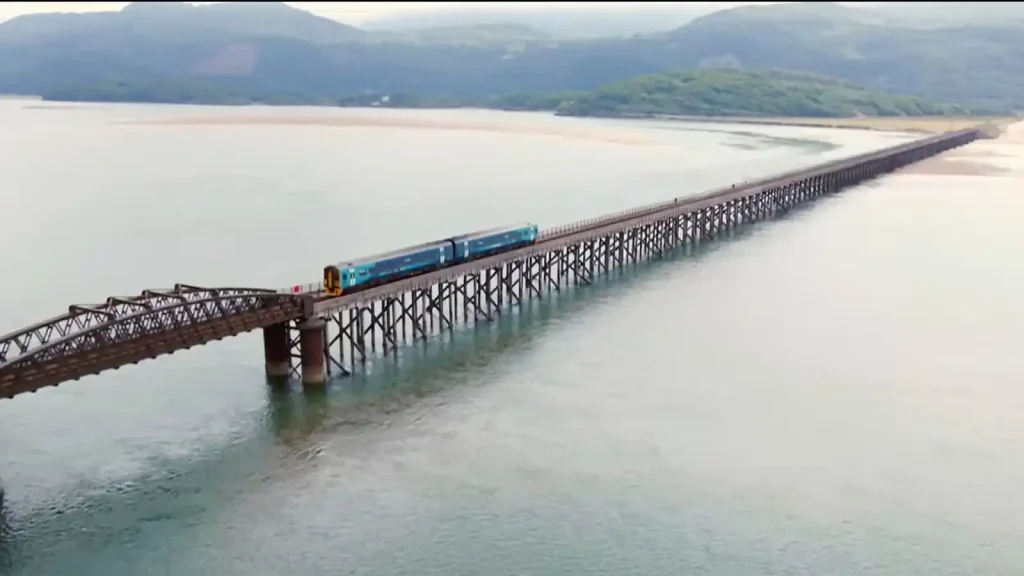
After exploring the urban sophistication of 55 Broadway, Tim Dunn’s journey continues to the dramatically different setting of North Wales, where the Barmouth Bridge spans the Mawddach Estuary. Completed in 1867, this remarkable structure stretches for nearly half a mile across the estuary, making it one of the longest timber viaducts still in use in Britain today.
The bridge’s construction represented an extraordinary engineering challenge, particularly given the technology available in the Victorian era. Engineers had to contend with strong tidal currents and shifting sands as they drove wooden piles deep into the estuary bed. The structure combines a wooden viaduct section with an iron swing bridge section that could originally open to allow larger vessels to pass through.
What makes Barmouth Bridge particularly special is its dual functionality. In addition to carrying trains on the Cambrian Line, it also accommodates pedestrians and cyclists on a separate walkway. This combination of purposes has made the bridge an integral part of both transportation infrastructure and recreational activities in the region for over 150 years.
The timber construction of the bridge has required ongoing maintenance throughout its lifetime. Traditional carpentry skills have been essential for preserving this historic structure, with skilled craftspeople carefully replacing damaged sections while maintaining the integrity of the original design. This process represents a living connection to Victorian engineering practices.
The setting of Barmouth Bridge adds significantly to its appeal. The structure spans a breathtaking estuary, with mountains rising dramatically on either side. The ever-changing light conditions create a constantly shifting view of the bridge throughout the day. During sunset, when golden light bathes the wooden structure, the bridge takes on an almost magical quality against the backdrop of mountains and water.
The Architecture the Railways Built episode 8
Contrasting Architectural Approaches
What makes this episode particularly compelling is the juxtaposition of these two railway structures. At 55 Broadway, we see how railway architecture evolved to embrace modernism and urban sophistication. The building stands as a testament to how railway companies expanded beyond purely functional considerations to create landmarks that expressed corporate prestige and artistic vision.
In contrast, Barmouth Bridge represents an earlier phase of railway development, when engineers worked primarily with natural materials to overcome geographical obstacles. The bridge’s wooden structure harmonizes with its natural surroundings, demonstrating how Victorian engineers often achieved a balance between technical requirements and environmental context.
Despite their differences, both structures share a common thread: they represent ingenious solutions to the challenges of their time. Moreover, both have proven remarkably durable, continuing to serve their intended functions many decades after their construction. This longevity speaks to the quality of their original design and construction, as well as to the ongoing commitment to their preservation.
Through Tim Dunn’s enthusiastic exploration, viewers gain not just architectural knowledge but also insights into how railway structures reflect broader historical and cultural developments. The episode demonstrates that railway architecture encompasses far more than just stations and tracks – it includes the full range of buildings and structures that make railway operations possible.
Conclusion The Architecture the Railways Built episode 8: Where Railway Architecture Meets Human Ingenuity
As we reflect on Tim Dunn’s exploration of these two remarkable railway structures, we discover more than just architectural marvels—we witness the evolving relationship between human innovation and transportation needs. Indeed, 55 Broadway and Barmouth Bridge stand as powerful bookends in the story of railway architecture, each representing different approaches yet sharing a common spirit of ingenuity.
These structures have transcended their original purposes to become cultural touchstones. Moreover, they embody the transformative power of railway infrastructure on communities and landscapes. The skyscraper headquarters in London revolutionized urban office design, while the wooden bridge in Wales has woven itself into the fabric of local life and tourism.
What lessons can we draw from these contrasting examples? First and foremost, successful railway architecture responds thoughtfully to its environment. Whether integrating into a bustling metropolis or harmonizing with a natural estuary, context-sensitive design creates lasting value. Additionally, both structures demonstrate how technical requirements need not constrain aesthetic possibilities but can instead inspire creative solutions.
The longevity of these structures also speaks volumes about sustainable design principles. Although created decades before “sustainability” entered architectural vocabulary, both have demonstrated remarkable durability and adaptability. Furthermore, their continued relevance reminds us that truly successful infrastructure maintains its utility while accumulating new layers of meaning over time.
Railway architecture, at its best, serves as a bridge between past and present. Through careful preservation efforts, these structures connect us to earlier generations’ ambitions and technical achievements. Meanwhile, they continue serving contemporary needs, proving that good design transcends its era.
Like a well-crafted journey, railway architecture carries us through time and space, revealing both destination and pathway. The modernist skyscraper and Victorian wooden bridge may seem worlds apart, yet they share a common foundation—human creativity applied to the challenge of movement and connection.
As Tim Dunn’s series demonstrates, railway architecture isn’t merely about buildings but about building connections—between places, ideas, and generations. Through these thoughtful explorations, we gain a deeper appreciation for the remarkable structures that continue to shape our relationship with travel, landscape, and architectural heritage.
FAQ The Architecture the Railways Built episode 8
Q: What is 55 Broadway and why is it significant to railway architecture?
A: 55 Broadway is the former headquarters of London Underground, completed in 1929 and designed by Charles Holden. It holds historical significance as London’s first skyscraper, rising twelve stories above St. James’s Park station. The building revolutionized London’s skyline by breaking away from traditional height restrictions that had previously limited building designs. Moreover, its innovative cruciform design maximized natural light and ventilation, while its integration with the underground station below demonstrated forward-thinking urban planning. The building also features notable artistic elements, including sculptures by prominent artists like Jacob Epstein and Henry Moore, making it not just a functional structure but a comprehensive work of architectural art.
Q: What makes Barmouth Bridge unique among railway structures?
A: Barmouth Bridge, completed in 1867, stands as one of Britain’s longest timber viaducts still in use today, spanning nearly half a mile across the Mawddach Estuary in North Wales. What truly sets this structure apart is its dual functionality – it carries trains on the Cambrian Line while simultaneously providing a separate walkway for pedestrians and cyclists. Additionally, the bridge combines wooden viaduct sections with an iron swing bridge section that was originally designed to open for passing vessels. Furthermore, its construction represents an extraordinary Victorian engineering achievement, as builders had to overcome strong tidal currents and shifting sands by driving wooden piles deep into the estuary bed. The bridge’s stunning setting, with mountains rising dramatically on either side, enhances its appeal as both an engineering marvel and a scenic landmark.
Q: How do 55 Broadway and Barmouth Bridge represent different approaches to railway architecture?
A: These two structures represent contrasting architectural philosophies separated by era and purpose. 55 Broadway embodies modernist urban sophistication, where railway architecture evolved beyond functionality to express corporate prestige and artistic vision. In contrast, Barmouth Bridge represents an earlier Victorian approach, when engineers primarily worked with natural materials to overcome geographical obstacles. While 55 Broadway stands as a bold statement in the heart of Westminster with its art deco interiors and commissioned sculptures, Barmouth Bridge harmonizes with its natural surroundings through wooden construction that blends with the estuary landscape. Nevertheless, both structures share a common thread of ingenuity – they offered innovative solutions to the challenges of their respective times while demonstrating remarkable durability and adaptability over decades of service.
Q: What artistic elements make 55 Broadway significant beyond its engineering aspects?
A: 55 Broadway transcends mere engineering through its deliberate artistic embellishments, most notably the sculptures commissioned by architect Charles Holden. Leading sculptors of the day, including Jacob Epstein, Henry Moore, and Eric Gill, created works representing the cardinal winds for the building’s exterior. These modernist sculptures initially sparked controversy but have since become recognized as important works of public art. Inside, the building showcases meticulous art deco interiors where every element, from custom-designed door handles to elegant light fixtures, reflects a cohesive artistic vision. The central lobby particularly exemplifies this marriage of function and beauty with its travertine walls and geometric patterns. Consequently, 55 Broadway stands as a comprehensive work of art rather than just an office building, demonstrating how railway architecture can elevate beyond utilitarian concerns.
Q: What conservation challenges does Barmouth Bridge face as a historic timber structure?
A: Barmouth Bridge’s timber construction has necessitated continuous maintenance throughout its 150+ year lifespan, presenting unique conservation challenges. Traditional carpentry skills remain essential for preserving this historic structure, as skilled craftspeople must carefully replace damaged wooden sections while maintaining the integrity of the original Victorian design. Unlike modern concrete or steel structures, the wooden components face constant exposure to harsh coastal elements, including saltwater, changing tides, and weather extremes. Furthermore, balancing the bridge’s dual role as both active transportation infrastructure and historic landmark creates additional conservation complexities. Despite these challenges, the ongoing preservation efforts represent a living connection to Victorian engineering practices and demonstrate our commitment to maintaining railway heritage for future generations to experience and enjoy.
Q: How does railway architecture reflect broader cultural and historical developments?
A: Railway architecture serves as a mirror reflecting the cultural, technological, and aesthetic values of its era. For instance, 55 Broadway’s modernist design and integration of contemporary art demonstrates the 1920s shift toward embracing new architectural forms and corporate expressions of prestige. Meanwhile, Barmouth Bridge reflects Victorian engineering confidence and the practical approach to overcoming natural barriers during the railway expansion boom. Moreover, both structures reveal changing relationships between transportation and community – the London headquarters represents centralized urban planning, while the Welsh bridge shows how railway infrastructure became woven into rural landscapes and tourism. Additionally, preservation efforts for both structures highlight our evolving approach to heritage and sustainability. Consequently, studying railway architecture provides insights not just into engineering history but into broader societal developments and values across different periods.
Q: What makes railway architecture different from other architectural disciplines?
A: Railway architecture uniquely blends functional engineering requirements with aesthetic considerations while responding to specific transportation needs. Unlike residential or purely commercial architecture, railway structures must prioritize operational efficiency and safety while simultaneously creating spaces that facilitate movement and connections. Additionally, railway architecture often spans diverse environments – from urban centers to remote landscapes – requiring adaptable approaches to different contexts. Furthermore, railway structures typically serve multiple stakeholders, including transportation companies, passengers, and surrounding communities. The discipline also embraces a wide variety of building types beyond stations, including headquarters, bridges, tunnels, and maintenance facilities. Finally, railway architecture frequently becomes emblematic of technological progress and national identity, carrying symbolic significance that extends beyond its practical function, as exemplified by both 55 Broadway and Barmouth Bridge.
Q: What lessons can modern architects and engineers learn from historical railway structures?
A: Historical railway structures offer valuable lessons for contemporary design professionals. First and foremost, successful railway architecture responds thoughtfully to its environment – whether integrating into urban contexts like 55 Broadway or harmonizing with natural settings like Barmouth Bridge. Additionally, these structures demonstrate how technical requirements need not constrain aesthetic possibilities but can instead inspire creative solutions. The remarkable longevity of both examples speaks volumes about sustainable design principles, showing how durability and adaptability create lasting value. Furthermore, they illustrate how infrastructure can accumulate new layers of meaning and purpose over time, serving evolving community needs. Like a well-crafted journey, thoughtful infrastructure design connects past and present while building relationships between places, ideas, and generations. Consequently, these historical examples encourage modern practitioners to design not merely for immediate function but for lasting cultural significance and environmental harmony.