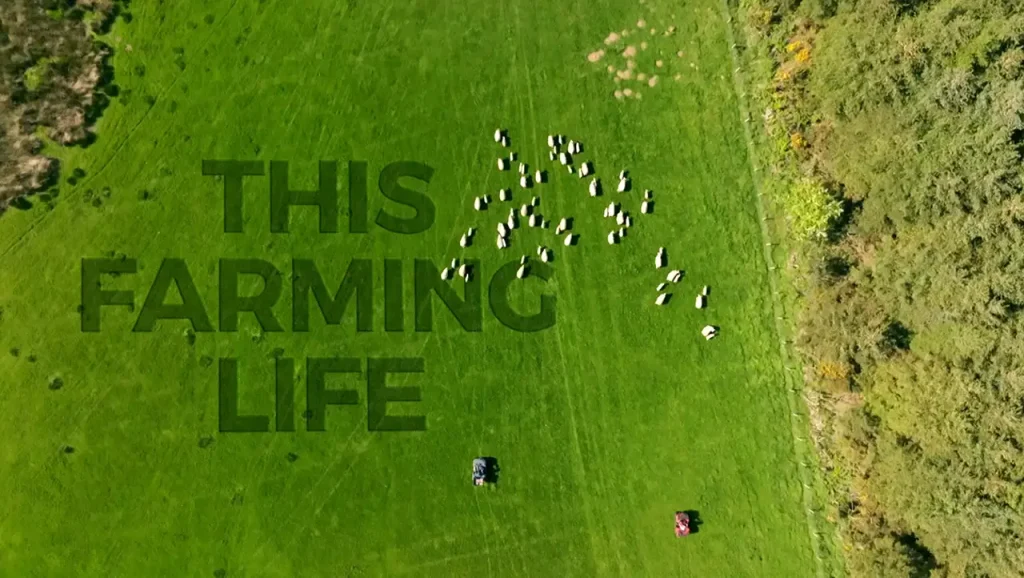
This Farming Life 2025 Episode 10: An Island Wedding
The windswept shores of Papa Westray set the scene for a momentous occasion in the lives of farmers Paul and Mel, as their long-awaited wedding day approaches. Meanwhile, their visiting nephews find themselves unexpectedly immersed in farm duties, trading their holiday plans for hands-on agricultural experience. In the midst of wedding preparations, ten-year-old Jakey—Paul and Mel’s son and chosen best man—faces perhaps the most daunting task of all: crafting a speech that captures the essence of his parents’ relationship.
The atmosphere on the island blends celebration with the ever-present demands of farm life. Paul and Mel must balance their wedding preparations with daily chores, demonstrating how farming families often intertwine life’s significant milestones with their agricultural responsibilities. Their nephews, initially reluctant to participate in farm work, gradually develop an appreciation for the rhythms and rewards of rural living. Through their eyes, viewers witness the contrast between urban convenience and the more demanding yet fulfilling nature of farm existence.
Across the archipelago, fellow farmer Sally confronts a more sobering reality. A mysterious illness has struck several of her ewes, casting a shadow over her flock’s future and her livelihood. The cameras capture Sally’s determination as she works tirelessly alongside her veterinarian, employing various treatments while anxiously monitoring her affected animals. This storyline highlights the precarious nature of livestock farming, where disease can rapidly transform prosperity into uncertainty.
Fortunately, Sally’s fortunes improve at the Latheron Show, where her carefully selected produce and livestock attract considerable attention. Her stall becomes a focal point for visitors, offering a welcome respite from her concerns back at the farm. The show provides not only a potential source of income but also a much-needed boost to Sally’s spirits as she receives recognition for her farming expertise and high-quality products.
Meanwhile, in the fertile farmlands of Fife, Andy and Jo make significant financial decisions to secure their future. After careful deliberation, they increase their existing loan to fund the installation of another holiday pod on their property. This investment reflects a growing trend among modern farmers who diversify their income streams beyond traditional agriculture. The holiday accommodation offers visitors an authentic farm experience while providing Andy and Jo with additional revenue that is less dependent on unpredictable factors like weather and market fluctuations.
In addition to this long-term investment, the Fife couple takes 400 lambs to market, hoping to generate immediate cash flow. The episode follows their journey from farm to auction, capturing the mixture of anticipation and anxiety that accompanies such sales. Every farmer knows that market prices can vary dramatically, and Andy and Jo’s financial plans hang in the balance as they wait to see what their lambs will fetch.
This Farming Life 2025 Episode 10
Back on Papa Westray, wedding preparations intensify as the big day draws near. Jakey practices his best man speech with endearing seriousness, while Paul and Mel transform their working farm into a celebration venue. Their wedding represents more than just a personal milestone; it symbolizes the continuation of farming traditions and the creation of another generation committed to working the land. Friends and neighbors pitch in to help with preparations, demonstrating the strong sense of community that characterizes rural life.
The episode reaches its emotional climax with Paul and Mel’s wedding ceremony. Against the backdrop of Papa Westray’s rugged beauty, the couple exchange vows that reflect their shared commitment to each other and to the farming lifestyle they’ve chosen. Jakey delivers his speech with unexpected poise, drawing tears and laughter from the assembled guests. The celebration that follows blends traditional wedding festivities with distinctly agricultural touches, creating a uniquely farming-centered commemoration.
Throughout the episode, viewers witness the remarkable resilience of farming families as they navigate both challenges and celebrations. From Sally’s struggle with livestock illness to Paul and Mel’s joyous wedding, and from Andy and Jo’s financial strategizing to Jakey’s coming-of-age moment as best man, “This Farming Life” continues to document the extraordinary lives of ordinary farmers with sensitivity and authenticity.
Farming Life in Harmony: Balancing Tradition with Innovation
As the sun sets over the diverse landscapes of British agriculture, “This Farming Life” reminds us that farming is not merely an occupation but a way of life deeply intertwined with family, community, and tradition. Moreover, the stories of Paul and Mel, Sally, and Andy and Jo illustrate the delicate balance modern farmers must maintain between honoring agricultural heritage and embracing necessary innovation.
The wedding on Papa Westray serves as a powerful metaphor for the farming lifestyle itself—a commitment made not just between two people, but to the land and livestock that sustain them. Furthermore, young Jakey’s role as best man symbolizes the passing of knowledge and values to the next generation, ensuring farming traditions continue despite mounting challenges.
Sally’s experience with her ailing ewes, on the other hand, highlights the vulnerability inherent in agricultural pursuits. Nevertheless, her subsequent success at the Latheron Show demonstrates the resilience that characterizes successful farmers. Through hardship comes growth, much like the crops they tend and the animals they raise.
Meanwhile, Andy and Jo’s financial decisions reflect a growing reality for British farmers: diversification is increasingly essential for survival. By investing in holiday accommodations, they adapt to changing economic landscapes while maintaining their core farming identity. Additionally, their market day anxieties capture the perpetual uncertainty farmers face despite careful planning and hard work.
What binds these seemingly distinct narratives together is a shared commitment to stewardship—of land, animals, family traditions, and rural communities. In fact, today’s farmers are both preservers of agricultural heritage and pioneers of new approaches that will allow farming to thrive for generations to come.
The episode ultimately reveals that farming success is measured not just in yields and profits but in sustainable practices, strong community connections, and the ability to adapt while honoring tradition. Each farmer’s journey, therefore, becomes a testament to the enduring importance of agriculture in our national identity and food security.
As viewers, we gain more than entertainment from these authentic portrayals; we develop a deeper appreciation for the hands that feed us. Through their triumphs and tribulations, these farming families remind us that the most essential work often happens far from public view, beneath open skies and changing seasons, where dedication to the land transcends all else.
FAQ This Farming Life 2025 Episode 10
Q: What makes ‘This Farming Life’ different from other agricultural documentaries?
A: ‘This Farming Life’ distinguishes itself through its intimate portrayal of farmers’ personal and professional lives, rather than focusing solely on agricultural techniques. Furthermore, the series captures the emotional reality of modern farming by documenting both celebrations like Paul and Mel’s wedding and challenges such as Sally’s struggle with livestock illness. Unlike conventional documentaries that might romanticize rural living, this program honestly depicts the financial pressures, weather dependencies, and market uncertainties that farmers face daily. The show’s strength lies in its authentic storytelling approach that follows families throughout entire farming seasons, allowing viewers to develop genuine connections with the featured farmers and better understand agriculture’s vital role in our food systems and national heritage.
Q: How do farming families balance tradition with necessary innovation?
A: Farming families maintain this delicate balance by preserving core agricultural values while selectively adopting new approaches that enhance sustainability and profitability. For instance, Andy and Jo’s decision to install holiday pods represents innovative diversification, yet they continue traditional livestock practices by taking 400 lambs to market. Many farmers blend generational knowledge with modern technology, using traditional animal husbandry principles alongside precision agriculture tools. Additionally, families preserve cultural traditions like farm weddings with agricultural touches while incorporating contemporary sustainable practices. This balanced approach allows them to honor their heritage while adapting to changing economic realities, climate challenges, and consumer preferences. Successful farmers essentially act as bridges between farming’s rich past and its evolving future, carefully evaluating which innovations complement their traditional practices rather than replace them entirely.
Q: Why is community support so important in rural farming areas?
A: Community support functions as the invisible infrastructure that sustains rural farming areas through both prosperity and hardship. When Paul and Mel prepared for their wedding, neighbors readily pitched in, demonstrating how interdependence remains essential in remote locations like Papa Westray. Moreover, during agricultural emergencies such as livestock illness outbreaks or extreme weather events, farmers rely on nearby colleagues for immediate assistance when veterinarians or services might be hours away. Agricultural communities also preserve specialized regional knowledge that often isn’t documented in textbooks but passes through generations of neighboring farms. Beyond practical support, these tight-knit networks provide crucial emotional resilience during difficult seasons, as evidenced when Sally received moral support alongside recognition at the Latheron Show. In essence, rural farming communities operate as extended family networks where reciprocal assistance and shared expertise create resilience that isolated operations simply couldn’t maintain independently.
Q: What financial challenges do modern British farmers typically face?
A: Modern British farmers confront numerous financial obstacles that have intensified in recent years. Initially, they face substantial capital requirements for land, equipment, and livestock that often necessitate significant loans, as demonstrated by Andy and Jo increasing their debt to fund expansion. Additionally, market volatility creates unpredictable income streams, with farmers frequently experiencing dramatic price fluctuations beyond their control. Weather dependencies further complicate financial planning, as unexpected conditions can devastate carefully cultivated crops or affect livestock health without warning. Rising input costs for essentials like feed, fertilizer, and fuel continuously squeeze profit margins, while regulatory compliance demands significant investment without immediate returns. Consequently, many farmers feel caught between preserving traditional practices and embracing diversification, such as installing holiday accommodations or developing value-added products. This financial pressure explains why many farming families, like those featured in the documentary, must constantly balance immediate cash flow needs with long-term sustainability goals.
Q: How does livestock illness impact small-scale farmers like Sally?
A: Livestock illness creates multilayered challenges for small-scale farmers like Sally, extending far beyond immediate veterinary costs. Firstly, disease outbreaks threaten years of careful breeding programs aimed at developing specific genetic traits within flocks. Additionally, treating sick animals demands intensive labor during critical periods when other farm tasks cannot be neglected. The emotional toll proves particularly significant as farmers develop strong connections with their animals, making livestock losses personally devastating beyond their economic impact. Furthermore, illness can dramatically affect cash flow projection, especially when farmers have already committed to financial obligations based on anticipated livestock sales. For operations with limited financial reserves, even a moderate disease outbreak might threaten the farm’s viability. Sally’s experience vividly illustrates how quickly agricultural fortunes can change, transforming a promising season into a struggle for survival, thus highlighting the inherent vulnerability that characterizes livestock farming regardless of how meticulously animals are managed.
Q: What role do agricultural shows like the Latheron Show play in farming communities?
A: Agricultural shows serve as multifaceted institutions within farming communities, functioning simultaneously as marketplaces, educational forums, social gatherings, and cultural celebrations. For Sally, the Latheron Show provided not just economic opportunities through her successful stall but also crucial emotional validation during a challenging period with her livestock. These events enable farmers to showcase their finest products and animals, thereby establishing professional reputations that enhance their market position year-round. Moreover, shows facilitate knowledge exchange between different farming operations, fostering innovation adoption across regions. Beyond professional benefits, these gatherings strengthen community bonds through friendly competition and shared celebration of agricultural achievements. Young farmers often develop their first industry connections at such events, creating mentorship pathways essential for agricultural succession. Essentially, agricultural shows transform isolated farming practices into communal cultural heritage, reinforcing the identity and pride of farming communities while connecting producers directly with appreciative consumers who might otherwise remain disconnected from food production realities.
Q: How is the next generation being prepared for agricultural careers in modern farming families?
A: Modern farming families prepare the next generation through a blend of traditional mentorship and contemporary education. Young Jakey’s participation in Paul and Mel’s wedding as best man represents more than a ceremonial role; it symbolizes his gradual integration into the farm’s operation and community standing. Today’s farm children typically gain hands-on experience from early ages, developing practical skills naturally alongside their parents and extended family. However, unlike previous generations, modern agricultural successors increasingly complement this experiential learning with formal agricultural education in specialized programs. Many farming parents deliberately expose their children to both traditional methods and innovative approaches, encouraging them to evaluate which practices best suit evolving agricultural contexts. Additionally, young people often participate in agricultural youth organizations that develop leadership capabilities alongside technical skills. This comprehensive preparation reflects the growing complexity of modern farming, which requires not only traditional knowledge but also business acumen, technological literacy, environmental understanding, and adaptability to succeed in increasingly challenging agricultural landscapes.
Q: Why has farm diversification become increasingly common in British agriculture?
A: Farm diversification has grown increasingly prevalent due to economic necessity rather than mere entrepreneurial ambition. As traditional farming faces tightening profit margins, diversification strategies like Andy and Jo’s holiday accommodations create essential income stability through multiple revenue streams. Furthermore, diversification helps farms better utilize underperforming assets, converting unused buildings or marginal land into profitable enterprises that complement core agricultural activities. Seasonal fluctuations in traditional farming cash flow can be balanced through year-round income from diversified ventures, improving overall financial resilience. Additionally, diversification often enables farms to capture greater value from their products through direct marketing rather than selling commodities at wholesale prices. Climate change has further accelerated this trend, as diversified operations typically weather environmental uncertainties better than mono-focused farms. Ultimately, diversification represents a practical adaptation strategy that allows farming families to maintain their agricultural lifestyle and land stewardship while acknowledging that traditional production agriculture alone may no longer sustain viable farm businesses in today’s economic landscape.