Amazon with Bruce Parry episode 2: Journey into the Heart of Peru’s Jungle
Deep within the verdant labyrinth of Peru’s Amazonian rainforest lies a world few outsiders have glimpsed. In the second episode of his groundbreaking documentary series, intrepid explorer Bruce Parry continues his transformative journey through one of Earth’s most biodiverse and threatened ecosystems. This installment follows Bruce as he ventures into the ancestral territories of the Achuar people, an indigenous tribe whose very existence has become entangled in a complex battle against encroaching oil companies.
The dense jungle canopy filters dappled sunlight onto the forest floor as Bruce and his small film crew navigate the sinuous waterways that serve as the primary transportation routes in this roadless wilderness. Their destination lies several days’ journey from the nearest town, in an area so remote that modern influences have only recently begun to penetrate the traditional lifestyles of its inhabitants. Along the way, Bruce encounters an astonishing variety of wildlife, from colorful poison dart frogs to elusive river dolphins that surface momentarily before disappearing into the murky depths.
The Achuar people have inhabited this region for countless generations, developing a profound understanding of the forest’s rhythms and resources. Their traditional knowledge encompasses thousands of plant species, hundreds of which they use for food, medicine, and construction. However, this harmonious relationship with the environment now faces an unprecedented threat. In recent years, multinational oil companies have set their sights on the vast petroleum reserves believed to lie beneath Achuar territory.
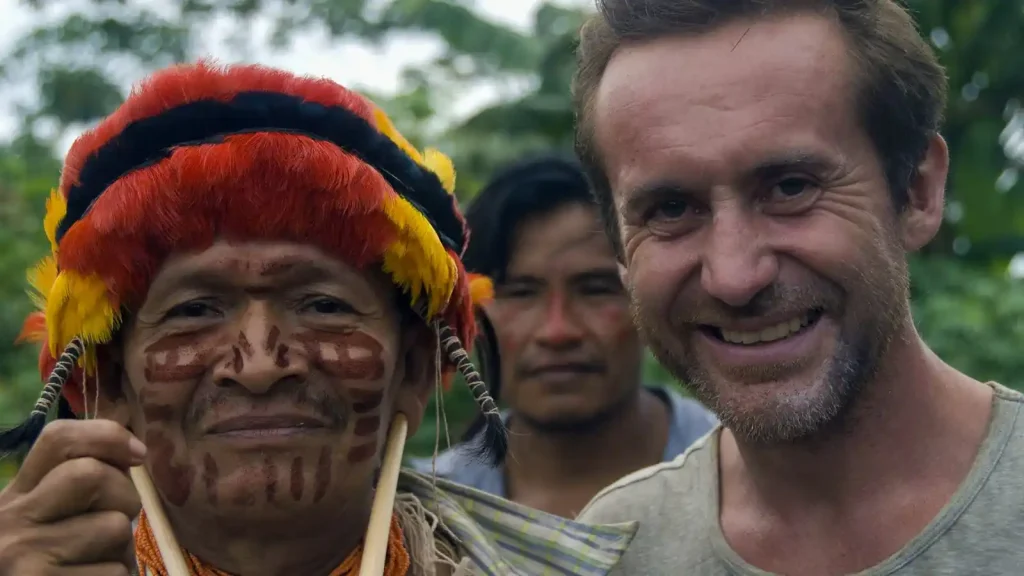
After arriving at the Achuar village, Bruce is warmly welcomed by the community’s elders. Through his translator, he learns about their ongoing struggle to protect their ancestral lands from industrial development. “The forest is our supermarket, our pharmacy, our university, and our cathedral,” explains one elder, his weathered face reflecting decades of life beneath the rainforest canopy. “If they take our land for oil, they take everything that makes us who we are.”
The Achuar have organized remarkable resistance efforts, forming alliances with environmental organizations and using legal channels to assert their territorial rights. Moreover, they have embraced strategic use of technology, utilizing GPS mapping to document their traditional land boundaries and satellite phones to coordinate with advocacy groups in Peru’s capital. Their fight represents not just a local struggle but embodies larger questions about indigenous sovereignty, environmental justice, and sustainable development.
Bruce’s immersion into Achuar culture deepens significantly when he is invited to participate in a traditional Shamanic ceremony. The ritual centers around the consumption of ayahuasca, a powerful plant medicine that has been used by Amazonian tribes for thousands of years to access altered states of consciousness and receive spiritual guidance. For the Achuar, these ceremonies are not mere cultural artifacts but living practices that reinforce their connection to the natural world and provide direction during times of crisis.
As dusk descends upon the village, Bruce joins a small group gathered in a ceremonial hut. The air is thick with anticipation and the pungent aroma of medicinal plants. The shaman, an elderly man whose knowledge has been passed down through countless generations, prepares the ayahuasca brew through a meticulous process. This sacred preparation combines several plants native to the Amazon, resulting in a concoction that contains DMT, a naturally occurring psychedelic compound.
Before drinking, Bruce participates in purification rituals and receives instructions on how to approach the experience. The shaman explains that the purpose is not recreational but profoundly spiritual—a journey to find one’s vision or life purpose. Furthermore, for the Achuar, these visions often provide practical guidance for community decisions, including their ongoing resistance to oil development.
The ceremony itself unfolds over several hours of darkness. Initially, Bruce experiences intense physical discomfort, a common first response to ayahuasca. However, this gives way to profound visual and emotional experiences that challenge his perception of reality. Many participants report encounters with spirit beings, ancestral presences, or powerful metaphorical visions that offer insights about their life path.
For Bruce, the experience proves transformative. Though he approaches the ceremony with journalistic objectivity, he finds himself profoundly moved by visions that seem to connect him to the living intelligence of the forest itself. “I felt a dissolution of the boundaries I normally perceive between myself and the natural world,” he later reflects. “It was as though I could sense the interconnected web of life that the Achuar have always described.”
Amazon with Bruce Parry episode 2
The morning after the ceremony brings a sense of clarity and renewed purpose. Bruce participates in a group discussion where participants share insights from their visions. The shaman offers interpretations that frame these experiences within Achuar cosmology. For many indigenous participants, the ceremony reinforces their commitment to protecting their homeland from industrial exploitation.
As Bruce prepares to leave the village, he has gained not just footage for his documentary but a deeper understanding of why the Achuar fight so tenaciously to preserve their way of life. Their struggle represents a critical flashpoint in the larger conflict between short-term resource extraction and long-term ecological sustainability. Additionally, their story highlights the often-overlooked connection between cultural diversity and biological diversity—as indigenous languages and traditions disappear, so too does invaluable knowledge about local ecosystems.
Bruce’s journey through the Amazon continues beyond this encounter, but his time with the Achuar leaves an indelible impression. Through his compassionate and immersive approach to documentary filmmaking, viewers are invited to look beyond stereotypes and appreciate the sophisticated knowledge systems and resistance strategies of indigenous Amazonian peoples. In doing so, we confront essential questions about our collective relationship with the natural world and the true costs of our resource-intensive global economy.
Conclusion Amazon with Bruce Parry episode 2: Guardians of the Forest – An Enduring Legacy
The story of Bruce Parry’s journey into the heart of Peru’s Amazonian rainforest reveals far more than just an adventure through stunning landscapes. In fact, it unveils a profound intersection between cultural heritage and environmental stewardship that has vital implications for our planet’s future. Through his immersive experience with the Achuar people, Bruce offers viewers a rare glimpse into an ancient way of life that stands as both resistance and alternative to our consumption-driven global society.
What makes the Achuar struggle so compelling is not merely their opposition to oil development, but rather their affirmative vision of a different relationship with the natural world. Furthermore, their fight encompasses a wisdom that modern society often overlooks—that cultural diversity and ecological diversity are inseparably linked. As we witness their daily lives unfold on screen, we begin to understand that protecting indigenous knowledge systems is equally as important as preserving biodiversity.
The ayahuasca ceremony, meanwhile, serves as a powerful metaphor for the shift in perspective that our world desperately needs. Just as Bruce temporarily dissolved the boundaries between himself and the forest, perhaps we too must reconsider the artificial separation we’ve constructed between humanity and nature. The Achuar worldview, which sees humans as integral participants within a living ecosystem rather than dominators of it, offers a timely alternative to extractive capitalism.
Bruce’s documentary thus challenges us to consider uncomfortable questions about progress and development. What kind of future are we creating through our consumption habits? Moreover, whose voices are we silencing in our pursuit of economic growth? The Achuar resistance reminds us that indigenous communities are not relics of the past but crucial partners in envisioning sustainable futures.
As Bruce departs from the village, he carries with him—and shares with viewers—a transformed understanding of what’s truly at stake in the Amazon. This is not simply a battle over resources or territory but a contest between fundamentally different ways of knowing and being in the world. Consequently, by amplifying the Achuar story, Bruce invites us to recognize our own role in either perpetuating or challenging the systems that threaten both cultural and biological diversity.
The journey through Peru’s jungle ultimately reveals that protecting the Amazon means not only preserving trees and wildlife but also honoring the human guardians who have stewarded these forests for millennia.
Frequently Asked Questions About Amazon with Bruce Parry Episode 2
Q: What is Amazon with Bruce Parry episode 2 about?
A: Episode 2 of Amazon with Bruce Parry documents the explorer’s immersive journey through Peru’s Amazonian rainforest where he encounters the Achuar indigenous people. Throughout this compelling installment, viewers witness the tribe’s ongoing struggle against multinational oil companies threatening their ancestral lands. The episode culminates in Bruce’s participation in a transformative Shamanic ayahuasca ceremony, which provides him with profound insights into the Achuar’s deep connection with their forest home and their determination to protect it from industrial exploitation.
Q: Who are the Achuar people and why is their struggle significant?
A: The Achuar are an indigenous tribe who have inhabited Peru’s Amazon rainforest for countless generations, developing sophisticated knowledge about the ecosystem’s plants, animals, and natural cycles. Their significance extends beyond their local resistance against oil development because they represent an alternative relationship with nature that challenges modern extractive capitalism. Furthermore, their struggle embodies critical questions about indigenous sovereignty, environmental justice, and sustainable development models. The Achuar exemplify how cultural diversity and biological conservation are inherently interconnected, demonstrating that protecting traditional knowledge systems is equally important as preserving the physical environment.
Q: What is ayahuasca and how does it function in Achuar society?
A: Ayahuasca is a powerful plant medicine derived from native Amazonian plants containing DMT, a naturally occurring psychedelic compound. In Achuar society, ayahuasca ceremonies serve as sacred rituals rather than recreational experiences, designed to access altered states of consciousness for spiritual guidance. Moreover, these ceremonies function as community decision-making tools, providing insights for navigating challenges like their resistance against industrial development. The ritualistic consumption of ayahuasca, prepared meticulously by experienced shamans, reinforces the tribe’s profound connection to the natural world. This practice represents a living tradition that has continued for thousands of years, helping the Achuar maintain their cultural identity despite external pressures.
Q: How does Bruce Parry’s documentary approach differ from conventional filmmaking?
A: Bruce Parry employs an immersive and participatory documentary approach that stands in stark contrast to conventional observational filmmaking. Instead of maintaining detached objectivity, he fully engages with Achuar cultural practices, including the challenging ayahuasca ceremony that transforms his own worldview. This methodological approach creates powerful emotional connections between viewers, the Achuar people, and their environmental struggles. Consequently, his documentary effectively communicates complex issues about conservation and cultural preservation through personal experience rather than abstract explanation. By physically and spiritually immersing himself in the Achuar way of life, Parry dismantles stereotypes about indigenous peoples and presents their sophisticated knowledge systems and resistance strategies with remarkable authenticity and respect.
Q: How are the Achuar blending traditional knowledge with modern technology?
A: The Achuar demonstrate remarkable adaptability by strategically incorporating modern technologies into their traditional lifestyle to strengthen their resistance against encroaching oil companies. They utilize GPS mapping to precisely document their ancestral land boundaries, creating indisputable evidence of their territorial claims. Additionally, they employ satellite phones to coordinate with environmental advocacy groups based in Peru’s capital, building powerful alliances that amplify their voice. This sophisticated integration of technological tools with traditional ecological knowledge represents a forward-thinking approach to indigenous activism. Their selective adoption of modern innovations, while maintaining core cultural values and practices, showcases how indigenous communities can effectively navigate contemporary challenges without sacrificing their identity.
Q: What transformation does Bruce Parry experience during the ayahuasca ceremony?
A: During the ayahuasca ceremony, Bruce undergoes a profound personal transformation that reshapes his understanding of humanity’s relationship with nature. Initially experiencing intense physical discomfort, he subsequently encounters powerful visual and emotional states that dissolve the boundaries between himself and the forest ecosystem. Bruce describes feeling connected to what he perceives as the living intelligence of the forest itself, providing direct experiential insight into the Achuar worldview. This transformation, though approached with journalistic intent, becomes genuinely life-altering as Bruce gains firsthand understanding of indigenous perspectives. The experience serves as a compelling narrative bridge, allowing viewers to vicariously appreciate the Achuar’s deep ecological connection and their motivation to protect their environment from industrial exploitation.
Q: What connection does the documentary establish between cultural diversity and biological conservation?
A: The documentary powerfully illustrates how cultural diversity and biological conservation are fundamentally intertwined rather than separate concerns. As the Achuar demonstrate extensive knowledge of thousands of plant species and their applications, the film reveals how indigenous wisdom represents generations of accumulated ecological understanding. The narrative explicitly connects the disappearance of indigenous languages and traditions with the loss of invaluable knowledge about local ecosystems. Therefore, the documentary argues that effective environmental conservation must include supporting the cultures that have traditionally stewarded these environments. This perspective challenges conventional Western conservation approaches that sometimes separate human communities from protected areas instead of recognizing indigenous peoples as essential partners in biodiversity preservation.
Q: What broader questions about modern society does Bruce Parry’s documentary raise?
A: Bruce Parry’s documentary challenges viewers to confront uncomfortable questions about progress, development, and our collective relationship with nature. It asks us to examine what kind of future we’re creating through our consumption habits and whose voices we’re silencing in our pursuit of economic growth. Moreover, the film presents the Achuar worldview as a viable alternative to extractive capitalism—one where humans function as integral participants within ecosystems rather than dominators of them. By contrasting these fundamentally different ways of knowing and being in the world, the documentary invites critical reflection on the artificial separation modern society has constructed between humanity and nature. Ultimately, it suggests that indigenous perspectives offer valuable wisdom for addressing our current environmental crisis.