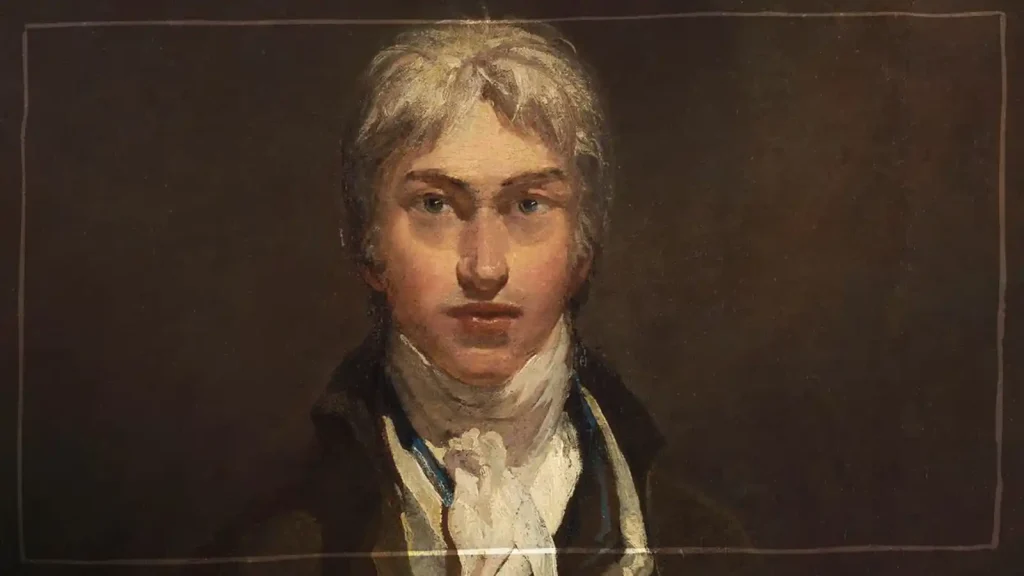
Turner – The Secret Sketchbooks: We all think we know JMW Turner. He is the “painter of light.” His canvases blaze with furious suns and swirling storms. They are epic. They feel timeless. He was a true master of his craft. Yet, behind these public masterpieces lived a very private man. Turner was a complex enigma. He was famously secretive. In fact, he guarded his inner life fiercely. But what was he hiding? For generations, a huge part of him remained locked away. This part was hidden from the world. It was a secret he took to his grave.
Now, that lock has been broken. An extraordinary, intimate collection is finally being opened. This is Turner’s hidden archive. Just imagine: over 37,000 private works. These are Turner’s private sketches. He also created thousands of personal drawings and watercolors. This vast archive was never meant for our eyes. Consequently, it offers a startling, new perspective. It’s like discovering the secret diary of a genius. Through this collection, we can finally glimpse the man behind the myth.
A landmark new television event is here. It is called Turner – The Secret Sketchbooks. This remarkable JMW Turner documentary ventures deep into that forbidden archive. In fact, it’s the very first time television has ever explored these pages. The program uses these fragile sketches as a window. This window looks directly into Turner’s inner world. We are about to meet the real JMW Turner. Therefore, this journey promises to be intimate. It will also be deeply revealing.
These sketches are not grand, finished paintings. Instead, they are raw, immediate, and unfiltered thoughts. They are the artist thinking directly onto the paper. Here, we see his creative obsessions take shape. We witness his private struggles. We feel his moments of despair and joy. The documentary delves deep into Turner’s psychology. What truly drove this relentless man? What did he fear most? Furthermore, what did he secretly love? The answers are not in the finished oils. Instead, the answers are right here, in faded pencil and watercolor.
The archive is like a map of his mind. We see him obsessively capture the world. He sketched everything. He drew crumbling ruins. He drew chaotic skies. He even drew the people in his life. These sketches were his companions. They were his confidants. Unlike his public paintings, these were for him alone. They show his vulnerability. As a result, we see a man who was profoundly human. He was not just a remote artistic god. He was a person, just like us.
This honest exploration does not shy away. It bravely confronts the most hidden parts of his life. For the first time on screen, the cameras focus on Turner’s erotic sketches. These drawings are startlingly intimate. They are deeply personal. Indeed, they show a side of the artist completely at odds with his public image. Many have never seen these works. Seeing them is jarring. Yet, they are essential to understanding the whole man. They reveal his complex, passionate, and physical nature.
These erotic works force us to ask new questions. Who was this man who painted sublime landscapes? How does this raw sensuality fit in? The Secret Sketchbooks tackles this directly. It seeks to unite the public genius with the private man. Instead of ignoring this material, the film embraces it. It uses these sketches to paint a richer, more complex portrait. This is Turner without the varnish. This is the artist in his full, uncensored humanity.
Guiding us on this journey is a very familiar face. The brilliant actor Timothy Spall joins the exploration. Spall famously portrayed the artist. His role in Mike Leigh’s acclaimed film Mr. Turner was iconic. He spent years inhabiting Turner’s gruff mind. He learned to paint. He learned to walk and talk like him. Therefore, his insights are incredibly personal. He connects with the artist on a profound level. Spall helps bridge the gap between the man and the legend. He makes Turner feel present.
Turner – The Secret Sketchbooks
But Spall is not alone on this quest. A remarkable group of modern artists joins him. The celebrated artist Tracey Emin offers her perspective. She sees a fellow rebel in Turner. She connects with his raw honesty. Rock legend Ronnie Wood also shares his passion. He finds a shared energy in Turner’s chaotic beauty. We also hear from acclaimed filmmaker Sir John Akomfrah. Each guest brings a unique, modern view. In essence, they see Turner not as a dusty icon, but as a contemporary.
To ground this emotional journey, experts are essential. Leading art historians provide crucial context. They help decode the symbols. They explain the techniques behind the hurried sketches. Additionally, we hear from psychoanalyst Orna Guralnik. She examines Turner’s psychology through this new evidence. She looks for clues to his inner conflicts. Even naturalist Chris Packham joins. He connects Turner’s obsessive observation of nature to the sketches. Together, they build a complete, 360-degree portrait.
So, why does this hidden archive matter so much? Because it shows us the process. We see the messy, brilliant, human side of genius. The grand canvases were the final act. Turner’s private sketches were the rehearsals. They were his safe space to fail. They were his private place to experiment. This JMW Turner documentary is not just about art. Ultimately, it is about the heart and mind of a creator. It is a story of what it costs to be a genius.
The Secret Sketchbooks changes everything we thought we knew. It completely reframes our understanding of a British icon. We move beyond the “painter of light.” At last, we meet the man who lived in the shadows. This is a journey into a hidden world. A world of passion, pain, and unfiltered genius. After watching, you will never look at a Turner painting the same way again. You will see the complex man behind every brushstroke.
Turner – The Secret Sketchbooks
Turner – The Secret Sketchbooks presents a profound reassessment of one of Britain’s greatest artists, peeling back the layers of a man who was as enigmatic as he was talented. To the public, Joseph Mallord William Turner is the “painter of light,” a master whose atmospheric canvases defined the Romantic era and paved the way for modern art. However, behind the celebrated masterpieces lies a complex, guarded individual whose true character has often been obscured by history. Through an examination of the thousands of drawings and private notes he left behind, a different figure emerges: a man driven by obsession, haunted by family trauma, and possessed of a fierce, rugged determination.
The narrative surrounding JMW Turner has historically focused on his professional triumphs and his eccentric public persona. Yet, the standard biography often misses the visceral reality of his origins. Born in Covent Garden, London, Turner did not hail from the refined background typical of the art establishment. He was a man of the earth, described by actor Timothy Spall—who portrayed the artist in the film Mr. Turner—as seemingly rising “out of the mud of the River Thames.” This working-class foundation defined his character; he retained his thick London accent and a combative attitude throughout his life, traits that made him an outsider even as he ascended to the highest ranks of the Royal Academy.
To truly understand the artist, one must look beyond the finished oils and investigate The Secret Sketchbooks that served as his diaries, financial ledgers, and confessional booths. Turner did not leave behind traditional written journals or memoirs, meaning these sketchbooks are the primary window into his mind. They reveal a man who was hyper-focused and obsessively compulsive, sketching far more than any of his contemporaries. These pages were not merely practice; they were a method of stabilizing himself in a chaotic world, providing structure and control when his personal life threatened to spiral into darkness.
The psychological weight Turner carried from childhood was immense. His early life in Covent Garden was surrounded by the harsh realities of Georgian London, including crime and prostitution, but the true danger lay within his own home. The death of his younger sister when he was eight years old devastated the family, and subsequently, his mother, Mary, succumbed to a severe mental illness, likely a form of schizophrenia or bipolar disorder.
This family tragedy forced a young turner to grow up quickly, finding solace and safety in the act of drawing. His father, a barber, became his emotional anchor, championing his son’s talent and displaying his early works in his shop, setting the stage for a career driven by a desperate need for security and success.
As he matured, the dichotomy between his public success and his private turmoil grew more pronounced. He was a prodigy who entered the Royal Academy schools at the unprecedented age of 14, yet he was constantly aware of his social standing. The drive to become a member of the Academy was not just about artistic validation; it was a quest for the title of “Esquire,” a shield of respectability that could protect him from the stigma of his background. JMW Turner documentary analyses suggest that his relentless work ethic was fueled by a fear of the workhouse and a desire to escape the shadow of his mother’s madness—a secret he guarded with intense ferocity.
This tension between the desire for establishment acceptance and an innate, raw creative force drove him to revolutionize landscape painting. He sought to capture not just the topography of a place, but the emotional and atmospheric truth of the natural world. From the wilds of Wales to the peaks of the Alps, Turner used his sketchbooks to stalk his subjects, experimenting with media and technique to convey the “sublime”—the terrifying, overwhelming beauty of nature. As we delve deeper into the revelations found within Turner – The Secret Sketchbooks, we find that his art was never just about what he saw; it was always a reflection of what he felt.
The Shadow of Mental Illness and the Quest for Structure
The specter of mental illness loomed large over Turner’s life and profoundly influenced his artistic development. The condition of his mother, Mary, was a dark secret that JMW Turner felt compelled to hide to preserve his rising reputation. in the Georgian era, mental instability was viewed with ignorance and fear, often attributed to moral failings or hereditary curses. Turner knew that if the art establishment associated him with “madness,” his career could be destroyed. Consequently, he facilitated his mother’s admission to St. Luke’s Hospital, a grim institution where patients were often chained and left in squalor. Once she was institutionalized, Turner and his father essentially erased her from their lives, never visiting her again.
This traumatic severance generated a heavy burden of guilt and anxiety. Turner’s psychology during this period manifested in his work through a pursuit of rigorous structure and control. His early architectural watercolours are meticulous in the extreme, with every brick and window rendered with hyper-focused precision. Analysts suggest that this obsession with tangible, ordered structures was a coping mechanism—a way to impose order on a world that felt unsafe and unpredictable due to his mother’s volatile outbursts. By mastering the physical world on paper, Turner could stabilize his own internal chaos.
However, his art also served as a vessel for his repressed grief. In paintings like the one depicting Dolbadarn Castle, Turner’s inner world seeps onto the canvas. The painting features a solitary figure, “Hopeless Owen,” a prince imprisoned by his brother, languishing in the foreground while the castle looms aloofly in the distance. The emotional distance between the small, hopeless figure and the unreachable stone fortress mirrors the gulf between Turner and his hospitalized mother. Through such works, the sketchbooks and resulting paintings become a silent autobiography, expressing the sorrow and guilt he could never voice aloud.
Class Struggle and the Royal Academy
Navigating the elite circles of the British art world required more than just talent; it demanded the demeanor of a gentleman, something turner was decidedly not. The Royal Academy at Somerset House was the epicenter of artistic power, an institution dedicated to elevating painting from a craft to an intellectual pursuit. For a barber’s son with a rough “working-class accent,” entering this “viper’s nest” was a daunting social challenge. As artist Tracey Emin notes, the class prejudice of the time meant that every time Turner spoke, he risked being judged not for his ideas, but for his shrill, unrefined voice.
Despite these social barriers, Turner’s undeniable genius forced the establishment to open its doors. He was elected as an Associate Member at the age of 24, the youngest in history at that time. This victory allowed him to adopt the trappings of a gentleman, moving to a prestigious address on Harley Street and painting a self-portrait that depicted him as a composed, well-dressed figure of authority. This self-image was a construct, a suit of armor worn to survive in a world that viewed him with suspicion. Timothy Spall emphasizes that Turner was driven by a determination to prove his worth and secure his financial future, ensuring he would never end up in a pauper’s grave.
Yet, acceptance was never unconditional. Critics like Sir George Beaumont acted as gatekeepers of taste, frequently attacking Turner’s evolving style. When Turner began to prioritize atmospheric effect over rigid detail, Beaumont accused him of misleading the nation’s taste and producing works that lacked definition. The Secret Sketchbooks reveal that Turner was deeply sensitive to this criticism, going so far as to copy negative reviews into his private notebooks.
He was acutely aware of the precariousness of his position; to maintain his patrons, he occasionally had to pivot back to realism, as seen in the masterpiece Frosty Morning. This painting, with its perfect rendering of a chilly landscape, was a strategic move to silence detractors and prove that his “imprecision” was a choice, not a lack of skill.
Unveiling Turner – The Secret Sketchbooks and the Erotic
Perhaps the most startling revelation from the archives is the existence of Turner’s erotic sketches. For a long time, it was believed that these drawings had been destroyed by executors who sought to protect the artist’s reputation, but many survived, offering a glimpse into a raw and passionate side of his nature. These sketches, often drawn in the brothels of London or during his private travels, depict scenes of sexual acts, including cunnilingus and group encounters. They are fragmented and explicit, often focusing on sexual organs rather than whole figures, reflecting a detached, almost pornographic view of intimacy.
Analysts viewing Turner’s private sketches suggest that these fragmented images indicate a man who, for much of his life, struggled to connect deeply with others. The transactional nature of visiting prostitutes allowed him to satisfy his “passionate, desiring” nature without the risks of emotional vulnerability. Tracey Emin observes the visceral quality of these drawings, noting their “erotic” and “emotional” power, yet they also highlight a sense of isolation. For years, Turner kept his romantic entanglements secret, including a long-term relationship that produced two illegitimate daughters whom he refused to publicly acknowledge.
The tone of Turner’s erotic sketches shifts dramatically later in his life, specifically after he meets Sophia Booth in Margate. Following the devastating loss of his father—his lifelong companion and assistant—Turner experienced a breakdown but eventually found solace with Sophia, a widow who ran a boarding house. The sketches from this period show a new tenderness: couples with legs entwined, full figures embracing, and a sense of genuine human connection. It appears that in his later years, freed from the burden of his past and the watchful eye of his father, Turner finally learned to trust and connect with another human being, integrating his emotional desires with a newfound sense of intimacy.
The Sublime, The Industrial, and The Abstract
Turner’s artistic maturity is defined by his engagement with the “sublime”—the awe-inspiring and terrifying power of nature. His journeys to the Alps and his obsession with the sea were not merely sightseeing trips; they were spiritual pilgrimages. He filled sketchbooks with frantic drawings of jagged peaks, avalanches, and storms, attempting to capture the feeling of human insignificance in the face of elemental forces. This pursuit led him to abandon the “safety” of precise lines in favor of swirling color and light. The Secret Sketchbooks show him experimenting with pastels and gouache, spitting on his work and smudging materials to replicate the chaos of the natural world.
This fascination with power extended to the burgeoning Industrial Revolution. Unlike many Romantics who shunned the machine age, Turner stared directly into it. In Rain, Steam and Speed, he depicted a steam train tearing through the landscape, a symbol of the brutal new world. The painting is a vortex of motion where the train, marked with red spots representing burning coal, becomes a demonic force of progress.
Similarly, in Slave Ship, he used a flaming, blood-red sky to illuminate the horrors of the Zong massacre, where slaves were thrown overboard for insurance money. Here, Turner’s psychology is on full display; he uses the turbulence of paint to express moral outrage and the terrifying indifference of nature, equating the political storm of slavery with the physical storm of the ocean.
The critical reaction to these later works was often hostile. The art establishment, unable to comprehend his move toward near-total abstraction, labeled his paintings as “omelettes” or “whitewash.” They questioned his sanity, suggesting that turner had lost his mind along with his eyesight. In reality, as Turner – The Secret Sketchbooks illustrates, he was in complete control. He had developed a unique visual language that prioritized the sensory experience over visual fidelity. In paintings like Snow Storm, where he purportedly had himself lashed to a ship’s mast to experience the vortex, he dissolved the horizon line entirely, merging sea and sky into a singular, chaotic energy field.
A Modern Legacy in Hiding
In his final years, the man who had fought so hard for recognition chose to retreat from the world. He lived a double life, residing in Chelsea with Sophia Booth under the pseudonym “Mr. Booth,” while maintaining his derelict studio elsewhere. This period of anonymity allowed him to paint with absolute freedom. The sketches from this time are remarkably modern, often consisting of just a few washes of color—a splash of blue, a bleed of yellow—that capture the essence of a sunset or a seascape with minimalist perfection. These works, once ridiculed, are now seen as precursors to Impressionism and abstract expressionism.
Turner’s concern for his legacy was paramount. Despite his reclusive habits, he was determined that his work should belong to the nation. He rejected offers to buy his masterpieces, preferring to hoard them in his studio with the intention of leaving them to the British public. He wanted his art to be kept together, a comprehensive testament to his life’s journey. As the JMW Turner documentary highlights, he viewed his paintings as extensions of himself; to sell them would be to sell off pieces of his soul.
Today, Turner – The Secret Sketchbooks stands as a vital key to unlocking the mystery of the man. They reveal that his move toward abstraction was not a result of madness or aging, but a deliberate, intellectual, and emotional evolution. He was a visionary who saw the future of art and ran toward it, regardless of the critics who nipped at his heels. By exploring these private pages, we finally meet the real Turner: not just the pugnacious, funny-looking Londoner or the distant academic, but a man of profound depth, vulnerability, and revolutionary vision.
FAQ Turner – The Secret Sketchbooks
Q: What makes Turner – The Secret Sketchbooks different from other documentaries about JMW Turner?
A: This groundbreaking documentary marks the first time television has explored Turner’s vast archive of over 37,000 private works, including sketches, drawings, and watercolors never intended for public viewing. Unlike previous films focusing on his celebrated paintings, this program delves into the artist’s intimate sketchbooks that functioned as personal diaries, revealing his creative process, psychological struggles, and hidden aspects of his life. Furthermore, the documentary includes previously unseen erotic sketches that challenge conventional understanding of the “painter of light,” presenting a complete portrait of Turner as a complex, passionate human being rather than merely an artistic icon.
Q: Who guides viewers through Turner’s secret archive in the documentary?
A: Actor Timothy Spall, who famously portrayed Turner in Mike Leigh’s acclaimed film Mr. Turner, serves as the primary guide through this intimate exploration. Additionally, the documentary features insights from celebrated contemporary artists including Tracey Emin and Ronnie Wood, filmmaker Sir John Akomfrah, leading art historians, psychoanalyst Orna Guralnik, and naturalist Chris Packham. This diverse group of experts and artists brings unique perspectives, helping viewers understand Turner not as a distant historical figure but as an artist whose struggles and innovations remain remarkably relevant today.
Q: How did Turner’s working-class background influence his artistic career?
A: Born in Covent Garden to a barber, Turner retained his thick London accent and combative attitude throughout his life, making him an outsider even as he ascended to the Royal Academy’s highest ranks. His humble origins fueled an intense drive for respectability and financial security, particularly the coveted title of “Esquire” that would shield him from class prejudice. Despite becoming the youngest Associate Member of the Royal Academy at age 24, he constantly faced criticism for his unrefined voice and manner. This working-class foundation ultimately shaped his revolutionary approach to art, as he brought raw authenticity and visceral energy to landscape painting that aristocratic contemporaries couldn’t match.
Q: What role did family tragedy play in shaping Turner’s art?
A: The death of Turner’s younger sister when he was eight, followed by his mother’s descent into severe mental illness, profoundly impacted his psychological development and artistic practice. Consequently, drawing became both solace and escape, a method of imposing order on an unsafe, unpredictable world. His mother’s institutionalization at St. Luke’s Hospital represented a dark secret he guarded fiercely, knowing that any association with “madness” could destroy his reputation in Georgian society. This trauma manifested in his meticulous early architectural watercolors, where hyper-focused precision served as a coping mechanism. Later works, such as his painting of Dolbadarn Castle featuring the imprisoned “Hopeless Owen,” became silent autobiographies expressing repressed grief and guilt.
Q: Why did Turner create erotic sketches, and what do they reveal about him?
A: Turner’s erotic sketches, often drawn in London brothels or during private travels, reveal a passionate, desiring nature that he carefully concealed from public view. These explicit drawings, featuring fragmented figures and focusing primarily on sexual organs, suggest a man who struggled with emotional vulnerability and intimacy for much of his life. However, the tone shifts dramatically in his later years after meeting Sophia Booth in Margate, when his sketches begin showing tenderness, full embracing figures, and genuine human connection. This transformation indicates that following his father’s death and freed from past burdens, Turner finally learned to integrate his emotional desires with authentic intimacy, moving beyond the transactional encounters that had characterized his earlier relationships.
Q: How did Turner’s sketchbooks function beyond artistic practice?
A: Turner’s sketchbooks served multiple crucial functions beyond mere artistic rehearsal—they operated as diaries, financial ledgers, confessional booths, and psychological stabilization tools. Since he left no traditional written journals or memoirs, these private pages provide the primary window into his mind and emotional life. He sketched obsessively, far more than any contemporary, using this compulsive practice to provide structure and control when personal chaos threatened to overwhelm him. The sketchbooks captured everything from crumbling ruins and chaotic skies to people in his life, functioning as trusted companions and confidants. Moreover, he even copied negative reviews from critics like Sir George Beaumont into these notebooks, revealing his acute sensitivity to criticism and precarious social position.
Q: What is the “sublime” in Turner’s art, and why did it matter to him?
A: The “sublime” represents the awe-inspiring, terrifying power of nature that dwarfs human significance—a concept central to Turner’s mature artistic vision. His journeys to the Alps and obsessive engagement with the sea were spiritual pilgrimages where he filled sketchbooks with frantic drawings of jagged peaks, avalanches, and storms. This pursuit led him to abandon precise lines in favor of swirling color and light that conveyed overwhelming emotional and atmospheric truth rather than mere topography. Turner experimented radically with materials, spitting on his work and smudging pastels to replicate natural chaos. In masterpieces like Snow Storm, where he allegedly had himself lashed to a ship’s mast, he dissolved horizon lines entirely, merging sea and sky into singular energy fields that prioritized visceral experience over visual fidelity.
Q: How did Turner respond to harsh criticism of his evolving style?
A: Despite being deeply sensitive to criticism—meticulously copying negative reviews into his private notebooks—Turner strategically navigated attacks from establishment gatekeepers like Sir George Beaumont. When critics accused him of misleading national taste with atmospheric effects that lacked rigid definition, he occasionally pivoted back to realism, as demonstrated in Frosty Morning, which featured perfect rendering of a chilly landscape. This masterpiece served as a calculated move to silence detractors and prove his “imprecision” was deliberate choice rather than declining skill. However, Turner ultimately remained committed to his revolutionary vision, continuing his move toward near-total abstraction despite critics labeling his later works as “omelettes” or “whitewash” and questioning his sanity. The secret sketchbooks prove he maintained complete artistic control throughout this evolution.
Q: What was Turner’s relationship with the Industrial Revolution?
A: Unlike many Romantic contemporaries who rejected industrialization, Turner confronted the machine age directly, recognizing its transformative power and moral implications. His masterpiece Rain, Steam and Speed depicts a steam train tearing through landscape as a vortex of motion, with red spots representing burning coal transforming the locomotive into a demonic force of progress. Similarly, in Slave Ship, he employed a flaming, blood-red sky to illuminate the horrors of the Zong massacre, using turbulent paint to express moral outrage and nature’s terrifying indifference. Turner’s willingness to engage with industrial and political subjects through his characteristic atmospheric chaos demonstrated how he used paint’s physical properties to convey both technological violence and ethical concerns, creating works that transcended simple landscape painting.
Q: Why did Turner choose anonymity in his final years despite his fame?
A: In his later years, Turner lived a double life, residing in Chelsea with Sophia Booth under the pseudonym “Mr. Booth” while maintaining his derelict studio elsewhere—a retreat that paradoxically granted him absolute creative freedom. This anonymity allowed him to paint without constraint, producing remarkably modern works consisting of just a few washes of color that captured sunsets or seascapes with minimalist perfection. Nevertheless, his concern for legacy remained paramount; he rejected lucrative offers to purchase his masterpieces, hoarding them instead with the intention of leaving his entire collection to the British public. Turner viewed his paintings as extensions of his soul, believing they should remain together as a comprehensive testament to his life’s journey, ensuring that future generations could understand the complete arc of his revolutionary artistic vision.