Wainwright Walks episode 4 – Conquering England’s Crown: An Exploration of Wainwright’s Scafell Pike
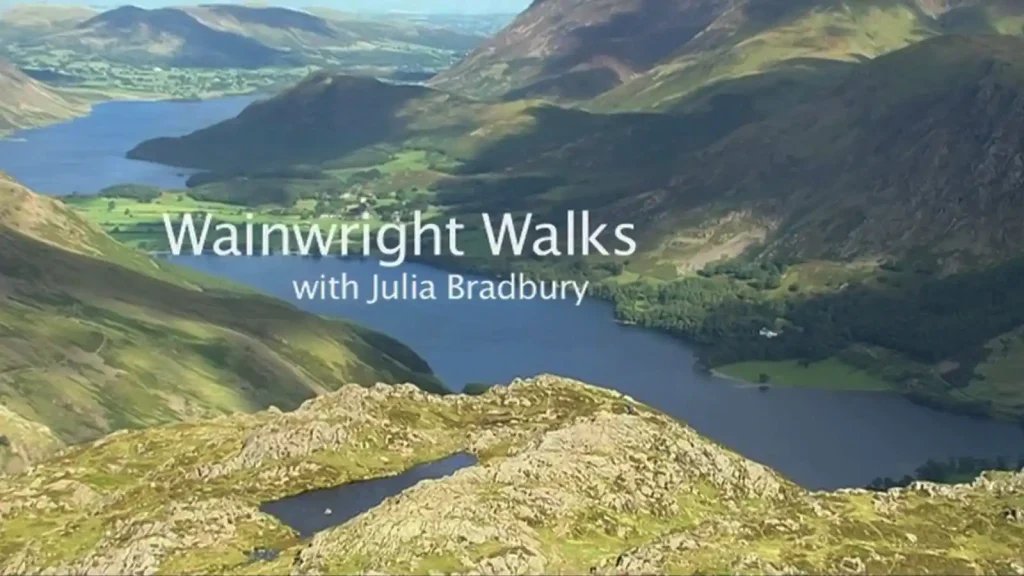
The documentary “Wainwright Walks episode 4 – Scafell Pike” invites viewers on a journey. It’s a journey not just across rugged landscapes, but also into the heart of a passion that has captivated generations. Julia Bradbury, our engaging host, confronts England’s highest peak, Scafell Pike. This ascent marks the zenith of her exploration into the life and legacy of Alfred Wainwright. Wainwright, a name synonymous with the Lake District, inspired millions through his meticulously illustrated guides. Consequently, this episode promises a deep dive into his world.
Before embarking on the formidable 3,000ft climb, Bradbury wisely seeks counsel. She consults Jos Naylor, a celebrated fell runner and local sheep farmer. His insights offer a contemporary perspective on navigating these challenging fells. Thereafter, the documentary focuses on a singular, compelling goal. Bradbury and her film crew must reach the roof of England before daylight fades. This premise sets a captivating stage for adventure and reflection.
Alfred Wainwright was more than a guide writer; he was an artist and, above all, a consummate fell walker. His pictorial guides, born from a profound love for the Lake District, are legendary. They have inspired countless individuals to explore these glorious fells. A century after Wainwright’s birth, Bradbury seeks to understand this enduring appeal. She aims to experience the “real Wainwright experience” firsthand.
Scafell Pike, described by Wainwright as “the one objective above all others,” serves as the ultimate test. Bradbury is not merely climbing a mountain. Indeed, she is tracing the steps of a man who intimately knew every crag and beck. Furthermore, she desires to uncover why Wainwright considered this particular walk the finest of all. The documentary, therefore, becomes a quest for understanding. It seeks to unravel the magnetic pull of both the man and the mountain.
The episode effectively conveys Wainwright’s profound connection to the fells. His descriptions are not just directional; they are poetic and deeply personal. He viewed the fells with an almost reverential awe. This reverence is something Bradbury clearly shares and attempts to convey. The program successfully highlights how Wainwright transformed fell walking from a mere pastime into an almost spiritual pursuit for many.
The ascent of Scafell Pike is no small undertaking. This fact is immediately apparent as Bradbury prepares for the challenge. She carries her waterproofs and a packed lunch, ready before eight in the morning. This attention to detail underscores the seriousness of the venture. The film crew’s three-day wait for suitable weather further emphasizes the mountain’s formidable nature. Even then, the chosen day is uncertain, with the threat of rain looming.
Bradbury’s meeting with Jos Naylor provides a fascinating interlude. Naylor is a legend in his own right, a sheep farmer who has conquered all 214 Wainwright fells in a mere seven days. His feat was a tribute to Wainwright, whose guidebooks he deeply respected. Naylor’s incredible stamina, running 70 fells on his 70th birthday, contrasts sharply with Wainwright’s more contemplative pace. Yet, both men share an unparalleled knowledge and love for these peaks.
Naylor’s advice is practical: pick the right weather for the best views. He also offers quiet encouragement: “You’ll make it all right. You’ve just got to keep going”. This encounter enriches the narrative. It connects Wainwright’s historical presence with the living traditions of the fells. Moreover, it highlights the sheer athleticism involved in fell running, a discipline Naylor has mastered. His almost mystical description of running down Scafell Pike, aided by a helicopter’s downdraft, adds a touch of magic. It’s a vivid contrast to the deliberate, photographic pace of Wainwright.
Wainwright Walks episode 4
The Path Unfolds: From Seathwaite to the Heights
Wainwright’s recommended route from Seathwaite Farm is a seven-hour round trip for most. For a film crew, however, the journey is considerably longer. Bradbury acknowledges the initial challenge: the destination is not visible. The summit lies five miles distant, hidden by the mountainous terrain. This initial uncertainty builds anticipation.
The documentary meticulously charts the course. It begins with a gradual path following the River Derwent southwards to Stockley Bridge. This bridge, an old packhorse crossing, marks the point where the ascent steepens. Wainwright himself, during his 1930s walking holidays, was less equipped than modern walkers. He recalled bringing sturdy shoes, a mac, and just one set of clothing. This historical detail provides context. It underscores the evolution of outdoor gear and attitudes.
Bradbury’s narration, combined with visuals of Wainwright’s hand-drawn maps, brings the route to life. The walk is described as covering two pages in Wainwright’s guide, an ominous sign of its length and complexity. As she progresses, the landscape transforms. The path narrows and steepens as she heads up Grains Gill, aiming for a height of 2,000 feet. The effort becomes palpable. “This is more like rock climbing than walking,” Bradbury observes at one point. Her genuine reactions, like accidentally stepping in a stream, add a relatable human element.
The sounds of bubbling brooks and gentle streams are a recurring motif. These natural soundscapes contrast with the exertion of the climb. The documentary effectively uses these moments to showcase the sensory richness of the fells. It’s not just about the views; it’s about the entire immersive experience.
A Sanctuary of Silence: Sprinkling Tarn
A significant and beautiful segment of the documentary is the detour to Sprinkling Tarn. Wainwright recommended this diversion, and Bradbury, though a self-proclaimed “city girl” typically averse to detours, finds it immensely rewarding. The tarn is one of the walk’s best-kept secrets. It lies just a few hundred yards off the main route, yet it is visited by relatively few of the thousands who tackle Scafell Pike.
The arrival at Sprinkling Tarn is a moment of pure magic. “That is definitely worth a detour!” Bradbury exclaims. The silence is profound, broken only by the occasional sheep or the trickle of water. Here, at nearly 2,000 feet, the sense of height is deceptive. The tarn, dramatically set beneath Great End, offers a space for quiet contemplation. Bradbury revels in this tranquility, a stark contrast to the noise of her urban life.
This interlude serves as a powerful reminder of what Wainwright sought in the fells: solitude and unspoiled beauty. He noted that many walkers, “bewitched by the beauty and solitude of the tarn,” might be tempted to linger. Yet, he urged them onward: “Much remains to be done”. This scene is pivotal. It showcases the gentler, more spiritual side of fell walking, balancing the sheer physical challenge of the main ascent. The imagery here is stunning, capturing the ethereal quality of this hidden gem.
Human Imprints and Enduring Legacy
As Bradbury continues her ascent, the documentary touches upon the impact of human activity on the fells. She encounters path repairers, whose work is a “necessary evil” in maintaining routes popularized by Wainwright himself. These men use rocks, sometimes flown in by helicopter, to reinforce the paths against erosion caused by countless boots. This is a direct consequence of Wainwright’s legacy. His guides opened up the fells to many, but this popularity has a price.
One of the path repairers speculates that Wainwright would have been “pretty scathing” about such overt human imprints. Wainwright was famously hostile to anything that marred the natural landscape. He might have thrown his pipe down in disgust at the sight of constructed paths. Ironically, a shortcut he identified is now a main, heavily repaired route, testament to his influence. An estimated 100,000 people use this path to Scafell Pike annually.
This section adds a layer of complexity to the narrative. It moves beyond a simple appreciation of nature to consider the responsibilities that come with promoting and accessing wild places. The documentary handles this subtly. It acknowledges the conservation efforts without being preachy. It also provides a moment of practical insight into the labor required to keep these beloved paths usable. The “crazy paving stones in the sky” are a testament to both human ingenuity and human impact.
The Wild High Fells and Deceptive Peaks
Leaving the relative shelter of the lower slopes, Bradbury ascends to Esk Hause. At 2,500 feet, it’s the highest pass in the Lake District. The terrain changes dramatically here. It becomes more open, exposed, and wild. The gentle pastures are gone, replaced by a starker, rockier landscape. For centuries, Esk Hause was an important pass for transporting wool, a reminder of the historical human connection to these high places.
The view from Esk Hause is commanding, looking down into three valleys. However, it also presents a moment of potential confusion. Many “wishful thinkers,” as Wainwright termed them, mistake Ill Crag for the true summit of Scafell Pike. Bradbury, consulting her guide, avoids this error. There is still a mile-and-a-half of difficult Lakeland terrain to negotiate.
Wainwright’s description of Ill Crag is particularly evocative. He calls it “a desolate scene. A frozen avalanche of crags and stones… A safe refuge for escaped convicts or an ideal depository for murdered corpses”. This grimly humorous passage highlights his distinctive writing style. It also paints a vivid picture of the ruggedness that awaits. Bradbury’s lighthearted warning to fellow walkers – “Watch out for the bodies!” – maintains the engaging tone. This part of the journey emphasizes the mental challenge of navigating such terrain, where visibility can be poor and false summits can dash hopes.
The Final, Arduous Ascent
The Scafell ridge represents the most consistently high ground in England. For over a mile, the path from Great End, past Ill Crag and Broad Crag, never dips below 2,800 feet. This desolate, volcanic rock is described as inhospitable yet captivating. The wind becomes a significant factor, cutting sharply and making progress more difficult. Bradbury notes her trousers look like “ferrets are running up and down them” due to the wind’s force.
After seven and a half hours of walking, the urgency to reach the summit before dark becomes pressing. The sight of the summit cairn is a moment of relief and renewed determination. However, the landscape itself presents the final obstacles. The path disappears at times amongst a “boulder graveyard” of sharp, jagged rocks. Even the hardy sheep are absent here. Small cairns left by other walkers are the only guides.
Wainwright himself wrote of the magic of camping alone just below this point, watching the sunrise. For Bradbury, however, a disheartening realization dawns. She must descend a “boulder highway” before the final climb to the true summit. “Just when you think you’ve cracked a bit of it,” she remarks, capturing the walker’s frequent experience of effort followed by yet another challenge. The emptiness of the peak, devoid of other people, adds to the sense of isolation and the scale of the undertaking. It is here, facing the peak at close quarters, that Wainwright posed his timeless question: “Why does a man climb mountains?”.
The Roof of England Attained
The final ascent to the top of Scafell Pike is described as the steepest climb of the day. The combination of climbing and filming has made progress incredibly slow. Sensible walkers have long since departed. Yet, after nearly ten hours, Bradbury approaches the culmination of her efforts. She reflects that on this single long day, she has witnessed the full spectrum of what the Lake District offers: wide valleys, steep ravines, silent tarns, and windswept rocky ridges. Wainwright’s biggest climb truly does have it all.
The sight of the cairn, less than a hundred yards away, is a moment of triumph. Reaching the very top is accompanied by exclamations of joy and a palpable sense of achievement. “It’s a pretty fantastic feeling, I’ve got to say,” Bradbury admits, as the wind howls around her. From this vantage point, England’s tallest mountain, she can see Wast Water, the deepest lake, and hundreds of fells stretching out in all directions. The Isle of Man glimmers in the distance.
Wainwright noted that fell walkers are not drawn to this summit for its conventional beauty, because it is not beautiful in that sense. Instead, it is “sturdy and rugged and strong”. The allure lies simply in the fact that it is the highest point in England. Reaching it allows one to say, “I did it”. Bradbury echoes this sentiment: “And I did”.
A Journey’s Climax and Lingering Thoughts
This documentary excels in its portrayal of a personal challenge intertwined with a tribute to a local icon. Julia Bradbury serves as an enthusiastic and relatable guide. Her genuine effort and appreciation for both the landscape and Wainwright’s legacy shine through. The cinematography beautifully captures the grandeur and shifting moods of the Lake District. From misty mornings to sun-dappled tarns and windswept summits, the visuals are consistently stunning.
Compared to other walking or nature documentaries, “Wainwright Walks” offers a unique blend of physical endeavor, historical appreciation, and personal reflection. It is less a purely geographical survey and more a character-driven exploration. While some programs might focus solely on the flora, fauna, or geology, this series places the human experience of the landscape, particularly through Wainwright’s lens, at its core. Its strength lies in this personable approach. It makes the daunting prospect of fell walking accessible and appealing, even to arm-chair travelers.
The program’s pacing is generally effective, mirroring the rhythm of a long day’s walk – periods of intense effort interspersed with moments of quiet beauty. The inclusion of Naylor and the path repairers adds valuable perspectives, enriching the narrative beyond a simple travelogue. If there is a minor weakness, it might be that the sheer length of the walk and the detail of the route could occasionally feel slow for viewers unfamiliar with the fells. However, for enthusiasts of Wainwright or the Lake District, this detail is likely a significant strength.
The societal impact of such a documentary lies in its gentle advocacy for appreciating and preserving natural landscapes. By showcasing the beauty of the fells and the dedication of those who walk and maintain them, it encourages a deeper connection with the outdoors. It subtly reinforces the value of wild spaces for physical challenge, mental well-being, and spiritual solace. The journey up Scafell Pike, as depicted here, is more than just a walk; it’s an encounter with history, with nature in its rawest form, and ultimately, with oneself. The feeling of accomplishment, of standing above it all, is a powerful draw eloquently conveyed.
The Summit of Experience
As twilight embraces the fells, our journey alongside Julia Bradbury reaches its natural conclusion. Indeed, her ascent of Scafell Pike embodies everything Wainwright cherished about the Lake District. The challenge, the beauty, and ultimately, the profound sense of achievement combine to create something truly magical.
Standing atop England’s crown, one cannot help but feel connected to generations of fell walkers before us. Moreover, Wainwright’s presence lingers in every carefully described path and lovingly sketched crag. His guides, therefore, serve as more than mere directions—they are invitations to experience the landscape through his adoring eyes.
What makes this documentary particularly compelling is its honesty. Bradbury never pretends the journey is easy. Instead, she shares every labored breath, uncertain step, and moment of pure joy along the way. Her ten-hour odyssey reveals both the physical demands and spiritual rewards of such an undertaking.
The detour to Sprinkling Tarn, meanwhile, reminds us to embrace unexpected discoveries. Consequently, we learn that sometimes the greatest treasures lie just off our planned route. This mirrors life’s journey, where rigidly following our path might cause us to miss hidden wonders hiding in plain sight.
The human impact on these beloved fells raises important questions. How do we balance accessibility with preservation? Furthermore, would Wainwright himself approve of the changes his popularity inspired? These questions, however, never overshadow the celebration of this magnificent landscape.
Like scattered cairns guiding lost walkers, Wainwright’s words continue pointing the way for adventurers today. His deep connection to these peaks and valleys transcends time. Thus, each step taken on these ancient paths represents both a nod to tradition and a personal voyage of discovery.
The Lake District, with Scafell Pike as its crowning glory, offers more than stunning vistas. Above all, it provides perspective—a chance to rise above daily concerns and glimpse something timeless. Bradbury’s journey reminds us that mountains aren’t merely obstacles to overcome but experiences to embrace.
In the end, perhaps Wainwright’s greatest gift wasn’t his meticulous guides but his invitation to see beyond the obvious. The true summit, after all, isn’t measured in feet and inches but in moments of clarity and connection found along the way.
FAQ Wainwright Walks episode 4
Q: Who is Alfred Wainwright and why is he significant to the Lake District?
A: Alfred Wainwright was more than a guide writer; he was an artist and consummate fell walker who created meticulously illustrated pictorial guides to the Lake District. His profound love for these fells transformed ordinary walking into an almost spiritual pursuit for many enthusiasts. Indeed, a century after his birth, his legacy continues to inspire countless visitors to explore the region. Wainwright’s intimate knowledge of every crag and beck made him synonymous with the Lake District landscape, essentially creating a template for how we experience and appreciate these magnificent natural spaces today.
Q: What makes Scafell Pike special among Wainwright’s walks?
A: Scafell Pike stands as “the one objective above all others” according to Wainwright himself. As England’s highest peak at 3,000 feet, it represents the ultimate challenge for fell walkers. Moreover, this mountain offers the complete Lake District experience in a single journey – from wide valleys and bubbling brooks to silent tarns and windswept rocky ridges. The summit provides unparalleled views across hundreds of fells, with Wast Water (England’s deepest lake) visible below. While not conventionally beautiful, Scafell Pike is, in Wainwright’s words, “sturdy and rugged and strong,” embodying the essential character of the Lake District fells.
Q: How difficult is the Scafell Pike walk for average hikers?
A: The Scafell Pike walk presents a significant challenge for average hikers. Wainwright’s recommended route from Seathwaite Farm typically takes about seven hours round trip for most walkers. The journey involves steep ascents, with some sections feeling “more like rock climbing than walking.” Furthermore, the upper portions feature exposed, rocky terrain with paths that occasionally disappear among what’s described as a “boulder graveyard.” Weather conditions can change rapidly, adding another layer of difficulty. Therefore, proper preparation, suitable gear, and reasonable fitness are essential for safely completing this demanding but rewarding hike.
Q: What is Sprinkling Tarn, and why does Wainwright recommend visiting it?
A: Sprinkling Tarn is a hidden gem – a beautiful mountain lake that lies just a few hundred yards off the main route to Scafell Pike. Wainwright specifically recommended this detour because it offers a moment of profound tranquility amid the challenging hike. Dramatically set beneath Great End at nearly 2,000 feet elevation, the tarn exemplifies the solitude and unspoiled beauty Wainwright sought in the fells. The silence here is remarkable, broken only by occasional sheep or the gentle trickle of water. Consequently, despite thousands tackling Scafell Pike annually, relatively few discover this peaceful sanctuary that perfectly balances the physical demands of the main ascent.
Q: How has Wainwright’s popularity affected the Lake District trails?
A: Wainwright’s popularity has created a double-edged sword for Lake District trails. His guides have inspired thousands to experience these magnificent landscapes, with an estimated 100,000 people now using the path to Scafell Pike annually. However, this popularity has led to significant erosion problems. As a result, path repairers now work constantly, sometimes using helicopter-delivered rocks to reinforce routes against damage from countless boots. Ironically, Wainwright himself was famously hostile to anything marring the natural landscape and would likely have been “pretty scathing” about such human interventions. This tension between accessibility and preservation remains a central challenge in maintaining his beloved fells.
Q: Who is Jos Naylor and how does he connect to Wainwright’s legacy?
A: Jos Naylor is a celebrated fell runner and local sheep farmer who provides a fascinating contemporary connection to Wainwright’s legacy. This remarkable athlete conquered all 214 Wainwright fells in just seven days as a tribute to the guide writer he deeply respected. Even more impressively, Naylor ran 70 fells on his 70th birthday, demonstrating extraordinary stamina and knowledge of the terrain. Although his athletic approach contrasts sharply with Wainwright’s contemplative pace, both men share an unparalleled love and understanding of the peaks. Through Naylor, we see how Wainwright’s influence extends beyond hiking to inspire different ways of experiencing the fells.
Q: What equipment did Wainwright use compared to modern hikers?
A: Wainwright’s equipment during his 1930s walking holidays was remarkably sparse compared to modern hikers. He recalled bringing only sturdy shoes, a mac (raincoat), and just one set of clothing for his expeditions. In contrast, today’s fell walkers typically carry specialized hiking boots, layered waterproof clothing, navigation tools, emergency supplies, and often high-tech gear like GPS devices. This striking difference underscores how outdoor equipment and attitudes have evolved over the decades. Nevertheless, Wainwright’s minimalist approach reminds us that connection with the landscape, rather than gear, remains the essence of fell walking.
Q: What distinguishes “Wainwright Walks” from other nature documentaries?
A: “Wainwright Walks” stands apart from other nature documentaries through its unique blend of physical endeavor, historical appreciation, and personal reflection. Unlike programs that focus primarily on flora, fauna, or geology, this series places the human experience of the landscape at its core. Julia Bradbury serves as a relatable guide, sharing her genuine effort and honest reactions throughout the journey. Furthermore, the documentary’s pacing mirrors a long day’s walk – alternating between intense effort and quiet beauty. This personable approach makes fell walking accessible even to armchair travelers, while including perspectives from figures like Jos Naylor adds depth beyond a simple travelogue.
Q: What can hikers see from the summit of Scafell Pike?
A: From Scafell Pike’s summit, hikers are rewarded with truly breathtaking panoramic views. On clear days, you can see hundreds of fells stretching out in all directions across the Lake District. Additionally, Wast Water, England’s deepest lake, is visible glistening below, creating a striking contrast with the rugged mountain landscape. The Isle of Man can be spotted glimmering in the distance on especially clear days. Moreover, the Scafell ridge itself represents the most consistently high ground in England, with the path never dipping below 2,800 feet for over a mile. This magnificent viewpoint offers a sense of accomplishment that Wainwright described simply as being able to say, “I did it.”
Q: How does Wainwright’s writing style enhance the walking experience?
A: Wainwright’s writing style transforms ordinary route directions into a rich, multi-dimensional experience. His descriptions combine practical guidance with poetic observations and occasional humor, as seen in his description of Ill Crag as “a safe refuge for escaped convicts or an ideal depository for murdered corpses.” Furthermore, his hand-drawn maps and illustrations capture details a photograph might miss. Wainwright viewed the fells with reverential awe, and this passion infuses every word. Consequently, walkers using his guides don’t merely follow a path; they see through his eyes and connect with his deep appreciation of the landscape, creating an almost companionable presence on the journey.