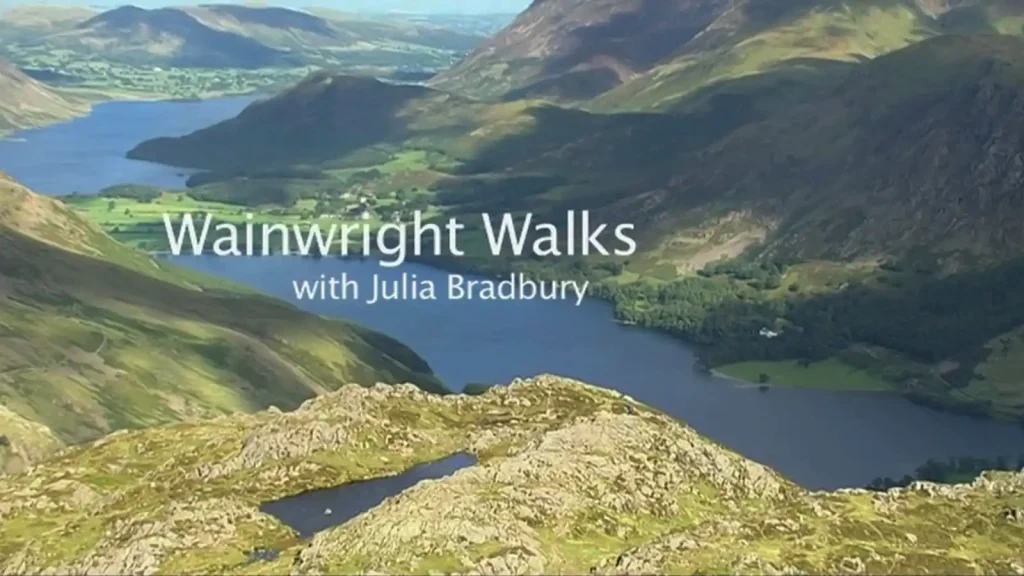
Wainwright Walks episode 9 takes viewers on a remarkable journey through one of the Lake District’s most historically significant and emotionally charged landscapes, where ancient Roman engineering meets the tragic story of a lost village. This particular exploration of High Street reveals layers of history spanning over two millennia, from Roman legions traversing the highest road in Britain to the heartbreaking submersion of an entire community beneath the waters of Haweswater reservoir.
The enduring appeal of Alfred Wainwright’s fell walking philosophy becomes particularly poignant in this remote corner of the Lake District, where solitude and natural beauty converge with profound human stories. Unlike the more popular peaks that draw crowds of hikers, High Street represents what Wainwright called “mountain solitude,” appealing primarily to those seeking both physical challenge and historical connection. The fell’s isolation in the far eastern area of the Lakes has preserved its character, allowing modern walkers to experience something approaching the same sense of discovery that captivated the young Wainwright during his first visit in 1930.
This exploration encompasses multiple interconnected narratives that demonstrate how landscape shapes human experience across centuries. The documentary reveals how geography determined the fate of communities, influenced military strategy, and continues to provide sanctuary for England’s last remaining golden eagle. Moreover, the story illustrates the complex relationship between progress and preservation, showing how the creation of vital infrastructure can simultaneously destroy irreplaceable heritage.
The Roman road that crosses High Street represents one of Britain’s most ambitious ancient engineering projects, reaching 750 meters above sea level to connect strategic forts across the challenging Lakeland terrain. Archaeological evidence presented by National Trust archaeologist Jamie Lund reveals sophisticated construction techniques adapted specifically for high-altitude conditions, demonstrating Roman ingenuity in using local materials including peat, gravel, and brushwood to create a durable pathway through harsh mountain environments.
Understanding this landscape requires grappling with the transformation that occurred in 1935, when Manchester Corporation’s ambitious reservoir project fundamentally altered the valley’s character forever. The creation of Haweswater reservoir, while providing essential water supplies to Manchester, came at the cost of erasing Mardale village and its centuries-old community, creating what local journalist Karen Barden describes as one of the Lake District’s most profound losses.
Wainwright Walks episode 9
The Lost Village of Mardale: A Community Beneath the Waters
The story of Mardale village represents one of the most poignant examples of progress coming at an irreversible cultural cost in British history. When the Haweswater Act passed in 1919, Manchester Corporation gained the legal authority to purchase every piece of land in the valley, setting in motion a process that would culminate in the complete submersion of a thriving farming community. The village, described as one of the most beautiful and tranquil in the Lake District, housed approximately 40 inhabitants by the 1930s, including families who had lived there for generations.
The final church service in August 1935 became a symbolic moment of loss that resonates through local folklore. Although the small church could accommodate only 75 people, 81 mourners crowded inside while others gathered outside, singing “Lift Up Thine Eyes To The Hills” as what Karen Barden poetically described as “the first tears of the reservoir.” The systematic dismantling of the village involved demolishing most buildings, with the Territorial Army using some structures for explosives practice, while the church stones were carefully relocated to construct the reservoir’s draw-off tower.
Even the dead could not remain undisturbed, as approximately 100 bodies from the churchyard required exhumation and reburial in Shap cemetery, where a special section was designated for former Mardale residents. This comprehensive erasure of a community demonstrates the scale of transformation that modern infrastructure projects could demand, particularly in an era when environmental and cultural impact assessments did not exist to protect local heritage.
High Street: Britain’s Highest Roman Road
The Roman road that gives High Street its name represents an extraordinary feat of ancient engineering, constructed around the end of the first century AD to connect the fort at Brougham near Penrith with installations at Ambleside and Keswick. At 750 meters above sea level, this route holds the distinction of being the highest Roman road in Britain, demonstrating the empire’s commitment to maintaining strategic communications across even the most challenging terrain.
Archaeological investigation reveals sophisticated construction techniques specifically adapted for high-altitude conditions. Rather than using the stone paving familiar from urban Roman roads, engineers working on High Street employed local materials in innovative ways. They created a level platform by removing surface peat, then built up layers using gravel, additional peat, brushwood in wet areas, and finally a covering of larger stones. This approach proved remarkably durable, with sections remaining visible and usable for nearly two thousand years.
The road’s strategic importance extended beyond mere military movement, serving as a vital communication link that enabled Roman administration of the northern frontier. The challenging terrain that modern fell walkers find exhilarating would have presented serious logistical obstacles for Roman forces, making the successful completion of this high-altitude route a testament to their engineering capabilities and determination to maintain control over Britain’s remote regions.
The Cultural Legacy of High Street’s Summit
Beyond its Roman origins, High Street’s expansive plateau developed into a significant cultural gathering place for local communities throughout subsequent centuries. The annual shepherds’ meets combined practical necessity with social celebration, bringing together farmers from surrounding valleys to reclaim strayed livestock while engaging in communal festivities that strengthened regional bonds.
These gatherings featured athletics and games that took advantage of the summit’s unique geography, most notably horse racing along what became known as Racecourse Hill. The steep slope between High Street and Riggindale provided a dramatic and dangerous course that tested both horse and rider, creating legendary competitions that drew participants and spectators from across the region. Alfred Wainwright particularly celebrated these historical uses, recognizing how the fell’s accessibility and expansive summit made it an ideal venue for community gatherings.
The summit’s role as a social center demonstrates how geography shapes human culture, with the Roman road’s legacy extending far beyond its original military purpose. The same elevated plateau that facilitated imperial communications later served as neutral ground where different valley communities could gather safely, creating traditions that persisted for centuries after Roman withdrawal from Britain.
Wainwright’s Vision and the Modern Walking Experience
Alfred Wainwright’s first encounter with High Street in 1930 established a lifelong fascination with this particular fell, which he described as forming “a spine along the eastern fringe of Lakeland” that provided “a splendid full day’s march at a consistently high altitude.” His detailed route descriptions emphasize the classic nature of the ascent from Mardale, following the ridge crest directly from valley to summit without variation, creating what he termed “the connoisseur’s route up High Street.”
The fell walking experience that Wainwright championed finds perfect expression on High Street, where the combination of physical challenge, historical significance, and natural beauty creates what he called “an epitome of life.” His philosophy that “the weaklings and irresolute drop out on the way up” while “the determined reach the top” reflects the demanding nature of the ascent, which involves navigating multiple false summits including Heron Crag, Swine Crag, Eagle Crag, and Rough Crag before reaching the final approach via Long Stile.
The route’s character changes dramatically as walkers progress from the reservoir shores through conifer plantations onto the open ridge, eventually reaching the vast grassy plateau that gives the fell its distinctive character. This progression from intimate valley scenery to expansive mountain vistas exemplifies the transformative power of fell walking that Wainwright celebrated throughout his guide books, demonstrating how physical effort reveals landscape perspectives unavailable to casual observers.
Wildlife and Conservation in the Haweswater Valley
The transformation of Mardale valley into Haweswater reservoir inadvertently created one of England’s most important wildlife habitats, particularly for the golden eagle, which maintains its last English nesting site in the surrounding crags. However, this conservation success story carries its own note of sadness, as the valley’s aging male eagle has remained without a mate since 2004, making the future of this population uncertain.
The presence of the golden eagle adds another layer of historical continuity to High Street, as these magnificent birds would have soared over Roman legions just as they do over modern fell walkers. The sight of eagles was once commonplace across the Lake District, making Haweswater’s role as their final English stronghold particularly significant for understanding how landscape changes affect wildlife populations over time.
During drought periods, the reservoir’s receding waters reveal glimpses of the submerged village, including stone walls, roads, and even the tennis court outside the former Dun Bull pub. These periodic exposures of Mardale’s remains create powerful reminders of what lies beneath the surface, though they also attract crowds of tourists who sometimes transform the solemn site into what Karen Barden describes as “a complete circus” with hot dog sellers and ice cream vendors.
Walking in the Footsteps of History: Why High Street Matters Today
Standing on High Street’s windswept plateau today, modern fell walkers literally follow in the footsteps of Roman legions, medieval shepherds, and countless others who found meaning in this elevated crossing point between valleys. The story revealed in Wainwright Walks episode 9 offers something far more profound than mere historical curiosity—it presents a masterclass in how landscape shapes human experience across millennia, and why preserving these connections matters more than ever in our rapidly changing world.
The tale of High Street embodies the beautiful contradiction at the heart of the Lake District experience. Here, progress and preservation dance an eternal waltz, sometimes harmoniously, sometimes tragically. Manchester’s engineers created a reservoir that supplies millions with clean water while simultaneously preserving one of England’s most important golden eagle habitats. Yet this same achievement erased Mardale village so completely that visitors today struggle to imagine the thriving community that once called this valley home. The submerged tennis court and stone walls that occasionally surface during droughts serve as ghostly reminders that our most utilitarian decisions often carry unexpected emotional weight.
Alfred Wainwright understood that fell walking transcends mere physical exercise—it becomes a form of time travel, connecting us to layers of human experience embedded in the landscape itself. His vision of High Street as offering “mountain solitude” feels increasingly prescient in an age of digital overload and urban crowding. The “connoisseur’s route” he championed demands not just physical effort but genuine engagement with place, requiring walkers to slow down, observe, and absorb the stories written in stone and soil.
Perhaps most remarkably, the Roman road that gives High Street its name demonstrates how infrastructure built for one purpose can evolve to serve entirely different human needs. What began as a military communication route became a gathering place for shepherds’ meets and horse racing, later inspiring one of Britain’s greatest walking guides, and today provides a pathway for anyone seeking that transformative combination of challenge and contemplation that Wainwright called “an epitome of life.”
The endangered golden eagle soaring over these fells represents both continuity and fragility—the same species that witnessed Roman construction crews now faces an uncertain future, with England’s last breeding male searching in vain for a mate. This poignant detail reminds us that landscapes never remain static; they constantly evolve through the interplay of human activity, natural processes, and changing climate conditions.
For contemporary walkers, High Street offers something increasingly rare: the opportunity to experience genuine solitude while connecting with an unbroken chain of human presence stretching back two thousand years. In following Wainwright’s carefully described route from Haweswater’s shores to the ancient summit plateau, modern adventurers participate in a conversation across centuries, adding their own footprints to those of Roman soldiers, shepherd families, and countless other seekers drawn to high places.
The enduring appeal of this remote fell suggests that despite our technological sophistication, we still crave the fundamental experiences that drew our ancestors to these heights: physical challenge, natural beauty, historical connection, and the profound satisfaction of reaching elevated ground through our own efforts. In a world where virtual experiences increasingly substitute for physical ones, High Street stands as a monument to the irreplaceable value of putting one foot in front of the other, climbing toward something greater than ourselves.
FAQ Wainwright Walks episode 9
Q: What is Wainwright Walks episode 9 about?
A: Wainwright Walks episode 9 explores High Street, a fell in the Lake District featuring Britain’s highest Roman road. Additionally, the episode reveals the tragic story of Mardale village, which was submerged beneath Haweswater reservoir in 1935. Furthermore, viewers discover how this remote location inspired Alfred Wainwright during his first Lakes visit in 1930.
Q: What happened to Mardale village?
A: Mardale village was completely destroyed in 1935 to create Haweswater reservoir for Manchester’s water supply. Consequently, approximately 40 residents lost their homes, while 100 bodies from the churchyard required exhumation and reburial in Shap cemetery. Moreover, the final church service became a poignant symbol of loss, with 81 mourners crowding into a building designed for 75.
Q: Why is High Street called “High Street”?
A: High Street derives its name from the ancient Roman road that crosses the fell’s summit plateau. Specifically, this route connected Roman forts at Brougham near Penrith with installations at Ambleside and Keswick. Therefore, the name literally refers to a “high street” – an elevated roadway that served as a crucial communication link across challenging Lakeland terrain.
Q: How high is the Roman road on High Street?
A: The Roman road on High Street reaches 750 meters above sea level, making it the highest Roman road in Britain. Remarkably, this extraordinary engineering achievement demonstrates Roman determination to maintain strategic communications across even the most challenging terrain. Additionally, archaeological evidence reveals sophisticated construction techniques using local materials including peat, gravel, and brushwood for durability.
Q: What makes High Street significant for walkers?
A: High Street offers what Alfred Wainwright called “mountain solitude,” providing a classic ridge walk with exceptional historical significance. Furthermore, the route encompasses multiple false summits including Heron Crag, Swine Crag, and Eagle Crag before reaching the expansive plateau. Consequently, walkers experience both physical challenge and historical connection while following what Wainwright termed “the connoisseur’s route up High Street.”
Q: Can you see the remains of Mardale village?
A: During drought periods, Haweswater’s receding waters occasionally reveal submerged remains of Mardale village, including stone walls, roads, and the tennis court outside the former Dun Bull pub. However, these exposures attract large crowds, sometimes transforming the solemn site into what local journalist Karen Barden describes as “a complete circus.” Therefore, such sightings remain rare and unpredictable events.
Q: What wildlife can you see at Haweswater?
A: Haweswater hosts England’s last remaining golden eagle nesting site, though the aging male has been without a mate since 2004. Additionally, the reservoir’s creation inadvertently established important wildlife habitat despite destroying the original village. Furthermore, these magnificent birds represent historical continuity, having soared over Roman legions just as they do over modern fell walkers today.
Q: How difficult is the walk up High Street?
A: The High Street ascent presents a demanding but rewarding challenge, climbing just shy of 3,000 feet through rocky terrain and multiple false summits. Moreover, Alfred Wainwright described the route as “an epitome of life” where “the weaklings and irresolute drop out on the way up.” Nevertheless, determined walkers following the ridge crest enjoy excellent views throughout the classic ascent.
Q: What was the historical significance of High Street’s summit?
A: Beyond its Roman origins, High Street’s expansive plateau served as a cultural gathering place for centuries, hosting annual shepherds’ meets that combined practical livestock recovery with social celebration. Additionally, the summit featured athletics and games, most notably horse racing along the steep slope between High Street and Riggindale. Consequently, this elevated plateau became neutral ground where different valley communities gathered safely.
Q: Why did Alfred Wainwright consider High Street special?
A: Wainwright first climbed High Street during his 1930 Lakes debut, establishing a lifelong fascination with this remote fell that he described as forming “a spine along the eastern fringe of Lakeland.” Furthermore, he appreciated its comparative solitude, noting it appealed mainly to “lovers of mountain solitude.” Therefore, High Street embodied his philosophy that fell walking transcends mere exercise, becoming a transformative encounter with landscape and history.