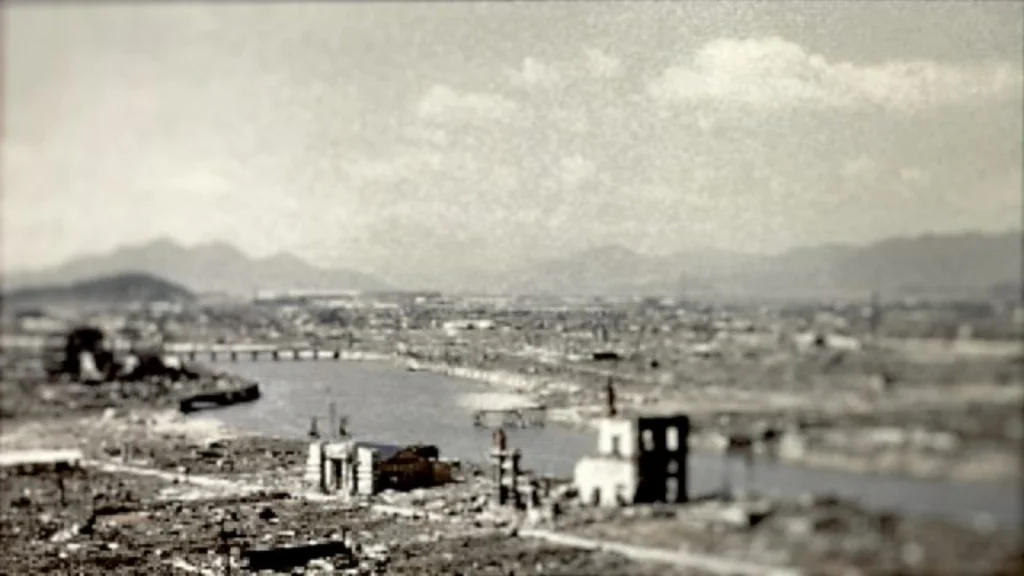
What Happened at Hiroshima: The morning of August 6th, 1945, dawned clear and bright over Hiroshima. People were starting their day. Children were on their way to school. Suddenly, at 8:15 AM, the sky ignited with a silent, blinding flash. It was a light not of this world, like a second sun had exploded just above the city. In that single, horrific instant, the world changed forever. Now, eighty years later, we stand at a crossroads. We must ask ourselves again: what happened at Hiroshima? More importantly, we must consider what its haunting legacy means for our fragile peace today.
The initial impact was unimaginable. The atomic bomb, codenamed “Little Boy,” detonated with the force of 15,000 tons of TNT. Consequently, it wiped the vibrant city off the map. An estimated 78,000 people, out of a population of 350,000, were vaporized in a fraction of a second. They left behind only scorched shadows on stone, ghostly imprints of their final moments. In addition to this, the blast unleashed a terrifying shockwave. It flattened nearly every building within a mile. The city became a sprawling wasteland of fire and debris.
What followed the flash was a vision of hell on Earth. The bomb’s intense heat immediately ignited thousands of fires. Since most of Hiroshima was built of wood and paper, these fires quickly merged. They formed a monstrous firestorm that swept through the ruins. The storm created its own winds, pulling oxygen into its roaring heart. It incinerated everything and everyone in its path. Survivors, horribly burned and disoriented, stumbled through the devastation. They were desperate to find water or escape the suffocating heat. The city’s rivers were soon choked with the dead and dying.
Furthermore, a strange and terrifying phenomenon occurred. A sticky, radioactive “black rain” began to fall. This dark downpour carried deadly particles from the mushroom cloud. Thirsty survivors drank this poisoned water, unknowingly sealing their fate. It was a cruel second wave of death. This rain contaminated the land and water for years to come. Ultimately, it ensured that the tragedy of Hiroshima would not end when the fires finally burned out. The unseen killer of radiation had only just begun its work.
What Happened at Hiroshima
The Invisible Scars
For those who survived the initial blast and flames, a new horror awaited. This was acute radiation sickness. People who seemed uninjured began to fall ill days or weeks later. They suffered from fever, hair loss, and internal bleeding. There was no cure. Consequently, tens of thousands more perished in agony. The long-term effects were just as devastating. Over the following decades, rates of leukemia and other cancers soared among the survivors. The genetic legacy of the bomb was passed down through generations. Children were born with birth defects, bearing the scars of a weapon they never saw.
These survivors, known as hibakusha or “bomb-affected people,” faced a lifetime of suffering. In addition to their physical ailments, they endured severe social stigma. Many struggled to find work or to marry. People feared their illnesses were contagious or hereditary. As a result, many hibakusha concealed their past, living with their trauma in silence. They carried not only the physical scars but also the deep, invisible wounds of memory and prejudice. Exploring what happened at Hiroshima means understanding this prolonged human tragedy.
Echoes in a Modern World
Today, as conflicts rage across the globe, the drumbeat of war grows louder. Disturbingly, the threat of nuclear escalation has re-entered mainstream discussion. Treaties that once held the nuclear arms race in check are fraying. New technologies are making these weapons even more dangerous. This is the context for BBC journalist Jordan Dunbar’s urgent investigation. He delves into the history of August 1945. He seeks to understand how we reached that terrible moment. Above all, he hopes to find lessons that can prevent history from repeating itself.
His journey is a bridge between the past and the present. It connects the post-war arms race and the chilling tensions of the Cold War to today’s high-stakes conflicts. We find ourselves in a similar predicament. The world is once again discussing the unthinkable. The use of nuclear weapons in conflict is a real and terrifying possibility. The story of Hiroshima is therefore not just a history lesson. Instead, it is a stark and vital warning for our time.
Voices Crying Out for Peace
To truly comprehend what happened at Hiroshima, we must listen to those who were there. Jordan speaks with elderly survivors, the hibakusha. Many have only recently found the strength to share their harrowing stories. They see frightening echoes of the past in today’s political climate. Their voices are a powerful plea for peace and disarmament. They share their memories not for sympathy, but as a solemn duty to the future. They want the world to know the true cost of nuclear war. Each story is a testament to human resilience. It is also a reminder of the absolute horror that must never be unleashed again.
The legacy of Hiroshima stretches far beyond Japan’s shores. Jordan also connects with a family in the United Kingdom. He learns how their lives have been personally shaped by the events of 1945. This surprising link shows the global reach of the atomic age. It demonstrates how one single event could cast a long shadow over generations. It affects families thousands of miles away. Their story underscores a profound truth. In our interconnected world, the consequences of such actions are never truly local. They ripple outwards, touching us all in ways we may not even realize.