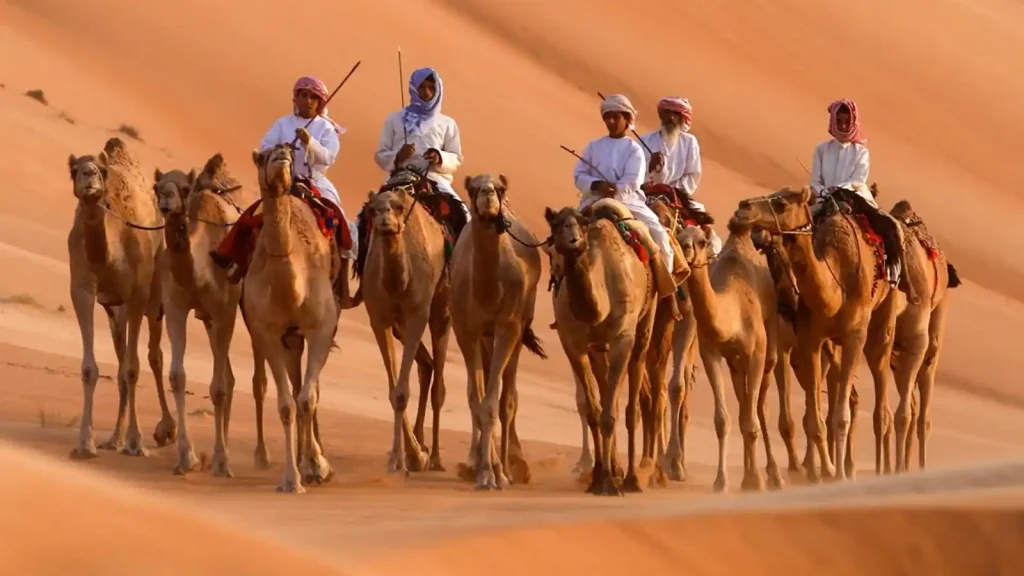
Wild Arabia episode 3: Since the discovery of oil, Arabia has undergone massive transformations that have touched nearly every aspect of life, including the region’s deep-rooted connection to nature. For centuries, the people of Arabia lived in harmony with their environment, relying on its bounty for survival and sustenance. However, with the advent of modern technology and industrialization, that relationship has evolved into something entirely different. The impact of this shift is perhaps most evident in the ancient tradition of camel racing, which has transformed from a simple cultural pastime into a high-tech, cutting-edge sport.
What was once a humble race of endurance and stamina is now a spectacle of advanced innovation. In the past, camel racing relied purely on the bond between the camel and its rider, with little more than the natural landscape to guide them. Today, that tradition has merged with the digital age, turning camel racing into a futuristic event, complete with robotic jockeys, GPS tracking, and state-of-the-art training facilities. It’s a metaphor for Arabia itself—balancing its rich heritage while embracing the possibilities of the future.
Yet, the rapid modernization of the Arabian Peninsula hasn’t come without its challenges, especially for the wildlife that once roamed freely across its vast deserts and coastal regions. As cities rise and infrastructure expands, animals like the Arabian oryx, desert foxes, and gazelles now find themselves living in close proximity to bustling urban centers. But instead of being swept aside, these animals are being actively protected, thanks to the very technology that has transformed the region. This shift toward conservation is perhaps one of the most inspiring aspects of Arabia’s modern story.
One example of this newfound balance is the effort to protect the dugong, a gentle marine mammal that calls the Arabian Gulf its home. As industrial activity in the region grows, dugongs face increasing threats from habitat loss and boat traffic. To counter this, scientists have fitted these creatures with satellite transmitters, allowing them to monitor their movements and ensure their safety. This real-time tracking offers invaluable data, helping researchers understand how to safeguard the dugongs’ delicate environment. It’s a powerful example of how technology, often seen as a force of destruction, can also be harnessed for good.
Similarly, the centuries-old practice of falconry has evolved in step with Arabia’s modernization. Falcons, long revered for their hunting prowess, now take part in a very different kind of chase. Rather than pursuing live prey, they are trained to chase radio-controlled planes, simulating the hunt without causing harm to wildlife. This blend of tradition and innovation ensures that this ancient sport continues to thrive in the modern age while minimizing its environmental impact.
Perhaps one of the most striking examples of Arabia’s commitment to sustainability and environmental stewardship is the construction of the world’s first carbon-neutral city. Nestled in the very heart of oil country, this ambitious project represents a bold vision for the future. It stands as a testament to the region’s recognition that the time has come to think beyond oil and look toward renewable energy sources. Solar panels stretch across vast stretches of desert, harnessing the sun’s power to fuel homes, businesses, and industries without contributing to carbon emissions. This futuristic city, with its sleek design and sustainable infrastructure, is a blueprint for what the rest of the world could aspire to achieve.
But even as Arabia races toward the future, it remains deeply connected to its past. The region’s natural beauty, from its rolling dunes to its crystal-clear waters, continues to inspire awe in both residents and visitors alike. And thanks to the tireless efforts of conservationists and forward-thinking leaders, the wildlife that has called this land home for millennia still finds a place in the modern landscape. Camels still roam the deserts, falcons still soar through the skies, and dugongs still glide through the waters, all under the watchful eye of those dedicated to their preservation.
Wild Arabia episode 3
This balancing act between progress and preservation is no easy feat. It requires a delicate harmony between tradition and innovation, between the needs of a modern society and the rights of the natural world. But Arabia is rising to the challenge, showing the world that it is possible to embrace the future without forgetting where you come from. By using technology not only to advance human society but also to protect the environment, Arabia is forging a path that many other nations could follow.
In the end, the story of modern Arabia is one of transformation—of a land that has adapted and evolved in ways that few could have imagined just a century ago. From the rise of ultra-modern cities to the preservation of ancient traditions, Arabia’s journey is a fascinating study in contrast. It is a place where the past and the future coexist, where camels now race under the watchful eye of satellites and falcons hunt radio-controlled planes. But more than anything, it is a place where people are learning that progress doesn’t have to come at the cost of nature.
As the sun sets over the desert, casting long shadows over the dunes, one can’t help but feel a sense of awe for the resilience of this land and its people. The changes that have swept across Arabia may be vast, but at its core, the connection between the people and the natural world remains unbroken, evolving with the times, yet staying true to its roots. The Arabian Peninsula, with its ever-shifting sands and timeless traditions, continues to surprise and inspire, offering hope that, even in a rapidly changing world, nature and technology can coexist in harmony.
Conclusion Wild Arabia episode 3
As Arabia stands on the threshold of an uncertain yet promising future, it has proven that transformation and tradition can coexist. The story of this remarkable region is a testament to the human capacity for adaptation—where technology has not just shaped cities but safeguarded ancient traditions and fragile ecosystems. In a world often divided between progress and preservation, Arabia has found a way to blend the two in a way that is both inspiring and hopeful.
This journey through modernization, while rapid and sometimes overwhelming, has not left nature behind. Instead, Arabia’s people have embraced the power of innovation to protect what is most precious. From tracking dugongs in the Arabian Gulf to constructing carbon-neutral cities in the heart of oil country, the region has shown that it is possible to harness technology for the greater good. This is not just about survival, but about thriving—about forging a future where nature and human achievement move forward together, hand in hand.
In this land of contrasts, where robotic camel jockeys race across the sands and falcons chase modern prey, there is an undeniable beauty in the balance that has been struck. The traditions that once defined this land continue to live, not in the shadows of progress, but alongside it. Arabia’s deserts still echo with the rhythms of ancient life, even as its cities pulse with the energy of the modern world.
As the sun sets on this chapter of Arabia’s story, one thing is clear: the connection between its people and their land endures, evolving but unbroken. Arabia is not just a place of immense change, but a place of resilience, where progress and preservation are not opposites, but partners in shaping the future. In this delicate dance between old and new, Arabia offers a powerful reminder that with vision and care, we can build a future that honors both our past and our planet.
FAQ Wild Arabia episode 3
Q: How has the discovery of oil impacted the traditional way of life in Arabia?
A: The discovery of oil has led to significant modernization, transforming Arabia’s traditional practices. Ancient customs, such as camel racing, have evolved into technologically advanced sports, reflecting the region’s delicate balance between heritage and progress.
Q: What role does technology play in protecting wildlife in modern Arabia?
A: Technology is crucial in safeguarding Arabia’s wildlife. From satellite transmitters tracking dugongs to radio-controlled planes used in falconry, innovation helps preserve the region’s unique ecosystems while minimizing environmental harm.
Q: How has camel racing evolved in the modern era?
A: Camel racing has transitioned from a cultural tradition into a high-tech sport. Robotic jockeys, GPS tracking, and advanced training methods have revolutionized this ancient practice, blending tradition with cutting-edge technology.
Q: What is Arabia doing to promote sustainability?
A: Arabia is leading sustainability efforts by building the world’s first carbon-neutral city, powered by solar energy. This initiative showcases the region’s commitment to reducing carbon emissions and exploring renewable energy sources.
Q: How does modern Arabia maintain a balance between nature and progress?
A: Arabia achieves balance by using technology to protect its wildlife while embracing development. Conservation efforts coexist with modernization, ensuring that both nature and society can thrive together in harmony.