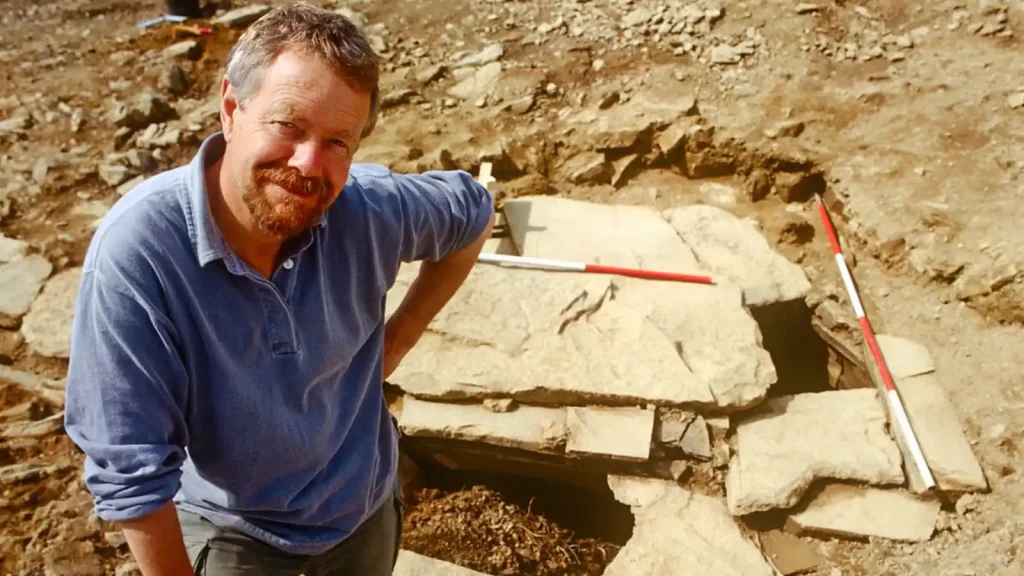
Meet the Ancestors episode 9: In the summer of 1998, an extraordinary discovery was made in the tranquil barley fields of Orkney. A mysterious void suddenly appeared, revealing an ancient secret buried deep beneath the earth. This was not merely an incidental hole; it was the entrance to a burial chamber, undisturbed for an astonishing 5,000 years. Such a discovery represented a time capsule of our distant ancestors, preserved for millennia, and only now brought to light. This revelation unraveled a complex narrative concerning life, death, and ritual practices of the Neolithic period.
As news of the find spread, Julian Richards, a distinguished archaeologist renowned for his passion for unearthing the past, assembled a multidisciplinary team of experts to unravel the secrets of the ancient tomb. This team included forensic specialists, investigative officers, and seasoned archaeologists, each driven by an eagerness to reconstruct the stories of our predecessors.
They began to systematically excavate the tomb, painstakingly removing each skeletal remain with precision. Every unearthed bone was akin to a fragment of a larger historical mosaic, a silent yet eloquent testament to the lives of individuals long forgotten. Drawing upon a diverse range of expertise, the team was able to facilitate a comprehensive exploration of the site, ensuring that various perspectives contributed to the understanding of its significance, drawing upon diverse expertise to maximize understanding of its historical significance.
The burial chamber, undisturbed for millennia, provided a remarkably rare insight into the lives of Neolithic people. As the excavation continued, the team uncovered more than mere skeletal remains; they unearthed an enigmatic story that spoke of a community deeply interwoven with both the natural and spiritual realms. The positioning of the skeletons offered profound insights into their mortuary customs, suggesting intricate rituals and beliefs concerning mortality.
The burial practices preserved in this chamber hinted at a culture rich in symbolism, underscoring a sophisticated worldview encompassing the mysteries of life, death, and what lay beyond. These findings point to the existence of a spiritual framework, perhaps reflective of ancestor worship or cosmological beliefs that guided their understanding of the world.
To stand upon the barley field in Orkney, knowing that beneath lay the remnants of a civilization long obscured, was to feel the weight of history itself. As the excavation proceeded with scholarly rigor, each discovery was handled with immense reverence. Whether it was a bone, a tool, or a pottery shard, every fragment contributed to a more nuanced reconstruction of the lives of those buried there.
The past seemed to reveal itself in incremental layers, each artifact adding depth to the narrative of this community that had been hidden for thousands of years. The process was not merely an extraction of objects but rather a piecing together of human experience—an attempt to bring forth the voices of individuals who had long since ceased to speak.
Meet the Ancestors episode 9 – Remarkable Findings
The findings within the chamber were extraordinary, with skeletons interred alongside tools and ornaments in deliberate positions that conveyed a deep reverence for the deceased. Such careful arrangements implied that death was seen not as an endpoint but as a transition to another existential plane. This perception of death, while not entirely understood by modern scholars, indicated a nuanced spiritual framework that guided their funerary practices. The presence of ornaments and tools suggests they may have believed in a continuation of some aspects of existence, perhaps envisioning the deceased carrying these items into the afterlife.
Julian Richards’ Narrative
Throughout the excavation, Julian Richards offered a compelling narrative of the unfolding discoveries, often remarking, ‘It is as though we are walking alongside these ancient individuals, piecing together their stories fragment by fragment,’ bringing the story to life with his characteristic enthusiasm and analytical insight. He vividly painted a picture of these ancient individuals, contemplating their daily lives, their struggles, and their aspirations. Who were these people? What defined their beliefs? How did they confront the inevitabilities of life and death?
Though conclusive answers remain elusive, Richards’s interpretations, grounded in the archaeological evidence, offered a meaningful glimpse into the human condition during the Neolithic period. He bridged empirical findings with broader anthropological questions, thus bringing the human aspects of this ancient culture into clearer focus.
Architectural Marvel
The burial chamber was an architectural feat in itself. Constructed with imposing megalithic stones and meticulously sealed, it had safeguarded its contents from the ravages of time. The craftsmanship inherent in its construction indicated an advanced understanding of engineering and architecture, far beyond what might be expected of a society often dismissed as primitive.
This was not merely a repository for the deceased; it was a sacred space, constructed with deliberate care and precision. The chamber’s enduring structural integrity, even after millennia, attested to the ingenuity of its builders and underscored the cultural and spiritual importance of the site. This structure provided not only a physical safeguard for the dead but also a lasting monument to the beliefs and values of those who built it.
Cultural and Social Framework
The burial chamber also offered insights into the broader cultural and social context of the Neolithic period. The findings were not solely concerned with death; they also shed light on the lived experiences of this community. The tools and artifacts discovered alongside the skeletons spoke of skilled craftsmanship, hunting, and gathering, suggesting that the community had achieved a balance with their environment.
Though modest in size, the community displayed significant social complexity, governed by traditions, rituals, and social hierarchies. The presence of ornaments, tools, and other objects highlighted a society that valued not only functionality but also aesthetic beauty, reflecting a sophisticated relationship with their environment. These artifacts speak to a cultural life that celebrated artistry and the interconnectedness of community roles.
Connection to Our Ancestors
One of the most compelling aspects of this discovery was the visceral connection it provided to our ancient ancestors. Though separated by five millennia, the funerary practices revealed within the tomb conveyed a profound humanity. The respect shown to the deceased, the careful placement of bodies, and the inclusion of meaningful artifacts suggested that these individuals grappled with the same existential questions of life and death that continue to concern us today.
Despite the temporal gulf, there exists a continuity of emotions and values—a shared humanity that links us to these ancient people. This discovery reminds us that fundamental aspects of human experience—love, grief, reverence for the dead—have persisted unchanged throughout the ages, underscoring the enduring nature of human connection.
Clues About the Community
As the excavation progressed, the team uncovered further evidence about the community that once thrived in Orkney. Although the skeletons were silent, they offered profound insights into physical health, dietary habits, and the challenges faced by these people. Some bones bore evidence of physical exertion, such as enlarged muscle attachment sites and stress markers on joint surfaces, suggesting the demands of daily labor, while others exhibited signs of trauma or disease, painting a picture of the medical difficulties of the time.
The examination of these remains revealed the resilience of individuals who endured harsh conditions yet managed to establish a stable and enduring society. The analysis of dental health, bone density, and injury patterns offered a clearer understanding of their lifestyle, nutrition, and the physical toll exacted by their environment.
Resilience of the Neolithic People
Perhaps the most striking revelation was the resilience demonstrated by these people. Despite adversities, they established a society that thrived in a challenging and remote environment, showcasing their ingenuity and determination. Their survival in such an inhospitable setting attested to their ability to innovate, adapt, and foster a sense of community cohesion that allowed them to persevere.
The inhospitable terrain and harsh climatic conditions posed significant challenges to daily life. These Neolithic people had to contend with unpredictable weather, limited arable land, and the constant demands of securing food and resources. Yet, they managed to create a stable community structure that not only survived but thrived for centuries. Their resilience was not only physical but also cultural; it was evident in the enduring traditions, rituals, and communal bonds that held their society together.
Their story, now being pieced together five millennia later, reveals the remarkable resourcefulness and adaptability they exhibited. The challenges they overcame—harsh climatic conditions, physical tolls of subsistence activities, and the constant threat of scarcity—highlighted their capacity to endure. Evidence from the skeletal remains indicates the wear and tear of daily labor, yet it also tells of the strength and fortitude required to sustain such efforts. The cultural practices that emerged from these conditions—complex burial rites, intricate craftsmanship, and communal activities—speak to a society deeply interconnected and resilient in the face of adversity.
The resilience of these people was evident not only in their physical remains but also in the cultural expressions that enabled them to flourish within an unforgiving landscape. Their ability to adapt was demonstrated through their use of available resources, the construction of protective structures, and the development of technologies that supported their survival. From the way they built their homes to how they organized their communal spaces, every aspect of their society was a testament to human ingenuity in overcoming environmental limitations. Ultimately, their story demonstrates that the human spirit has always been characterized by the ability to overcome challenges and adapt, turning obstacles into opportunities for growth and survival.
Concluding the Excavation
As Julian Richards and his team concluded their work in Orkney, they left behind more than mere collections of bones and artifacts. They had reconstructed a narrative—one that bridged the temporal divide, connecting us to our ancestors in a way that only archaeology can achieve. The burial chamber in the barley field was more than a hole in the ground; it was a portal into a long-forgotten epoch, a time when life and death were intertwined in ways we are only beginning to comprehend.
The team meticulously documented every aspect of the excavation, from the positioning of bones to the intricacies of artifacts, ensuring that no detail was overlooked. This careful analysis of the findings not only provided a window into the daily lives and spiritual practices of these ancient people but also contributed to a broader understanding of Neolithic society as a whole. By capturing every fragment of evidence, Richards and his team ensured that the story of these individuals would continue to be studied and interpreted by future generations, enriching our collective understanding of human history.
Their work in Orkney was a testament to the power of archaeology to breathe life into the past, transforming silent remnants into a vivid narrative that connects us across millennia. It emphasized that archaeology is not just about uncovering objects; it is about reconstructing human experiences and preserving the echoes of lives long gone. Through their efforts, the burial chamber in Orkney became a bridge between the ancient and the modern, a testament to the resilience, creativity, and enduring spirit of humankind.
Reflection on the Discovery
Ultimately, the discovery in Orkney was not solely an investigation into the distant past but a poignant reminder of the enduring nature of our shared human experience. It underscored the significance of archaeological research in revealing this continuity—how the lives of those who preceded us can inform our understanding of humanity today. By studying the lives, practices, and resilience of these ancient people, we deepen our appreciation for the creative, adaptive spirit that defines us.
The story that emerged from this excavation was more than just a historical account; it was a bridge between the past and present, providing us with a profound connection to those who lived millennia ago. The resilience they demonstrated in overcoming the harsh conditions of their environment speaks to the tenacity of the human spirit, which remains a defining trait of our species. The complex rituals and beliefs they held, expressed in the careful arrangement of the burial chamber and the inclusion of meaningful artifacts, show us that our ancestors were as deeply contemplative and connected to the mysteries of life and death as we are today.
Furthermore, this discovery highlights the importance of cultural memory and the ways in which human societies construct meaning around existence. The practices and symbols found within the burial chamber provide an invaluable glimpse into the worldview of the Neolithic people of Orkney, reminding us that the search for purpose and continuity is a universal human endeavor. By examining their artifacts and burial customs, we see the early manifestations of values, community cohesion, and spiritual exploration that are still present in modern societies.
The narrative uncovered through this excavation reminds us that the story of our ancestors is also, in many ways, our own—a testament to resilience, ingenuity, and the universal human experience. It is a reminder that across the vast expanse of time, fundamental human experiences—love, loss, hope, and perseverance—have always shaped our existence. The Orkney excavation does more than reconstruct history; it invites us to see our place within the broader continuum of human life, inspiring a deeper understanding of where we come from and the enduring qualities that bind us together across generations.
Conclusion Meet the Ancestors Episode 9
The excavation of the Orkney burial chamber transcended a mere archaeological endeavor; it represented a profound exploration into the timeless human condition. The artifacts, skeletal remains, and the very architecture of the chamber revealed a society that was deeply engaged with both material and spiritual worlds. Their resilience, ingenuity, and sense of community were not simply historical details but enduring qualities that resonate with us today. The study and preservation of such sites allow us to bridge the temporal divide, offering valuable insights into universal aspects of human existence.
Through archaeology, we come to realize that the fears, hopes, and social connections that shape our lives today were equally significant to our ancestors thousands of years ago. This shared humanity, as reflected in the practices of the Neolithic people of Orkney, serves as a powerful reminder of our continuity and resilience. The burial chamber, concealed for millennia and brought to light in 1998, continues to speak to us, reminding us that the narratives of our ancestors await rediscovery, understanding, and respect by each successive generation.
FAQ: Meet the Ancestors Episode 9
Q: What remarkable find emerged from the Orkney fields in 1998?
A: In 1998, a 5,000-year-old burial chamber was uncovered in Orkney. This ancient tomb, undisturbed for millennia, provided new insights into the lives and ritual practices of Neolithic ancestors.
Q: How did the archaeologists begin their excavation?
A: Led by Julian Richards, a team of archaeologists and specialists conducted a meticulous excavation of the burial chamber. Each skeleton and artifact was carefully unearthed to preserve their historical significance.
Q: What did the burial chamber reveal about Neolithic burial practices?
A: The chamber demonstrated that these individuals deeply respected their deceased, arranging bodies in specific positions with tools and ornaments, suggesting sophisticated spiritual beliefs.
Q: What does the burial site tell us about the lives of people in the Neolithic period?
A: The tools and skeletons found indicated that these individuals were skilled craftsmen and hunters. Despite significant hardships, they established a resilient and enduring community. The artifacts offer insights into their technological abilities and social structure.
Q: Why is the discovery in Orkney significant for understanding our ancestors?
A: This discovery helps bridge the past and present, providing insights into the beliefs, daily life, and resilience of our ancestors. It highlights the continuity of human experience and reveals how fundamental human emotions and concerns have remained consistent across millennia.
Q: How were bodies buried in Neolithic Orkney?
A: Bodies in Neolithic Orkney were buried with great care, often placed in specific positions alongside tools, ornaments, and other grave goods. This practice indicates a belief in an afterlife or continuation of existence, and suggests complex rituals surrounding death. The careful positioning of bodies and inclusion of artifacts reflect a deep respect for the deceased and highlight the spiritual and cultural significance of burial practices in this period.
Q: What do archaeological discoveries tell us about Neolithic people?
A: Archaeological discoveries provide invaluable insights into the lives of Neolithic people. From burial practices to the tools and artifacts found, these discoveries reveal information about their social structures, craftsmanship, diet, health, and spiritual beliefs. The artifacts indicate a sophisticated understanding of their environment and complex social relationships, while the construction of burial chambers points to advanced engineering skills and communal effort.
Q: Significance of the Orkney burial chamber discovery
A: The Orkney burial chamber discovery is significant as it offers a rare, well-preserved glimpse into Neolithic life. It highlights the social and cultural complexities of this community, revealing intricate burial customs, spiritual beliefs, and the resilience of the people. This discovery helps bridge the gap between the past and present, allowing us to better understand how early societies functioned, their values, and how they responded to the challenges of their environment.
Q: What was found in the 5,000-year-old tomb in Orkney?
A: The 5,000-year-old tomb in Orkney contained multiple skeletal remains, tools, ornaments, and other artifacts. The skeletons were laid in deliberate positions, and the presence of tools and ornaments suggests they were buried with items that held significance, possibly for use in an afterlife. These findings provide insight into the funerary practices, social hierarchy, and spiritual beliefs of the Neolithic people.
Q: Where to learn more about Neolithic archaeology in Orkney?
A: To learn more about Neolithic archaeology in Orkney, you can visit the Orkney Museum or the Ness of Brodgar archaeological site. There are also numerous resources available through Historic Environment Scotland and local guided tours that provide in-depth information about the Neolithic monuments and burial sites found throughout Orkney. Books and documentaries on Orkney’s rich archaeological heritage are also valuable resources for further exploration.
Q: What challenges did the Neolithic people of Orkney face, and how did they overcome them?
A: The Neolithic people of Orkney faced harsh climatic conditions, limited arable land, and the constant demands of securing food and resources. Despite these challenges, they demonstrated remarkable ingenuity and resilience. They developed stable community structures, used available resources effectively, and fostered strong communal bonds that allowed them to thrive in a challenging environment.