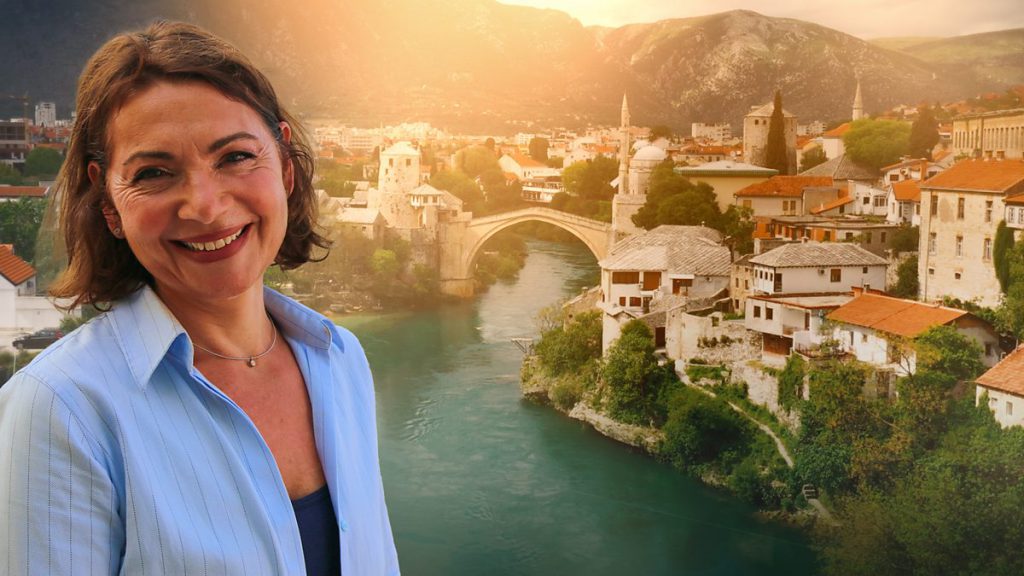
The Balkans Episode 2: Europe’s Forgotten Frontier
Katya Adler embarks on a revealing journey through Romania, Kosovo, and Serbia, exploring a region that has long been overlooked by Western powers but is now emerging as a critical frontier in global geopolitics. As tensions rise in Eastern Europe and superpowers vie for influence, the Balkans have become a focal point in a struggle that could shape the continent’s future.
Romania: NATO’s Expanding Stronghold
Her first stop is Romania, a country that has rapidly transformed from a post-communist state into a key player in NATO’s defense strategy. She visits what is soon to become NATO’s largest military base in Europe, a vast complex designed to reinforce the alliance’s eastern flank against potential threats from Russia.
With Moscow’s increasingly aggressive stance, NATO has bolstered its presence in Romania, making the country one of its most strategically significant members. From state-of-the-art surveillance systems to advanced missile defense installations, the base represents a powerful deterrent against potential incursions. As military officials explain the heightened security measures, it becomes clear that Romania is no longer a peripheral player in European defense but a central pillar of regional stability.
Beyond military concerns, Katya delves into the sentiments of the Romanian people. While many support NATO’s presence, some question whether the country risks becoming a frontline battleground in a potential conflict. The debate underscores Romania’s delicate balancing act—securing its sovereignty while navigating the geopolitical chessboard of Eastern Europe.
Kosovo: A Nation Still in Limbo
From Romania, Katya travels south to Kosovo, Europe’s youngest nation. A quarter-century after its brutal war for independence from Serbia, Kosovo remains a land of contrasts—hope and uncertainty, progress and division.
Driving down Tony Blair Street, named after the British prime minister who championed NATO’s intervention in the 1999 war, she sees firsthand how international alliances have shaped the country. Kosovo has embraced its Western supporters, with streets and monuments commemorating figures like Bill Clinton and Madeleine Albright. Yet, despite international recognition from over 100 countries, Kosovo remains unrecognized by Serbia and several other nations, keeping it in a state of diplomatic limbo.
In the heart of Kosovo, Katya meets ethnic Serbs who still consider the region part of Serbia. Their villages, adorned with Serbian flags, feel worlds apart from the rest of the country. For them, Kosovo’s independence is an illusion, an artificial creation upheld by Western powers. The tensions between Kosovo’s Albanian majority and its Serbian minority remain palpable, manifesting in sporadic protests and diplomatic standoffs.
Despite these divisions, younger generations are eager to move forward. Entrepreneurs and activists are working to build a future beyond the shadows of war, but with Serbia still refusing to acknowledge Kosovo’s sovereignty, true reconciliation remains elusive. The visit paints a picture of a country forging its identity while still haunted by the past.
Serbia: A Battleground of Influence
The journey concludes in Serbia, where a different kind of battle is taking place—one of global influence. Unlike Romania and Kosovo, Serbia has resisted full alignment with the West, maintaining close ties with Russia and China while simultaneously courting European investment.
At a sprawling coal power plant, Katya witnesses how this geopolitical tug-of-war plays out in the energy sector. With heavy financial backing from China, Serbia is modernizing its coal industry, defying EU climate regulations in the process. Meanwhile, Russian energy deals ensure that Serbia remains dependent on Moscow for its fuel needs. The West, eager to curb Russian and Chinese influence, offers incentives for Serbia to transition towards greener energy and closer European integration.
But Serbia is not easily swayed. Nationalist sentiments run deep, and many Serbians still feel betrayed by NATO’s 1999 bombing campaign. This lingering resentment makes the country cautious in its dealings with Western powers. While younger Serbians push for EU membership and modernization, political leaders walk a fine line, leveraging relationships with all sides to extract the best possible deals.
The stakes are high. With global power dynamics shifting, the Balkans are no longer just a historical crossroads—they are a region up for grabs. The fear is that, as the West remains preoccupied with conflicts elsewhere, Russia and China could deepen their foothold, tipping the balance of power in ways that could redefine Europe’s future.
The Balkans episode 2: Europe’s Forgotten Frontier
A Region at a Crossroads
As Katya’s journey comes to an end, one thing is clear: the Balkans are no longer Europe’s forgotten frontier. This region, often dismissed as a backwater of old conflicts and stalled diplomacy, is now a pivotal stage for global power plays. With NATO reinforcing its presence, Kosovo still struggling for full recognition, and Serbia resisting Western influence, the future of the Balkans remains uncertain.
What happens next could determine the fate of not just Eastern Europe, but the entire continent. Will the West solidify its presence and foster stability, or will external powers redraw the balance? The answers lie in a complex web of alliances, ambitions, and historical grievances—a web that the world can no longer afford to ignore.
Conclusion The Balkans episode 2
The Balkans have long been a land of shifting borders and unresolved tensions, a place where history lingers in the air like a whispered warning. Today, this region is no longer a forgotten frontier but a high-stakes arena where global superpowers compete for influence. As Katya Adler’s journey reveals, Romania, Kosovo, and Serbia each stand at a crossroads, their futures intertwined with the ambitions of NATO, the European Union, Russia, and China.
Romania, once on the periphery of European affairs, has stepped into the limelight as a crucial NATO stronghold. Its transformation from a post-communist state into a frontline defender of Western security speaks volumes about the shifting power dynamics in Eastern Europe. The country’s vast military base, bristling with advanced defense systems, is more than just a strategic asset—it is a symbol of commitment, a line in the sand drawn against growing threats. But as Romania embraces this role, it also faces an existential dilemma: security comes at a cost, and many wonder if the price might be too high.
In Kosovo, the scars of war remain fresh, etched into the streets, the monuments, and the memories of its people. It is a nation born from conflict, yet still struggling to gain full recognition. While young Kosovars dream of progress and integration, the lingering divide between the Albanian majority and Serbian minority keeps the country in a state of fragile uncertainty. Every road sign in Kosovo tells a story—some in Albanian, some in Serbian, all reflecting a nation pulled in different directions. True peace remains elusive, caught in the web of history and unresolved grievances.
Meanwhile, Serbia stands as the ultimate geopolitical tightrope walker, balancing on the edge of multiple alliances. It is a country that remembers the NATO bombings of 1999 and refuses to forget, yet looks westward for economic opportunities. It welcomes Chinese investments, leans on Russian energy, and entertains European Union overtures—all while preserving its own nationalist spirit. This delicate dance of diplomacy reflects Serbia’s determination to play all sides in a game where the stakes could not be higher.
As the world’s attention shifts from one crisis to another, the Balkans remind us that history does not disappear—it simmers beneath the surface, waiting for the right moment to boil over. This is a region where decisions made today will echo for generations, where alliances are tested, and where the future of Europe is quietly being rewritten. The question remains: who will shape that future? The answer lies not just in the hands of world leaders but in the resilience of the people who call the Balkans home. Their story is still being told, and the world would do well to listen.
FAQ The Balkans episode 2: Europe’s Forgotten Frontier
Q: Why is the Balkans considered a critical geopolitical frontier?
A: The Balkans is a crucial geopolitical hotspot due to its strategic position between Western Europe, Russia, and the Middle East. Major powers, including NATO, the EU, Russia, and China, vie for influence in the region, shaping its political and economic future.
Q: How has Romania transformed into a key NATO stronghold?
A: Romania has rapidly evolved from a post-communist nation into a frontline NATO defense hub. Hosting one of NATO’s largest military bases, it strengthens Europe’s eastern flank with advanced surveillance systems, missile defenses, and strategic military assets to counter potential Russian threats.
Q: What are the major challenges Kosovo faces as an independent nation?
A: Despite gaining independence in 2008, Kosovo struggles with international recognition, economic development, and ethnic tensions. While over 100 countries recognize Kosovo, Serbia and several global powers refuse to do so, keeping it in diplomatic limbo and hindering its full integration into global institutions.
Q: Why does Serbia maintain strong ties with Russia and China?
A: Serbia’s historical ties with Russia, economic partnerships with China, and nationalist sentiments make it hesitant to fully align with the West. Russian energy deals and Chinese investments in infrastructure and energy projects provide Serbia with economic leverage, while lingering resentment from NATO’s 1999 bombing campaign fuels distrust toward Western alliances.
Q: How do young generations in the Balkans view their future?
A: Many young people in the Balkans aspire for a future integrated with the European Union, seeking economic opportunities, stability, and modernization. However, nationalist divisions, political uncertainty, and external influences continue to shape their aspirations, forcing them to navigate a complex and evolving geopolitical landscape.
Q: What impact could external powers have on the Balkans’ future?
A: The influence of NATO, the EU, Russia, and China could determine the region’s stability and development. Increased Western support may push the Balkans toward integration with Europe, while deeper Russian and Chinese involvement could shift power dynamics and create new geopolitical tensions.