Wainwright Walks episode 3 – Unveiling the Charm of Lakeland’s Smallest Giant: An Analysis of Wainwright Walks, Castle Crag
The enduring allure of England’s Lake District finds vivid expression in the documentary series Wainwright Walks. Episode three focuses specifically on Castle Crag. It follows presenter Julia Bradbury into the Borrowdale Valley. This area is notably Britain’s wettest vale. Her mission is clear. She aims to ascend Castle Crag. Furthermore, she seeks to understand its unique place in fell walking history. Alfred Wainwright included 214 fells in his famous pictorial guides. Remarkably, Castle Crag stands alone. It is the only summit under 1,000 feet deemed worthy of inclusion. Bradbury sets out to discover why this diminutive peak earned such distinction.
The documentary effectively blends travelogue with historical exploration. It uses Wainwright’s legacy as a constant reference point. Bradbury begins her journey in the village of Grange. From there, she embarks on a relatively short walk. The route measures about a mile and a half. However, the narrative quickly establishes that scale is not Castle Crag’s defining feature. Instead, its character and history hold the key. Early in the episode, Bradbury meets Sarah Woodcock. Woodcock is the National Trust’s senior curator for the Lake District. This interaction provides essential context. It grounds the walk within the broader landscape of conservation and tourism.
Woodcock highlights the National Trust’s significant role. The Trust manages a quarter of the Lake District. Moreover, she discusses the immense visitor numbers. Approximately 19 million people visit annually. This figure underscores the challenges of balancing access with preservation. Wainwright himself cherished the peacefulness of the fells. Consequently, such numbers might have shocked him. The conversation also touches upon Borrowdale’s industrial past. Sheep farming, mining, and particularly slate quarrying shaped this landscape. This history contrasts sharply with the tranquil image many visitors seek today. Indeed, Castle Crag itself is a former quarry site. This fact becomes central to understanding its rugged appeal.
Bradbury’s presentation style is engaging and accessible. She acts as an enthusiastic guide for the viewer. Her journey mirrors the experience many walkers might have. She navigates the path, shares observations, and expresses genuine wonder. Furthermore, she frequently references Wainwright’s own words. She quotes his descriptions of Castle Crag. For instance, he called it “an obstruction in the throat of Borrowdale”. This metaphor captures its geographical position perfectly. It forces the River Derwent through a narrow passage. Bradbury also shares Wainwright’s humorous side. She notes his dedication of book six to his own legs. These moments add personality to the legendary guidebook author.
The documentary skillfully portrays the walk’s progression. It starts gently through woodland alongside the River Derwent. Then, the path ascends towards the old quarry road. The landscape transforms dramatically. Imposing crags dominate the view. Bradbury effectively conveys the changing atmosphere. She moves from lush greenery to the stark beauty of slate spoil heaps. The climb intensifies significantly towards the summit. A zig-zag path carved from slate presents a challenge. This section visually represents the fell’s industrial scars. It also highlights Wainwright’s fascination with man’s impact on nature.
Subject matter expertise is woven throughout the narrative. Bradbury consults Wainwright’s guides directly. She discusses his meticulous approach to mapping and illustration. He used photographs to create detailed pen-and-ink sketches back home. This dedication produced the iconic guides still used today. The documentary also incorporates geographical details. It mentions the official height of Castle Crag (951ft). Interestingly, Wainwright initially estimated it slightly higher. Such details appeal to those interested in fell walking specifics. Additionally, the mention of Herdwick sheep, introduced by Vikings, adds local flavour. The story of Millican Dalton, the “Borrowdale Hermit,” provides another layer. He lived in a cave on Castle Crag. His eccentric life embodies a desire for freedom in nature.
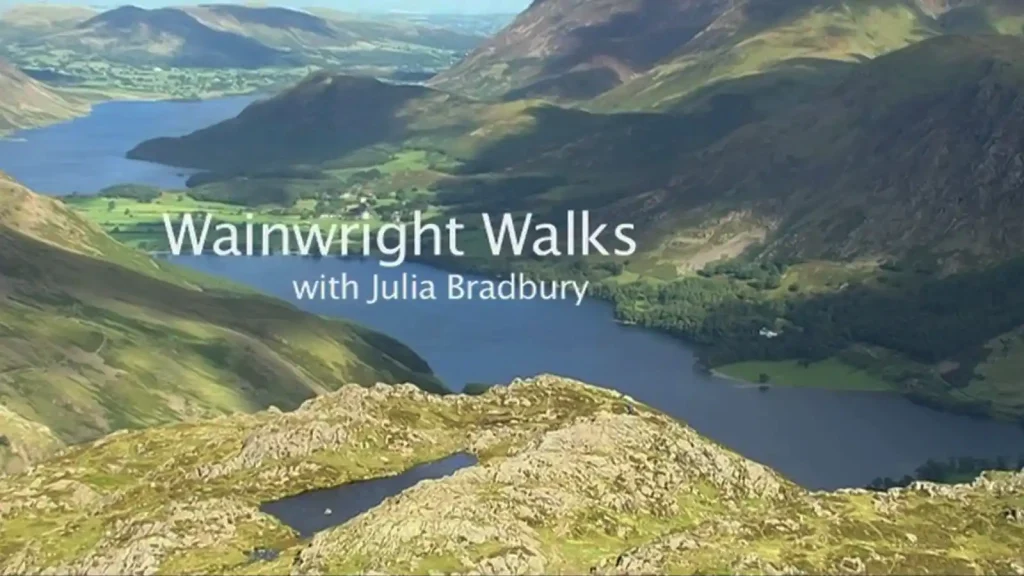
Visually, the documentary captures the beauty of Borrowdale effectively. Sweeping shots showcase the valley and Derwentwater. Close-ups reveal the texture of the slate and flora. The filmmakers handle the changeable Lake District weather well. Sunlight filters through trees. Later, clouds gather, hinting at potential rain. This reflects the reality of walking in Britain’s wettest valley. The contrast between the lower wooded sections and the exposed upper slopes is striking. The final ascent up the spoil heap is particularly dramatic. It emphasizes the fell’s unique character, shaped by both nature and industry.
Assessing the documentary’s strengths, its accessibility ranks high. It caters to a broad audience. Viewers need not be experienced fell walkers to appreciate the journey. Bradbury’s relatable presentation makes the experience inviting. The integration of Wainwright’s life and work provides a strong narrative hook. It elevates the program beyond a simple walking guide. Furthermore, the exploration of local history adds depth. Understanding the quarrying past enriches the appreciation of the landscape. The relatively short length of the walk itself makes Castle Crag an achievable goal. The documentary successfully argues for its inclusion in Wainwright’s guides despite its modest height. Its unique blend of natural beauty, industrial history, and rugged character makes it special.
However, potential weaknesses could be noted. For seasoned Wainwright enthusiasts or expert mountaineers, the treatment might seem introductory. The focus remains largely on Bradbury’s personal experience. Deeper analysis of Wainwright’s specific mapping techniques or complex geological features is limited. Additionally, while the history is touched upon, some viewers might desire more extensive detail about the quarrying operations or the lives of the workers. The encounter with the National Trust curator, while informative, is relatively brief. Expanding on the conservation challenges could offer further substance. The program prioritizes visual appeal and narrative flow over exhaustive detail. This is a valid choice for its target audience but may leave specialists wanting more.
Wainwright Walks episode 3
In terms of societal impact, documentaries like Wainwright Walks play a role in promoting outdoor recreation. They encourage appreciation for natural landscapes. Moreover, they highlight the importance of conservation efforts. By showcasing the beauty of the Lake District, the program may inspire viewers to visit. This contributes to local tourism, albeit adding to the visitor pressure discussed.
The focus on Wainwright also helps keep his legacy alive. It introduces new generations to his work and his passion for the fells. The episode subtly touches on themes of solitude versus community. Wainwright sought peace, yet millions now follow his paths. The presence of the war memorial at the summit adds a poignant layer. It connects the landscape to human history and sacrifice.
Compared to other documentaries in the nature or walking genre, Wainwright Walks: Castle Crag holds a distinct position. Many programs focus purely on natural history or extreme mountaineering challenges. This series, however, is deeply rooted in cultural heritage. The figure of Alfred Wainwright provides a unique lens. It is less about conquering peaks and more about experiencing landscapes as he did.
Unlike survival-focused shows, the tone is gentle and appreciative. It shares similarities with travelogues that explore specific regions. Yet, its connection to Wainwright’s guides gives it a specific literary and historical anchor. The blend of personal journey, historical context, and practical walking information is characteristic of this style. It successfully captures the spirit of Wainwright’s own approach. He combined detailed observation with personal reflection.
The episode successfully argues that Castle Crag’s inclusion was justified. Its dramatic profile, rich history, and rewarding views belie its low altitude. Wainwright recognized its unique personality. He saw it as “so magnificently independent, so ruggedly individual”. Bradbury’s journey effectively translates this assessment for a television audience. She experiences the steep final climb. She marvels at the panoramic views from the summit cairn. This cairn also serves as a war memorial. This adds solemnity to the picturesque location. The documentary shows how history, nature, and human experience intertwine on this small fell. It demonstrates that significance is not solely measured in height. Character and story matter profoundly.
Through Bradbury’s exploration, the viewer gains insight into Wainwright’s perspective. He valued the essence of a place. Castle Crag, despite its industrial scars, offered a concentrated Lakeland experience. It provided beauty, challenge, and a sense of history within a compact area. The documentary conveys this effectively. It uses Wainwright’s own evocative prose alongside stunning visuals. The journey up Castle Crag becomes a metaphor. It represents discovering hidden value in unexpected places. The fell stands as a testament to resilience. Nature reclaims industrial sites. Small peaks offer grand experiences. Bradbury concludes her walk visibly convinced of the fell’s special status. She affirms its place as a “perfect little gem”.
Conclusion Wainwright Walks episode 3: The Enduring Legacy of Castle Crag
As Julia Bradbury descends from Castle Crag’s summit, we’re left with a profound appreciation for Wainwright’s wisdom. The smallest giant in Lakeland proves that greatness isn’t measured in feet or meters. Instead, it’s found in character, history, and the stories etched into the landscape.
Castle Crag stands as a perfect metaphor for life’s unexpected treasures. We often chase grand peaks while overlooking the smaller summits that might actually offer richer experiences. Moreover, the fell’s industrial past reminds us how human activity and nature dance together through time, creating something uniquely beautiful.
The documentary brilliantly captures this delicate balance. Through Bradbury’s eyes, we witness the transformation from woodland serenity to the dramatic slate-strewn summit. Her journey mirrors our own as viewers – initially questioning why this modest hill earned Wainwright’s approval, then gradually understanding its undeniable charm.
Wainwright himself would likely smile at how his legacy continues. His words, lovingly quoted throughout the episode, still guide walkers decades later. Furthermore, his appreciation for Castle Crag’s “magnificent independence” demonstrates his unique perspective. He valued quality over quantity, character over conformity.
The Lake District faces significant challenges today. With millions of visitors annually, the tension between accessibility and preservation grows stronger. Yet Castle Crag embodies resilience. It weathered centuries of industrial use and now thrives as a natural haven. Similarly, the region must adapt while preserving its essential character.
For those who walk in Wainwright’s footsteps, Castle Crag offers a perfect introduction to fell walking. It presents challenges without overwhelming, rewards effort with spectacular views, and connects walkers to both natural and human history. Like a perfectly crafted short story, it delivers a complete experience in condensed form.
As the clouds gather over Borrowdale, we’re reminded that the Lake District’s magic lies partly in its changeability. Castle Crag, like a chameleon, reveals different faces under varying light and weather. Consequently, no two visits are ever quite the same.
In the end, Wainwright’s littlest giant stands tall in our imagination – not despite its modest stature but because of its oversized personality. It beckons us to lace up our boots and discover for ourselves why sometimes the smallest peaks leave the biggest impressions.
FAQ Wainwright Walks episode 3
Q: Who presents the Wainwright Walks episode featuring Castle Crag?
A: Julia Bradbury presents the Wainwright Walks episode featuring Castle Crag. She guides viewers through the Borrowdale Valley, Britain’s wettest vale, as she ascends this unique fell. Throughout the journey, Bradbury shares observations, quotes from Wainwright’s guides, and expresses genuine wonder at the landscape, making her an engaging and accessible host for viewers.
Q: Why did Alfred Wainwright include Castle Crag in his famous pictorial guides despite its low height?
A: Alfred Wainwright included Castle Crag because of its distinctive character, dramatic profile, and rich historical significance rather than its height. Although standing at only 951 feet, Castle Crag offers a concentrated Lakeland experience with stunning views, industrial heritage as a former quarry site, and unique personality. Wainwright himself described it as “so magnificently independent, so ruggedly individual,” making it the only summit under 1,000 feet worthy of inclusion among his 214 documented fells.
Q: What industrial history is associated with Castle Crag and the Borrowdale Valley?
A: Castle Crag itself was a former slate quarry site, which explains its rugged, dramatic appearance today. The broader Borrowdale Valley has a rich industrial past shaped by sheep farming, mining, and particularly slate quarrying activities. Consequently, this industrial heritage creates a fascinating contrast with the tranquil natural beauty visitors seek today. The documentary highlights how these past human activities have permanently shaped the landscape, with features like the zig-zag path carved from slate representing the fell’s industrial scars.
Q: What conservation challenges does the Lake District face according to the documentary?
A: The Lake District faces significant challenges balancing access with preservation due to immense visitor pressure. Sarah Woodcock, the National Trust’s senior curator, reveals that approximately 19 million people visit annually, while the Trust manages a quarter of the Lake District. Furthermore, these numbers would likely have shocked Wainwright himself, who cherished the peacefulness of the fells. The documentary touches on this tension between promoting tourism and maintaining the natural character that attracts visitors in the first place.
Q: How does the documentary visually capture the Borrowdale landscape?
A: The documentary uses sweeping panoramic shots to showcase the valley and Derwentwater, while close-up footage reveals the texture of slate and flora throughout the journey. Additionally, the filmmakers masterfully capture the Lake District’s changeable weather, with sunlight filtering through trees and clouds gathering later. The contrast between lower wooded sections and exposed upper slopes is particularly striking, illustrating the dramatic transformation of the landscape as Bradbury ascends toward the summit.
Q: What interesting characters are mentioned in connection with Castle Crag?
A: The documentary mentions Millican Dalton, known as the “Borrowdale Hermit,” who lived in a cave on Castle Crag. His eccentric lifestyle embodied a profound desire for freedom in nature, adding a fascinating human element to the fell’s history. Moreover, the program touches on Alfred Wainwright’s own distinctive personality, sharing his humorous side through anecdotes like his dedication of book six to his own legs, which adds depth and charm to the legendary guidebook author’s portrayal.
Q: How does the documentary compare to other walking or nature programs?
A: Unlike survival-focused shows or purely natural history documentaries, Wainwright Walks is deeply rooted in cultural heritage with a gentle, appreciative tone. The series uses Alfred Wainwright as a unique lens, focusing less on conquering peaks and more on experiencing landscapes meaningfully. Additionally, it blends personal journey, historical context, and practical walking information in a way that captures Wainwright’s own approach of combining detailed observation with personal reflection.
Q: What is the significance of the memorial at Castle Crag’s summit?
A: The cairn at Castle Crag’s summit serves as a war memorial, adding a layer of solemnity to this picturesque location. This memorial connects the natural landscape to human history and sacrifice, creating a poignant moment in the documentary. Consequently, this feature demonstrates how Castle Crag intertwines natural beauty with cultural significance, offering visitors a chance for both scenic appreciation and respectful remembrance when they reach the summit.
Q: What makes Castle Crag a good introduction to fell walking for beginners?
A: Castle Crag offers an ideal introduction to fell walking because its route is relatively short at about a mile and a half, making it an achievable goal even for less experienced walkers. Nevertheless, it still presents enough challenge through sections like the zig-zag slate path to give a taste of fell walking difficulty. Like a perfectly crafted short story, it delivers a complete Lakeland experience in condensed form, providing spectacular views, natural beauty, and historical interest without requiring extensive hiking skills.
Q: How did Alfred Wainwright create his famous pictorial guides featured in the documentary?
A: Alfred Wainwright used a meticulous approach to mapping and illustration, taking photographs during his walks and later creating detailed pen-and-ink sketches at home. This dedicated process produced the iconic guides that remain popular with fell walkers today. Furthermore, the documentary shows Bradbury consulting these guides directly during her journey, demonstrating their enduring practical value and artistic merit despite being created decades ago, cementing Wainwright’s legacy as more than just a guidebook author but as an artist who captured the essence of the Lake District.