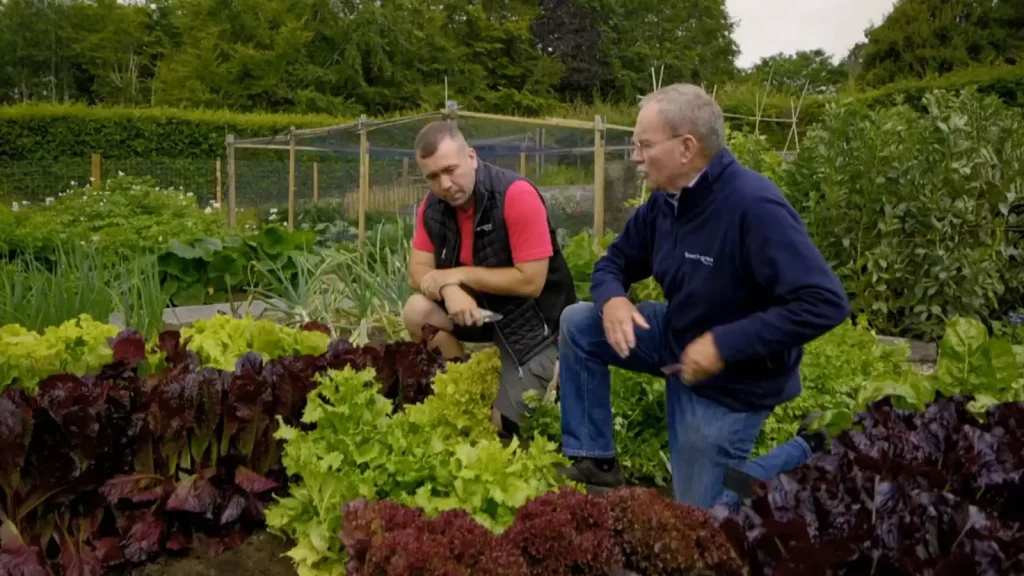
Welcome to a brand new episode from our favourite Scottish garden. In The Beechgrove Garden 2025 episode 19, a gentle peace usually settles over the vibrant flowerbeds and burgeoning vegetable plots. The air typically hums with the buzz of bees and the quiet satisfaction of growth. However, this week, a palpable sense of concern hangs in the air. A shadow has fallen across a corner of this beloved sanctuary. Beneath the soil’s surface, an unseen enemy threatens the health of many cherished crops. This challenge will test the team’s knowledge, their resolve, and their deep love for the garden they nurture so carefully.
Calum and George come together to confront this serious problem head-on. Their conversation reveals the identity of the culprit: club root. This is a common yet devastating soil-based disease. It acts like a silent saboteur, attacking the roots of brassicas and other related plants. Consequently, the team faces a significant threat to their cabbages, broccoli, and cauliflowers. The two gardeners discuss the potential impact with worried expressions. They know this disease can linger in the soil for years. Therefore, its discovery in one area of Beechgrove requires immediate and decisive action to prevent a widespread catastrophe.
The disease manifests in a truly insidious way. Instead of thriving, affected plants become stunted and wilted, especially on sunny days. Below ground, the roots transform into swollen, club-like masses. As a result, they can no longer absorb water and nutrients effectively. George explains this process with clarity, showing the gnarled evidence from an afflicted plant. The team understands that this is more than just a horticultural problem. It is an emotional blow for any gardener who has poured their heart into raising healthy plants. Nevertheless, their initial shock quickly turns into a powerful determination to fight back.
With the problem identified, the focus immediately shifts to containment and management. The Beechgrove team are strategists in the face of this garden adversary. They know that completely eradicating club root is nearly impossible. Therefore, their plan is to limit its impact and halt its relentless spread. They begin by cordoning off the infected area to prevent contaminated soil from travelling on tools or boots. Furthermore, they discuss the critical importance of soil pH. Club root thrives in acidic conditions, so they will add lime to raise the soil’s alkalinity, making it less hospitable for the disease.
Next, the team explores the long-term strategy of crop rotation. This ancient practice is one of their most powerful weapons. By moving susceptible crops to a new, clean area of the garden each year, they can starve the disease. Calum also investigates resistant plant varieties. Plant breeders have fortunately developed cultivars with a natural defence against club root. In addition, these resilient plants offer a beacon of hope for future harvests. This part of the episode is a masterclass in resilient gardening, demonstrating how to adapt and overcome even the most persistent of challenges.
Despite the gravity of the club root situation, the vibrant pulse of the garden continues elsewhere. The show transitions smoothly to the main vegetable plot, a testament to nature’s enduring bounty. Here, George finds solace and joy in the simple act of harvesting. He moves through the rows, his basket quickly filling with the fruits of his labour. The camera lingers on the deep greens of spinach and the bright orange of perfectly formed carrots. He gathers produce destined for the kitchen, reminding us all of the deep connection between the garden and the table. This segment is a beautiful, calming contrast to the earlier drama.
The Beechgrove Garden 2025 episode 19
Planning for the future is an essential part of a gardener’s soul. While battling a current problem, it is vital to sow the seeds of future beauty. Accordingly, Calum turns his attention to a task filled with promise and optimism. He begins sowing viola seeds for a spectacular display of autumn colour. With a gentle touch, he prepares the seed trays and carefully places the tiny seeds. He explains that these hardy little flowers will provide a welcome splash of purple, yellow, and blue when much of the garden is beginning to fade. This act of forward-thinking is a powerful symbol of hope.
Our journey then takes us away from Beechgrove for a short while. We travel to the lush landscape just outside Dumfries. Here, we get another delightful report from Colin Crosbie’s personal plot. Colin shares his own gardening story, offering a different perspective and fresh inspiration. We see the unique challenges and triumphs he faces in his own space. This regular feature provides a wonderful glimpse into another gardener’s world. Consequently, it enriches our understanding and passion for the craft, proving that beautiful gardens can be created everywhere. Colin’s segment feels like visiting an old friend who is always eager to share their latest discoveries.
As always, the episode is filled with the week’s invaluable handy hints. These small, practical tips are often the most memorable takeaways for viewers. The team shares nuggets of wisdom on everything from tool maintenance to clever, natural pest control. These are the secrets that elevate a garden from good to truly great. They empower viewers to return to their own gardens with new confidence and skills. Whether you are a novice or a seasoned expert, these hints provide something useful for everyone. They are a cherished and essential part of the Beechgrove experience.
Ultimately, The Beechgrove Garden 2025 episode 19 is a compelling narrative of resilience. It masterfully balances the stark reality of a serious garden disease with the enduring hope and joy that gardening brings. The team’s response to the club root crisis is a powerful lesson in problem-solving and perseverance. At the same time, the bountiful harvest and the sowing of future flowers remind us that the cycle of life in the garden never truly stops. It is an episode that will leave you feeling informed, inspired, and deeply connected to the earth.
The Beechgrove Garden 2025 episode 19 review
The Beechgrove Garden 2025 episode 19 masterfully explores the intricate dance of creation, maintenance, and problem-solving that defines modern horticulture. This installment navigates a diverse landscape of topics, from tackling a devastating soil-borne disease to designing a beautiful and fully accessible space. It provides a wealth of practical advice that empowers enthusiasts to cultivate not just plants, but also resilience and foresight in their own plots. The episode serves as a timely reminder that a thriving garden is a product of continuous learning and adaptation.
For many, the height of summer represents the peak of their gardening efforts, a time to enjoy the fruits of their labor. However, this period is also critical for forward-planning and vigilance. It is when subtle issues can escalate and when preparations for the coming seasons must begin. The guidance offered demonstrates how proactive care, from sowing seeds for autumn colour to managing pests and diseases, ensures a home garden remains a place of beauty and productivity year-round. An expert garden is one that anticipates the future while managing the present.
This comprehensive review of The Beechgrove Garden 2025 episode 19 delves into its core themes. We will examine advanced propagation techniques for a variety of challenging seeds. We will also dissect the serious threat of clubroot disease, outlining the expert strategies for its containment and management. Furthermore, the episode showcases a truly inspirational garden transformation, highlighting principles of accessible design that can be applied to any style garden. Finally, it covers the nuanced art of harvesting vegetables and observing the garden for future improvements.
Successful gardening hinges on a deep understanding of plant life cycles and the environment. It requires more than just planting a seed and hoping for the best. Expert gardeners know that observation is one of their most powerful tools. They learn to read the subtle cues plants provide, from the yellowing of an onion leaf to the wilting of a cabbage. This foundational knowledge allows for timely interventions that can save a crop or enhance a future display of flowers.
The episode beautifully illustrates that the joys of a garden are multifaceted. There is immense satisfaction in harvesting fresh, crisp lettuce or perfectly formed onions grown with your own hands. Equally, there is profound pleasure in the visual splendour of a border filled with vibrant blooms or the tranquil sound of a water feature. This installment powerfully communicates that a garden can and should be a space that caters to all senses and all levels of physical ability, making it a truly personal sanctuary.
Ultimately, the journey through this episode is one of empowerment. It provides the knowledge to confront significant challenges, like the discovery of clubroot in a cherished vegetable plot. The detailed demonstrations offer a clear roadmap for gardeners to follow, demystifying complex processes and encouraging experimentation. The program transitions seamlessly from identifying a problem to presenting a suite of practical, actionable solutions, a hallmark of its enduring appeal to gardeners everywhere.
Confronting Clubroot and Other Garden Challenges
A significant challenge emerged in The Beechgrove Garden 2025 episode 19 with the discovery of clubroot in a competition vegetable bed. George Anderson explained that this is a serious issue for any gardener. Clubroot is not a fungus or bacterium but a slime mould, a soil-dwelling organism that specifically attacks members of the brassica family, which includes cabbages, cauliflowers, sprouts, and calabrese. Its insidious nature means it can exist silently in the soil as microscopic spores, completely unknown to the gardener until a susceptible plant is introduced.
The science behind a clubroot infection is fascinatingly direct. When a cabbage or related plant begins to grow, its roots release natural chemicals, or exudates. These exudates act as a trigger, causing the dormant clubroot spores in the soil to germinate. Once active, the organism infects the fine root hairs, the primary structures for absorbing water and nutrients. From there, it moves into the main root system, causing the cells to expand uncontrollably. This results in the characteristic gnarled, club-like swellings that give the disease its name, effectively crippling the plant’s ability to function. A plant with clubroot will often wilt on a sunny day, a key sign that its root system is compromised.
Preventing the spread of clubroot requires meticulous garden hygiene, as the spores are easily transported. George noted several potential pathways for its introduction into the Beechgrove plot, including on the soles of shoes, on garden tools, within contaminated compost or mulch, or on the roots of imported plants. To combat this, the team implemented strict measures, such as sterilising footwear at entrances to the trials area and thoroughly cleaning all tools after use. This discipline is essential for containing an outbreak and protecting the wider green garden.
Managing clubroot once it is established is a long-term commitment. The spores can remain viable in the soil for as long as a decade, making simple eradication impossible. Therefore, the most effective strategy is a combination of crop rotation and the use of resistant varieties. By not planting brassicas in the affected soil for many years, gardeners can slowly reduce the spore load. In the meantime, growing specially bred clubroot-resistant varieties of cabbage and cauliflower allows for a successful harvest even in infected ground. Any infected plant material must be carefully removed and either burned or sent to landfill; it should never be added to the compost heap, as this will only perpetuate the problem.
Propagation Techniques: From Complex Seeds to Simple Cuttings
The episode provided a masterclass in seed propagation, showcasing diverse techniques tailored to the specific needs of different plants. George Anderson began with Trillium chloropetalum, a plant that demands immense patience. He explained that its seeds have a sticky, sweet mucilage that attracts ants and wasps, which then act as natural distributors. For sowing, he used a lean compost mix containing ordinary compost, extra perlite for drainage, and leaf mould to retain moisture. After sprinkling the seeds, he covered them not with more compost, but with a layer of grit. This keeps the surface clean, prevents moss growth, and allows the gardener to see when germination occurs.
The true test of a gardener’s patience comes with the trillium’s germination timeline. George emphasized that nothing will appear above the soil in the first year; during this time, the seed only produces a root. It is not until the second year that a single green shoot will emerge. This highlights the critical importance of keeping detailed records, including the sowing date on the label, to prevent the pot from being discarded prematurely.
A similar patient approach is needed for Cyclamen hederifolium. George demonstrated sowing these seeds onto the same gritty compost mix, explaining their clever natural mechanism where the pollinated flower coils up and pulls the seed pod back to the base of the plant for protection. These seeds will germinate the following spring.
In stark contrast, George demonstrated a completely different method for Meconopsis complexus, a yellow poppy with seeds as fine as dust. Instead of putting the seeds on the compost and covering them, he first applied a layer of grit to the compost surface. He then carefully sprinkled the tiny seeds over the top of the grit. When watered, the seeds wash down into the crevices, perfectly mimicking how they would settle in a natural, rocky environment. This technique leads to much faster results, with germination expected in early autumn of the same year. These tiny seedlings, however, will require protection in a cold frame over winter.
Meanwhile, Calum demonstrated a more conventional but equally timely technique: sowing violas for autumn and spring displays. Using the variety ‘Red Tiger Eye’, he filled a tray with seed compost and, importantly, watered it before sowing. This pre-moistening prevents the very fine viola seeds from being washed away. He scattered the seeds thinly, explaining that this sowing was timed for autumn colour, while a later sowing would provide plants for spring. To ensure good germination, he covered the seeds with a light layer of vermiculite, which helps retain moisture and excludes the light that can inhibit sprouting. This method offers a cost-effective way to produce a large number of plants.
Colin Crosbie provided a follow-up on another form of propagation: cuttings. He showed off the Helenium cuttings he took earlier in the year, which were now robust young plants with pots full of healthy white roots. He noted an interesting phenomenon where two cuttings placed in the same pot often grow better together. This is because the roots produce and share growth hormones, a small but significant detail for anyone engaged in home garden propagation. These successful cuttings were now ready for the next stage: planting out into the garden.
Designing for Accessibility and Enjoyment
A truly inspiring segment of The Beechgrove Garden 2025 episode 19 featured the Edinburgh garden of Karin and Carson Ralton, a space completely redesigned around accessibility. Karin, who was diagnosed with MS 24 years ago, explained that her mobility is now reliant on a wheelchair. The original garden was largely inaccessible, with gravel and limited paths that restricted her to a small area near the back door. The transformation was born out of a desire for Karin to have the freedom to access and enjoy her entire outdoor space independently.
The design philosophy was brilliantly simple yet effective: the garden was built around a network of smooth, wheelchair-friendly paths and interspersed with planting pockets. This structure provided the essential framework, allowing Karin to navigate every corner of the plot. The development of the garden was also spurred on by the pandemic, as visits to garden centres became a primary outing for the couple. This led to a gradual accumulation of diverse plants that now fill the space with life and colour. The result is a testament to how a garden can be adapted to meet changing life circumstances without sacrificing beauty or horticultural interest. It is a perfect example of a functional style garden.
The Raltons incorporated several innovative and sustainable features into their ecogarden. A key element is a timber boardwalk, which Carson built to allow Karin to reach a beloved pond. To ensure longevity and environmental responsibility, the boardwalk’s structure is built on top of foundations made from recycled plastic, a fantastic and durable material. Another clever feature is a water fountain crafted from an upcycled central heating water tank. Karin noted her love for the soothing sound of the water, and the boardwalk gives her the independence to visit the pond and its resident frogs whenever she wishes.
Karin also shared her passion for succulents, demonstrating how she creates beautiful container displays. She explained that succulents are an excellent starting point for new gardeners because they are so resilient. Her technique for potting them was particularly clever. After placing a piece of crock over the drainage hole in her bowl, she used empty plant pots as placeholders. She filled the bowl with a gritty, free-draining compost mix around the placeholders, then removed them to leave perfectly sized holes for her succulents.
This avoids a struggle to dig holes later and protects the delicate plants. She finished by top-dressing with grit to keep the leaves off the damp soil and prevent rot, a vital tip for keeping these plants healthy.
The Art of the Harvest and Garden Observation
The episode also celebrated the rewards of a productive vegetable plot, with George Anderson demonstrating the finer points of harvesting. He began with spring onions, variety ‘Kyoto Market’, which had been sown in clumps rather than a continuous row. George explained this method is not just for convenience; it is a strategic way to manage disease. If one clump becomes infected, it can be removed without the disease easily spreading along the entire row. This is a simple but effective technique for any top garden.
Next, George turned to the main crop of onions. He advised harvesting them when they are large enough to be useful in the kitchen, ideally around the size of a tennis ball for good storage potential. A key sign that onions are nearing maturity is when the foliage begins to yellow and die back. At this stage, many experienced gardeners will gently bend the leafy tops over at the neck. This action constricts the stem, slowing the flow of sap to the leaves and diverting the plant’s energy into the bulb. This process helps the onion to firm up and mature properly, preparing it for months of storage.
The harvest continued with broad beans, specifically the long-podded ‘Bunyard’s Exhibition’. George shared how to tell when the pods are ready: they should be shiny, and the beans inside should feel firm and lumpy. He stressed the importance of picking them by pulling downwards to avoid tearing the plant. He also demonstrated the gourmet practice of “double podding”—removing the individual beans from their pod and then slipping off their tough outer skins. This extra step yields a tender, sweet bean that tastes, as he described it, like a garden pea. As a bonus tip, he noted that the fresh leafy tops of the broad bean plants can be steamed and eaten.
Beyond the harvest, Colin Crosbie emphasized the crucial role of observation in garden management. He advocated for gardeners to take the time to simply sit in their garden and look. This practice reveals what is working well, what is not, and what tasks need to be prioritized for the coming seasons. In a modern twist on a timeless practice, Colin uses his mobile phone to take photographs of areas he wants to improve.
These images serve as a visual to-do list for autumn and winter, reminding him to divide and bulk up certain plants, such as his yellow and gold flowers, to create a more impactful display next year. This blend of traditional observation and modern technology defines the contemporary expert garden.
Finally, Colin demonstrated planting his newly rooted Helenium cuttings. He arranged them in a natural “drift” to create a flowing, high-impact display. In a move that might seem harsh, he systematically cut off all the existing flowers from the young plants. He explained this is an act of “kindness” to the plant. By removing the flowers, the plant is not tempted to expend its energy on producing blooms and seeds. Instead, all its resources are directed downwards, into establishing a strong, healthy root system. This sacrifice of immediate flowers ensures a much larger, more robust, and floriferous plant in the long run.
Cultivating Resilience: The Garden as Teacher and Sanctuary
The Beechgrove Garden’s encounter with clubroot serves as a powerful metaphor for life itself—sometimes we face challenges that can’t be simply wished away or quickly fixed. Like the persistent spores lurking beneath the soil, many of our toughest obstacles require not just immediate action, but long-term strategy, patience, and an unwavering commitment to moving forward despite setbacks. The team’s measured response—containment, rotation, resistant varieties—mirrors the wisdom we need in our own lives when facing seemingly insurmountable problems.
What strikes me most profoundly about this episode is how it illuminates gardening’s dual nature as both teacher and healer. While George and Calum grappled with disease management, they simultaneously demonstrated the forward-thinking optimism that defines successful gardeners. Sowing viola seeds for autumn color while battling a root disease isn’t just good horticultural practice—it’s an act of faith in the future. It reminds us that even in our darkest moments, we can plant seeds of hope for seasons yet to come.
The transformation of Karin and Carson’s garden offers perhaps the most inspiring lesson of all. Their story transcends accessibility design to reveal something deeper about adaptation and possibility. When life changes our circumstances, we have a choice: we can retreat to whatever small corner remains manageable, or we can reimagine the entire landscape. Their boardwalk to the beloved pond isn’t just practical infrastructure—it’s a bridge between who Karin was and who she continues to be. It’s proof that gardens, like their gardeners, can evolve to meet new realities without losing their essential beauty or purpose.
The harvesting demonstrations remind us why we garden in the first place. There’s something almost sacred about pulling your own onions from the earth or snapping fresh broad beans from their glossy pods. In our increasingly digital world, these simple acts connect us to rhythms that have sustained humanity for millennia. When George speaks of “double podding” broad beans or bending onion tops to encourage maturity, he’s sharing more than technique—he’s passing down the accumulated wisdom of countless gardeners who understood that good things take time and attention.
Colin’s advice about simply sitting and observing might seem passive in our action-oriented culture, but it’s actually revolutionary. In a world that constantly demands our attention, the act of quietly watching what thrives and what struggles becomes both meditation and education. His practice of photographing areas for future improvement bridges ancient wisdom with modern tools, proving that the best gardening traditions adapt rather than resist change.
Whether you’re facing your own garden’s clubroot crisis, planning accessible spaces for changing abilities, or simply trying to grow better tomatoes next season, the principles remain constant: observe carefully, plan thoughtfully, act decisively, and never stop learning. Every challenge is an opportunity to deepen your understanding, every success a foundation for future growth.
Step outside tomorrow morning. Feel the soil between your fingers. Notice what’s thriving and what needs attention. Plant something—anything—for the future you. Because in the end, every garden is an act of optimism, every seed a vote of confidence in tomorrow’s possibilities.
FAQ The Beechgrove Garden 2025 episode 19
Q: What is clubroot disease and why is it so dangerous for gardens?
A: Clubroot is a devastating soil-borne slime mould that specifically attacks brassica family plants including cabbages, cauliflowers, and broccoli. Unlike typical fungal diseases, this persistent organism can survive in soil for up to a decade as microscopic spores. When susceptible plants grow nearby, their root exudates trigger spore germination, causing characteristic swollen, club-like root masses that prevent proper water and nutrient absorption.
Q: How can gardeners prevent clubroot from spreading in their plots?
A: Prevention requires meticulous garden hygiene since spores easily travel on footwear, tools, contaminated compost, and plant roots. Additionally, sterilize shoes before entering growing areas and thoroughly clean all tools after use. Furthermore, quarantine new plants before introduction and avoid sharing equipment with other gardeners. However, once established, focus shifts to long-term management through crop rotation and resistant varieties rather than complete eradication.
Q: What are the best propagation techniques for challenging garden seeds?
A: Different seeds require tailored approaches based on their natural mechanisms. For instance, trillium seeds need gritty, well-draining compost and extraordinary patience, taking two full years to show above-ground growth. Meanwhile, dust-fine poppy seeds benefit from reverse sowing onto grit surfaces, allowing natural washing into crevices. Moreover, pre-moistening seed trays prevents fine seeds from washing away, while vermiculite covering excludes germination-inhibiting light.
Q: How do you create an accessible garden design for wheelchair users?
A: Successful accessible gardens center around smooth, wheelchair-friendly pathways connecting all areas with strategically placed planting pockets. Therefore, eliminate gravel surfaces and create firm, level paths using appropriate materials. Additionally, incorporate raised beds at suitable heights and ensure adequate turning spaces. Furthermore, features like timber boardwalks over water features extend accessibility while upcycled elements like repurposed water tanks add sustainable character without compromising function.
Q: When and how should gardeners harvest onions for optimal storage?
A: Harvest onions when they reach tennis ball size and foliage begins yellowing naturally. Consequently, experienced gardeners gently bend leaf tops at the neck to constrict sap flow, redirecting energy into bulb development. This technique helps onions firm up properly for extended storage. Moreover, timing is crucial – harvest too early and bulbs won’t store well, too late and they may begin deteriorating. Therefore, monitor foliage color changes as your primary harvest indicator.
Q: What makes garden observation such a powerful tool for plant health?
A: Regular observation reveals subtle plant cues that indicate health problems or growth opportunities before they become serious issues. Furthermore, experienced gardeners learn to read yellowing onion leaves, wilting cabbages, and other early warning signs. Additionally, modern techniques like photographing problem areas create visual to-do lists for future improvements. However, this practice requires dedicated time simply sitting and watching, which seems passive but provides invaluable diagnostic information.
Q: Why do gardeners remove flowers from newly planted cuttings?
A: Removing existing flowers from young plants redirects energy toward root establishment rather than bloom production, ensuring stronger long-term growth. Although this seems counterintuitive, this ‘kindness’ prevents plants from expending resources on reproduction when they should focus on survival. Consequently, plants develop more robust root systems that support significantly larger, more floriferous displays in subsequent seasons. Therefore, sacrifice immediate gratification for substantially better future performance.
Q: What soil conditions help manage clubroot disease effectively?
A: Clubroot thrives in acidic soil conditions, making pH management a critical control strategy. Therefore, adding lime raises soil alkalinity, creating less hospitable conditions for spore survival and germination. Additionally, improving drainage reduces moisture levels that favor disease development. However, these measures work alongside crop rotation rather than replacing it. Furthermore, resistant plant varieties provide the most reliable harvest success in previously infected areas.
Q: How do companion plantings benefit propagation success rates?
A: Two cuttings grown together in the same pot often outperform single plantings because roots produce and share growth-promoting hormones naturally. Moreover, this symbiotic relationship mimics natural plant communities where root networks support collective health. Additionally, clump sowing of seeds like spring onions provides disease management benefits – infected sections can be removed without affecting the entire planting. Therefore, strategic companion arrangements enhance both propagation success and garden resilience.
Q: What makes double-podding broad beans worth the extra effort?
A: Double-podding involves removing beans from pods and then slipping off their tough outer skins, revealing tender, sweet kernels that taste remarkably similar to garden peas. Furthermore, this gourmet technique transforms ordinary broad beans into a delicacy worthy of fine dining. Additionally, the fresh leafy tops can be steamed and eaten, maximizing harvest value. However, timing matters – pods should be shiny with firm, lumpy beans inside for optimal flavor and texture.