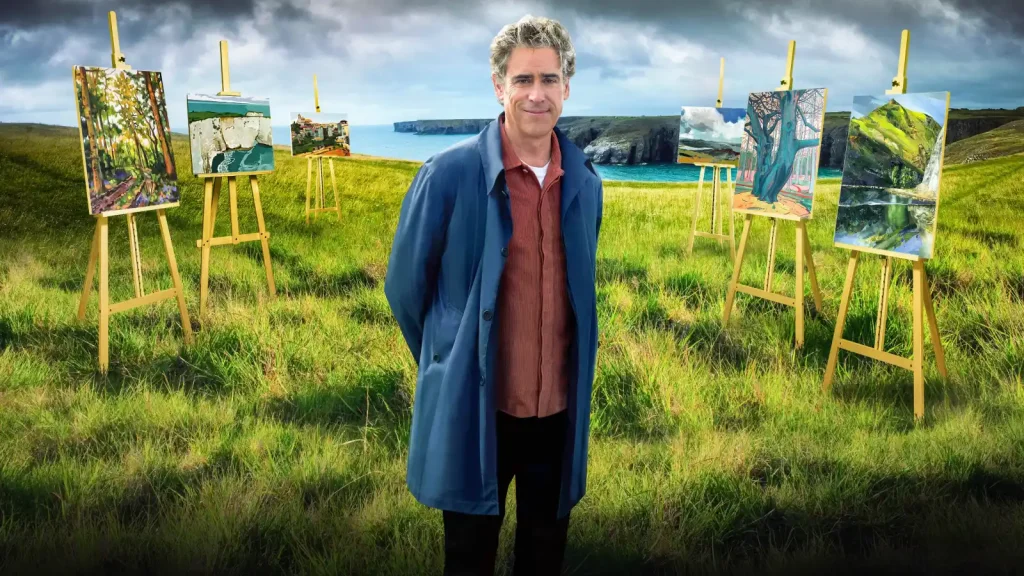
Landscape Artist Of The Year 2026 episode 1 marks a triumphant return to the screen, blending the serene beauty of the British countryside with the high-stakes pressure of a prestigious televised competition. The series remains a cornerstone of the arts community, offering a vital platform for both amateur and professional painters to showcase their technical prowess and unique creative visions. This particular installment finds its heart in the Lake District, a region historically intertwined with the evolution of the very tools the artists use today. The atmosphere is charged with a mix of reverence for the landscape and the palpable tension of a ticking clock.
The significance of this episode extends beyond mere entertainment, as it introduces a fresh dynamic to the panel of esteemed judges. As the artists set up their easels on the shores of Derwentwater, the competition enters a new era of critical evaluation. This transition in leadership brings a renewed focus on bold ideas and work that pushes the boundaries of traditional landscape art. The presence of fifty wildcard competitors nearby adds a layer of democratic opportunity, ensuring that talent can emerge from any corner of the field.
The scope of the day involves an intense four-hour challenge where eight invited participants must interpret a complex vista featuring mountains, ancient woodland, and a historic island. The article will explore the specific techniques employed by the artists, from meticulous oil applications to innovative mixed-media approaches involving lace and poetry. It will also examine the historical context of the location and the specific criteria the judges use to determine who moves forward. Each brushstroke made under the Cumbrian sun contributes to a larger story of personal expression and technical endurance.
Background information from the event highlights the immense pressure of the £10,000 commission at stake. The ultimate winner of the series will travel to County Mayo to paint Croagh Patrick, Ireland’s holy mountain, for the National Gallery of Ireland. This prize elevates the competition from a local heat to a career-defining opportunity. For the artists gathered at Derwentwater, the day is not just about capturing a view but about proving they possess the stamina and vision required for such a monumental task.
The environment serves as both a muse and a formidable opponent. The graphite-rich hills of Cumbria, which famously inspired the invention of the pencil, provide a backdrop that is as intellectually stimulating as it is visually arresting. The artists must contend with shifting light, moving clouds, and the scrutiny of experts who have spent their lives immersed in the world of fine art. This creates a high-pressure environment where every decision, from the choice of palette to the placement of a single figure, is magnified.
The transition from the initial setup to the heat of the competition happens rapidly. As the upbeat music fades and the four-hour timer begins, the artists must quickly move past their nerves and commit to a composition. Some choose to focus on the grand scale of the fells, while others zoom in on the architectural details of the Italianate boathouse on Derwent Island. This divergence in focus illustrates the vast range of interpretations possible within a single landscape.
As the day progresses, the technical diversity of the group becomes apparent. Professional artists from across the UK bring their established styles to the pods, ranging from urban-inspired graphic clarity to romantic, impressionistic brushwork. Meanwhile, the wildcards on the shoreline experiment with lino prints, wool textures, and collage. This variety ensures that the judges are presented with a wide spectrum of creative output, making the task of selection increasingly difficult.
The direction of the heat is defined by how each individual handles the “sublime” nature of Derwentwater. The judges are looking for more than just a literal transcription of the scene; they seek work that captures the energy and spirit of the place. As the artists navigate the challenges of the day, the audience gains an intimate look at the creative process, from the first charcoal mark to the final finishing touch.
Landscape Artist Of The Year 2026 episode 1
Technical Diversity And Methodologies In Landscape Artist Of The Year 2026 episode 1
The artists featured in the first heat of the season displayed a remarkable range of technical approaches, highlighting the evolving definition of landscape art. Andy Cropper, a professional artist from Sheffield, provided a stark contrast to his usual urban subject matter. His submission piece featured a nocturne of an office block, yet at Derwentwater, he had to adapt his oil and acrylic technique to a vast expanse of water and mountains. This shift required him to embrace a looser style than his typical meticulous work, focusing on the texture and ripples of the lake rather than the sharp lines of man-made structures.
Conversely, David Garrett utilized his background in graphic design and his experience as a school chaplain to bring a sense of order to the natural chaos. He employed stencils to achieve clean lines and sharp accents, a method that initially seemed at odds with the organic curves of the fells. However, the judges noted that his work successfully combined these sharp edges with softer passages, creating a rhythmic composition. His ability to find geometry in the landscape allowed him to construct a view that led the eye across the water to the distant peaks with deliberate precision.
The use of unconventional materials was most prominently seen in the work of Juan Lynn Quinn. Her approach integrated mixed media, including French lace and written poetry, to create a “dreamlike” interpretation of the scene. By embroidering lace onto the canvas, she aimed to provide a texture akin to skin, reflecting her spiritual connection to nature and the archetype of the mother. While the judges found this multifaceted approach intriguing, they also noted the difficulty of harmonizing such disparate elements within the four-hour timeframe.
The Influence Of Location In Landscape Artist Of The Year 2026 episode 1
Derwentwater served as more than just a scenic backdrop; it acted as a historical and atmospheric catalyst for the artists. Known as the “Queen of the Lakes,” the area is famous for its majestic fells, such as Cat Bells, and the ancient woodland that fringes the water. The historical significance of the Borodale Valley, where a storm in the 16th century allegedly revealed the graphite that led to the invention of the pencil, added a layer of professional heritage to the day. This connection to the history of drawing tools provided a poignant subtext for the artists working in the pods.
The atmospheric conditions of the day presented both opportunities and obstacles. The light in the Lake District is notoriously fickle, moving across the mountains and changing the tonal values of the landscape every few minutes. Judy Flanagan, transitioning from a career in education to professional art, chose to anticipate these changes by focusing her composition on the right-hand side of the vista. She aimed to capture the “golden hour” and the romantic light as it moved across the water, utilizing breathy brushstrokes to create an impressionistic and atmospheric scene.
For other artists, the location demanded a focus on narrative and scale. Kevin Day, a professional from Newcastle, insisted on including trademark figures in his landscape to provide a sense of story and human proportion. By placing a mother and child on the shoreline, he shifted the focus from the grandeur of the mountains to a quiet, everyday moment. This decision highlighted the relationship between humans and the vastness of nature, prompting the judges to consider the narrative of passing down an intact landscape to the next generation.
Evaluative Criteria Of The Judges In Landscape Artist Of The Year 2026 episode 1
The judging panel, consisting of Tai Shan Schierenberg, Kathleen Soriano, and new judge Eva Langret, employed a rigorous set of criteria to evaluate the finished works. Eva Langret, the Artistic Director of Frieze London, expressed a particular interest in bold ideas and work that pushes the boundaries of the genre. The judges were not merely looking for technical accuracy but for a “personal expression” that captured the essence of Derwentwater. They frequently discussed the “painterly qualities” of the submissions, looking for a balance between the artist’s established style and their reaction to the immediate environment.
A key point of contention and interest for the judges was the balance between abstraction and representation. In the case of Kim Day, a concept artist for film and television, her work began as a series of abstract shapes and intense colors. She moved away from conventional greens and blues, experimenting with purples, pinks, and yellows to capture the emotional aspect of the scene. The judges praised her ability to zoom in on the island and the boathouse, filling the page with texture and mood. They noted that her work remained authentic to her vision while successfully reacting to the specific tones of the Cumbrian landscape.
The judges also scrutinized the “vigor and energy” of the mark-making. Rosie Good, who studied at the Royal Academy of Arts, impressed the panel with her expressive and spontaneous style. Her work often focuses on derelict buildings and ruins, but at Derwentwater, she applied her “scribbling” and layering technique to the tangled terrain of the lakeshore. The judges observed that her final piece showed the process of its creation, with thousands of marks coalescing into an organic image. This transparency of process was a significant factor in her being shortlisted.
The Wildcard Factor And Community Engagement
The presence of fifty wildcard artists provided a broader context for the competition, showcasing the vibrancy of the amateur art community. These artists, working without the shelter of the pods, faced the elements directly—including the occasional spider or bug in their paint. The diversity of their work was staggering, ranging from traditional watercolors to Welsh wool “candy floss” textures. One artist even utilized a magnifier due to being registered sight-impaired, demonstrating a miraculous level of detail in her textured panorama of the lake.
The wildcard competition is a high-stakes endeavor in its own right, as only one artist from the pool of winners across the heats is selected for the semi-final. In this episode, Gemma Ramston was chosen as the favorite for her rich, textured panorama. The judges were moved by her ability to “feel” her way through the landscape, producing a work that was both visually beautiful and tactile. This segment of the day emphasizes the show’s commitment to discovering talent regardless of professional background or physical limitations.
Interaction between the judges and the wildcards often highlights the sensory experience of painting outdoors. One wildcard artist used lavender spike oil as a medium, filling her workstation with a sweet scent that stood out to the judges. This choice was both practical—it is less toxic than traditional thinners—and sensory, contributing to the “magical” atmosphere of the shoreline. Such details illustrate that landscape painting is an immersive experience involving more than just sight; it is an engagement with the environment on multiple levels.
Shortlist Selection And The Final Deliberation
The process of narrowing eight talented artists down to a shortlist of three was described by the judges as particularly challenging. They noted that many artists who were not used to grand mountain scenery had successfully adapted their “way of looking” to match the landscape. The three artists who ultimately made the shortlist—Kim Day, Andy Cropper, and Rosie Good—each represented a distinct philosophical approach to the task. Kim brought a rich, concept-driven use of color; Andy showcased an uncompromising focus on tonal expanses; and Rosie offered a unique, mark-heavy vision of entanglement.
During the final deliberation, the judges revisited the artists’ submission pieces to see how their style translated to the four-hour heat. They marveled at the “economy of gesture” in Andy’s water, which managed to signify reflection and movement with just a few brushes. They also discussed Rosie’s “chaos,” noting that her work represented the meeting of man-made and organic elements. However, it was Kim’s ability to “zoom in” and find the mysterious, “Stephen King-esque” quality of the boathouse that truly captivated them. Her work felt both harmonious and deeply personal.
The final decision rested on which artist best captured the “majesty and stature” of the location while maintaining their own artistic voice. Kim Day was ultimately declared the winner of the heat. The judges felt that she had brought “a little bit of herself” to the work, creating something magical, deep, and rich. Her success in the first heat sets a high bar for the rest of the competition, proving that a bold, concept-driven approach can thrive even when faced with the traditional grandeur of the Lake District.
Future Stakes And The Path To The Commission
The victory for Kim Day marks the beginning of a journey toward the prestigious £10,000 commission for the National Gallery of Ireland. As the winner of this heat, she moves one step closer to the challenge of painting Croagh Patrick. This fabled mountain in County Mayo, with its pyramid-shaped peak and Atlantic views, offers a different kind of grandeur than the hills of Cumbria. The ability to capture such an iconic landmark for a national institution requires not just skill, but a profound understanding of the spirit of a place.
The upcoming episodes of the series promise to take the artists to equally stunning locations, including Dover Castle and the Ouse Valley Viaduct. Each site will demand a new set of skills and a fresh perspective. For the artists who did not move forward, the experience of painting at Derwentwater remains a “privilege” and a career highlight. The show continues to provide a “unique lens” on the environment, encouraging both the participants and the audience to engage with the world through creativity.
Landscape Artist Of The Year 2026 episode 1 successfully balanced the technical demands of fine art with the emotional journey of its creators. From the historical legend of the first pencil to the modern use of French lace on canvas, the episode celebrated the enduring power of the landscape to inspire. As the competition moves forward, the focus remains on finding that one artist who can transcend literal representation to create a work that is truly “sublime.” The search for the next great landscape artist continues, fueled by the same spirit of discovery that first drew shepherd to graphite in the Borodale Valley.
The conclusion of the first heat leaves the audience with a sense of anticipation for the rest of the season. The artists have demonstrated that while the landscape is a constant, the ways in which it can be interpreted are infinite. Whether through sharp graphic lines or soft, purple-toned abstractions, the beauty of the UK’s natural heritage remains a primary source of artistic innovation. The journey from the shores of Cumbria to the peaks of Ireland is now underway, and the creative evolution of the participants will remain the focal point of this eleventh series.
As the artists pack their easels and the “art angels” clear the picnic supplies from the wildcard area, the impact of the day lingers. The technical insights shared by the judges and the diverse methodologies of the painters offer a masterclass in contemporary landscape practice. Landscape Artist Of The Year 2026 episode 1 has not only crowned a winner but has also reaffirmed the importance of art as a means of connecting with and understanding our environment. The next heat at St. James’s Park awaits, promising new challenges, soaring temperatures, and another eight artists ready to step into the spotlight.
Conclusion And Summary Of Artistic Achievement
In summarizing the events of the day, it is clear that the competition is as much about mental fortitude as it is about artistic talent. The four-hour time limit acts as a pressure cooker, forcing artists to make “rash decisions” or, conversely, to “reflect” and find a balance between speed and quality. The artists in this heat proved that they could rise to the occasion, transforming a complex vista into a series of highly individual artworks. The judges’ focus on “bold ideas” and “personal expression” ensured that the winner was someone who did more than just paint what they saw—they painted how they felt.
The role of the judges in this new series is pivotal, as they navigate the transition from established traditions to more contemporary interpretations. Eva Langret’s addition to the panel has already influenced the dialogue, bringing a focus on how creativity acts as a lens for environmental engagement. This analytical approach, combined with Tai and Kathleen’s deep knowledge of painterly technique, provides a comprehensive framework for evaluation. The winner, Kim Day, exemplified this blend of technical skill and conceptual depth, making her a deserving champion of the season’s opening heat.
Ultimately, the first episode of the eleventh series serves as a reminder of the enduring appeal of landscape art. By bringing together professionals, amateurs, and wildcards in such a historic and beautiful location, the show celebrates the democratic nature of creativity. As the competition moves toward the semi-finals and the eventual commission in Ireland, the standards of Landscape Artist Of The Year 2026 episode 1 will undoubtedly serve as a guide for all those who follow. The hills of Cumbria have once again inspired a new generation of artists, ensuring that the legacy of the pencil and the palette remains as vibrant as ever.
FAQ Landscape Artist Of The Year 2026 episode 1
Q: What is the main location featured in Landscape Artist Of The Year 2026 episode 1?
A: The episode takes place at Derwentwater in the Lake District, famously known as the Queen of the Lakes. This stunning location features majestic fells like Cat Bells, ancient woodland, and Derwent Island with its distinctive Italianate boathouse. Furthermore, the area holds historical significance as the Borodale Valley is where graphite was discovered, leading to the invention of the pencil.
Q: Who are the judges for the 2026 series of Landscape Artist Of The Year?
A: The judging panel consists of Tai Shan Schierenberg, Kathleen Soriano, and new addition Eva Langret. Eva serves as the Artistic Director of Frieze London and brings fresh perspective to the competition. Notably, her appointment signals a renewed focus on bold ideas and work that pushes traditional boundaries.
Q: How long do artists have to complete their paintings during the heat?
A: Artists must complete their landscapes within a demanding four-hour time limit. This constraint acts as a pressure cooker, forcing participants to balance speed with quality. Consequently, artists must make quick decisions about composition while maintaining their artistic integrity throughout the challenge.
Q: What is the ultimate prize for winning Landscape Artist Of The Year 2026?
A: The series winner receives a prestigious £10,000 commission to paint Croagh Patrick for the National Gallery of Ireland. This fabled mountain in County Mayo features a distinctive pyramid-shaped peak with Atlantic views. Therefore, the prize represents both a significant financial reward and a career-defining opportunity.
Q: Who won the first heat of Landscape Artist Of The Year 2026?
A: Kim Day, a concept artist for film and television, emerged victorious in episode one. The judges praised her bold use of unconventional colours including purples, pinks, and yellows. Additionally, they admired her ability to capture the mysterious, atmospheric quality of the boathouse on Derwent Island.
Q: What unconventional materials did artists use in the competition?
A: Juan Lynn Quinn incorporated French lace and written poetry into her mixed-media approach, creating dreamlike textures. Meanwhile, wildcard artists experimented with Welsh wool, lino prints, and collage techniques. One artist even used lavender spike oil as a less toxic painting medium, filling her workstation with sweet fragrance.
Q: How does the wildcard competition work alongside the main heat?
A: Fifty wildcard artists paint alongside the eight invited competitors, working directly in the elements without pod shelter. Only one wildcard winner from all heats advances to the semi-finals. In this episode, Gemma Ramston won the wildcard round with her rich, textured panorama created despite being registered sight-impaired.
Q: What criteria do judges use to evaluate the landscape paintings?
A: Judges look beyond technical accuracy to assess personal expression and painterly qualities. They evaluate how artists balance their established style with reactions to the immediate environment. Moreover, they scrutinise the vigour and energy of mark-making, seeking work that captures the essence and spirit of the location.
Q: Which three artists made the shortlist in the first heat?
A: Kim Day, Andy Cropper, and Rosie Good were shortlisted for their distinct approaches. Kim brought concept-driven colour work, while Andy showcased tonal expanses with economical brushwork. Rosie, trained at the Royal Academy of Arts, impressed with her expressive mark-heavy style depicting organic entanglement.
Q: Where will future episodes of Landscape Artist Of The Year 2026 be filmed?
A: Upcoming episodes will feature equally stunning British locations including Dover Castle and the Ouse Valley Viaduct. The next heat takes place at St. James’s Park with predicted soaring temperatures. Each new site will demand different skills and fresh perspectives from the competing artists.