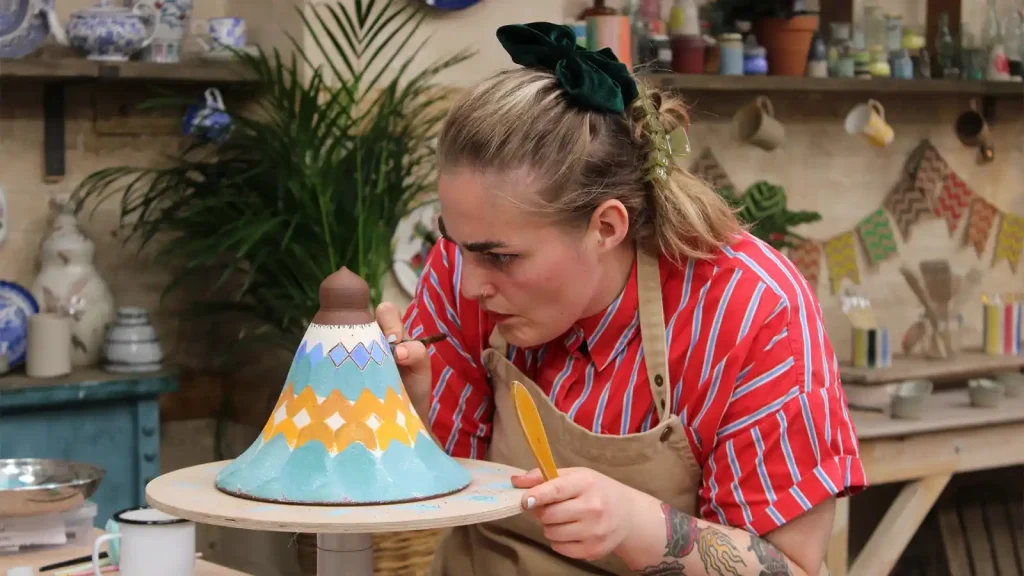
The Great Pottery Throw Down 2026 Episode 6: Where Clay Meets Destiny
The kiln fires are burning brighter than ever. Meanwhile, the tension in the pottery studio has reached its peak. Episode 6 of The Great Pottery Throw Down 2026 brings us to a pivotal moment in this beloved ceramics competition. Only the most skilled potters remain standing, and each one knows that their place in the competition hangs by a thread as delicate as freshly thrown porcelain.
This week’s challenge promises to test every ounce of skill these talented artists possess. The remaining contestants must create terracotta tagines, those beautifully functional North African cooking vessels that combine form with purpose. It’s a task that demands precision, creativity, and nerves of steel. Moreover, the potters must work within strict time constraints while maintaining the exacting standards that have brought them this far in the competition.
Terracotta has captivated potters for thousands of years. This earthy, porous clay carries with it the weight of ceramic history. From ancient amphoras to modern garden pots, terracotta has served humanity faithfully across countless generations. Now, these contemporary potters must honor that legacy whilst creating something uniquely their own.
The tagine itself represents a perfect marriage of aesthetics and utility. Its distinctive conical lid isn’t merely decorative; it serves a crucial function in trapping steam and returning moisture to the food below. Consequently, creating a successful tagine requires understanding not just how it looks, but how it works. The potters must think like engineers as much as artists.
Each contestant approaches the wheel with their own vision. Some opt for traditional geometric patterns inspired by Moroccan tilework. Others choose to push boundaries with contemporary designs. However, all must ensure their pieces remain true to the tagine’s essential purpose. After all, a beautiful vessel that doesn’t function properly is simply an expensive ornament.
Keith Brymer Jones returns to the judging table with his characteristic warmth and expertise. His decades of experience in pottery have made him a beloved figure in the ceramics world. Furthermore, his emotional investment in each potter’s journey adds genuine heart to the competition. When Keith tears up over a particularly moving piece, viewers know the emotion is real.
The judges don’t simply look for technical perfection. Instead, they seek that magical combination of skill, creativity, and soul that elevates pottery from craft to art. They examine each tagine for structural integrity, aesthetic appeal, and functional design. Additionally, they consider how well each piece reflects the potter’s individual artistic voice.
This episode, however, brings an extra layer of scrutiny. The field has narrowed considerably, and the competition has never been fiercer. Every slight wobble, every uneven glaze application, every questionable design choice could mean the difference between advancing and going home. The pressure is palpable.
Guest judge Gabriel Nichols arrives at the pottery studio with a reputation that precedes him. Known for pushing boundaries in contemporary ceramics, Nichols brings fresh perspective to the judging panel. His challenge promises to shake things up considerably. The potters know they’ll need to step outside their comfort zones if they want to impress this innovative artist.
Nichols’ big challenge adds an unexpected twist to the competition. The potters must demonstrate not only mastery of traditional techniques but also willingness to take risks. It’s a delicate balance between respecting ceramic traditions and embracing innovation. Those who play it too safe might find themselves overshadowed. Conversely, those who push too far into experimental territory risk creating pieces that simply don’t work.
The Great Pottery Throw Down 2026 episode 6
The guest judge’s presence electrifies the atmosphere at the Gladstone Museum, where The Great Pottery Throw Down films its mesmerizing pottery challenges. This historic venue, steeped in ceramic heritage, provides the perfect backdrop for modern potters to showcase their skills. The museum’s walls have witnessed countless ceramic triumphs and disasters throughout the years.
As the potters work their magic at the wheels, drama inevitably unfolds. Clay cracks unexpectedly. Glazes don’t behave as anticipated. Time runs short just when crucial finishing touches remain incomplete. These are the moments that separate good potters from great ones. Indeed, how contestants handle pressure reveals as much about their abilities as their technical skills do.
Some potters thrive under stress, finding creative solutions to unexpected problems. Their years of experience guide their hands even when their minds race with anxiety. Others struggle visibly, second-guessing decisions and losing precious minutes to indecision. The cameras capture every grimace, every sigh of relief, every moment of triumph and despair.
Throughout the studio, supportive camaraderie mingles with competitive tension. These potters have formed genuine friendships during their time together. Nevertheless, each knows that only one can ultimately claim the title. They encourage each other through difficulties while secretly hoping their own work will shine brightest. It’s this human element that makes The Great Pottery Throw Down so compelling to watch.
The Great Pottery Throw Down 2026 episode 6
The Great Pottery Throw Down 2026 Episode 6: Terracotta Tagines and Technical Precision in the Pottery Studio
The Great Pottery Throw Down 2026 episode 6 delivered one of the competition’s most technically demanding challenges yet, as the remaining potters faced the intricate art of creating functional terracotta tagines under intense time pressure. This pivotal episode, filmed at the iconic Gladstone Museum, marked a watershed moment in the series where traditional North African pottery techniques intersected with contemporary ceramics expertise. The challenge tested not merely throwing skills but the potters’ ability to construct multi-component vessels requiring precise measurements, structural integrity, and aesthetic refinement. With guest judge Gabriel Nichols joining series stalwarts Keith Brymer Jones and Siobhan McAndrew, the stakes escalated dramatically as contestants navigated the complex requirements of terracotta work.
The significance of this episode extended beyond entertainment value, showcasing the enduring relevance of ancient pottery traditions in modern ceramics practice. Terracotta, one of humanity’s oldest fired-clay mediums, demands respect for fundamental principles that have remained unchanged for millennia. The tagine, originating from North African culinary culture, represents a perfect marriage of form and function—its distinctive conical lid designed to condense cooking steam and return moisture to the ingredients below. For contemporary potters working in a competitive environment, replicating this utilitarian vessel required mastery of proportion, symmetry, and structural engineering alongside artistic vision.
The episode explored three distinct challenges that progressively increased in difficulty and creative freedom. Beginning with the main challenge of throwing terracotta tagines, the potters then faced a technical challenge set by Gabriel Nichols that pushed their decorative skills to new limits. Finally, a spot challenge demanded rapid problem-solving and adaptability. Throughout these tasks, the unique properties of terracotta clay—its earthy colour, porous texture, and distinctive firing characteristics—presented both opportunities and obstacles that separated confident practitioners from those still developing their technical foundations.
Within the storied walls of the Gladstone Museum, where generations of ceramic innovation have been preserved and celebrated, this episode highlighted the tension between historical authenticity and contemporary interpretation. The potters worked within a tradition stretching back thousands of years while simultaneously competing in a thoroughly modern context where precision, speed, and creativity were measured in real time. Keith Brymer Jones, known for his emotional investment in the potters’ journeys, joined forces with co-judge Siobhan McAndrew and guest expert Gabriel Nichols to evaluate work that ranged from structurally sound masterpieces to ambitious failures that revealed the unforgiving nature of terracotta construction.
The atmosphere in the pottery studio crackled with tension as contestants confronted the reality that a single miscalculation in wall thickness, lid proportion, or drying technique could spell disaster. Unlike more forgiving clay bodies, terracotta reveals every flaw, every inconsistency, every moment of hesitation at the wheel. The conical lid of a tagine must balance geometric precision with organic flow, while the base requires sufficient weight and stability to support the entire structure without sacrificing the vessel’s essential lightness. These competing demands created a crucible where technical skill, artistic sensitivity, and mental fortitude were tested simultaneously.
As the episode unfolded, patterns emerged that distinguished the strongest competitors from those struggling to maintain momentum. Some potters demonstrated intuitive understanding of clay behaviour, adjusting their techniques dynamically in response to environmental conditions and material feedback. Others adhered rigidly to predetermined plans, discovering too late that terracotta demands constant dialogue between maker and medium. The judges observed these approaches with keen attention to detail, recognizing that success in ceramics requires both technical knowledge and the wisdom to know when rules should be bent or broken entirely.
The significance of The Great Pottery Throw Down extends beyond showcasing individual talent; it preserves and promotes ceramics as a vital contemporary art form. In an era dominated by digital fabrication and mass production, watching skilled hands shape raw earth into functional beauty reconnects viewers with fundamental human creativity. The 2026 series has consistently elevated the conversation around pottery, demonstrating that what might appear simple—spinning clay on a wheel—actually encompasses physics, chemistry, art history, spatial reasoning, and profound cultural knowledge. Episode 6 epitomized these layers of complexity, revealing pottery as an endlessly challenging discipline where even experienced practitioners face humbling moments of failure and transcendent breakthroughs.
The Great Pottery Throw Down 2026 episode 6 also highlighted the role of specialized expertise in ceramics education, with Gabriel Nichols bringing fresh perspectives to the judging panel. Guest judges throughout the series have enriched the competition by introducing specialized knowledge that complements the core judging team’s broad expertise. This collaborative approach mirrors the ceramics community itself, where practitioners freely share techniques, celebrate innovations, and maintain traditions through generous mentorship. As the episode progressed toward its conclusion, the question loomed: which potter would demonstrate the combination of skill, adaptability, and artistic vision necessary to avoid elimination, and whose work would fall short of the exacting standards required to continue in the competition?
The Main Challenge: Constructing Functional Terracotta Tagines
The episode’s central challenge required potters to throw complete terracotta tagines consisting of two separate components: a base with integrated handles and a conical lid topped with a decorative knob. This traditional North African cooking vessel presented multiple technical obstacles that tested fundamental wheel-throwing skills alongside more advanced construction techniques. The potters received specifications for both internal and external measurements, with the base requiring a nine-inch inside diameter and the lid needing an eight-inch external diameter. These precise requirements eliminated any margin for error, as the lid had to sit properly within the base’s rim to create the functional seal necessary for authentic tagine cooking.
Terracotta clay behaves differently from stoneware or porcelain bodies more familiar to many contemporary potters. Its lower firing temperature and higher iron content create distinctive working properties that demand adjusted techniques. The clay tends to be more plastic and responsive during throwing but can also be less forgiving during drying and firing. Several contestants immediately recognized these characteristics, adjusting their wheel speed and hand pressure accordingly. Others struggled to adapt, resulting in walls of inconsistent thickness or bases that wobbled rather than sitting flat—fundamental flaws that would compromise both function and aesthetics.
The challenge of throwing the conical lid proved particularly revealing. Unlike a simple bowl or cylinder, the tagine lid requires a gradual, mathematically precise slope from its widest point to the narrow opening at the apex. Too steep an angle creates structural weakness; too shallow a slope produces an ungainly, squat appearance that fails to capture the tagine’s essential character. Potters employed various techniques to achieve this geometry, with some using wooden ribs to establish consistent curves while others relied on eye and experience to judge the proper proportions. The most successful practitioners demonstrated fluid, confident movements that translated mental vision into physical form with minimal hesitation.
Handle construction added another layer of complexity to the main challenge. The tagine base required two handles positioned opposite each other, serving both functional and aesthetic purposes. These handles needed sufficient strength to support the weight of a filled vessel while maintaining visual balance and ergonomic comfort. Potters pulled handles using traditional methods, extruding clay through controlled pressure to create consistent thickness and smooth surfaces. Attachment proved critical—handles joined too soon could collapse under their own weight, while those attached to overly dry bases risked cracking during the drying process. The window of ideal attachment time required careful monitoring and judgment.
The decorative knob atop each lid provided an opportunity for individual expression within the challenge’s rigid parameters. Some potters created simple, functional knobs that prioritized heat resistance and durability. Others crafted elaborate finials incorporating twisted details, textured surfaces, or sculptural forms that referenced botanical or architectural motifs. Keith Brymer Jones and the judging panel evaluated these choices not merely on aesthetic merit but on how well they served the vessel’s purpose. A beautiful knob that became too hot to touch during cooking or proved structurally fragile represented misguided priorities, whereas simple elegance that enhanced usability earned genuine appreciation.
Throughout the throwing process, the potters confronted time management challenges that intensified as the deadline approached. Terracotta requires careful drying to prevent cracking, yet the competition schedule demanded relatively rapid progression from wet clay to finished piece. Contestants employed various strategies to accelerate drying without inducing stress cracks: some used gentle heat sources positioned at strategic distances, while others manipulated air circulation to create optimal drying conditions. The most experienced potters demonstrated sophisticated understanding of these variables, adjusting their approach based on studio humidity, clay consistency, and individual piece requirements.
As the main challenge progressed, the judges circulated through the pottery studio, observing techniques and offering occasional commentary. Gabriel Nichols brought specialist knowledge of terracotta traditions, noting where contemporary approaches diverged from historical practices. Keith Brymer Jones focused on fundamental wheel skills, identifying potters whose centering remained imperfect or whose wall thickness varied excessively. These observations created teachable moments that benefited not only the contestants but also viewers seeking to understand what separates competent pottery from exceptional work.
Gabriel Nichols and the Technical Challenge: Decorative Precision Under Pressure
Gabriel Nichols, serving as guest judge for The Great Pottery Throw Down 2026 episode 6, introduced a technical challenge that demanded meticulous decorative work on pre-thrown terracotta forms. Unlike the main challenge’s emphasis on structural throwing skills, this task focused on surface decoration techniques that transform functional pottery into art objects worthy of display. The technical challenge required potters to execute a specific decorative pattern using sgrafitto and slip trailing methods, replicating a demonstration piece with exacting precision. This challenge type, characteristic of The Great Pottery Throw Down format, strips away creative decision-making to isolate pure technical execution.
The demonstration piece featured intricate geometric patterns created through sgrafitto—a technique involving applying slip (liquid clay) to leather-hard pottery, then carving through the slip layer to reveal the contrasting terracotta beneath. The pattern’s complexity demanded steady hands, sharp tools, and deep understanding of how clay responds at different moisture levels. Too wet, and the carved lines smear; too dry, and the slip chips rather than cutting cleanly. The potters received identical pre-thrown bowls and had to match not only the pattern’s design but also the crispness of execution that distinguished professional-quality work from amateur attempts.
Gabriel Nichols explained the cultural significance of the decorative traditions represented in the technical challenge. Many North African and Mediterranean pottery traditions employ slip decoration and sgrafitto techniques, creating distinctive regional styles that have evolved over centuries. Understanding these historical contexts enriched the challenge beyond mere skill demonstration, connecting contemporary ceramics practice to its deep roots in human culture. The potters approached the work with varying degrees of familiarity—some had extensive experience with slip techniques, while others confronted these methods for the first time under competition pressure.
The judging criteria for technical challenges remained consistent throughout the series: the finished pieces were evaluated blind, with judges unaware which potter created which piece until after rankings were determined. This meritocratic approach eliminated any unconscious bias based on previous performance or personal relationships. The pieces were arranged in order from best to worst, with first place receiving maximum points and last place receiving none. For potters struggling in the overall competition, the technical challenge offered an opportunity to demonstrate specific strengths and regain momentum. Conversely, strong overall performers sometimes stumbled on technical challenges requiring unfamiliar skills.
The pressure of blind judging intensified the technical challenge atmosphere considerably. Potters understood that every detail would receive scrutiny without the possibility of explanation or context. A slightly wobbly line, an area where slip pooled unevenly, or a section where the carved design lost crispness—any imperfection would be immediately apparent when pieces stood side by side. This reality pushed contestants to work at the absolute limit of their capabilities, producing some of the episode’s most tense moments as they raced against time while maintaining the slow, deliberate pace that decorative work demands.
Keith Brymer Jones observed the proceedings with characteristic emotional investment, visibly wincing when potters made errors and beaming when he witnessed particularly skillful execution. His expertise in decorative techniques allowed him to anticipate problems before they materialized, though the rules prevented him from intervening beyond general encouragement. Siobhan McAndrew brought complementary knowledge, particularly regarding how different slip consistencies affect application and carving properties. Together with Gabriel Nichols, the judging panel represented a formidable combination of expertise that guaranteed thorough, informed evaluation.
As the technical challenge concluded, the finished pieces revealed a wide range of outcomes that illustrated skill disparities among the remaining potters. The best examples demonstrated crisp, confident lines with consistent depth and width, creating patterns that flowed harmoniously across the curved surfaces. Less successful attempts showed hesitation in the carving, with lines that wandered or varied in character. The judges could literally see each potter’s confidence level—or lack thereof—inscribed in the clay. This transparency made the technical challenge particularly revealing, stripping away the possibility of hiding weaknesses beneath stylistic choices or creative concepts.
The Spot Challenge: Rapid Problem-Solving and Adaptive Skill
Following the sustained concentration demanded by the main and technical challenges, the spot challenge introduced an element of spontaneity that tested the potters’ ability to think and work under extreme time pressure. These brief, often playful challenges have become beloved elements of The Great Pottery Throw Down format, providing lighter moments while still assessing genuine skill. The specific spot challenge in episode 6 required contestants to throw small vessels to exact specifications within a severely limited timeframe, eliminating the possibility of extensive planning or revision.
The spot challenge’s design philosophy differs fundamentally from the main challenge approach. Where the tagine construction allowed hours for careful execution and refinement, the spot challenge compressed similar technical demands into minutes. This compression reveals which potters possess deeply internalized skills that function almost automatically versus those who rely heavily on conscious calculation and adjustment. Muscle memory, developed through thousands of hours at the wheel, becomes the primary determinant of success when time constraints prevent deliberate thought about every hand position and pressure adjustment.
Potters approached the spot challenge with visible differences in stress response and confidence. Those who had trained extensively in production pottery—throwing large quantities of identical pieces—demonstrated clear advantages, their hands finding familiar positions without conscious direction. Others, whose experience centered more on individual sculptural work or one-off pieces, struggled to achieve consistency without the luxury of time for refinement. The challenge highlighted these experiential differences, showing how varied paths through ceramics education prepare practitioners differently for specific demands.
Keith Brymer Jones and the judging panel evaluated spot challenge results based on adherence to specifications, overall craftsmanship, and the consistency achieved despite severe time limitations. The measurements provided were specific: vessels needed to match particular heights and diameters, with judges using calipers to verify dimensions. Even a piece that appeared beautifully thrown could fail if measurements fell outside acceptable tolerances. This rigorous evaluation reinforced a fundamental pottery truth: feeling matters less than facts, and a potter’s perception of their work often differs significantly from objective reality.
The spot challenge also served narrative purposes within the episode’s larger structure, providing pacing variety and opportunities for personality to emerge more fully. Under the extended pressure of main challenges, potters often retreat into intense focus that obscures individual character. The spot challenge’s compressed timeline and slightly lower stakes allowed more natural reactions, revealing how different competitors handled frustration, celebrated small victories, or supported fellow contestants. These human moments enriched the competitive drama without diminishing the serious craft assessment at the episode’s core.
Judging Criteria and the Gladstone Museum Setting
The evaluation process throughout The Great Pottery Throw Down 2026 episode 6 reflected sophisticated understanding of what constitutes excellence in ceramics. The judges assessed pieces across multiple dimensions: technical execution, aesthetic achievement, functional appropriateness, and creative interpretation within given constraints. This multi-faceted approach prevented any single strength from compensating for significant weaknesses elsewhere. A beautifully decorated piece with structural flaws would not succeed, nor would a technically perfect but aesthetically lifeless vessel earn top marks.
Keith Brymer Jones brought to the judging process his decades of experience as both practicing potter and ceramics educator. His emotional responses to contestants’ work—sometimes moving him to tears when particularly touched by someone’s achievement or struggle—never compromised his technical assessments. He could simultaneously appreciate the human journey represented in a piece while objectively identifying where execution fell short of professional standards. This combination of empathy and rigor has made him central to The Great Pottery Throw Down’s success, demonstrating that serious craft evaluation need not be cold or detached.
Siobhan McAndrew complemented Keith’s approach with her own extensive background in ceramics, often focusing on aspects of design, proportion, and how pieces would function in real-world contexts beyond the competition setting. Her questions during evaluation pushed potters to articulate their decision-making processes, revealing whether choices emerged from informed judgment or happy accident. Understanding why a potter made specific decisions often mattered as much as the decisions themselves, as it indicated whether success could be replicated or remained a one-time occurrence.
Gabriel Nichols’s presence as guest judge enriched the evaluation by introducing specialist knowledge specific to terracotta traditions and the particular challenges featured in the episode. Guest judges throughout the series have represented various ceramics specializations—sculptural pottery, production throwing, decorative techniques, or specific cultural traditions. This rotating expertise ensures that challenges can explore breadth across the ceramics field while maintaining authoritative assessment. Gabriel’s specific insights into tagine construction and terracotta working properties provided contestants with valuable feedback that extended their knowledge beyond what the main judging panel could offer.
The Gladstone Museum setting added layers of meaning to the judging process. As one of Britain’s premier ceramics museums, housing extensive collections documenting pottery’s industrial and artistic history, the museum provided constant reminder of the traditions within which contemporary potters work. The building itself, a former pottery factory transformed into a museum, embodied the evolution from craft production to artistic practice that characterizes modern ceramics. Judging pottery within these walls created implicit connections between the contestants’ work and the historical pieces displayed throughout the museum—a humbling context that underscored both how much has been achieved and how much remains to be learned.
The physical arrangement of judging sessions contributed to the process’s tension and drama. Finished pieces were displayed on tables where judges could examine them from all angles, picking them up to assess weight distribution, running fingers over surfaces to feel texture variations, and peering closely at joints and attachments to verify structural integrity. This hands-on evaluation revealed details invisible to cameras and casual observation, allowing judges to identify craftsmanship subtleties that separated good work from exceptional achievement.
Technical Failures and Learning Moments in Episode 6
The Great Pottery Throw Down 2026 episode 6 provided multiple instances where ambitious attempts met with failure, creating powerful learning opportunities for both contestants and viewers. Pottery’s unforgiving nature means that mistakes often cannot be hidden or corrected—a cracked lid, a collapsed wall, or a warped base represents not merely aesthetic compromise but fundamental functional failure. Several potters in this episode confronted such catastrophic outcomes, forcing them to rebuild completely or accept significantly diminished results.
One particularly dramatic failure involved a tagine base that developed stress cracks during the drying process, rendering it unusable despite hours of careful throwing and finishing work. The potter’s visible devastation revealed the emotional investment that craft work demands and the vulnerability inherent in creating objects subject to chemical and physical transformations beyond complete human control. Keith Brymer Jones offered consolation while acknowledging the harsh reality: in pottery, good intentions and hard work cannot overcome fundamental technical errors in clay preparation, construction, or drying management.
Another potter struggled with achieving proper symmetry in the conical lid, resulting in a lopsided form that failed to sit properly within the base. This asymmetry stemmed from inconsistent wall thickness during throwing—one side pulled thinner than the other, creating imbalance that became increasingly pronounced as the piece dried and shrank. The judges used this example to discuss the importance of even pressure and consistent hand positioning during wheel work, demonstrating how small variations in technique cascade into significant final outcomes. For viewers learning pottery, such explicit connections between cause and effect provided invaluable educational content.
Handle attachment failures also occurred, with one potter’s carefully crafted handles separating from the tagine base as clay moisture levels changed. This common pottery problem results from mismatched moisture content between the handle and attachment point, or insufficient scoring and slip application to create strong mechanical and chemical bonds. The judges examined the failed attachment closely, showing where proper preparation would have created roughened surfaces for better adhesion. These technical post-mortems transformed failures into teaching moments, extracting maximum educational value from disappointment.
The technical challenge revealed failures of a different character—errors in decoration and surface treatment that didn’t compromise structural integrity but demonstrated insufficient skill with specialized techniques. Smeared sgrafitto lines, uneven slip application, and patterns that lost coherence across the curved surface all appeared among the submitted pieces. Gabriel Nichols provided detailed analysis of what went wrong, explaining how slip consistency, tool sharpness, clay moisture level, and hand steadiness all influenced final outcomes. His expertise transformed what might have been simple criticism into constructive guidance.
These failures, difficult as they were for contestants experiencing them, served essential purposes within the episode’s educational mission. The Great Pottery Throw Down succeeds not by presenting pottery as easy or accessible to everyone but by honestly representing the discipline’s challenges and the skill required for consistent success. Viewers develop genuine appreciation for accomplished potters by witnessing how easily things can go wrong and how much knowledge, practice, and care successful execution requires.
Standout Performances and Artistic Vision in Terracotta
While failures provided dramatic moments and learning opportunities, The Great Pottery Throw Down 2026 episode 6 also showcased exceptional performances that demonstrated what becomes possible when technical skill combines with artistic vision and careful execution. Several potters produced tagines that impressed the judges not merely by meeting basic requirements but by exceeding expectations through thoughtful design choices and superior craftsmanship. These standout pieces revealed individual voices emerging within the challenge’s constraints, showing how creativity flourishes within structure rather than being stifled by it.
One potter created a tagine whose proportions achieved near-perfect balance, with the conical lid rising to a height that created visual drama while maintaining functional appropriateness. The curve from base to apex flowed with mathematical precision yet appeared organic and natural, suggesting the potter’s intuitive grasp of form rather than mechanical adherence to measurements. Keith Brymer Jones praised this achievement effusively, noting that such harmony of proportion represents advanced understanding that many potters spend careers pursuing. The handles integrated seamlessly with the base’s form, neither too heavy nor too delicate, demonstrating the sophisticated design thinking that separates competent work from artistic achievement.
Another exceptional performance involved a tagine decorated with subtle surface texture that enhanced rather than competed with the form’s essential simplicity. Using simple tools to create regular patterns in the leather-hard clay, the potter added visual interest that caught light in appealing ways without overwhelming the piece’s fundamental elegance. The judges appreciated this restraint, particularly in an episode where some contestants added excessive decoration that cluttered rather than enhanced their work. Understanding when to stop, when enough is enough, represents crucial artistic wisdom that technical skill alone cannot provide.
The technical challenge produced a clear winner whose sgrafitto work demonstrated professional-level precision and confidence. The carved lines flowed smoothly without hesitation marks, maintaining consistent depth and width throughout complex geometric patterns. The slip application showed careful attention to even coverage, avoiding the pooling and thin spots that marred less successful attempts. Gabriel Nichols identified this piece immediately as the competition’s strongest, with Keith Brymer Jones and Siobhan McAndrew concurring without hesitation. The potter’s success illustrated how focused practice in specific techniques pays dividends when those skills are tested under pressure.
Several potters distinguished themselves through problem-solving and adaptive responses when initial approaches didn’t yield desired results. One contestant, recognizing that their first thrown lid exhibited poor symmetry, made the bold decision to discard it and start fresh rather than attempting to correct fundamental flaws. This choice required both honest self-assessment and confidence that sufficient time remained to complete a superior replacement. The gamble paid off, with the second lid proving far more successful and earning judges’ praise not merely for its technical quality but for the clear-headed decision-making it represented.
The episode’s standout performances reinforced a central theme running throughout The Great Pottery Throw Down: excellence in ceramics requires balancing competing demands that often exist in tension. Technical precision must coexist with artistic expression; careful planning must allow flexibility for adaptation; confidence must be tempered with critical self-assessment; and individual vision must function within traditional forms. The potters who succeeded in episode 6 demonstrated they understood these paradoxes and could navigate them skillfully.
Elimination Decision and Competition Trajectory
As The Great Pottery Throw Down 2026 episode 6 approached its conclusion, the judges faced the difficult responsibility of determining which potter’s work fell sufficiently short of required standards to warrant elimination from the competition. This decision process weighs multiple factors: performance across all episode challenges, demonstrated skill development throughout the series, consistency versus occasional brilliance, and fundamental aptitude suggested by the work’s various dimensions. The elimination announcement represents the episode’s emotional climax, bringing relief for those who advance and heartbreak for the departing contestant.
The potter ultimately eliminated had struggled throughout the episode, with their tagine exhibiting multiple technical flaws that compromised both function and appearance. The base sat unevenly, the lid fit poorly, and the handles showed weak attachment that raised concerns about durability. In the technical challenge, their work ranked near the bottom, with decoration that appeared hesitant and imprecise. The spot challenge provided no redemption, as time pressure exposed gaps in fundamental throwing skills. Taken together, these performances indicated that despite effort and enthusiasm, this potter had not yet developed the skill level required for the competition’s advancing stages.
Keith Brymer Jones delivered the elimination decision with visible emotion, acknowledging the eliminated potter’s dedication and progress while explaining why their work couldn’t justify continued participation. The judges emphasized that elimination reflected current skill levels rather than ultimate potential, encouraging the departing contestant to continue developing their craft beyond the competition’s pressures. This compassionate but honest approach characterized The Great Pottery Throw Down’s handling of eliminations throughout the series, maintaining human dignity while upholding rigorous standards.
For the potters advancing beyond episode 6, the elimination served as both relief and warning. Relief because they had survived another round; warning because the competition’s difficulty would only increase as remaining contestants represented progressively higher skill levels. Each subsequent episode would demand more sophisticated techniques, greater creative vision, and increased consistency. The potters who advanced understood they could not rest on previous achievements but must continue pushing their capabilities to remain competitive.
The competition trajectory revealed by this episode showed particular potters emerging as frontrunners while others occupied more precarious positions. Some contestants had demonstrated consistent excellence across multiple challenges, suggesting deep wells of skill and knowledge to draw upon. Others showed more variable performance, excelling in certain challenge types while struggling with others—a pattern indicating specialized strengths but concerning gaps in fundamental skills. As the series progressed toward its conclusion, these patterns would become increasingly significant.
Episode 6’s elimination also affected group dynamics within the remaining competitors. Bonds had formed over shared experiences and mutual support through challenges’ stresses and disappointments. Losing a colleague to elimination created genuine grief, even as it meant one fewer rival for ultimate victory. The Great Pottery Throw Down succeeded in capturing these complex emotional responses, showing contestants as complete human beings rather than mere competitors. Their reactions to elimination—both their own and others’—revealed character and values that enriched the series beyond pure craft assessment.
The Cultural Significance of The Great Pottery Throw Down in Contemporary Ceramics
The Great Pottery Throw Down occupies unique cultural space within contemporary ceramics, serving simultaneously as entertainment, education, and advocacy for pottery as vital artistic practice. The 2026 series continued building on the program’s established success, introducing new audiences to ceramics while providing serious practitioners with substantive technical content. Episode 6 exemplified this dual purpose, offering engaging drama for casual viewers while maintaining sufficient rigor and expertise to satisfy experienced potters watching with critical eyes.
The series has measurably impacted pottery’s public profile and participation rates in ceramics classes and workshops. Following previous series, pottery studios across Britain reported significant increases in enrollment as people inspired by the show sought hands-on experience with clay. This democratizing effect represents one of The Great Pottery Throw Down’s most important contributions, making ceramics accessible to people who might otherwise never have considered trying pottery. By presenting the craft as challenging but learnable, the show encourages participation without minimizing the skill mastery that excellence requires.
Keith Brymer Jones’s role extends beyond judging individual pieces to serving as pottery’s public ambassador. His genuine emotional responses to contestants’ work—particularly his tendency to cry when moved by someone’s achievement or struggle—have made him a beloved figure who humanizes what might otherwise appear a cold, technical discipline. His presence demonstrates that serious craft expertise coexists comfortably with emotional openness and empathy, challenging stereotypes about what artistic authority looks like. This modeling of constructive, supportive expertise has influenced how ceramics education is conceived and practiced.
The Gladstone Museum’s involvement in hosting The Great Pottery Throw Down creates productive connections between historical ceramics traditions and contemporary practice. Museum collections that might seem distant from modern life become relevant when viewers see contemporary potters grappling with techniques unchanged since Roman times or engaging with decorative traditions from diverse global cultures. The setting reminds audiences that pottery represents unbroken continuity with humanity’s deepest past—that when someone sits at a potter’s wheel, they participate in activities that connect them to ancestors across millennia and cultures.
The Great Pottery Throw Down also influences ceramics economics by raising awareness of pottery as purchasable art rather than merely functional commodity. Viewers who develop appreciation for the skill involved in throwing consistent forms, achieving particular glazes, or executing complex decoration become more willing to pay prices that fairly compensate potters for their expertise and labor. This economic impact supports sustainable ceramics practice, allowing skilled practitioners to make livings from their craft rather than treating pottery as expensive hobby requiring other income sources.
The series format’s influence extends beyond Britain, with international versions introducing pottery to new audiences worldwide. The basic structure—main challenge, technical challenge, spot challenge, with progressive elimination toward an ultimate champion—has proven adaptable across cultures while maintaining focus on genuine skill assessment. This global reach amplifies ceramics’ cultural significance, creating international community united by shared appreciation for clay and fire’s transformative possibilities.
FAQ The Great Pottery Throw Down 2026 episode 6
Q: What is The Great Pottery Throw Down 2026 and what makes episode 6 significant?
A: The Great Pottery Throw Down 2026 is a competitive ceramics series filmed at the Gladstone Museum where skilled potters face increasingly difficult challenges. Episode 6 proved particularly significant because contestants tackled terracotta tagines, traditional North African cooking vessels requiring precise measurements and multi-component construction. Furthermore, guest judge Gabriel Nichols introduced specialized technical challenges that tested decorative skills alongside structural throwing abilities, making this episode a comprehensive assessment of pottery expertise.
Q: What technical challenges did potters face when creating terracotta tagines?
A: Creating functional tagines demanded mastery of multiple technical elements simultaneously. Potters needed to throw a nine-inch base with integrated handles and an eight-inch conical lid with decorative knob, ensuring precise fit between components. Additionally, terracotta clay behaves differently from stoneware, requiring adjusted techniques for its lower firing temperature and higher plasticity. The conical lid’s gradual slope presented geometric challenges, while handle attachment required perfect timing to prevent collapse or cracking during drying.
Q: Who are the judges on The Great Pottery Throw Down and what expertise do they bring?
A: Keith Brymer Jones serves as the primary judge, bringing decades of experience as both practicing potter and ceramics educator, known for his emotional investment in contestants’ journeys. Siobhan McAndrew complements his approach with expertise in design, proportion, and functional pottery assessment. Episode 6 featured Gabriel Nichols as guest judge, contributing specialist knowledge of terracotta traditions and decorative techniques. This combination ensures comprehensive evaluation across technical execution, aesthetic achievement, and cultural authenticity.
Q: What is sgrafitto and why was it challenging in the technical challenge?
A: Sgrafitto involves applying liquid clay slip to leather-hard pottery, then carving through the slip layer to reveal contrasting terracotta beneath, creating intricate geometric patterns. This technique proves challenging because clay moisture level critically affects results—too wet causes smeared lines, while too dry creates chipping rather than clean cuts. Moreover, executing consistent patterns across curved surfaces demands steady hands, sharp tools, and deep understanding of clay behavior. The technical challenge required replicating a demonstration piece with professional-level precision under time pressure.
Q: How does the elimination process work on The Great Pottery Throw Down?
A: Judges evaluate performance across all episode challenges including the main challenge, technical challenge, and spot challenge, considering both individual episode results and overall competition trajectory. Technical challenges employ blind judging where pieces are ranked without knowing which potter created which work, ensuring meritocratic assessment. Consequently, the potter whose work demonstrates the most significant gaps in fundamental skills or fails to meet required standards faces elimination. Judges deliver decisions with compassion while maintaining rigorous professional expectations.
Q: Why was the spot challenge important in episode 6?
A: The spot challenge tested rapid problem-solving and adaptive skill by requiring potters to throw small vessels to exact specifications within severely limited timeframes. Unlike the main challenge’s hours-long construction process, this compressed timeline revealed which potters possessed deeply internalized skills functioning almost automatically. Therefore, contestants with extensive production pottery experience demonstrated clear advantages, their muscle memory developed through thousands of hours enabling consistent results without conscious calculation. Additionally, the challenge provided pacing variety and opportunities for personality to emerge naturally.
Q: What role does the Gladstone Museum play in The Great Pottery Throw Down?
A: The Gladstone Museum, one of Britain’s premier ceramics museums housed in a former pottery factory, provides historically resonant setting that connects contemporary pottery to centuries of tradition. Judging pottery within these walls creates implicit connections between contestants’ work and extensive historical collections documenting pottery’s industrial and artistic evolution. Consequently, the setting underscores both heritage and innovation, reminding participants and viewers that ceramics represents unbroken continuity with humanity’s deepest past while remaining vital contemporary art form.
Q: What common failures occurred during the tagine construction challenge?
A: Several potters experienced catastrophic failures including stress cracks developing during drying due to improper moisture management, asymmetrical lids resulting from inconsistent wall thickness, and handle attachments separating from bases because of mismatched moisture levels or insufficient scoring. These failures illustrated pottery’s unforgiving nature where mistakes cannot be hidden or easily corrected. However, judges transformed these disappointments into valuable teaching moments, demonstrating how small technical variations cascade into significant final outcomes and explaining proper preparation techniques.
Q: How has The Great Pottery Throw Down influenced contemporary ceramics culture?
A: The series has measurably increased pottery’s public profile, with studios across Britain reporting significant enrollment increases following broadcast. By presenting ceramics as challenging but learnable, the show democratizes access while maintaining rigorous standards that satisfy experienced practitioners. Furthermore, the program influences ceramics economics by raising awareness of pottery as purchasable art deserving fair compensation for expertise and labor. International versions have created global community united by shared appreciation for clay and fire’s transformative possibilities.
Q: What distinguished the standout performances in episode 6?
A: Exceptional performers demonstrated harmony between technical precision and artistic vision, creating tagines with near-perfect proportions where mathematical accuracy appeared organic rather than mechanical. Standout pieces featured thoughtful decorative choices that enhanced rather than overwhelmed essential form, showing sophisticated restraint and design wisdom. Moreover, successful potters exhibited strong problem-solving abilities, making bold decisions to discard flawed work and start fresh rather than attempting to correct fundamental errors. These performances illustrated how excellence requires balancing competing demands of precision, creativity, and adaptive flexibility.


Thank you, I appreciate these videos.