MasterChef The Professionals 2026 episode 20 marks a turning point in the competition, delivering one of the most ambitious and intellectually demanding experiences the series has ever placed before its finalists. Three chefs remain standing — a stage reached through months of relentless pressure, technical scrutiny, and culinary revelation. Yet nothing in the competition so far fully prepares them for what awaits in the Alpine foothills of northern Italy, where the very definition of fine dining is being quietly, radically rewritten.
The destination is Brunico, a small and picturesque town nestled in the South Tyrol region, where the mountains are not simply a backdrop but the primary ingredient. It is here that chef patron Norbert Niederkofler has built something remarkable: Atelier Moessmer, a restaurant that has become a global pilgrimage site for those who believe gastronomy has a responsibility to the land it inhabits. The establishment achieved three Michelin stars within just four months of opening — a world record — and the philosophy driving that recognition is as rigorous as it is beautiful.
That philosophy is known as Cook the Mountain, and it asks something genuinely difficult of anyone who encounters it. Rather than treating the natural world as a supplier of convenient ingredients, it positions the surrounding Alpine ecosystem as both larder and ethical framework. Norbert cooks in harmony with nature, sourcing exclusively from producers and foragers within the immediate region, and never reaching for the easy luxury of imported citrus or out-of-season produce. The mountain provides everything, or it provides nothing. There is no middle ground.
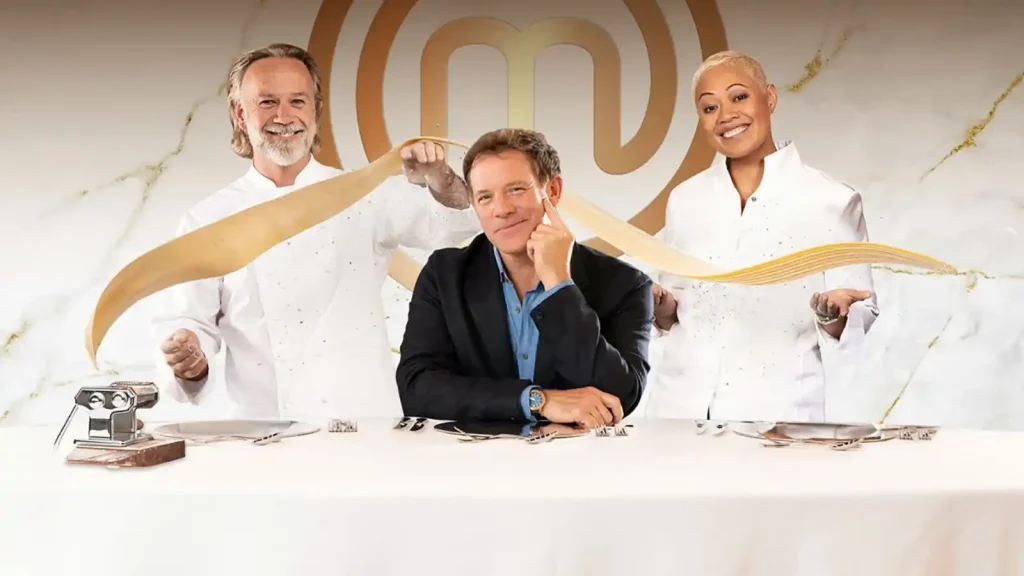
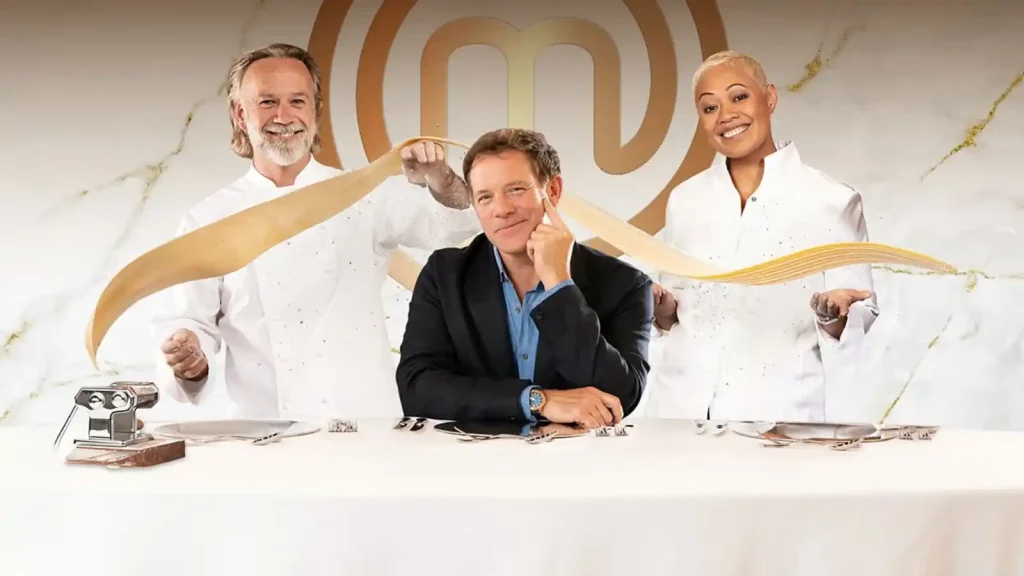
For the three finalists — Sven, Jed, and Rudy — the journey to South Tyrol arrives at the precise moment when the competition demands its highest register. Finals week is already charged with expectation, and the judges — Monica Galetti, Marcus Wareing, and Matt Adlard — have made clear that only chefs capable of genuine creative evolution will earn the trophy. This Italian adventure therefore functions as both inspiration and examination, a rare opportunity to absorb a world-class culinary philosophy and then demonstrate that they have truly understood it.
The stakes are sharpened further by the structure of the experience itself. On day one, the finalists receive a masterclass from Norbert, explore the mountainous landscape as foragers, and then cook their own dish reflecting his principles. On day two, the challenge escalates entirely: they become part of Norbert’s actual brigade, cooking tasting menu dishes for a full restaurant of paying guests, with the judges seated among the diners. The pressure of working in one of the world’s most philosophically demanding kitchens, delivering two-star-level food to a room full of scrutinising eyes, represents the kind of test that defines careers.
Throughout both days, the finalists are confronted not merely with technical complexity but with a fundamentally different way of thinking. Norbert’s larder contains over 300 wild herbs. His kitchen operates on a no-waste philosophy that ensures every foraged or farmed ingredient reaches its maximum potential before anything is discarded. Pine trees become flavouring agents. Beef hearts become garnishes. Nothing is ornamental. Everything is deliberate. The mountain, in Norbert’s hands, is infinitely generous to those who approach it with respect.
Understanding what the finalists encounter in South Tyrol requires understanding what Cook the Mountain actually demands of a cook. It is not simply regional sourcing dressed in fine-dining plating. It is a complete restructuring of culinary instinct, one that asks a chef to replace habitual ingredient choices with intimate seasonal and geographical knowledge, and to find flavour where others might see only scarcity. This reorientation is, simultaneously, the most liberating and most demanding thing Norbert asks of those who enter his kitchen.
The episode, therefore, unfolds as something closer to a philosophical immersion than a conventional competition segment. Nobody leaves the competition on this day. Instead, the finalists leave Italy changed — armed with ideas, techniques, and a new understanding of what food can be when it answers to the landscape rather than the menu. What follows in the MasterChef kitchen will demand that they translate that understanding into the finest cooking of their lives.
The Cook the Mountain Philosophy Behind MasterChef The Professionals 2026 Episode 20
Norbert Niederkofler’s Cook the Mountain philosophy did not emerge from a single moment of inspiration. It developed over years of working in the Alpine environment and grappling with a simple but profound question: what does this place actually offer, and how can cooking honour that offer completely? The answer he arrived at is both austere and abundant. The mountains of South Tyrol provide everything a kitchen could need, provided the kitchen is willing to work with seasonal rhythms, local producers, and the full spectrum of what nature makes available — including what others might dismiss as secondary or marginal ingredients.
The philosophy, as Norbert explains during the masterclass, begins with a rigorous rejection of convenience. Citrus fruits, for example, are simply unavailable locally and therefore absent from his larder. In their place, fermented and preserved ingredients provide acidity and brightness. Foraged herbs — more than 300 varieties — supply depth, bitterness, fragrance, and complexity that no imported ingredient could replicate. The result is a flavour vocabulary entirely specific to the South Tyrol landscape, one that shifts with every season and rewards the chef who pays close attention.
No-waste principles underpin the entire operation. When Norbert describes the way his kitchen uses every part of each ingredient — preserving what cannot be used immediately, fermenting what benefits from time, and finding culinary purpose in elements that conventional kitchens discard — he is describing not merely environmental responsibility but a creative discipline. Constraint, in this context, becomes the engine of invention. Every dish must justify every component, and every component must reflect the mountain that produced it.
Norbert Niederkofler’s Masterclass and Its Impact on the Finalists
The masterclass at Atelier Moessmer is the first structured encounter the finalists have with Cook the Mountain in practice. Norbert demonstrates several of his own dishes, each technically complex and each delivering what the judges later describe as a stunning array of flavours. These are not simple plates. They require precision, understanding, and a deep familiarity with the ingredient combinations that define the restaurant’s identity. For Sven, Jed, and Rudy, watching these dishes come together is an education in a culinary language they have not previously spoken.
Norbert communicates his philosophy through the dishes themselves rather than through abstract instruction. Each plate illustrates a principle: restraint in seasoning that allows foraged ingredients to speak clearly, precision in technique that ensures nothing is lost in preparation, and presentation that reflects the landscape without becoming theatrical. The finalists absorb this, and the judges — watching closely — note that the challenge will demand genuine internalisation rather than superficial imitation. Norbert does not want replicas of his dishes. He wants evidence that his philosophy has been understood.
Specifically, Norbert sets the finalists the task of cooking their own dish that both represents his philosophy and meets his standards. This is a formidable brief. It requires each chef to identify, from their foraging experience and the masterclass, which ingredients and principles they have connected with most deeply, and then to express that connection through a single plate. Sven, Jed, and Rudy each approach the challenge differently, bringing their individual backgrounds and cooking instincts to bear on a shared philosophical framework.
Foraging in the Alpine Landscape: A Natural Larder for MasterChef The Professionals 2026 Episode 20
The foraging expedition into the mountainous region surrounding Brunico is, for the finalists, one of the most genuinely revelatory experiences the competition has offered. Guided through terrain that Norbert’s team knows intimately, they encounter the wild herbs, edible plants, and seasonal ingredients that form the foundation of the Atelier Moessmer larder. For chefs trained in classical and contemporary kitchens where ingredients arrive packaged and labelled, this direct encounter with the source is both humbling and galvanising.
The sheer diversity of the Alpine larder becomes immediately apparent. Over 300 wild herb varieties represent not merely botanical abundance but culinary possibility on a scale that challenges any assumption that local sourcing means limited flavour. Each herb carries its own character — some bitter, some resinous, some floral, some intensely savoury — and understanding how to deploy them requires the kind of sensory engagement that no amount of formal kitchen training fully prepares a chef for. The finalists are, in the most literal sense, learning to read a landscape.
The foraging experience also reinforces the no-waste ethos at the heart of Cook the Mountain. When ingredients are gathered by hand from a finite natural environment, every leaf and stem carries an inherent value that industrially supplied produce cannot convey. The finalists begin to understand, through direct physical experience, why Norbert insists on using each ingredient to its maximum potential. Waste is not simply an environmental concern here; it is a failure of respect toward the landscape that has provided the ingredients in the first place.
MasterChef The Professionals 2026 Episode 20 and the Challenge of Cooking Norbert’s Way
When the finalists return from the mountains and begin preparing their Cook the Mountain-inspired dishes, the true difficulty of the task becomes clear. Translating a philosophy into a plate requires more than technical skill. It requires a coherent culinary argument — a dish that could not have been made anywhere else, using anything else, in any other way. This is a standard that eliminates both safe choices and clever shortcuts. Every element must be necessary. Every flavour must earn its place.
Sven approaches his dish with focus and deliberate restraint, drawing on the foraging experience to build flavour combinations that reflect the Alpine environment. Jed brings a more instinctive sensibility, trusting his palate to make connections between the ingredients he has encountered and the principles Norbert has articulated. Rudy works with characteristic intensity, the pressure of the environment channelled into a level of concentration that his cooking demands. Each chef faces the same fundamental challenge: to cook in a way that feels genuinely new to them while remaining coherent and technically accomplished.
Norbert’s assessment is, as would be expected, exacting. He evaluates not merely whether the dishes taste good but whether they reflect an authentic engagement with his philosophy. Flavour combinations that feel forced, or elements that have been included for visual effect rather than culinary purpose, are identified immediately. The finalists learn, in real time, that Cook the Mountain is less forgiving of empty gestures than any cooking style they have encountered in the competition to date. The mountain requires honesty from those who invoke it.
Day Two at Atelier Moessmer: Cooking for Service in MasterChef The Professionals 2026 Episode 20
The second day at Atelier Moessmer raises the stakes to a level the competition has rarely matched. The finalists are incorporated into Norbert’s brigade for a full lunch service, cooking tasting menu dishes for a room of paying diners. This is not a simulation or a controlled test. It is a live restaurant environment operating at two-Michelin-star level, and every plate that leaves the kitchen reflects directly on the restaurant’s reputation and on Norbert himself.
The specific dishes the finalists are tasked with preparing illustrate the complexity involved. A risotto flavoured with pine oil captures Cook the Mountain principles in concentrated form — a classic Italian base ingredient transformed by the resinous, intensely local flavour of Alpine pine, producing something both familiar and entirely unfamiliar. A catfish dish garnished with grated beef heart represents a different dimension of the philosophy: the commitment to using every part of every animal, presenting what might elsewhere be considered secondary cuts as components of a refined tasting dish.
Both dishes require precision at pace, under the supervision of a brigade that operates to standards the finalists have never previously been held to. There is no margin for imprecision. Norbert’s kitchen runs on a discipline that is absolute, and integrating into that environment while maintaining focus on technically demanding plates tests every competency the finalists possess. The knowledge that Marcus, Matt, and Monica are seated in the dining room adds a further layer of pressure that the chefs must absorb and convert into controlled performance.
Technical Execution Under Pressure: What Service Reveals About the Finalists
Live service in a working restaurant exposes capacities and limitations that competition kitchen tests cannot always reveal. The rhythm of a tasting menu service — precise timing, coordinated plating, consistent standards across multiple covers — demands a kind of disciplined athleticism from every member of the brigade. For the finalists, operating in this environment alongside Norbert’s own team means adapting quickly, following systems they have only briefly encountered, and maintaining the quality of their preparation regardless of what is happening around them.
Sven demonstrates a composure during service that reflects both his experience and the focus he has brought throughout finals week. His ability to maintain precision under the particular pressure of a real restaurant environment suggests a professional maturity that the competition has steadily revealed. Jed shows remarkable adaptability, translating the principles absorbed during the masterclass and foraging into consistent output during service — a capacity for rapid internalisation that marks him as a genuinely versatile chef. Rudy’s intensity, which can at times work against him in controlled settings, functions well in the pace of service, where absolute focus is not merely useful but essential.
The judges experience the results from the dining room, eating the dishes the finalists have prepared as part of a full tasting experience. This perspective — as paying guests receiving plates from a restaurant operating at two-star level — provides a different kind of assessment from the studio tastings they are accustomed to. The food must work not merely as technically accomplished cooking but as hospitality, delivering pleasure and surprise within the framework of a coherent tasting menu. The standard required is, by any measure, extraordinary.
What MasterChef The Professionals 2026 Episode 20 Reveals About Finals-Level Cooking
The South Tyrol episode functions, among other things, as a diagnostic of exactly what separates the three remaining finalists from the chefs who have been eliminated across the series. The capacity to engage with a demanding philosophical framework, to translate that engagement into a dish under time pressure, and then to perform at the required level in a live restaurant service — each of these tasks filters for qualities that cannot be acquired quickly. They are the accumulated product of years of professional experience, curiosity, and the willingness to remain genuinely open to new ideas.
What Norbert’s challenge specifically tests is intellectual flexibility. A chef who can cook technically within established styles but cannot adapt their thinking to a radically different culinary framework will struggle here. The finalists are not asked to reproduce what they already know. They are asked to absorb something entirely new and express it authentically. That requirement — to be changed by an encounter with a philosophy rather than simply informed by it — is among the most sophisticated demands the competition has made.
The episode also implicitly defines the standard that the trophy will require. Each of the three chefs has demonstrated, across the series, that they are capable of exceptional cooking within familiar contexts. The Italian adventure establishes that exceptional cooking in unfamiliar contexts, driven by principles they have encountered only briefly, is also within their reach. The final battle in the MasterChef kitchen will determine which of them can bring all of that together at the highest possible level.
The Broader Significance of Cook the Mountain for the Culinary World
Norbert Niederkofler’s achievement at Atelier Moessmer resonates beyond the competition precisely because it represents a coherent response to questions the culinary world is increasingly asking itself. As fine dining confronts questions about sustainability, provenance, and the environmental cost of luxury ingredients, Cook the Mountain offers a model that does not compromise on ambition or flavour while operating within strict ethical parameters. The three Michelin stars awarded within four months of opening serve as formal confirmation that this model is not merely admirable but culinarily compelling.
The no-waste philosophy, the reliance on over 300 wild herbs, the substitution of preserved and fermented ingredients for imported luxuries — these are not ascetic restrictions but creative frameworks. They force the kitchen toward solutions that imported ingredients would never prompt, producing flavour profiles specific to a place and a season that no other kitchen in the world can replicate. The identity of the food is, in the most precise sense, geographic. It could not exist anywhere but the Alpine region it reflects.
For young chefs observing this approach — whether as finalists in a competition or as cooks anywhere in the world looking for a direction that feels both meaningful and technically rigorous — Cook the Mountain presents a serious alternative to the globalised ingredient palette that has defined much of contemporary fine dining. The lesson it offers is not merely environmental. It is culinary. The constraints of a specific place, approached with intelligence and craft, are not limitations. They are a source of identity, originality, and depth that freely available global ingredients can rarely provide.
What the Finalists Carry Forward from MasterChef The Professionals 2026 Episode 20
Nobody leaves the competition on this particular day, but every finalist leaves South Tyrol substantively changed. The experience at Atelier Moessmer is not designed to be a memory they carry passively into the final stages. It is intended to be a transformation — a recalibration of what they believe cooking can achieve and what they are capable of bringing to the MasterChef kitchen when the competition reaches its conclusion.
Sven, Jed, and Rudy each return to the competition with a sharper understanding of why a dish exists, rather than merely how it is made. Norbert’s philosophy insists on purpose at every level — the purpose of each ingredient, each technique, each flavour decision — and that insistence is, in itself, a tool that the finalists can deploy in any kitchen context. The question it poses — why is this here, and is it truly necessary? — is one that will shape the food they produce in the final rounds.
FAQ
Q: What happens in MasterChef The Professionals 2026 episode 20?
A: MasterChef The Professionals 2026 episode 20 takes the three remaining finalists — Sven, Jed, and Rudy — to Brunico in South Tyrol, Italy. There, they receive a masterclass from three-Michelin-star chef Norbert Niederkofler, forage Alpine ingredients, cook their own Cook the Mountain-inspired dish, and join Norbert’s brigade for a live lunch service at Atelier Moessmer.
Q: Who is Norbert Niederkofler and why does he feature in MasterChef The Professionals 2026?
A: Norbert Niederkofler is the chef patron of Atelier Moessmer in South Tyrol. He earned three Michelin stars within four months of opening — a world record. His Cook the Mountain philosophy, which champions hyper-local Alpine sourcing and zero waste, makes him one of the most influential culinary minds working today. The MasterChef The Professionals 2026 finalists visit him specifically to broaden their culinary thinking.
Q: What is the Cook the Mountain philosophy that features in this episode?
A: Cook the Mountain is Norbert Niederkofler’s culinary philosophy centred on cooking in harmony with the Alpine environment. It prioritises ingredients and producers exclusively from the surrounding region. Imported produce such as citrus fruits is replaced with preserved, fermented, and foraged alternatives. Additionally, the approach demands a strict no-waste ethos, ensuring every ingredient reaches its full culinary potential before anything is discarded.
Q: Where is Atelier Moessmer located and what makes it significant?
A: Atelier Moessmer is located in Brunico, a picturesque town in the South Tyrol region of northern Italy. It holds three Michelin stars, achieved within a record four months of opening. Furthermore, the restaurant is widely regarded as a destination for experiencing food considered to represent the future of gastronomy, drawing visitors from across the globe who want to experience Cook the Mountain in person.
Q: What do the MasterChef The Professionals 2026 finalists do on day one in South Tyrol?
A: On day one, the finalists attend a masterclass led by Norbert Niederkofler, during which he demonstrates technically complex dishes showcasing his philosophy. They then head into the mountainous landscape to forage their own Alpine ingredients. Subsequently, each finalist must cook an original dish that both reflects Cook the Mountain principles and meets Norbert’s exacting standards — a demanding creative challenge unlike anything in the competition so far.
Q: What challenge do the finalists face on day two at Atelier Moessmer?
A: On day two, the three finalists join Norbert’s professional brigade and cook for a full live lunch service at Atelier Moessmer. They prepare two-star tasting menu dishes for a dining room that includes judges Marcus Wareing, Matt Adlard, and Monica Galetti. Specifically, the dishes include a pine oil risotto and a catfish course garnished with grated beef heart — both technically demanding plates requiring absolute precision under real service pressure.
Q: How does foraging in the Alps connect to Norbert’s cooking approach?
A: Foraging is central to Cook the Mountain because it supplies the raw material of Norbert’s larder. His kitchen uses over 300 varieties of wild Alpine herbs, each contributing distinct flavour characteristics that imported ingredients cannot replicate. Moreover, gathering ingredients directly from the landscape reinforces the no-waste ethos: chefs who have foraged by hand naturally develop a deeper respect for every leaf, stem, and root they bring into the kitchen.
Q: Do any contestants leave MasterChef The Professionals 2026 in episode 20?
A: No contestant leaves the competition in MasterChef The Professionals 2026 episode 20. The Italian adventure serves as an intensive culinary education rather than an elimination round. However, the skills, ideas, and philosophical understanding the finalists gain in South Tyrol will directly influence their cooking when the competition returns to the MasterChef kitchen for the final battle. All three chefs — Sven, Jed, and Rudy — continue into the next stage.
Q: What specific dishes do the finalists prepare during the live service at Atelier Moessmer?
A: During the live service, the finalists prepare tasting menu dishes that reflect Cook the Mountain principles. These include a risotto flavoured with pine oil, which captures the resinous character of the Alpine landscape, and a catfish course garnished with grated beef heart, demonstrating the no-waste philosophy applied to protein. Both dishes demand consistent precision across multiple covers, requiring each finalist to perform at a professional restaurant standard throughout the entire service.
Q: How does the Italian trip shape the final stages of MasterChef The Professionals 2026?
A: The South Tyrol experience fundamentally raises the standard expected of each finalist. Norbert’s masterclass, the foraging expedition, and the live service collectively demand intellectual flexibility, technical precision, and genuine creative adaptation. Consequently, the judges return to the MasterChef kitchen having seen each chef perform in a world-class restaurant environment. The finalists, in turn, carry a sharpened understanding of culinary purpose — knowledge that must now define the finest cooking of their careers.