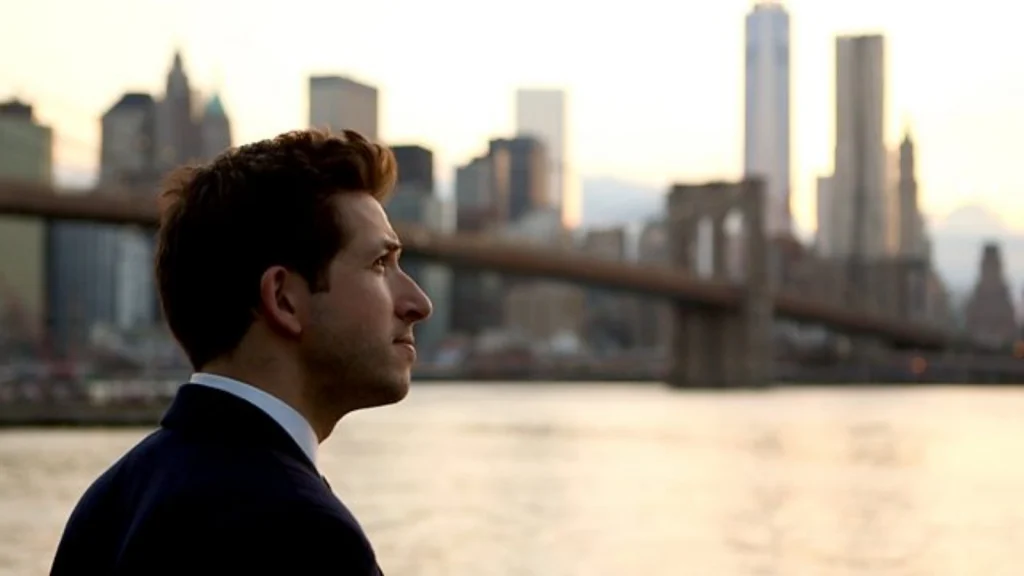
The documentary A Tale of Three Cities episode 3 – New York explores the pivotal year of 1951, when the city became the cultural capital of the world. In the aftermath of World War II, as Europe lay battered, the global center of gravity shifted across the Atlantic. New York, the largest and richest city on the planet, pulsed with the energy of an unruly teenager, a place where the old rules no longer applied and the future was being forged daily. This was the moment when a distinctly American culture, driven by consumerism and boundless optimism, began to assert its influence on a global scale.
This period holds immense significance because it laid the groundwork for the modern world we inhabit today. The cultural explosions in art, music, literature, and media during this single year were not isolated events; they were interconnected threads in a larger tapestry of innovation and rebellion. The rise of abstract expressionism, for instance, championed by artists like Jackson Pollock, signaled a radical break from traditional forms. This spirit of defiance questioned the very fabric of a society that was rapidly embracing conformity, a tension that would define the coming decades.
The scope of this cultural renaissance, as detailed in A Tale of Three Cities episode 3 – New York, was vast and multifaceted. It was a year that saw the dazzling jazz style known as bebop reach its zenith, with musicians like Thelonious Monk rewriting the rules of modern music in smoky downtown clubs. Simultaneously, a young Marlon Brando was revolutionizing cinema with a new, raw form of acting, while Jack Kerouac captured the restless spirit of his peers, giving a powerful voice to the Beat Generation.
To understand this creative eruption, it’s essential to recognize the unique backdrop of 1951 New York. The city was a paradox: a gleaming symbol of post-war prosperity and the headquarters of the newly formed United Nations, yet also a gritty haven for misfits and rebels. While Madison Avenue pioneered a slick new art form of advertising that fueled a burgeoning consumer culture, the bohemian enclaves of Greenwich Village nurtured a burgeoning counterculture that rejected those very values. It was a city of two minds, uptown and downtown, conformity and rebellion, existing in a dynamic, often-contentious dialogue.
This article will delve into the key movements and seminal figures that defined this remarkable year. We will explore how the city’s artists, writers, and musicians challenged the status quo and created new forms of expression that continue to resonate. From the explosive canvases of Jackson Pollock to the improvisational genius of bebop and the literary birth of the Beat Generation, we will trace the origins of a cultural revolution. This was the moment when New York truly became the Babylon of the 20th century, a crucible where the modern world was born.
The arrival of the United Nations headquarters on the banks of the East River cemented New York’s status as a global city. This vast project, a collaboration of international architects, was more than just a building; it was a symbol of hope. It represented a utopian dream that nations could work together to end the devastation of war. For New York to be chosen as its permanent home, over established cultural centers like Paris and Geneva, signaled a profound shift. The city ceased to be merely American and became international territory, the meeting place for the entire world.
A Tale of Three Cities episode 3 – New York
The Birth of Modern Advertising on Madison Avenue
While the United Nations represented global cooperation, another New York street came to symbolize a different kind of global influence: Madison Avenue. In the 1950s, this street was the undisputed center of the advertising world, an industry that was becoming an exhilarating new art form in its own right. Amidst the sea of sharp-suited ad men, one figure stood out: an eccentric Brit named David Ogilvy. Arriving in advertising at the late age of 39, Ogilvy used his Englishness to his advantage, sporting tweeds and even kilts in a world of dark suits. He understood that to advertise anything else, you first had to advertise yourself.
In 1951, Ogilvy’s fledgling agency landed a small contract that would change the course of advertising forever. The client was Hathaway, a struggling shirtmaker from Maine with a meager budget. Given complete creative freedom, Ogilvy devised a campaign of stunning simplicity and genius. He hired a handsome, aristocratic-looking model, but felt something was missing. On the way to the shoot, he impulsively bought a black eyepatch from a drugstore and, for a few shots, had the model wear it.
The resulting ad, first published in The New Yorker, was an instant sensation. The eyepatch was a masterstroke of what Ogilvy called “story appeal.” It created an air of mystery and intrigue around the “Hathaway Man,” making consumers desperately curious about him and, by extension, the shirt he wore. Within a week, every Hathaway shirt in the country was sold out. The campaign’s success made Ogilvy famous and demonstrated a new, more sophisticated approach to advertising, one that relied on wit, glamour, and psychological intrigue rather than simple product descriptions. He became the “Michelangelo of Madison Avenue,” pioneering the sleek art of seduction that continues to define the industry.
Rebellion in the Village: The Beat Generation
While uptown buzzed with the slick conformity of consumer culture, a powerful rebellion was brewing downtown. If Manhattan’s rigid grid system represented order and rationality, Greenwich Village’s chaotic, unruly streets symbolized the opposite. By 1951, the Village had become a magnet for those who rejected the conventional values of mainstream America. It was a cheap, raggedy neighborhood that musician David Amram described as an “oasis from the air-conditioned nightmare,” a place where people could pursue their “hopeless dreams” away from the pressure to conform. This was the birthplace of the counterculture.
This bohemian enclave became the spiritual home of the Beat Generation, and in 1951, one of its residents wrote their defining manifesto. Jack Kerouac, a 29-year-old writer, had for years been trying to capture the restless spirit of his generation in a novel based on his cross-country road trips. In the spring of that year, fueled by Benzedrine and coffee, he embarked on a legendary writing marathon. To avoid interrupting his creative flow by changing paper, he taped together sheets of tracing paper into a single 120-foot-long scroll and fed it into his typewriter.
In just three weeks, Kerouac poured out the manuscript for On the Road. The book, a thinly fictionalized account of his travels, was a breathless, lyrical celebration of an America he feared was disappearing—an America of open spaces, freedom, and spontaneity. It championed the outcasts, the hobos, drunks, and drifters who were being written out of the narrative of post-war prosperity.
In his famous passage, he declared his love for “the mad ones… the ones who never yawn or say a commonplace thing, but burn, burn, burn like fabulous yellow roman candles.” Though it would take another six years to be published, On the Road became the bible for a generation of rebels, a powerful attack on 1950s conformity and a celebration of the fierce individuality that Kerouac believed was the true soul of America.
The Sound of Rebellion: Bebop and Thelonious Monk
The soundtrack to this downtown counterculture was bebop. This radical new form of jazz was itself a rebellion, born from black musicians who were tired of playing predictable swing music for white dance audiences. Bebop prized virtuosity, innovation, and complex improvisation above all else. In the smoky basement clubs of the Village, legendary figures like Dizzy Gillespie, Charlie Parker, and Miles Davis were all pushing the boundaries of music. The high priest of this new sound, however, was a pianist and composer of singular genius: Thelonious Monk.
Monk’s playing style was as eccentric as his dress sense. He attacked the piano with a flat-handed technique, creating dissonant, rhythmically complex music that baffled and amazed listeners. He was exploring uncharted musical territory. On July 23, 1951, Monk recorded what many consider his masterpiece, “Straight, No Chaser.” The composition was an audacious distillation of bebop, breaking new harmonic ground with a deceptively simple motif that shifted and changed with each repetition. It was, as Monk’s son later described, the music that “cracked open” the next generation of jazz giants like John Coltrane.
The jazz clubs of New York were more than just music venues; they were havens of liberty and self-expression in a still-segregated America. They were melting pots where the artists of the Beat Generation, Abstract Expressionist painters, and bebop musicians all came together, feeding off each other’s creative energy. According to Thelonious Monk Jr., the incredible concentration of genius in that one geographical location was unprecedented. However, this creative freedom had a dark side.
The jazz scene was fueled by heroin, which took a staggering toll on its brightest stars. In August 1951, Monk himself fell victim to the era’s harsh laws when he was arrested for drug possession (the narcotics belonged to a friend) and spent two months in jail, a stark reminder that the city that could make a career could just as easily break one.
A Tale of Three Cities episode 3 – New York: The Rise of the American Artist
New York in 1951 patented a new kind of American artist: brilliantly talented, but also impulsive, flawed, and self-destructive. No one embodied this archetype more powerfully than the painter Jackson Pollock. A rugged, denim-wearing figure from Wyoming, Pollock was one part modernist painter, one part Marlboro Man. By the early 1950s, living in self-imposed exile from the city in Long Island, a sober Pollock was creating the best work of his career and was hailed by many as the world’s greatest living artist.
Pollock’s technique was revolutionary and quintessentially American. He laid his vast canvases on the floor of his barn studio, circling them in what observers described as a shaman-like dance. He would drip, pour, and spatter paint directly from the can, using sticks, trowels, and even his hands. “I want to express my feelings,” he explained, “rather than illustrate them.” The results were monumental abstract paintings like “One: Number 31, 1950,” a breathtaking web of color and line that was nearly five meters wide. To Pollock’s champions, these works were not chaotic, but harmonious and structured, capturing the expansive energy of the American dream itself.
However, Pollock’s golden period came to an abrupt end in November 1951. After two years of sobriety, he started drinking again. The descent was rapid and tragic. One evening, he drunkenly upended the entire dinner table during a party, a symbolic act of sabotage against the very civility he struggled with. Like so many other New York artists of his time, Jackson Pollock was fighting to find his own dissonant voice against the crushing pressure of 50s conformity. His drinking escalated, he never produced great work again, and five years later, he was killed in a car crash while driving drunk.
Method and Madness: A New Kind of Acting
The restless, rebellious energy embodied by Pollock and Kerouac found its way onto the silver screen through a revolutionary approach to acting. In 1951, a converted church in Hell’s Kitchen housed the Actors Studio, a cultural powerhouse that would train nearly all of America’s great modern actors, from Robert De Niro to Marilyn Monroe. Its formidable director, Lee Strasberg, rejected conventional training and championed a new technique he called “The Method.”
Method acting was about emotional truth. Strasberg urged his actors to draw upon their own painful memories and experiences—what he called “affective memories”—to inhabit their characters fully. He wanted reality, not performance. The process could be intense and psychologically grueling, pushing actors to confront their deepest traumas to unlock authentic emotion. A young James Dean, newly arrived in New York, famously began cutting himself with a knife during an exercise, a shocking act that Strasberg saw as a gateway to emotional truth.
In September 1951, the world witnessed the explosive power of Method acting on a grand scale with the release of the film A Streetcar Named Desire. The film starred a young, unknown actor named Marlon Brando as the violent, magnetic Stanley Kowalski. Brando’s performance was a force of nature. In the film’s most iconic scene, he howls for his wife, “Stella!”, with a raw, animalistic anguish that audiences had never seen before. It wasn’t just acting; Brando was channeling a deep reservoir of emotional energy. His performance kick-started his career and, along with James Dean, introduced a new kind of American hero: the sensitive, brooding anti-hero, a rebel who captured the untamable electricity of the counterculture.
The Echoes of 1951: When Rebellion Became America’s Greatest Export
The year 1951 didn’t just witness a collection of isolated cultural explosions—it marked the moment when America learned to export its contradictions to the world. In the span of twelve months, New York managed to perfect both the art of selling dreams and the art of questioning them. David Ogilvy was crafting seductive narratives on Madison Avenue while Jack Kerouac was dismantling them in Greenwich Village. Jackson Pollock was splattering paint across canvases with the same anarchic energy that Thelonious Monk brought to jazz piano, and Marlon Brando was teaching audiences that vulnerability could be more magnetic than invincibility.
What made this cultural renaissance so enduring wasn’t its individual achievements, but how these movements fed off each other’s creative rebellion. The same city that housed both the United Nations and the smoky basement clubs of the Village understood something profound: genuine cultural influence comes not from presenting a unified front, but from embracing the creative tension between opposing forces. The bebop musicians rejecting commercial swing, the Method actors abandoning theatrical artifice, the Abstract Expressionists abandoning representational art—each movement was essentially asking the same question: what happens when we strip away the comfortable lies and deal with raw truth?
This willingness to expose contradictions became America’s secret weapon in the cultural cold war. While other nations projected singular identities, America offered complexity. It sold both the dream and the nightmare, the aspiration and the rebellion against that very aspiration. Madison Avenue could promise the good life in the morning, and by evening, the Village could offer an alternative vision of what the good life might actually mean.
The tragic undertow running through many of these stories—Pollock’s self-destruction, Monk’s imprisonment, the heroin epidemic in jazz clubs—wasn’t incidental to the creative explosion. It was proof of how high the stakes were for artists trying to create authentic work in a culture increasingly dominated by manufactured consensus. Their struggles weren’t just personal; they were early warnings about the psychological costs of a society that demands both conformity and originality, security and innovation.
Today, as we navigate our own cultural crossroads between digital conformity and creative rebellion, the lessons of 1951 feel remarkably current. We’re still wrestling with the same fundamental tension between selling dreams and living authentically, between global connectivity and individual expression. The difference is that now, instead of smoky Village clubs, our countercultures emerge in virtual spaces, and instead of Madison Avenue, our cultural narratives are shaped by algorithmic feeds.
The genius of 1951 New York wasn’t that it resolved these contradictions—it was that it made them productive. It created a template for how a culture could be simultaneously mainstream and subversive, commercial and artistic, global and deeply personal. In our age of polarization, perhaps what we need isn’t to choose sides, but to rediscover that electric creative space where opposites don’t just coexist—they collaborate in making something entirely new.
FAQ A Tale of Three Cities episode 3 – New York
Q: Why was 1951 considered a pivotal year for New York becoming the world’s cultural capital?
A: Following World War II, as Europe lay devastated, the global center of cultural gravity shifted across the Atlantic to New York. The city pulsed with unprecedented creative energy, becoming home to revolutionary movements in art, music, literature, and advertising. Furthermore, 1951 marked the moment when distinctly American culture began asserting its worldwide influence through bebop jazz, abstract expressionism, Beat literature, and Method acting.
Q: How did the United Nations headquarters impact New York’s global status in 1951?
A: The UN headquarters on the East River transformed New York from merely an American city into international territory. Additionally, choosing New York over established cultural centers like Paris and Geneva signaled a profound global shift. The building represented more than architecture; it symbolized hope and humanity’s utopian dream of peaceful cooperation, cementing the city’s role as the world’s meeting place.
Q: What made David Ogilvy’s Hathaway shirt campaign so revolutionary in advertising?
A: Ogilvy’s genius lay in creating “story appeal” through a simple black eyepatch worn by the Hathaway Man model. This masterstroke generated mystery and intrigue, making consumers desperately curious about both the man and the shirt. Within one week, every Hathaway shirt sold out nationwide. Moreover, the campaign demonstrated sophisticated advertising that relied on psychological intrigue rather than basic product descriptions.
Q: How did Jack Kerouac write ‘On the Road’ and why was it culturally significant?
A: In spring 1951, fueled by Benzedrine and coffee, Kerouac embarked on a legendary three-week writing marathon. He taped together sheets into a 120-foot scroll to avoid interrupting his creative flow. The resulting novel celebrated America’s disappearing spirit of freedom and spontaneity, championing outcasts and drifters. Consequently, it became the Beat Generation’s bible and a powerful attack on 1950s conformity.
Q: What made Thelonious Monk’s bebop style so groundbreaking in 1951?
A: Monk attacked the piano with a flat-handed technique, creating dissonant, rhythmically complex music that explored uncharted territory. His masterpiece “Straight, No Chaser,” recorded July 23, 1951, broke new harmonic ground with deceptively simple motifs. Furthermore, bebop represented rebellion against predictable swing music, prioritizing virtuosity and complex improvisation. Monk’s innovation directly influenced the next generation of jazz giants like John Coltrane.
Q: What was unique about Jackson Pollock’s revolutionary painting technique?
A: Pollock laid vast canvases on his barn floor, circling them in shaman-like dances while dripping, pouring, and spattering paint directly from cans. He used sticks, trowels, and hands instead of brushes, explaining he wanted to “express feelings rather than illustrate them.” However, his golden period ended tragically in November 1951 when he resumed drinking after two years of sobriety.
Q: How did Method acting revolutionize American cinema in 1951?
A: Lee Strasberg’s Actors Studio championed “The Method,” urging actors to draw upon painful personal memories for emotional truth. This psychologically grueling process demanded reality over performance. Additionally, Marlon Brando’s explosive performance in “A Streetcar Named Desire” demonstrated Method acting’s power, introducing the sensitive, brooding anti-hero archetype. Consequently, this revolutionary approach trained nearly all of America’s subsequent great actors.
Q: What characterized the cultural divide between uptown and downtown New York in 1951?
A: Uptown Manhattan represented order and conformity, epitomized by Madison Avenue’s slick advertising culture and the UN’s international diplomacy. Meanwhile, downtown Greenwich Village embodied chaos and rebellion, serving as an “oasis from the air-conditioned nightmare.” Furthermore, this geographic divide reflected America’s psychological tension between embracing prosperity and questioning its values, creating dynamic dialogue between opposing worldviews.
Q: What were the darker aspects of 1951’s creative renaissance in New York?
A: The creative explosion came with devastating personal costs. Jazz clubs were fueled by heroin addiction, destroying many brilliant musicians. Additionally, Thelonious Monk spent two months in jail for drug possession, while Jackson Pollock’s alcoholism ended his productive period and eventually killed him. These tragedies revealed the psychological toll of creating authentic art while fighting against society’s crushing pressure toward conformity.
Q: How does 1951 New York’s cultural explosion continue influencing contemporary society?
A: The year 1951 established templates for modern creativity, advertising, and counterculture that persist today. Madison Avenue’s psychological advertising techniques evolved into contemporary marketing strategies. Moreover, the Beat Generation’s rebellion against conformity prefigured subsequent countercultural movements. Additionally, Method acting remains the foundation of modern performance, while abstract expressionism continues influencing contemporary art. These innovations created lasting frameworks for authentic creative expression.