Amazon with Bruce Parry episode 4 – Heart of the Amazon
Deep in the emerald labyrinth of the world’s largest rainforest, Bruce Parry reaches a pivotal milestone in his extraordinary expedition through the Amazon. The intrepid explorer has now arrived at the halfway point of his journey, venturing into the magnificent Mamiraua Sustainable Development Reserve—a protected sanctuary spanning over 11,000 square kilometers of pristine wetland ecosystems. This ecological treasure houses an astonishing array of the Amazon’s most celebrated and endangered species, from the elusive pink river dolphins to the vibrant scarlet macaws that paint the canopy with flashes of crimson.
In this fourth episode of his immersive documentary series, Parry embeds himself with the Ribeirinho communities—the resilient river people whose lives flow in harmony with the rising and falling waters of the Amazon. These semi-nomadic inhabitants have developed remarkable adaptations to their ever-changing environment. Their stilt houses rise and fall with the seasonal floods, while their intimate knowledge of the forest’s rhythms has been passed down through countless generations.
The relationship between the Ribeirinho and their watery home transcends mere survival. Furthermore, it represents one of humanity’s most fascinating examples of environmental symbiosis. As Bruce discovers, these communities have developed sustainable harvesting practices that allow them to thrive without depleting the natural abundance that surrounds them. Their traditional wooden canoes glide silently through flooded forests, navigating channels that appear and disappear with the seasonal inundations that can raise water levels by more than ten meters.
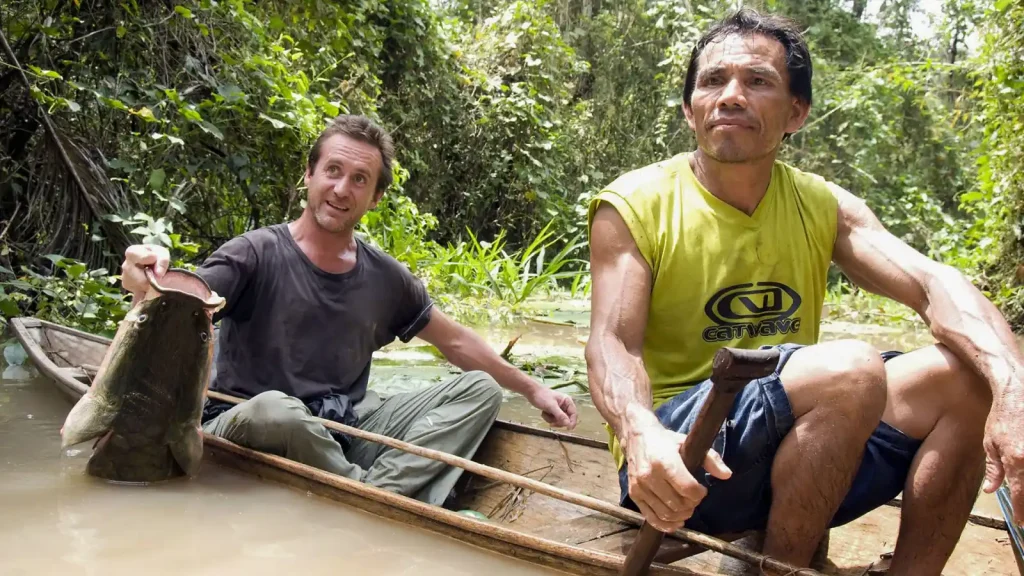
The centerpiece of this episode revolves around an exhilarating hunt for the legendary pirarucu—a prehistoric behemoth that ranks among the Amazon’s most impressive aquatic creatures. Also known as the arapaima, this ancient air-breathing fish can grow to lengths exceeding two meters and weigh over 100 kilograms. Once threatened by overfishing, the pirarucu has made a remarkable comeback in Mamiraua thanks to community-based conservation efforts implemented by the Ribeirinho.
Bruce joins a fishing expedition led by experienced Ribeirinho fishermen who have refined their techniques over lifetimes spent on these waters. The hunt requires exceptional patience, keen observation, and split-second timing. Unlike conventional fishing methods, capturing a pirarucu involves spotting the fish when it surfaces to breathe—an event that occurs approximately every 20 minutes. In that brief moment of vulnerability, skilled fishermen must react instantly with specialized harpoons.
The significance of the pirarucu extends beyond its impressive size. Therefore, the sustainable management of this species has become a model for conservation efforts throughout the Amazon basin. Through carefully regulated fishing quotas and protected breeding areas, the Ribeirinho have transformed what was once an endangered species into a renewable resource that supports both ecological balance and community livelihoods.
Throughout his stay, Bruce embraces the daily rhythms of Ribeirinho life. He learns to navigate the flooded forests, construct traditional fishing tools, and prepare local delicacies using ingredients harvested from the surrounding waters and forests. The community’s generosity in sharing their knowledge reflects a cultural tradition of hospitality that has welcomed travelers for centuries.
Amazon with Bruce Parry episode 4
Evenings in the village bring communities together for storytelling sessions where elder Ribeirinho recount ancient legends that personify the forest’s creatures and explain natural phenomena. These oral traditions serve as both entertainment and educational tools, preserving ecological knowledge and cultural identity across generations. Bruce participates in these gatherings, gaining insights into how mythology and practical knowledge intertwine in Amazonian cultures.
The episode also explores the challenges facing these communities in an era of climate change and external pressures. Rising temperatures and changing rainfall patterns threaten the delicate balance of flooding cycles upon which the entire ecosystem depends. Additionally, encroaching development and illegal resource extraction imperil both the reserve and the Ribeirinho way of life.
As Bruce concludes his time in Mamiraua, he reflects on how this protected reserve represents both the fragility and resilience of the Amazon as a whole. The sustainable practices developed by the Ribeirinho offer valuable lessons for conservation efforts worldwide, demonstrating how human communities can thrive while preserving biodiversity.
This episode captures not just the breathtaking natural beauty of the Amazon at its most iconic, but also the profound human connections that have shaped this landscape for millennia. Bruce’s journey continues, carrying with him the wisdom of the river people and a deeper understanding of our complex relationship with the natural world.
Amazon with Bruce Parry episode 4: The Timeless Lessons of the Amazon
As Bruce Parry’s expedition through the heart of the Amazon draws to a close, we are left with far more than breathtaking imagery of an exotic landscape. His immersive journey alongside the Ribeirinho has revealed profound truths about our relationship with the natural world. These river people, whose lives ebb and flow with the rhythms of the Amazon, embody a delicate balance that modern society has largely forgotten.
The Mamiraua Reserve stands as a living laboratory where ancient wisdom meets contemporary conservation. Through the careful management of species like the magnificent pirarucu, the Ribeirinho demonstrate how humans can thrive without sacrificing ecological integrity. Their approach offers a compelling alternative to the false dichotomy between preservation and progress that often dominates environmental discussions.
What makes this story particularly powerful, however, is not just the sustainable practices themselves. Rather, it is the underlying worldview that gives rise to them. The Ribeirinho do not see themselves as separate from nature but as an integral thread in the vast tapestry of Amazonian life. Consequently, their decisions reflect a holistic understanding that recognizes interdependence as the fundamental reality of existence.
As climate change accelerates and biodiversity continues to decline globally, the wisdom of the Ribeirinho becomes increasingly relevant. Their adaptability in the face of seasonal flooding mirrors the resilience we must all develop in an era of environmental uncertainty. Furthermore, their community-based approach to resource management provides a blueprint for collaborative solutions to our most pressing ecological challenges.
Perhaps the most valuable lesson from Parry’s journey is that environmental stewardship need not be a burden. The Ribeirinho’s relationship with their surroundings is not defined by sacrifice but by reciprocity and respect. Like skilled dancers moving in harmony with an unseen partner, they have choreographed a way of life that honors the rhythm of the forest while meeting their own needs.
As we reflect on this remarkable expedition, we might consider how the principles of the Ribeirinho could transform our own communities. Their story reminds us that humanity’s future depends not on conquering nature but on rediscovering our place within it. In the end, the Amazon’s greatest gift may be this timeless wisdom: we protect what we love, and we love what we truly understand.
FAQ Amazon with Bruce Parry episode 4
Q: What is the Mamiraua Sustainable Development Reserve featured in Bruce Parry’s Amazon documentary?
A: The Mamiraua Sustainable Development Reserve is a protected sanctuary spanning over 11,000 square kilometers of pristine wetland ecosystems in the Amazon rainforest. This ecological treasure houses an astonishing array of the Amazon’s most celebrated and endangered species, including pink river dolphins and scarlet macaws. Moreover, it serves as a living laboratory where ancient wisdom meets contemporary conservation efforts, demonstrating how humans can sustainably coexist with nature while preserving biodiversity.
Q: Who are the Ribeirinho people that Bruce Parry lived with during his Amazon expedition?
A: The Ribeirinho are resilient river people whose lives flow in harmony with the rising and falling waters of the Amazon. These semi-nomadic inhabitants have developed remarkable adaptations to their ever-changing environment over generations. Their relationship with their watery home transcends mere survival and represents one of humanity’s most fascinating examples of environmental symbiosis. The Ribeirinho have crafted sustainable harvesting practices that allow them to thrive without depleting the natural abundance surrounding them.
Q: What is special about the pirarucu fish that Bruce Parry hunted in the Amazon?
A: The pirarucu (also known as arapaima) is a prehistoric behemoth that ranks among the Amazon’s most impressive aquatic creatures. This ancient air-breathing fish can grow to lengths exceeding two meters and weigh over 100 kilograms. Once threatened by overfishing, the pirarucu has made a remarkable comeback in Mamiraua thanks to community-based conservation efforts. The sustainable management of this species has consequently become a model for conservation throughout the Amazon basin, transforming what was once endangered into a renewable resource.
Q: How do the Ribeirinho people hunt for pirarucu fish?
A: Hunting the pirarucu requires exceptional patience, keen observation, and split-second timing unlike conventional fishing methods. The process involves spotting the fish when it surfaces to breathe—an event that occurs approximately every 20 minutes. In that brief moment of vulnerability, skilled Ribeirinho fishermen must react instantly with specialized harpoons. This traditional technique has been refined over lifetimes spent on Amazonian waters and represents a sustainable approach to harvesting this magnificent species while ensuring its continued survival.
Q: What conservation practices have the Ribeirinho implemented in the Amazon?
A: The Ribeirinho have implemented carefully regulated fishing quotas and established protected breeding areas for species like the pirarucu. Through these community-based conservation efforts, they have transformed what were once endangered species into renewable resources that support both ecological balance and community livelihoods. Furthermore, their sustainable harvesting practices extend beyond fishing to include responsible collection of forest products. Their holistic approach demonstrates how indigenous knowledge can contribute significantly to modern conservation challenges.
Q: How do storytelling traditions contribute to conservation in Ribeirinho communities?
A: Evenings in Ribeirinho villages feature storytelling sessions where elders recount ancient legends that personify forest creatures and explain natural phenomena. These oral traditions serve as both entertainment and crucial educational tools, preserving ecological knowledge and cultural identity across generations. The stories create an emotional connection to the environment, instilling values of respect and stewardship. Consequently, these narrative traditions help maintain the delicate balance between human needs and environmental sustainability by embedding conservation ethics within cultural identity.
Q: What challenges do Amazon communities like the Ribeirinho face today?
A: Amazon communities currently face multiple pressing challenges, including climate change impacts like rising temperatures and changing rainfall patterns that threaten the delicate balance of flooding cycles. Additionally, encroaching development, illegal resource extraction, and deforestation imperil both the reserves and indigenous ways of life. The Ribeirinho must therefore navigate these modern threats while maintaining their traditional knowledge systems. Despite these challenges, their adaptability—demonstrated through centuries of living with seasonal flooding—offers hope for resilience in an era of environmental uncertainty.
Q: What lessons can we learn from Bruce Parry’s experience with the Ribeirinho in the Amazon?
A: Bruce Parry’s experiences with the Ribeirinho reveal that environmental stewardship need not be a burden but rather a relationship of reciprocity and respect. Like skilled dancers moving in harmony with their partner, the Ribeirinho have choreographed a way of life that honors the rhythm of the forest. Their story demonstrates that humanity’s future depends not on conquering nature but on rediscovering our place within it. In essence, the Amazon’s greatest gift may be this timeless wisdom: we protect what we love, and we truly love what we understand.