Amazon with Bruce Parry episode 6
In the heart of Brazil’s Para state, a dramatic narrative unfolds—a tale of survival, conflict, and transformation where the Amazon rainforest confronts its most formidable challenge. Bruce Parry’s profound journey reaches its climax, capturing the raw, unfiltered reality of a landscape locked in an intense struggle between preservation and progress.
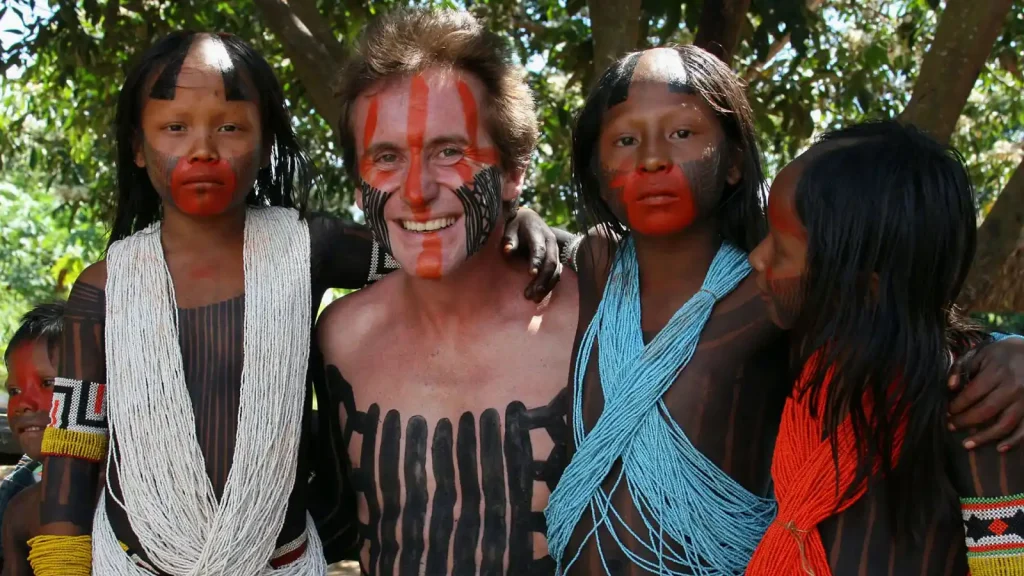
The dense, emerald canopy of the Amazon trembles under the weight of agricultural expansion. Here, the battle lines are drawn not with weapons, but with chainsaws and cattle herds. Parry immerses himself in this complex ecosystem, walking alongside two seemingly opposing worlds: the rugged cowboys driving economic development and the indigenous Kayapo Indians defending their ancestral homeland.
Cattle ranching emerges as the primary force reshaping this magnificent wilderness. Vast swathes of ancient forest disappear, transformed into monotonous pastures that stretch across the horizon like an endless green-brown carpet. Each cleared hectare represents more than just lost trees—it symbolizes a fundamental conflict between human needs and environmental preservation.
By embedding himself with both the cowboys and Kayapo, Parry offers an unprecedented perspective on this multifaceted conflict. The cowboys, driven by economic necessity and dreams of prosperity, see the forest as an opportunity for agricultural growth. They represent a complex narrative of survival, where expanding farmland means feeding families and contributing to Brazil’s agricultural economy.
Conversely, the Kayapo Indians stand as guardians of an ecosystem that has sustained their culture for generations. Their connection to the land transcends economic metrics—it is spiritual, historical, and deeply personal. Through Parry’s lens, viewers witness their passionate resistance, understanding that each felled tree represents more than timber; it signifies the erosion of their traditional way of life.
The documentary becomes a nuanced exploration of competing realities. It challenges viewers to move beyond simplistic narratives of good versus evil, revealing the intricate human stories behind environmental transformation. Economic pressures, cultural traditions, and ecological concerns intertwine in a complex dance of survival and adaptation.
Parry’s approach is deeply empathetic and investigative. He listens more than he speaks, allowing the protagonists of this environmental drama to share their perspectives candidly. By living alongside both cowboys and Kayapo, he uncovers the human dimensions of a conflict often reduced to statistical reports and satellite imagery.
The visual narrative speaks volumes about the Amazon’s vulnerability. Lush forests give way to stark, open landscapes—a metaphorical representation of the region’s ongoing metamorphosis. Each cleared section tells a story of human ambition, economic pragmatism, and the relentless pressure of global market demands.
Amazon with Bruce Parry episode 6
Indigenous communities like the Kayapo represent more than resistance; they embody a profound understanding of ecological balance. Their traditional knowledge, accumulated over millennia, offers insights into sustainable coexistence with the natural world. Through Parry’s documentary, their voices emerge not as distant echoes but as critical perspectives in the global environmental dialogue.
Economic drivers behind deforestation are complex and multifaceted. Cattle ranching provides livelihoods for thousands, fuels Brazil’s agricultural exports, and represents a tangible path out of poverty for many rural communities. Yet, this progress comes at an extraordinary environmental cost that extends far beyond local boundaries.
The documentary challenges viewers to contemplate difficult questions. How do we balance human economic needs with environmental preservation? Can sustainable development truly exist, or are these concepts fundamentally incompatible? Parry’s journey doesn’t offer simple answers but invites deeper reflection on our relationship with nature.
As his Amazon adventure concludes, Bruce Parry leaves audiences with a powerful, nuanced understanding of a region in profound transition. The story of Para state becomes a microcosm of global environmental challenges—a testament to human complexity, economic realities, and the ongoing negotiation between progress and preservation.
In this remarkable exploration, the Amazon emerges not just as a geographical location but as a living, breathing narrative of human struggle, resilience, and potential transformation. Parry’s documentary becomes more than a documentary—it is a bridge between worlds, perspectives, and possible futures.
Conclusion Amazon with Bruce Parry episode 6
As the last rays of sunlight pierce through the thinning Amazon canopy, Bruce Parry’s journey becomes a powerful metaphor for humanity’s most critical environmental crossroads. The story of Para state is more than a local narrative—it’s a global reflection on our collective relationship with the natural world.
What emerges from this profound exploration is not a simple tale of villains and heroes, but a nuanced tapestry of human survival, economic necessity, and ecological preservation. The cowboys and Kayapo Indians represent more than opposing forces; they embody the complex human struggle to find balance between progress and sustainability.
Through Parry’s lens, we witness the Amazon not as a distant, abstract concept, but as a living ecosystem intimately connected to human survival. Each cleared hectare tells a story of difficult choices—of families seeking economic stability, of indigenous communities fighting to preserve their ancestral heritage, of a planet grappling with unprecedented environmental challenges.
The documentary challenges us to look beyond simplistic solutions. Sustainable development is not about choosing between economic growth and environmental protection, but finding innovative ways to harmonize human needs with ecological preservation. It demands creativity, empathy, and a willingness to understand perspectives different from our own.
Indigenous communities like the Kayapo offer profound wisdom in this quest. Their traditional knowledge, developed over millennia, provides crucial insights into living in harmony with nature. They remind us that true progress is not measured by acres cleared or cattle raised, but by our ability to coexist with the intricate web of life that sustains us.
As global citizens, we stand at a critical juncture. The Amazon’s story is our story—a narrative of interconnectedness, resilience, and potential transformation. It challenges us to reimagine our relationship with the natural world, to see beyond immediate economic gains and consider the long-term consequences of our actions.
Bruce Parry’s journey becomes an invitation—a call to deeper understanding, compassionate dialogue, and collective action. It reminds us that every choice we make ripples through the complex ecosystem of our planet. The Amazon is not just a forest; it is a living testament to the delicate balance between human ambition and natural preservation.
In the end, the true power of this documentary lies not in providing answers, but in sparking crucial conversations about our shared future.
FAQ Amazon with Bruce Parry episode 6
Q: What is the main focus of Bruce Parry’s Amazon documentary episode 6?
A: The main focus of Bruce Parry’s Amazon documentary episode 6 is the conflict between deforestation and conservation in Brazil’s Para state. Parry immerses himself with both cattle ranchers driving economic development and the indigenous Kayapo Indians defending their ancestral homeland. Through this dual perspective, he explores the complex reality of environmental transformation, economic pressures, and cultural preservation. The documentary serves as a nuanced examination of the struggle between human progress and environmental sustainability in one of Earth’s most critical ecosystems.
Q: How does Bruce Parry present the cowboys’ perspective in the documentary?
A: Bruce Parry presents the cowboys’ perspective by living alongside them and allowing them to share their motivations candidly. Rather than portraying them as villains, he shows how economic necessity and dreams of prosperity drive their actions. The documentary illustrates how these cowboys view forest clearing as an opportunity for agricultural growth that feeds their families and contributes to Brazil’s economy. Consequently, Parry helps viewers understand that the cowboys represent a complex narrative of survival where expanding farmland means economic stability, not simply environmental destruction.
Q: What role do the Kayapo Indians play in this documentary?
A: The Kayapo Indians play the role of environmental guardians in the documentary. Parry showcases their deep spiritual and historical connection to the Amazon rainforest, which transcends purely economic considerations. Furthermore, the Kayapo represent a profound understanding of ecological balance developed over millennia. Their resistance to deforestation stems from the fact that each felled tree erodes their traditional way of life. Additionally, the documentary positions their voices as critical perspectives in the global environmental dialogue, offering valuable insights into sustainable coexistence with nature.
Q: How does the documentary visually represent the Amazon’s transformation?
A: The documentary visually represents the Amazon’s transformation through stark contrasts between lush forests and cleared landscapes. These visual transitions serve as powerful metaphors for the region’s ongoing metamorphosis. Moreover, the camera captures vast swathes of ancient forest being converted into monotonous pastures that stretch across the horizon like an endless green-brown carpet. This visual narrative effectively communicates the vulnerability of the Amazon ecosystem while illustrating how each cleared section tells a story of human ambition, economic pragmatism, and global market demands.
Q: What complex questions does the documentary raise about development and conservation?
A: The documentary raises several complex questions about finding balance between human economic needs and environmental preservation. It challenges viewers to consider whether sustainable development can truly exist or if economic progress and conservation are fundamentally incompatible. Additionally, it prompts reflection on how global market demands impact local ecosystems. Rather than providing simple answers, the documentary invites deeper contemplation about our collective relationship with nature. In essence, it asks viewers to reconsider how we measure progress—whether by economic metrics alone or by our ability to coexist harmoniously with the natural world.
Q: What approach does Bruce Parry take to tell this environmental story?
A: Bruce Parry takes a deeply empathetic and investigative approach to tell this environmental story. Instead of imposing his viewpoint, he listens more than he speaks, allowing both cowboys and Kayapo to share their perspectives candidly. By living alongside both groups, he uncovers the human dimensions of a conflict often reduced to statistics and satellite imagery. Furthermore, his immersive methodology creates a bridge between opposing worlds and perspectives. This approach moves beyond simplistic narratives of good versus evil, revealing the intricate human stories behind environmental transformation.
Q: What economic factors drive deforestation in the Amazon according to the documentary?
A: According to the documentary, multiple economic factors drive deforestation in the Amazon. Primarily, cattle ranching emerges as the dominant force reshaping the wilderness. This agricultural activity provides livelihoods for thousands of people and fuels Brazil’s agricultural exports. Moreover, it represents a tangible path out of poverty for many rural communities. The documentary illustrates how economic pressures, combined with dreams of prosperity, create powerful incentives for forest clearing. However, it also acknowledges that this economic progress comes at an extraordinary environmental cost extending far beyond local boundaries.
Q: What is the broader significance of Para state’s story as presented in the documentary?
A: The broader significance of Para state’s story lies in its function as a microcosm of global environmental challenges. Bruce Parry presents this region not as a distant, abstract concept, but as a living ecosystem intimately connected to human survival. Consequently, the documentary transforms a local narrative into a global reflection on our collective relationship with the natural world. It serves as a powerful metaphor for humanity’s critical environmental crossroads. Additionally, Para state’s story challenges viewers to look beyond simplistic solutions and recognize that every choice we make ripples through the complex ecosystem of our planet.