Amazon with Bruce Parry episode 5: Bruce Parry’s Journey Through Wealth, Wilderness, and Wonder
In the captivating fifth episode of “Amazon with Bruce Parry,” viewers are taken on an immersive exploration of the Amazon rainforest’s multifaceted wealth. The intrepid explorer ventures through contrasting worlds within this vast ecosystem, revealing the complex relationships between humans and one of Earth’s most valuable natural treasures.
The journey begins in Manaus, the Amazon’s bustling metropolis rising unexpectedly from the surrounding jungle. Here, Parry mingles with millionaires whose fortunes have been built on the resources extracted from the rainforest. Furthermore, these elite citizens showcase a lifestyle that stands in stark contrast to the traditional communities living just beyond the city limits. Their lavish parties and opulent homes tell a story of economic prosperity, yet they also raise questions about sustainability and the distribution of wealth generated by the Amazon’s bounty.
As the narrative unfolds, Parry transitions from urban luxury to the gritty reality of illegal gold mining operations hidden within the forest. Additionally, he doesn’t merely observe these miners—he lives and works alongside them, experiencing firsthand their dangerous pursuit of fortune. Through this immersion, viewers gain insight into the complex motivations driving these individuals. Many miners are simply trying to support their families, caught between economic necessity and environmental impact. The backbreaking labor and primitive conditions reveal the human cost of this controversial industry, while simultaneously highlighting the economic disparities that fuel such extractive activities.
In perhaps the most visually stunning segment of the episode, Parry ascends into the forest canopy to spend time with scientific researchers. These dedicated individuals are pioneering innovative approaches to valuing the rainforest. Therefore, they’re working to quantify the worth of the Amazon beyond its extractable resources. Their research focuses on ecosystem services such as carbon sequestration, biodiversity preservation, and the forest’s role in regional and global climate regulation. Consequently, Parry’s nights spent suspended high among the treetops offer both breathtaking views and profound insights into the scientific community’s efforts to reframe how we perceive forest value.
Throughout the episode, Parry serves as a thoughtful mediator between these contrasting perspectives on wealth. The millionaires of Manaus represent traditional economic models that have extracted value from the Amazon for centuries. In contrast, the scientists embody an emerging paradigm that recognizes the intrinsic and functional value of intact ecosystems. Meanwhile, the gold miners occupy a complex middle ground, responding to immediate economic pressures while directly altering the landscape.
The visual storytelling is particularly effective when juxtaposing these different environments. From the neon-lit clubs of Manaus to the muddy gold pits and then to the serene forest canopy, each setting is rendered with attention to both aesthetic beauty and environmental context. These transitions help viewers comprehend the interconnectedness of these seemingly separate worlds.
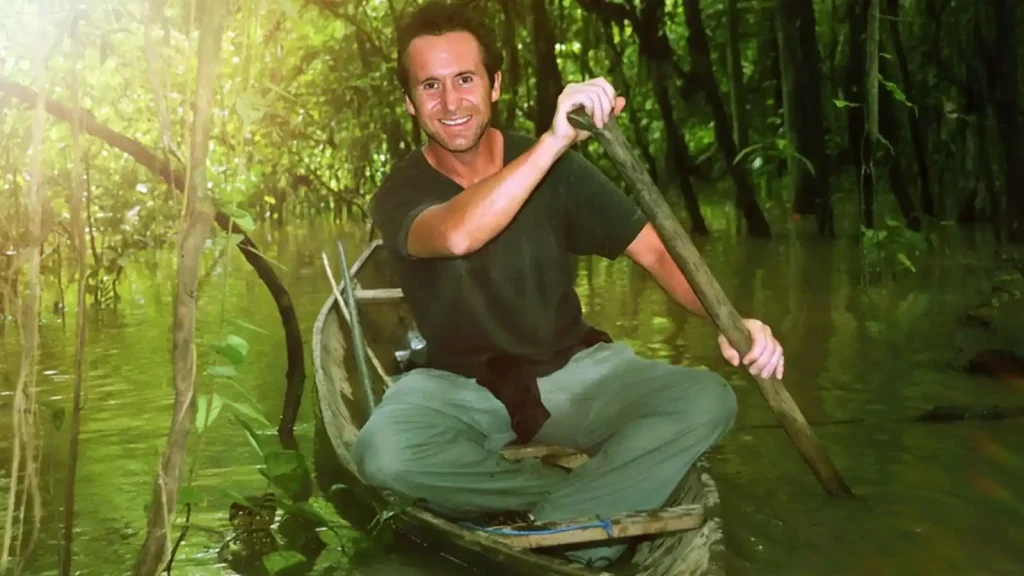
What makes this episode especially compelling is Parry’s genuine engagement with individuals from each group. He approaches everyone with curiosity and respect, creating space for authentic exchanges. Moreover, his willingness to participate fully—whether dancing at an exclusive party, handling mercury in the gold mining process, or sleeping on a precarious platform high above the forest floor—demonstrates a commitment to experiential understanding rather than detached observation.
The episode doesn’t shy away from difficult questions about development, conservation, and economic justice. However, instead of presenting didactic answers, it invites viewers to consider multiple perspectives. The wealth of the Amazon is shown to be simultaneously material and ecological, immediate and long-term, personal and collective.
Amazon with Bruce Parry episode 5
By the conclusion, viewers have traversed not just geographical distances but ideological ones as well. The traditional concept of wealth is expanded beyond monetary value to include biodiversity, ecological functioning, and cultural heritage. Parry’s journey serves as a microcosm of the larger conversations surrounding the Amazon’s future, where competing visions of prosperity and development clash and occasionally find common ground.
The episode leaves us with a deeper appreciation for the complexity of human-environment relationships in the Amazon. In addition, it challenges simplified narratives about conservation versus development by showing how real people navigate these tensions in their daily lives. Through Parry’s eyes, we glimpse both the magnificence of the rainforest and the multifaceted human stories unfolding within its bounds.
As the credits roll, viewers are left contemplating what true wealth means in the context of the Amazon, and by extension, in our increasingly interconnected world. The revolutionary approach to valuing the forest, highlighted through the scientists’ work, suggests new possibilities for reconciling human needs with environmental preservation—a timely message as the global community grapples with climate change and biodiversity loss.
This thought-provoking episode ultimately reminds us that the Amazon’s greatest wealth may lie not in what can be extracted from it, but in what can be learned from it about sustainable relationships between humanity and the natural world.
Amazon with Bruce Parry episode 5: A Journey That Transforms Our Understanding
As Bruce Parry’s Amazon expedition concludes, we’re left with a transformed perspective on what truly constitutes wealth. Throughout his journey, Parry has skillfully navigated between worlds that rarely intersect yet remain inextricably connected. Like tributaries flowing into the mighty Amazon River, these diverse experiences merge into a profound understanding of our relationship with the natural world.
The stark contrasts Parry witnessed—from Manaus’s opulent mansions to primitive mining camps, and finally to the tranquil canopy research stations—reveal the multifaceted nature of human interaction with this vital ecosystem. Furthermore, these juxtapositions challenge us to reconsider how we value natural resources in our increasingly interconnected world.
What makes Parry’s exploration uniquely powerful is his immersive approach. Rather than observing from a distance, he plunged into each environment with genuine curiosity and respect. Consequently, viewers gain authentic insights into the complex motivations driving each group’s relationship with the rainforest.
The scientists’ revolutionary work especially resonates as we face global environmental challenges. By quantifying ecosystem services such as carbon sequestration and biodiversity preservation, they offer a new framework for understanding the forest’s worth. This paradigm shift suggests that the Amazon’s true value may exceed traditional economic measures.
Meanwhile, the gold miners’ struggles highlight the tension between immediate economic needs and long-term environmental sustainability. Their story serves as a mirror reflecting our broader societal challenges—how do we balance prosperity with preservation?
Parry’s journey reminds us that the Amazon is not merely a resource to be exploited or a wilderness to be protected. Instead, it represents a living laboratory where humanity’s relationship with nature continues to evolve. Like a complex ecosystem itself, this relationship requires balance, adaptability, and respect for interconnections.
As we reflect on Parry’s experiences, perhaps the most valuable lesson is that wealth takes many forms. Beyond material riches, true prosperity might be found in maintaining the delicate ecological balance that sustains all life. The Amazon’s greatest treasure, therefore, may be the wisdom it offers about creating harmonious relationships between humanity and the natural world—a legacy far more precious than gold.
FAQ Amazon with Bruce Parry episode 5
Q: What is “Amazon with Bruce Parry” about?
A: “Amazon with Bruce Parry” is a documentary series where explorer Bruce Parry immerses himself in different environments and communities throughout the Amazon rainforest. The series examines the complex relationships between humans and this vital ecosystem, showcasing contrasting perspectives on wealth, development, and conservation. Throughout his journey, Parry connects with millionaires in Manaus, works alongside illegal gold miners, and joins scientists studying the forest canopy, offering viewers a multifaceted understanding of the Amazon’s ecological and economic importance.
Q: How does Bruce Parry approach his interactions with different communities in the Amazon?
A: Bruce Parry approaches every community with genuine curiosity and respect, creating space for authentic exchanges rather than imposing his own perspectives. Instead of merely observing from a distance, he fully participates in each environment—whether dancing at exclusive parties with Manaus elites, handling mercury in gold mining operations, or sleeping on precarious platforms high in the forest canopy with researchers. Consequently, this immersive approach allows viewers to gain authentic insights into the complex motivations driving each group’s relationship with the rainforest and creates a more profound understanding than detached observation could provide.
Q: What contrasting perspectives on wealth does the documentary present?
A: The documentary presents three contrasting perspectives on wealth in the Amazon. First, the millionaires of Manaus represent traditional economic models that extract value through resource exploitation, displaying material wealth through lavish parties and opulent homes. Second, the gold miners exemplify a complex middle ground, responding to immediate economic pressures while directly altering the landscape in their pursuit of survival. Finally, the scientists embody an emerging paradigm that recognizes the intrinsic value of intact ecosystems, focusing on ecosystem services like carbon sequestration and biodiversity preservation. These juxtapositions challenge viewers to reconsider how we value natural resources in our interconnected world.
Q: How do scientists in the documentary value the Amazon differently?
A: Scientists in the documentary pioneer innovative approaches to valuing the Amazon beyond its extractable resources. Rather than focusing solely on materials that can be harvested, they quantify ecosystem services such as carbon sequestration, biodiversity preservation, and the forest’s role in regional and global climate regulation. Moreover, their research offers a new framework for understanding the forest’s worth that suggests the Amazon’s true value may exceed traditional economic measures. This paradigm shift represents a revolutionary approach to valuing forests that could help reconcile human needs with environmental preservation—a critical perspective as we face global climate challenges.
Q: Why is the gold mining segment particularly significant in the documentary?
A: The gold mining segment is particularly significant because it reveals the human dimension of environmental degradation. Parry doesn’t simply condemn these operations but lives alongside the miners to understand their motivations. Through this immersion, viewers discover that many miners are simply trying to support their families, caught between economic necessity and environmental impact. The backbreaking labor and primitive conditions expose the human cost of this controversial industry, while simultaneously highlighting the economic disparities that fuel such extractive activities. This nuanced portrayal challenges simplified narratives about conservation versus development by showing how real people navigate these tensions daily.
Q: How does the documentary use visual storytelling to convey its message?
A: The documentary employs powerful visual storytelling by juxtaposing dramatically different environments. From the neon-lit clubs of Manaus to the muddy gold pits and then to the serene forest canopy, each setting is rendered with attention to both aesthetic beauty and environmental context. These visual transitions help viewers comprehend the interconnectedness of these seemingly separate worlds. Furthermore, the contrast between Manaus’s opulent mansions, primitive mining camps, and tranquil canopy research stations reveals the multifaceted nature of human interaction with this vital ecosystem. This approach transforms abstract concepts about environmental and economic relationships into tangible, emotional experiences for the viewer.
Q: What broader message does “Amazon with Bruce Parry” convey about wealth?
A: “Amazon with Bruce Parry” ultimately expands our concept of wealth beyond monetary value to include biodiversity, ecological functioning, and cultural heritage. Throughout the journey, viewers are challenged to consider that true prosperity might be found in maintaining the delicate ecological balance that sustains all life. Like tributaries flowing into the mighty Amazon River, the diverse perspectives presented merge into a profound understanding that the rainforest’s greatest treasure may be the wisdom it offers about creating harmonious relationships between humanity and the natural world—a legacy far more precious than gold. This multidimensional view of wealth invites us to reconsider our values in an age of environmental crisis.
Q: How does the documentary address questions about development and conservation?
A: Rather than presenting didactic answers about development and conservation, the documentary invites viewers to consider multiple perspectives on these complex issues. Instead of portraying the situation as a simple binary between exploitation and preservation, it shows how the Amazon’s wealth is simultaneously material and ecological, immediate and long-term, personal and collective. Additionally, by following Parry through different communities, the documentary reveals how the rainforest serves as a living laboratory where humanity’s relationship with nature continues to evolve. This nuanced approach acknowledges that, like a complex ecosystem itself, this relationship requires balance, adaptability, and respect for interconnections.